
Recent from talks
Impi
Knowledge base stats:
Talk channels stats:
Members stats:
Impi
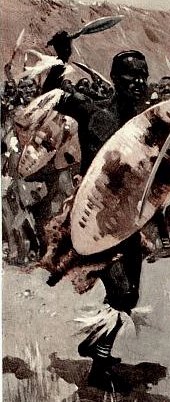
Impi is a Nguni word meaning war or combat and by association any body of men gathered for war, for example impi ya masosha is a term denoting an army. Impi were formed from regiments (amabutho) from large militarised homesteads (amakhanda). In English impi is often used to refer to a Zulu regiment, which is called an ibutho in Zulu, or the army of the Zulu Kingdom.
Its beginnings lie far back in historic local warfare customs, when groups of armed men called impi battled. They were systematised radically by the Zulu king Shaka, who was then only the exiled illegitimate son of king Senzangakhona kaJama, but already showing much prowess as a general in the army (impi) of Mthethwa king Dingiswayo in the Ndwandwe–Zulu War of 1817–1819.
The Zulu impi is popularly identified with the ascent of Shaka, ruler of the relatively small Zulu tribe before its explosion across the landscape of southern Africa, but its earliest shape as an instrument of statecraft lies in the innovations of the Mthethwa chieftain Dingiswayo, according to some historians (Morris 1965). These innovations in turn drew upon existing tribal customs, such as the iNtanga. This was an age grade tradition common among many of the Bantu peoples of the continent's southern region. Young men were organised into age groups, with each cohort responsible for certain duties and tribal ceremonies. Periodically, the older age grades were summoned to the kraals of sub-chieftains, or inDunas, for consultations, assignments, and an induction ceremony that marked their transition from boys to full-fledged adults and warriors, the ukuButwa. Kraal or settlement elders generally handled local disputes and issues. Above them were the inDunas, and above the inDunas stood the chief of a particular clan lineage or tribe. The inDunas handled administrative matters for their chiefs – ranging from settlement of disputes to the collection of taxes. In times of war, the inDunas supervised the fighting men in their areas, forming leadership of the military forces deployed for combat. The age grade iNtangas, under the guidance of the inDunas, formed the basis for the systematic regimental organisation that would become known worldwide as the impi.
Warfare was of low intensity among the KwaZulu Natal tribes prior to the rise of Shaka, though it occurred frequently. Objectives were typically limited to such matters as cattle raiding, avenging some personal insult, or resolving disputes over segments of grazing land. Generally a loose mob, called an impi participated in these melees. There were no campaigns of extermination against the defeated. They simply moved on to other open spaces on the veldt, and equilibrium was restored.
The bow and arrow were known but seldom used. Warfare, like the hunt, depended on skilled spearmen and trackers. The primary weapon was a thin six-foot (1.8 m) throwing spear, the assegai; several were carried into combat. Defensive equipment included a small cowhide shield, which was later improved by King Shaka. Many battles were prearranged, with the clan warriors meeting at an agreed place and time while women and children of the clan watched from some distance away. Ritualized taunts, single combats and tentative charges were the typical pattern. If the affair did not dissipate before, one side might find enough courage to mount a sustained attack and drive their enemies. Casualties were usually light. The defeated clan might pay in lands or cattle and have captives to be ransomed but extermination and mass casualties were rare. Tactics were rudimentary.
Outside the ritual battles, the quick raid was the most frequent combat action, marked by burning kraals, seizure of captives, and the driving off of cattle. Pastoral herders and light agriculturalists, the Bantu did not usually build permanent fortifications to fend off enemies. A clan under threat simply packed their meagre material possessions, rounded up their cattle and fled until the marauders were gone. If the marauders did not stay to permanently dispossess them of grazing areas, the fleeing clan might return to rebuild in a day or two. The genesis of the Zulu impi thus lies in tribal structures existing long before the coming of Europeans or the Shaka era.
In the early 19th century, a combination of factors began to change the customary pattern. These included rising populations, the growth of white settlement and slaving that dispossessed native peoples both at the Cape and in Portuguese Mozambique, and the rise of ambitious "new men." One such man, a warrior called Dingiswayo (the Troubled One) of the Mthethwa rose to prominence. Historians such as Donald Morris hold that his political genius laid the basis for a relatively light hegemony. This was established through a combination of diplomacy and conquest, using not extermination or slavery, but strategic reconciliation and judicious force of arms. This hegemony reduced the frequent feuding and fighting among the small clans in the Mthethwa's orbit, transferring their energies to more centralised forces. Under Dingiswayo the age grades came to be regarded as military drafts, deployed more frequently to maintain the new order. It was from these small clans, including among them the eLangeni and the Zulu, that Shaka sprung.
Shaka proved himself to be one of Dingiswayo's most able warriors after the military call up of his age grade to serve in the Mthethwa forces. He fought with his iziCwe regiment wherever he was assigned during this early period, but from the beginning, Shaka's approach to battle did not fit the traditional mould. He began to implement his own individual methods and style, designing the famous short stabbing spear the iKlwa, a larger, stronger shield, and discarding the oxhide sandals that he felt slowed him down. These methods proved effective on a small scale, but Shaka himself was restrained by his overlord. His conception of warfare was far more extreme than the reconciliatory methods of Dingiswayo. He sought to bring combat to a swift and bloody decision, as opposed to duels of individual champions, scattered raids, or limited skirmishes where casualties were comparatively light. While his mentor and overlord Dingiswayo lived, Shaka's methods were reined in, but the removal of this check gave the Zulu chieftain a much broader scope. It was under his rule that a much more rigorous mode of tribal warfare came into being. This newer, brutal focus demanded changes in weapons, organisation and tactics.
Hub AI
Impi AI simulator
(@Impi_simulator)
Impi
Impi is a Nguni word meaning war or combat and by association any body of men gathered for war, for example impi ya masosha is a term denoting an army. Impi were formed from regiments (amabutho) from large militarised homesteads (amakhanda). In English impi is often used to refer to a Zulu regiment, which is called an ibutho in Zulu, or the army of the Zulu Kingdom.
Its beginnings lie far back in historic local warfare customs, when groups of armed men called impi battled. They were systematised radically by the Zulu king Shaka, who was then only the exiled illegitimate son of king Senzangakhona kaJama, but already showing much prowess as a general in the army (impi) of Mthethwa king Dingiswayo in the Ndwandwe–Zulu War of 1817–1819.
The Zulu impi is popularly identified with the ascent of Shaka, ruler of the relatively small Zulu tribe before its explosion across the landscape of southern Africa, but its earliest shape as an instrument of statecraft lies in the innovations of the Mthethwa chieftain Dingiswayo, according to some historians (Morris 1965). These innovations in turn drew upon existing tribal customs, such as the iNtanga. This was an age grade tradition common among many of the Bantu peoples of the continent's southern region. Young men were organised into age groups, with each cohort responsible for certain duties and tribal ceremonies. Periodically, the older age grades were summoned to the kraals of sub-chieftains, or inDunas, for consultations, assignments, and an induction ceremony that marked their transition from boys to full-fledged adults and warriors, the ukuButwa. Kraal or settlement elders generally handled local disputes and issues. Above them were the inDunas, and above the inDunas stood the chief of a particular clan lineage or tribe. The inDunas handled administrative matters for their chiefs – ranging from settlement of disputes to the collection of taxes. In times of war, the inDunas supervised the fighting men in their areas, forming leadership of the military forces deployed for combat. The age grade iNtangas, under the guidance of the inDunas, formed the basis for the systematic regimental organisation that would become known worldwide as the impi.
Warfare was of low intensity among the KwaZulu Natal tribes prior to the rise of Shaka, though it occurred frequently. Objectives were typically limited to such matters as cattle raiding, avenging some personal insult, or resolving disputes over segments of grazing land. Generally a loose mob, called an impi participated in these melees. There were no campaigns of extermination against the defeated. They simply moved on to other open spaces on the veldt, and equilibrium was restored.
The bow and arrow were known but seldom used. Warfare, like the hunt, depended on skilled spearmen and trackers. The primary weapon was a thin six-foot (1.8 m) throwing spear, the assegai; several were carried into combat. Defensive equipment included a small cowhide shield, which was later improved by King Shaka. Many battles were prearranged, with the clan warriors meeting at an agreed place and time while women and children of the clan watched from some distance away. Ritualized taunts, single combats and tentative charges were the typical pattern. If the affair did not dissipate before, one side might find enough courage to mount a sustained attack and drive their enemies. Casualties were usually light. The defeated clan might pay in lands or cattle and have captives to be ransomed but extermination and mass casualties were rare. Tactics were rudimentary.
Outside the ritual battles, the quick raid was the most frequent combat action, marked by burning kraals, seizure of captives, and the driving off of cattle. Pastoral herders and light agriculturalists, the Bantu did not usually build permanent fortifications to fend off enemies. A clan under threat simply packed their meagre material possessions, rounded up their cattle and fled until the marauders were gone. If the marauders did not stay to permanently dispossess them of grazing areas, the fleeing clan might return to rebuild in a day or two. The genesis of the Zulu impi thus lies in tribal structures existing long before the coming of Europeans or the Shaka era.
In the early 19th century, a combination of factors began to change the customary pattern. These included rising populations, the growth of white settlement and slaving that dispossessed native peoples both at the Cape and in Portuguese Mozambique, and the rise of ambitious "new men." One such man, a warrior called Dingiswayo (the Troubled One) of the Mthethwa rose to prominence. Historians such as Donald Morris hold that his political genius laid the basis for a relatively light hegemony. This was established through a combination of diplomacy and conquest, using not extermination or slavery, but strategic reconciliation and judicious force of arms. This hegemony reduced the frequent feuding and fighting among the small clans in the Mthethwa's orbit, transferring their energies to more centralised forces. Under Dingiswayo the age grades came to be regarded as military drafts, deployed more frequently to maintain the new order. It was from these small clans, including among them the eLangeni and the Zulu, that Shaka sprung.
Shaka proved himself to be one of Dingiswayo's most able warriors after the military call up of his age grade to serve in the Mthethwa forces. He fought with his iziCwe regiment wherever he was assigned during this early period, but from the beginning, Shaka's approach to battle did not fit the traditional mould. He began to implement his own individual methods and style, designing the famous short stabbing spear the iKlwa, a larger, stronger shield, and discarding the oxhide sandals that he felt slowed him down. These methods proved effective on a small scale, but Shaka himself was restrained by his overlord. His conception of warfare was far more extreme than the reconciliatory methods of Dingiswayo. He sought to bring combat to a swift and bloody decision, as opposed to duels of individual champions, scattered raids, or limited skirmishes where casualties were comparatively light. While his mentor and overlord Dingiswayo lived, Shaka's methods were reined in, but the removal of this check gave the Zulu chieftain a much broader scope. It was under his rule that a much more rigorous mode of tribal warfare came into being. This newer, brutal focus demanded changes in weapons, organisation and tactics.
Recent media