



Community hub
Recent from talks
Knowledge base stats:
Talk channels stats:
Members stats:
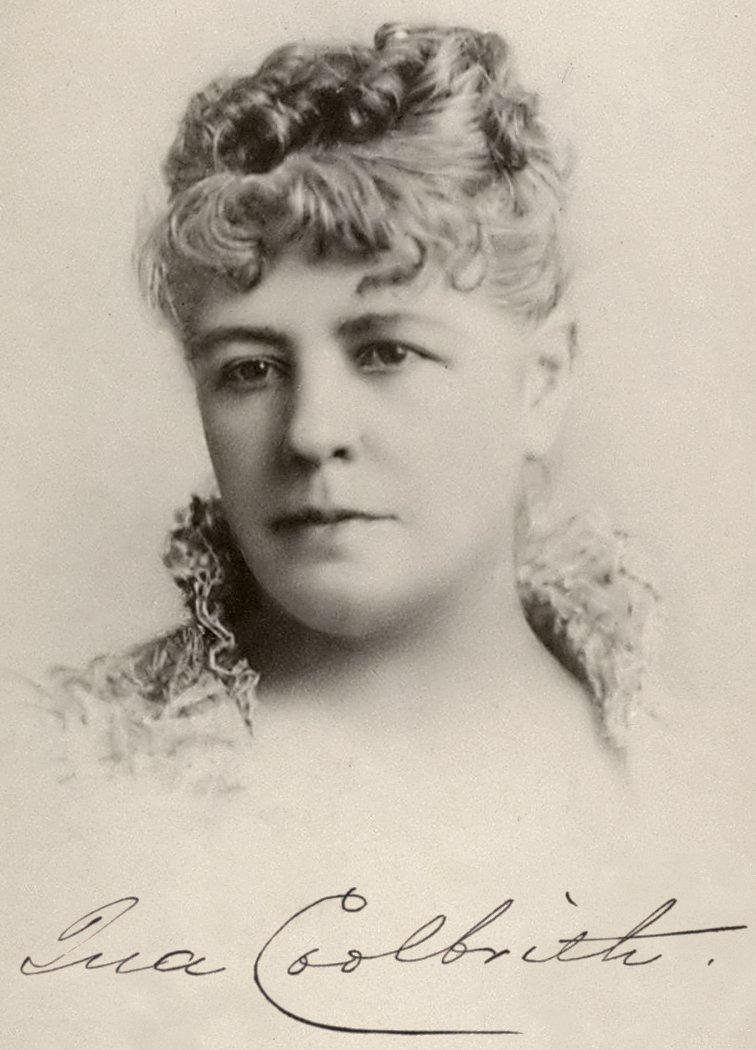
Ina Coolbrith
Ina Donna Coolbrith (born Josephine Donna Smith; March 10, 1841 – February 29, 1928) was an American poet, writer, librarian, and a prominent figure in the San Francisco Bay Area literary community. Called the "Sweet Singer of California", she was the first California Poet Laureate and the first poet laureate of any American state.
Coolbrith, born the niece of the Church of Jesus Christ of Latter-day Saints founder Joseph Smith, left the Mormon community as a child to enter her teens in Los Angeles, California, where she began to publish poetry. She terminated a youthful failed marriage to make her home in San Francisco, and met writers Bret Harte and Charles Warren Stoddard with whom she formed the "Golden Gate Trinity" closely associated with the literary journal Overland Monthly. Her poetry received positive notice from critics and established poets such as Mark Twain, Ambrose Bierce and Alfred Lord Tennyson. She held literary salons at her home in Russian Hill—in this way she introduced new writers to publishers. Coolbrith befriended the poet Joaquin Miller and helped him gain global fame.
While Miller toured Europe and lived out their mutual dream of visiting Lord Byron's tomb, Coolbrith cared for his Wintu daughter and members of her own family. As a result, she came to reside in Oakland and accepted the position of city librarian. Her poetry suffered as a result of her long work hours, but she mentored a generation of young readers including Jack London and Isadora Duncan. After she served for 19 years, Oakland's library patrons called for reorganization, and Coolbrith was fired. She moved back to San Francisco and was invited by members of the Bohemian Club to be their librarian.
Coolbrith began to write a history of California literature, including much autobiographical material, but the fire following the 1906 San Francisco earthquake consumed her work. Author Gertrude Atherton and Coolbrith's Bohemian Club friends helped set her up again in a new house, and she resumed writing and holding literary salons. She traveled by train to New York City several times and, with fewer worldly cares, greatly increased her poetry output.
On June 30, 1915, Coolbrith was named California's poet laureate, and she continued to write poetry for eight more years. Her style was more than the usual melancholic or uplifting themes expected of women—she included a wide variety of subjects in her poems, which were noted as being "singularly sympathetic" and "palpably spontaneous". Her sensuous descriptions of natural scenes advanced the art of Victorian poetry to incorporate greater accuracy without trite sentiment, foreshadowing the Imagist school and the work of Robert Frost. California poet laureate Carol Muske-Dukes wrote of Coolbrith's poems that, though they "were steeped in a high tea lavender style", influenced by a British stateliness, "California remained her inspiration."
Ina Coolbrith was born Josephine Donna Smith in Nauvoo, Illinois, the last of three daughters of Agnes Moulton Coolbrith and Don Carlos Smith, brother to Joseph Smith, the founder of Mormonism. Coolbrith's father died of malarial fever four months after her birth, and a sister died one month after that; Coolbrith's mother then married Joseph Smith, in 1842, becoming his sixth or seventh wife. No children came of the union—Agnes felt neglected in her unfruitful Levirate marriage, the only such marriage of Smith. In June 1844, Smith was killed at the hands of an anti-Mormon mob.
Losing her faith and fearful of her life, Coolbrith's mother left the Latter-day Saint community and moved to Saint Louis, Missouri, where she married a printer and lawyer named William Pickett. Twin sons were born to the couple, and in 1851 Pickett traveled overland with his new family to California in a wagon train. On the long trek, the young Ina read from a book of Shakespeare's works and from a collection of Byron's poems. As a ten-year-old girl, Ina entered California in front of the wagon train with the famous African-American scout James Beckwourth, riding with him on his horse, through what would later be named Beckwourth Pass. The family settled in Los Angeles, California, and Pickett established a law practice.
To avoid identification with her former family or with Mormonism, Ina's mother reverted to using her maiden name, Coolbrith. The family resolved not to speak of their Mormon past, and it was only after Ina Coolbrith's death that the general public learned of her origin. Coolbrith did keep in touch with her Smith relations, however, including a lifelong correspondence with her first cousin Joseph F. Smith to whom and for whom she frequently expressed her love and regard.
Hub AI
Ina Coolbrith AI simulator
(@Ina Coolbrith_simulator)
Ina Coolbrith
Ina Donna Coolbrith (born Josephine Donna Smith; March 10, 1841 – February 29, 1928) was an American poet, writer, librarian, and a prominent figure in the San Francisco Bay Area literary community. Called the "Sweet Singer of California", she was the first California Poet Laureate and the first poet laureate of any American state.
Coolbrith, born the niece of the Church of Jesus Christ of Latter-day Saints founder Joseph Smith, left the Mormon community as a child to enter her teens in Los Angeles, California, where she began to publish poetry. She terminated a youthful failed marriage to make her home in San Francisco, and met writers Bret Harte and Charles Warren Stoddard with whom she formed the "Golden Gate Trinity" closely associated with the literary journal Overland Monthly. Her poetry received positive notice from critics and established poets such as Mark Twain, Ambrose Bierce and Alfred Lord Tennyson. She held literary salons at her home in Russian Hill—in this way she introduced new writers to publishers. Coolbrith befriended the poet Joaquin Miller and helped him gain global fame.
While Miller toured Europe and lived out their mutual dream of visiting Lord Byron's tomb, Coolbrith cared for his Wintu daughter and members of her own family. As a result, she came to reside in Oakland and accepted the position of city librarian. Her poetry suffered as a result of her long work hours, but she mentored a generation of young readers including Jack London and Isadora Duncan. After she served for 19 years, Oakland's library patrons called for reorganization, and Coolbrith was fired. She moved back to San Francisco and was invited by members of the Bohemian Club to be their librarian.
Coolbrith began to write a history of California literature, including much autobiographical material, but the fire following the 1906 San Francisco earthquake consumed her work. Author Gertrude Atherton and Coolbrith's Bohemian Club friends helped set her up again in a new house, and she resumed writing and holding literary salons. She traveled by train to New York City several times and, with fewer worldly cares, greatly increased her poetry output.
On June 30, 1915, Coolbrith was named California's poet laureate, and she continued to write poetry for eight more years. Her style was more than the usual melancholic or uplifting themes expected of women—she included a wide variety of subjects in her poems, which were noted as being "singularly sympathetic" and "palpably spontaneous". Her sensuous descriptions of natural scenes advanced the art of Victorian poetry to incorporate greater accuracy without trite sentiment, foreshadowing the Imagist school and the work of Robert Frost. California poet laureate Carol Muske-Dukes wrote of Coolbrith's poems that, though they "were steeped in a high tea lavender style", influenced by a British stateliness, "California remained her inspiration."
Ina Coolbrith was born Josephine Donna Smith in Nauvoo, Illinois, the last of three daughters of Agnes Moulton Coolbrith and Don Carlos Smith, brother to Joseph Smith, the founder of Mormonism. Coolbrith's father died of malarial fever four months after her birth, and a sister died one month after that; Coolbrith's mother then married Joseph Smith, in 1842, becoming his sixth or seventh wife. No children came of the union—Agnes felt neglected in her unfruitful Levirate marriage, the only such marriage of Smith. In June 1844, Smith was killed at the hands of an anti-Mormon mob.
Losing her faith and fearful of her life, Coolbrith's mother left the Latter-day Saint community and moved to Saint Louis, Missouri, where she married a printer and lawyer named William Pickett. Twin sons were born to the couple, and in 1851 Pickett traveled overland with his new family to California in a wagon train. On the long trek, the young Ina read from a book of Shakespeare's works and from a collection of Byron's poems. As a ten-year-old girl, Ina entered California in front of the wagon train with the famous African-American scout James Beckwourth, riding with him on his horse, through what would later be named Beckwourth Pass. The family settled in Los Angeles, California, and Pickett established a law practice.
To avoid identification with her former family or with Mormonism, Ina's mother reverted to using her maiden name, Coolbrith. The family resolved not to speak of their Mormon past, and it was only after Ina Coolbrith's death that the general public learned of her origin. Coolbrith did keep in touch with her Smith relations, however, including a lifelong correspondence with her first cousin Joseph F. Smith to whom and for whom she frequently expressed her love and regard.