



Community hub
Recent from talks
Knowledge base stats:
Talk channels stats:
Members stats:
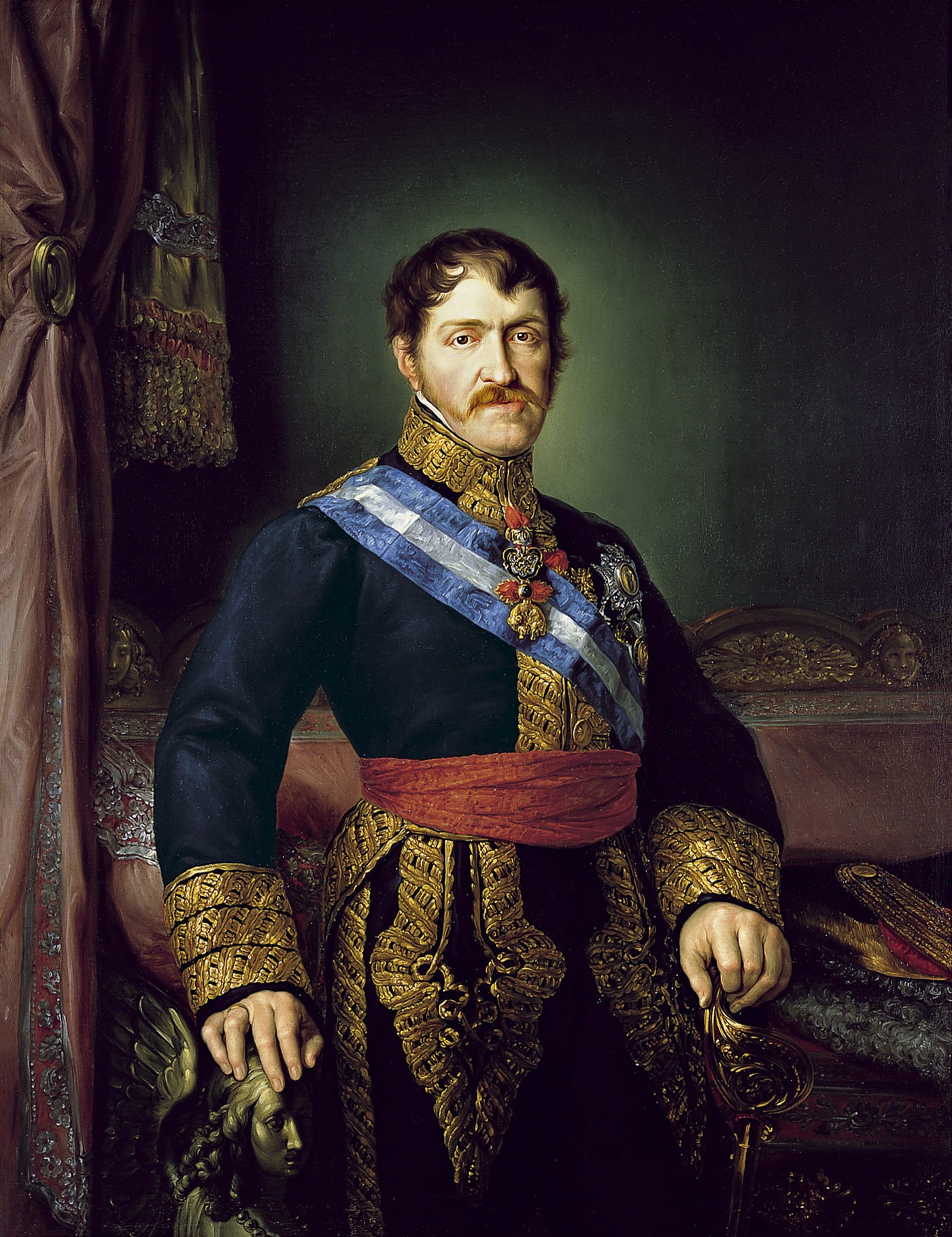
Infante Carlos María Isidro of Spain
Don Carlos María Isidro Benito de Borbón y Borbón-Parma (29 March 1788 – 10 March 1855) was an Infante of Spain and the second surviving son of King Charles IV of Spain and his wife, Maria Luisa of Parma. He claimed the throne of Spain after the death of his older brother King Ferdinand VII in 1833. His claim was contested by liberal forces loyal to the dead king's infant daughter, resulting in the First Carlist War (1833–1840). Don Carlos had support from the Basque provinces and much of Catalonia, but lost the war. His heirs continued the traditionalist cause, fought two more Carlist wars and were active into the mid-20th century, but never gained the throne.
Carlos was born on 29 March 1788 at the Palacio Real de Aranjuez in Aranjuez, in what is now the Community of Madrid. In 1808, Napoleon captured Madrid in the Battle of Somosierra and he induced Carlos's father, Charles IV, and Carlos's older brother, Ferdinand VII, to renounce their rights to the throne of Spain. But Carlos, who was heir presumptive to his brother, refused to renounce his rights to the throne, which he considered to have been given to him by God. From 1808 until 1814, he and his brothers were prisoners of Napoleon at the palace of Valençay in France.
In 1814, Carlos and the rest of the Spanish royal family returned to Madrid. In September 1816, he married his niece, Infanta Maria Francisca of Portugal (1800–1834), daughter of King John VI of Portugal and Carlos's sister Carlota Joaquina. Francisca was also sister of the second wife of Carlos's brother, Ferdinand VII. The couple had three sons:
Apart from several formal offices, Carlos took no significant part in the government of Spain. Ferdinand VII had found it necessary to cooperate with the moderate liberals and to sign a Constitution. Carlos, however, was known for his firm belief in the divine right of kings to govern absolutely, the rigid orthodoxy of his religious opinions, and his personal piety.
During the revolutionary troubles of 1820–1823 (the 'liberal triennium'), Carlos was threatened by the extreme radicals, but no attack was made on him. While there were certain conservatives in Spain who wanted to put Carlos on the throne immediately, Carlos himself was a firm believer in legitimate succession and would never have taken up arms against his brother.
In May 1830, Ferdinand VII published the Pragmatic Sanction, again allowing daughters to succeed to the Spanish throne as well as sons. This decree had originally been approved by the Cortes in 1786, but it had never been officially promulgated. On 10 October 1830, Ferdinand's wife gave birth to a daughter, Isabella, who thereupon displaced her uncle in the line of succession.
The clerical party (Spanish: apostólicos) continued to support the rights of Carlos to the throne. They considered the Pragmatic Sanction not only impractical but also illegal. They intrigued in favour of Carlos, but he himself would do no more than assert his rights in words. His wife and her sister, Maria Teresa (1793–1874), the former princess of Beira, on the other hand, were actively engaged in intrigues with the apostólicos.
In March 1833, Ferdinand "authorised" Carlos to go to Portugal with his wife and sister-in-law. The authorisation was in fact an order to remove Carlos and his adherents from Spain.
Hub AI
Infante Carlos María Isidro of Spain AI simulator
(@Infante Carlos María Isidro of Spain_simulator)
Infante Carlos María Isidro of Spain
Don Carlos María Isidro Benito de Borbón y Borbón-Parma (29 March 1788 – 10 March 1855) was an Infante of Spain and the second surviving son of King Charles IV of Spain and his wife, Maria Luisa of Parma. He claimed the throne of Spain after the death of his older brother King Ferdinand VII in 1833. His claim was contested by liberal forces loyal to the dead king's infant daughter, resulting in the First Carlist War (1833–1840). Don Carlos had support from the Basque provinces and much of Catalonia, but lost the war. His heirs continued the traditionalist cause, fought two more Carlist wars and were active into the mid-20th century, but never gained the throne.
Carlos was born on 29 March 1788 at the Palacio Real de Aranjuez in Aranjuez, in what is now the Community of Madrid. In 1808, Napoleon captured Madrid in the Battle of Somosierra and he induced Carlos's father, Charles IV, and Carlos's older brother, Ferdinand VII, to renounce their rights to the throne of Spain. But Carlos, who was heir presumptive to his brother, refused to renounce his rights to the throne, which he considered to have been given to him by God. From 1808 until 1814, he and his brothers were prisoners of Napoleon at the palace of Valençay in France.
In 1814, Carlos and the rest of the Spanish royal family returned to Madrid. In September 1816, he married his niece, Infanta Maria Francisca of Portugal (1800–1834), daughter of King John VI of Portugal and Carlos's sister Carlota Joaquina. Francisca was also sister of the second wife of Carlos's brother, Ferdinand VII. The couple had three sons:
Apart from several formal offices, Carlos took no significant part in the government of Spain. Ferdinand VII had found it necessary to cooperate with the moderate liberals and to sign a Constitution. Carlos, however, was known for his firm belief in the divine right of kings to govern absolutely, the rigid orthodoxy of his religious opinions, and his personal piety.
During the revolutionary troubles of 1820–1823 (the 'liberal triennium'), Carlos was threatened by the extreme radicals, but no attack was made on him. While there were certain conservatives in Spain who wanted to put Carlos on the throne immediately, Carlos himself was a firm believer in legitimate succession and would never have taken up arms against his brother.
In May 1830, Ferdinand VII published the Pragmatic Sanction, again allowing daughters to succeed to the Spanish throne as well as sons. This decree had originally been approved by the Cortes in 1786, but it had never been officially promulgated. On 10 October 1830, Ferdinand's wife gave birth to a daughter, Isabella, who thereupon displaced her uncle in the line of succession.
The clerical party (Spanish: apostólicos) continued to support the rights of Carlos to the throne. They considered the Pragmatic Sanction not only impractical but also illegal. They intrigued in favour of Carlos, but he himself would do no more than assert his rights in words. His wife and her sister, Maria Teresa (1793–1874), the former princess of Beira, on the other hand, were actively engaged in intrigues with the apostólicos.
In March 1833, Ferdinand "authorised" Carlos to go to Portugal with his wife and sister-in-law. The authorisation was in fact an order to remove Carlos and his adherents from Spain.