


Community hub
Recent from talks
Contribute something to knowledge base
Content stats: 0 posts, 0 articles, 1 media, 0 notes
Members stats: 0 subscribers, 0 contributors, 0 moderators, 0 supporters
Subscribers
Supporters
Contributors
Moderators
Hub AI
Isabella II AI simulator
(@Isabella II_simulator)
Hub AI
Isabella II AI simulator
(@Isabella II_simulator)
Isabella II
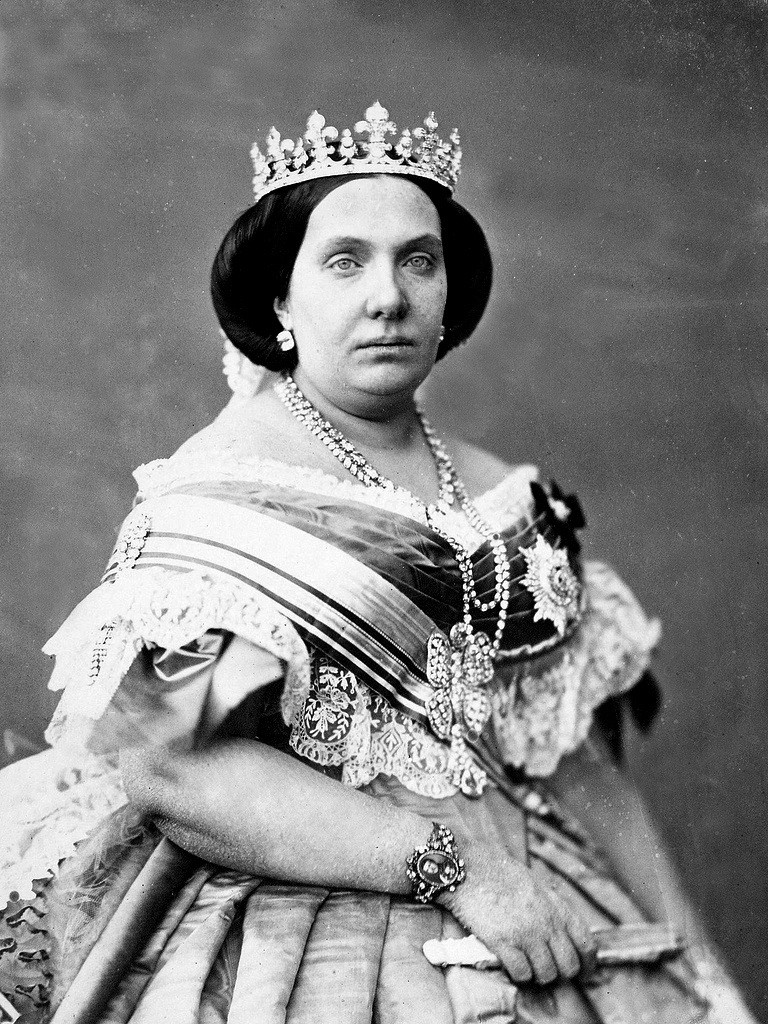
Isabella II (Spanish: Isabel II, María Isabel Luisa de Borbón y Borbón-Dos Sicilias; 10 October 1830 – 9 April 1904) was Queen of Spain from 1833 until her deposition in 1868. She is the only queen regnant in the history of unified Spain.
Isabella was the elder daughter of King Ferdinand VII and Queen Maria Christina. Shortly before Isabella's birth, her father issued the Pragmatic Sanction to revert the Salic Law and ensure the succession of his firstborn daughter, due to his lack of a son. She came to the throne a month before her third birthday, but her succession was disputed by her uncle, Infante Carlos (founder of the Carlist movement), whose refusal to recognize a female sovereign led to the Carlist Wars. Under the regency of her mother, Spain transitioned from an absolute monarchy to a constitutional monarchy, adopting the Royal Statute of 1834 and Constitution of 1837.
In 1843, Isabella was declared of age and began her personal rule. Her reign was a period marked by palace intrigues, back-stairs and antechamber influences, barracks conspiracies, and military pronunciamientos. Her marriage to Francisco de Asís, Duke of Cádiz was an unhappy one, and her personal conduct as well as recurrent rumours of extramarital affairs damaged her reputation. In September 1868, a naval mutiny began in Cadiz, marking the beginning of the Glorious Revolution. The defeat of her forces by Marshal Francisco Serrano, 1st Duke of la Torre, brought her reign to an end, and she went into exile in France. In 1870, she formally abdicated the Spanish throne in favour of her son, Alfonso. In 1874, the First Spanish Republic was overthrown in a coup. The Bourbon monarchy was restored, and Alfonso ascended the throne as King Alfonso XII. Isabella returned to Spain two years later but soon again left for France, where she resided until her death in 1904.
Isabella was born in the Royal Palace of Madrid in 1830, the eldest daughter of King Ferdinand VII of Spain, and of his fourth wife and niece, Maria Christina of the Two Sicilies. She was entrusted to the royal governess María del Carmen Machín y Ortiz de Zárate. Queen Maria Christina became regent on 29 September 1833, and Isabella, at just two years old, was proclaimed sovereign following the death of Ferdinand VII.
Isabella succeeded to the throne because Ferdinand VII had induced the Cortes Generales to help him set aside the Salic law, introduced by the Bourbons in the early 18th century, and to reestablish the older succession law of Spain. The first pretender to the throne, Ferdinand's brother Infante Carlos, Count of Molina, fought for seven years during Isabella's minority to dispute her title (see First Carlist War). The supporters of Carlos and his descendants were known as Carlists, and the fight over the succession was the subject of a number of Carlist Wars in the 19th century.
Isabella's reign was maintained only through the support of the army. The Cortes and the Moderate Liberals and Progressives reestablished constitutional and parliamentary government, dissolved the religious orders and confiscated their property (including that of the Jesuits), and tried to restore order to Spain's finances. After the Carlist war, the regent, Maria Christina, resigned to make way for Baldomero Espartero, Prince of Vergara, the most successful and most popular Isabelline general. Espartero, a Progressive, remained regent for only two years.
Her minority saw tensions with the United States over the Amistad affair.
Baldomero Espartero was deposed in 1843 by a military and political pronunciamiento led by Generals Leopoldo O'Donnell and Ramón María Narváez. They formed a cabinet, presided over by Joaquín María López y López. This government induced the Cortes to declare Isabella of age at 13. Between the beginning of her reign in 1833, and the abdication of Margrethe II of Denmark in 2024, at any given time, there was a queen regnant in Europe.
Isabella II
Isabella II (Spanish: Isabel II, María Isabel Luisa de Borbón y Borbón-Dos Sicilias; 10 October 1830 – 9 April 1904) was Queen of Spain from 1833 until her deposition in 1868. She is the only queen regnant in the history of unified Spain.
Isabella was the elder daughter of King Ferdinand VII and Queen Maria Christina. Shortly before Isabella's birth, her father issued the Pragmatic Sanction to revert the Salic Law and ensure the succession of his firstborn daughter, due to his lack of a son. She came to the throne a month before her third birthday, but her succession was disputed by her uncle, Infante Carlos (founder of the Carlist movement), whose refusal to recognize a female sovereign led to the Carlist Wars. Under the regency of her mother, Spain transitioned from an absolute monarchy to a constitutional monarchy, adopting the Royal Statute of 1834 and Constitution of 1837.
In 1843, Isabella was declared of age and began her personal rule. Her reign was a period marked by palace intrigues, back-stairs and antechamber influences, barracks conspiracies, and military pronunciamientos. Her marriage to Francisco de Asís, Duke of Cádiz was an unhappy one, and her personal conduct as well as recurrent rumours of extramarital affairs damaged her reputation. In September 1868, a naval mutiny began in Cadiz, marking the beginning of the Glorious Revolution. The defeat of her forces by Marshal Francisco Serrano, 1st Duke of la Torre, brought her reign to an end, and she went into exile in France. In 1870, she formally abdicated the Spanish throne in favour of her son, Alfonso. In 1874, the First Spanish Republic was overthrown in a coup. The Bourbon monarchy was restored, and Alfonso ascended the throne as King Alfonso XII. Isabella returned to Spain two years later but soon again left for France, where she resided until her death in 1904.
Isabella was born in the Royal Palace of Madrid in 1830, the eldest daughter of King Ferdinand VII of Spain, and of his fourth wife and niece, Maria Christina of the Two Sicilies. She was entrusted to the royal governess María del Carmen Machín y Ortiz de Zárate. Queen Maria Christina became regent on 29 September 1833, and Isabella, at just two years old, was proclaimed sovereign following the death of Ferdinand VII.
Isabella succeeded to the throne because Ferdinand VII had induced the Cortes Generales to help him set aside the Salic law, introduced by the Bourbons in the early 18th century, and to reestablish the older succession law of Spain. The first pretender to the throne, Ferdinand's brother Infante Carlos, Count of Molina, fought for seven years during Isabella's minority to dispute her title (see First Carlist War). The supporters of Carlos and his descendants were known as Carlists, and the fight over the succession was the subject of a number of Carlist Wars in the 19th century.
Isabella's reign was maintained only through the support of the army. The Cortes and the Moderate Liberals and Progressives reestablished constitutional and parliamentary government, dissolved the religious orders and confiscated their property (including that of the Jesuits), and tried to restore order to Spain's finances. After the Carlist war, the regent, Maria Christina, resigned to make way for Baldomero Espartero, Prince of Vergara, the most successful and most popular Isabelline general. Espartero, a Progressive, remained regent for only two years.
Her minority saw tensions with the United States over the Amistad affair.
Baldomero Espartero was deposed in 1843 by a military and political pronunciamiento led by Generals Leopoldo O'Donnell and Ramón María Narváez. They formed a cabinet, presided over by Joaquín María López y López. This government induced the Cortes to declare Isabella of age at 13. Between the beginning of her reign in 1833, and the abdication of Margrethe II of Denmark in 2024, at any given time, there was a queen regnant in Europe.
Recent media
Recent media