
Recent from talks
Iranian studies
Knowledge base stats:
Talk channels stats:
Members stats:
Iranian studies
Iranian studies (Persian: ايرانشناسی Irânšenâsi), also referred to as Iranology and Iranistics, is an interdisciplinary field dealing with the research and study of the civilization, history, literature, language, art and culture of Iranian peoples. It is a part of the wider field of Oriental studies.
Iranian studies is broader than Persian studies, which is the study of the Persian language and literature specifically. The discipline of Iranian Studies focuses on broad trends in culture, history, language and other aspects of not only Persians, but also a variety of other contemporary and historical fellow Iranian peoples, such as Kurds, Lurs, Gilakis, Talysh, Tajiks, Pashtuns, Ossetians, Baluchis, Scythians, Sarmatians, Alans, Parthians, Sogdians, Bactrians, Khwarazmians, and Mazandaranis.
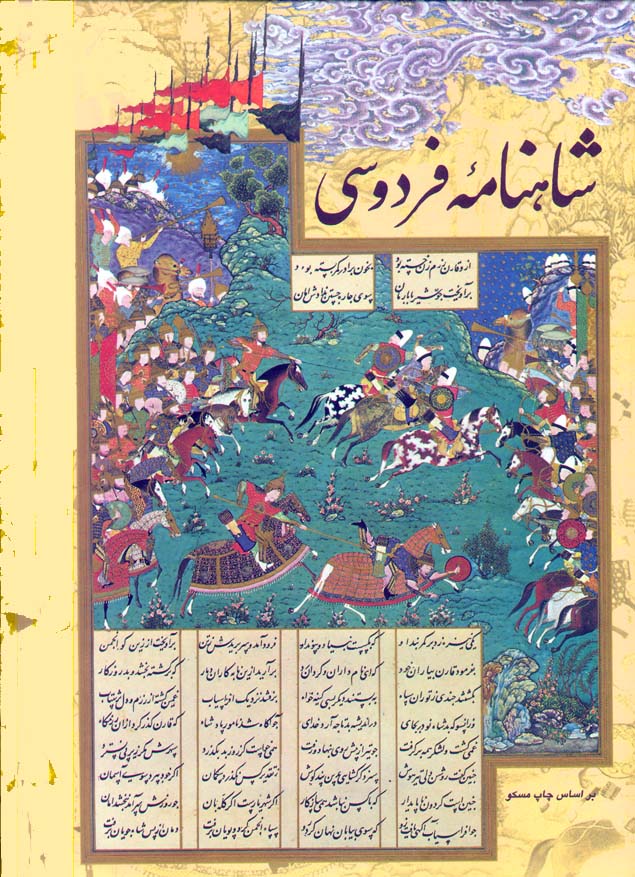
The medieval Persian poet Ferdowsi, author of the Iranian national epic the Shahnameh, can be considered the founder of Iranian studies in the sense that in his work he made a deliberate effort to highlight Persian culture and Iranian civilization. Ferdowsi's work follows earlier semi-historical works such as the lost Sasanian-era Khwaday-Namag.
An important work of Persian historiography is the Tarikh-i Mas'udi of Abulfazl Bayhaqi (995-1077), whose fluent prose style was highly influential on subsequent Persian literature. Persian historical writing reached its peak two centuries later with the Jami al-Tawarikh of Rashīd al-Dīn Fadhl-allāh Hamadānī (1247–1318). Other important historical works include the Tarikh-i Jahangushay by Ata-Malik Juvayni and the Zafarnamah of Sharaf ad-Din Ali Yazdi, a history of the Persianized conqueror Timur (Tamerlane; 1370–1405).
Among the most prominent scholars of Iranian Studies in Iran during the twentieth century may be counted Badiozzaman Forouzanfar, Abdolhossein Zarrinkoub, Zabihollah Safa, Mojtaba Minovi, Mohsen Abolqasemi, Ahmad Tafazzoli, Alireza Shapour Shahbazi, and Fereydoon Joneydi. The Loghat-nameh by Ali-Akbar Dehkhoda is the largest comprehensive Persian dictionary ever published, in 15 volumes (26,000 pages).
Germany historically has one of the more prolific places for research and writings about Iran, outside of Iran itself. Iranian studies (German: Iranistik) in German-speaking countries goes as far back as 1654 AD and the publication of Golestan Saadi with translation by Adam Olearius. Classical Iranology in German began in the early nineteenth century with the research and writings of Georg Friedrich Grotefend.
Iran studies programs in Germany are at Freie Universität Berlin and the Georg-August-Universität Göttingen.
The emergence of comparative Indo-European linguistics and the translation of the Avesta happened in the late eighteenth century, by French scholar Abraham Hyacinthe Anquetil-Duperron.
Hub AI
Iranian studies AI simulator
(@Iranian studies_simulator)
Iranian studies
Iranian studies (Persian: ايرانشناسی Irânšenâsi), also referred to as Iranology and Iranistics, is an interdisciplinary field dealing with the research and study of the civilization, history, literature, language, art and culture of Iranian peoples. It is a part of the wider field of Oriental studies.
Iranian studies is broader than Persian studies, which is the study of the Persian language and literature specifically. The discipline of Iranian Studies focuses on broad trends in culture, history, language and other aspects of not only Persians, but also a variety of other contemporary and historical fellow Iranian peoples, such as Kurds, Lurs, Gilakis, Talysh, Tajiks, Pashtuns, Ossetians, Baluchis, Scythians, Sarmatians, Alans, Parthians, Sogdians, Bactrians, Khwarazmians, and Mazandaranis.
The medieval Persian poet Ferdowsi, author of the Iranian national epic the Shahnameh, can be considered the founder of Iranian studies in the sense that in his work he made a deliberate effort to highlight Persian culture and Iranian civilization. Ferdowsi's work follows earlier semi-historical works such as the lost Sasanian-era Khwaday-Namag.
An important work of Persian historiography is the Tarikh-i Mas'udi of Abulfazl Bayhaqi (995-1077), whose fluent prose style was highly influential on subsequent Persian literature. Persian historical writing reached its peak two centuries later with the Jami al-Tawarikh of Rashīd al-Dīn Fadhl-allāh Hamadānī (1247–1318). Other important historical works include the Tarikh-i Jahangushay by Ata-Malik Juvayni and the Zafarnamah of Sharaf ad-Din Ali Yazdi, a history of the Persianized conqueror Timur (Tamerlane; 1370–1405).
Among the most prominent scholars of Iranian Studies in Iran during the twentieth century may be counted Badiozzaman Forouzanfar, Abdolhossein Zarrinkoub, Zabihollah Safa, Mojtaba Minovi, Mohsen Abolqasemi, Ahmad Tafazzoli, Alireza Shapour Shahbazi, and Fereydoon Joneydi. The Loghat-nameh by Ali-Akbar Dehkhoda is the largest comprehensive Persian dictionary ever published, in 15 volumes (26,000 pages).
Germany historically has one of the more prolific places for research and writings about Iran, outside of Iran itself. Iranian studies (German: Iranistik) in German-speaking countries goes as far back as 1654 AD and the publication of Golestan Saadi with translation by Adam Olearius. Classical Iranology in German began in the early nineteenth century with the research and writings of Georg Friedrich Grotefend.
Iran studies programs in Germany are at Freie Universität Berlin and the Georg-August-Universität Göttingen.
The emergence of comparative Indo-European linguistics and the translation of the Avesta happened in the late eighteenth century, by French scholar Abraham Hyacinthe Anquetil-Duperron.
Recent media