



Community hub
Recent from talks
Contribute something to knowledge base
Content stats: 0 posts, 0 articles, 1 media, 0 notes
Members stats: 0 subscribers, 0 contributors, 0 moderators, 0 supporters
Subscribers
Supporters
Contributors
Moderators
Hub AI
Timur AI simulator
(@Timur_simulator)
Hub AI
Timur AI simulator
(@Timur_simulator)
Timur
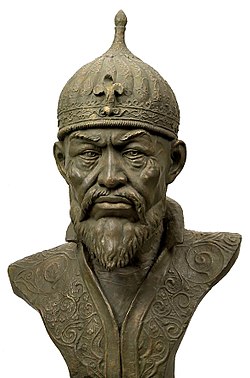
Timur (1320s – 17/18 February 1405), also known as Tamerlane, was a Turco-Mongol conqueror who founded the Timurid Empire in and around modern-day Afghanistan, Iran, and Central Asia, becoming the first ruler of the Timurid dynasty. An undefeated commander, he is widely regarded as one of the greatest military leaders and tacticians in history, as well as one of the most brutal and deadly. Timur is also considered a great patron of art and architecture, for he interacted with intellectuals such as Ibn Khaldun, Hafez, and Hafiz-i Abru and his reign introduced the Timurid Renaissance.
Born into the Turkicized Mongol confederation of the Barlas in Transoxiana (in modern-day Uzbekistan) in the 1320s, Timur gained control of the western Chagatai Khanate by 1370. From that base he led military campaigns across Western, South, and Central Asia, the Caucasus, and Southern Russia, defeating in the process the Khans of the Golden Horde, the Mamluks of Egypt and Syria, the emerging Ottoman Empire, as well as the late Delhi Sultanate of India, becoming the most powerful ruler in the Muslim world. From these conquests he founded the Timurid Empire, which fragmented shortly after his death. He spoke several languages, including Chagatai, an ancestor of modern Uzbek, as well as Mongolic and Persian, in which he wrote diplomatic correspondence.
Timur was the last of the major nomadic conquerors of the Eurasian Steppe, and his empire set the stage for the rise of the more structured and lasting Islamic gunpowder empires in the 16th and 17th centuries. Timur was of Turkified-Mongol descent, and, while probably not a direct descendant on either side, he shared a common ancestor with Genghis Khan on his father's side, though some authors have suggested his mother may have been a descendant of the Khan. He clearly sought to invoke the legacy of Genghis Khan's conquests during his lifetime. Timur envisioned the restoration of the Mongol Empire and according to Gérard Chaliand, saw himself as Genghis Khan's heir.
To legitimize his conquests, Timur relied on Islamic symbols and language, referring to himself as the "Sword of Islam". He was a patron of educational and religious institutions. He styled himself as a ghazi in the last years of his life. By the end of his reign, Timur had gained complete control over all the remnants of the Chagatai Khanate, the Ilkhanate, and the Golden Horde, and had even attempted to restore the Yuan dynasty in China. Timur's armies were inclusively multi-ethnic and were feared throughout Asia, Africa, and Europe, sizable parts of which his campaigns laid waste. Scholars estimate that his military campaigns caused the deaths of millions of people. Of all the areas he conquered, Khwarazm suffered the most from his expeditions, as it rose several times against him. Timur's campaigns have been characterized as genocidal.
He was the grandfather of the Timurid sultan, astronomer and mathematician Ulugh Beg, who ruled Central Asia from 1411 to 1449, and the great-great-great-grandfather of Babur (1483–1530), founder of the Mughal Empire.
Through his father, Timur claimed to be a descendant of Tumbinai Khan, a male-line ancestor he shared with Genghis Khan. Tumanay's great-great-grandson Qarachar Noyan was a minister for the emperor who later assisted the latter's son Chagatai in the governorship of Transoxiana. Though there are not many mentions of Qarachar in 13th and 14th century records, later Timurid sources greatly emphasized his role in the early history of the Mongol Empire. These histories also state that Genghis Khan later established the "bond of fatherhood and sonship" by marrying Chagatai's daughter to Qarachar. Through his alleged descent from this marriage, Timur claimed kinship with the Chagatai Khans.
The origins of Timur's mother, Tekina Khatun, are less clear. The Zafarnama merely states her name without giving any information regarding her background. Writing in 1403, John III, Archbishop of Sultaniyya, claimed that she was of lowly origin. The Mu'izz al-Ansab, written decades later, says that she was related to the Yasa'uri tribe, whose lands bordered that of the Barlas. Ibn Khaldun recounted that Timur himself described to him his mother's descent from the legendary Persian hero Manuchehr. Ibn Arabshah suggested that she was a descendant of Genghis Khan. The 18th century Books of Timur identify her as the daughter of 'Sadr al-Sharia', which is believed to refer to the Hanafi scholar Ubayd Allah al-Mahbubi of Bukhara.
Timur was born in Transoxiana near the city of Kesh (modern Shahrisabz, Uzbekistan), some 80 kilometres (50 mi) south of Samarkand, part of what was then the Chagatai Khanate.[citation needed] His name Temur means "Iron" in the Chagatai language, his mother-tongue (cf. Uzbek Temir, Turkish Demir). It is cognate with Genghis Khan's birth name of Temüjin. Later Timurid dynastic histories claim that Timur was born on 8 April 1336, but most sources from his lifetime give ages that are consistent with a birthdate in the late 1320s. Multiple scholars suspect the 1336 date was designed to tie Timur to the legacy of Abu Sa'id Bahadur Khan, the last ruler of the Ilkhanate descended from Hulagu Khan, who died in that year.
Timur
Timur (1320s – 17/18 February 1405), also known as Tamerlane, was a Turco-Mongol conqueror who founded the Timurid Empire in and around modern-day Afghanistan, Iran, and Central Asia, becoming the first ruler of the Timurid dynasty. An undefeated commander, he is widely regarded as one of the greatest military leaders and tacticians in history, as well as one of the most brutal and deadly. Timur is also considered a great patron of art and architecture, for he interacted with intellectuals such as Ibn Khaldun, Hafez, and Hafiz-i Abru and his reign introduced the Timurid Renaissance.
Born into the Turkicized Mongol confederation of the Barlas in Transoxiana (in modern-day Uzbekistan) in the 1320s, Timur gained control of the western Chagatai Khanate by 1370. From that base he led military campaigns across Western, South, and Central Asia, the Caucasus, and Southern Russia, defeating in the process the Khans of the Golden Horde, the Mamluks of Egypt and Syria, the emerging Ottoman Empire, as well as the late Delhi Sultanate of India, becoming the most powerful ruler in the Muslim world. From these conquests he founded the Timurid Empire, which fragmented shortly after his death. He spoke several languages, including Chagatai, an ancestor of modern Uzbek, as well as Mongolic and Persian, in which he wrote diplomatic correspondence.
Timur was the last of the major nomadic conquerors of the Eurasian Steppe, and his empire set the stage for the rise of the more structured and lasting Islamic gunpowder empires in the 16th and 17th centuries. Timur was of Turkified-Mongol descent, and, while probably not a direct descendant on either side, he shared a common ancestor with Genghis Khan on his father's side, though some authors have suggested his mother may have been a descendant of the Khan. He clearly sought to invoke the legacy of Genghis Khan's conquests during his lifetime. Timur envisioned the restoration of the Mongol Empire and according to Gérard Chaliand, saw himself as Genghis Khan's heir.
To legitimize his conquests, Timur relied on Islamic symbols and language, referring to himself as the "Sword of Islam". He was a patron of educational and religious institutions. He styled himself as a ghazi in the last years of his life. By the end of his reign, Timur had gained complete control over all the remnants of the Chagatai Khanate, the Ilkhanate, and the Golden Horde, and had even attempted to restore the Yuan dynasty in China. Timur's armies were inclusively multi-ethnic and were feared throughout Asia, Africa, and Europe, sizable parts of which his campaigns laid waste. Scholars estimate that his military campaigns caused the deaths of millions of people. Of all the areas he conquered, Khwarazm suffered the most from his expeditions, as it rose several times against him. Timur's campaigns have been characterized as genocidal.
He was the grandfather of the Timurid sultan, astronomer and mathematician Ulugh Beg, who ruled Central Asia from 1411 to 1449, and the great-great-great-grandfather of Babur (1483–1530), founder of the Mughal Empire.
Through his father, Timur claimed to be a descendant of Tumbinai Khan, a male-line ancestor he shared with Genghis Khan. Tumanay's great-great-grandson Qarachar Noyan was a minister for the emperor who later assisted the latter's son Chagatai in the governorship of Transoxiana. Though there are not many mentions of Qarachar in 13th and 14th century records, later Timurid sources greatly emphasized his role in the early history of the Mongol Empire. These histories also state that Genghis Khan later established the "bond of fatherhood and sonship" by marrying Chagatai's daughter to Qarachar. Through his alleged descent from this marriage, Timur claimed kinship with the Chagatai Khans.
The origins of Timur's mother, Tekina Khatun, are less clear. The Zafarnama merely states her name without giving any information regarding her background. Writing in 1403, John III, Archbishop of Sultaniyya, claimed that she was of lowly origin. The Mu'izz al-Ansab, written decades later, says that she was related to the Yasa'uri tribe, whose lands bordered that of the Barlas. Ibn Khaldun recounted that Timur himself described to him his mother's descent from the legendary Persian hero Manuchehr. Ibn Arabshah suggested that she was a descendant of Genghis Khan. The 18th century Books of Timur identify her as the daughter of 'Sadr al-Sharia', which is believed to refer to the Hanafi scholar Ubayd Allah al-Mahbubi of Bukhara.
Timur was born in Transoxiana near the city of Kesh (modern Shahrisabz, Uzbekistan), some 80 kilometres (50 mi) south of Samarkand, part of what was then the Chagatai Khanate.[citation needed] His name Temur means "Iron" in the Chagatai language, his mother-tongue (cf. Uzbek Temir, Turkish Demir). It is cognate with Genghis Khan's birth name of Temüjin. Later Timurid dynastic histories claim that Timur was born on 8 April 1336, but most sources from his lifetime give ages that are consistent with a birthdate in the late 1320s. Multiple scholars suspect the 1336 date was designed to tie Timur to the legacy of Abu Sa'id Bahadur Khan, the last ruler of the Ilkhanate descended from Hulagu Khan, who died in that year.
Recent media
Recent media