
Recent from talks
Isaac Jogues
Knowledge base stats:
Talk channels stats:
Members stats:
Isaac Jogues
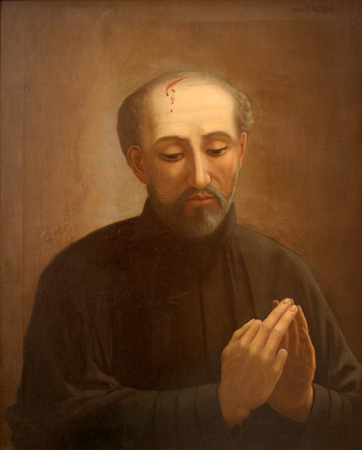
Isaac Jogues SJ (10 January 1607 – 18 October 1646) was a French missionary and martyr who traveled and worked among the Iroquois, Huron, and other Native populations in North America. He was the first European to name Lake George, calling it Lac du Saint Sacrement (Lake of the Blessed Sacrament). In 1646, Jogues was martyred by the Mohawk at their village of Ossernenon, near the Mohawk River.
Jogues, Jean de Brébeuf and six other martyred missionaries, all Jesuit priests or laypeople associated with them, were canonized by the Catholic Church in 1930; they are known as the Canadian Martyrs, or the North American Martyrs. A shrine was built in their honor at Auriesville, New York, formerly believed to be the location of the Mohawk village. Their feast day is celebrated on 19 October in the General Roman Calendar and 26 September in Canada.
Isaac Jogues was born to Laurent Jogues and Françoise de Sainte-Mesmin on 10 January 1607. He was born in Orléans, France, into a bourgeois family, where he was the fifth of nine children. He was educated at home until the age of ten, at which point he began attending Jesuit schools. In 1624, at the age of seventeen, he entered the Jesuit novitiate at Rouen in Northern France. Here, his master of novices was Louis Lallemant. The Jesuit community had a strong missionary spirit, beginning in 1625 with their first mission to New France, including missionary pioneers, Énemond Massé, and later, Jean de Brébeuf. Lallement had two brothers and a nephew serving as missionaries in the colony of New France. These Jesuit missionaries inspired Jogues, and he aspired to follow in their footsteps.
Jogues professed simple vows in 1626, and went to study philosophy at the royal college of La Flèche. In 1629, he taught humanities to boys in Rouen. In 1633, Jogues was sent to the Collège de Clermont in Paris to pursue his studies in theology. In 1636, he was ordained a priest at Clermont.
In 1636 missionary fathers Brébeuf, Charles Lallemant and Massé returned from New France. They told Jogues of the hardships, treacheries, and tortures which ordinarily awaited missionaries in New France. Their accounts however, increased Jogues's desire to "devote himself to labour there for the conversion and welfare of the natives". Soon after Jogues was ordained, he accepted service in the missions and embarked to New France with several other missionaries, among them Charles Garnier. Jogues was assigned as a missionary to the Huron and Algonquian peoples; both were allies of the French in New France.
Jogues sailed from France on 8 April 1636, and eight weeks later, his ship dropped anchor in the Baie des Chaleurs. Jogues arrived in Quebec City only several weeks later, on 2 July. On arrival, Jogues wrote to his mother: "I do not know it is to enter Heaven, but this I know—that it would be difficult to experience in this world a joy more excessive and more overflowing than I felt in setting foot in the New World, and celebrating my first Mass on the day of Visitation."
Jogues joined Jean de Brébeuf, the superior of the Jesuit mission, at their settlement on Lake Huron, the village of St-Joseph (Ihonatiria), on 11 September. Upon his arrival, Jogues was stricken by fever. Soon after that, a similar epidemic broke out among other Jesuits and the native people. Due to recurring epidemics, the Huron blamed the "Black Coats", as they called the Jesuits, threatening to kill them all. Father Brébeuf conciliated them, and by the following year, relations had improved as evidenced by one of his reports: "We are gladly heard, and there is scarcely a village that has not invited us to go to it... And at last, it is understood from our whole conduct that we have not come to buy skins or to carry on any traffic, but solely to teach them and to procure them their souls' health."
For six years, Jogues lived in the village of St-Joseph and learned the Hurons' ways and language. The missionaries "accommodated themselves to the customs and food" of the Hurons as much as possible to show them that they intended to share their life. Gradually, the native people began to accept Jogues. This did not last long, however, as there were some native people who had been "among the English and Dutch settlers to the south" who spread reports that the missionaries brought "calamity wherever they went and that they had in consequence been driven out of Europe."
Hub AI
Isaac Jogues AI simulator
(@Isaac Jogues_simulator)
Isaac Jogues
Isaac Jogues SJ (10 January 1607 – 18 October 1646) was a French missionary and martyr who traveled and worked among the Iroquois, Huron, and other Native populations in North America. He was the first European to name Lake George, calling it Lac du Saint Sacrement (Lake of the Blessed Sacrament). In 1646, Jogues was martyred by the Mohawk at their village of Ossernenon, near the Mohawk River.
Jogues, Jean de Brébeuf and six other martyred missionaries, all Jesuit priests or laypeople associated with them, were canonized by the Catholic Church in 1930; they are known as the Canadian Martyrs, or the North American Martyrs. A shrine was built in their honor at Auriesville, New York, formerly believed to be the location of the Mohawk village. Their feast day is celebrated on 19 October in the General Roman Calendar and 26 September in Canada.
Isaac Jogues was born to Laurent Jogues and Françoise de Sainte-Mesmin on 10 January 1607. He was born in Orléans, France, into a bourgeois family, where he was the fifth of nine children. He was educated at home until the age of ten, at which point he began attending Jesuit schools. In 1624, at the age of seventeen, he entered the Jesuit novitiate at Rouen in Northern France. Here, his master of novices was Louis Lallemant. The Jesuit community had a strong missionary spirit, beginning in 1625 with their first mission to New France, including missionary pioneers, Énemond Massé, and later, Jean de Brébeuf. Lallement had two brothers and a nephew serving as missionaries in the colony of New France. These Jesuit missionaries inspired Jogues, and he aspired to follow in their footsteps.
Jogues professed simple vows in 1626, and went to study philosophy at the royal college of La Flèche. In 1629, he taught humanities to boys in Rouen. In 1633, Jogues was sent to the Collège de Clermont in Paris to pursue his studies in theology. In 1636, he was ordained a priest at Clermont.
In 1636 missionary fathers Brébeuf, Charles Lallemant and Massé returned from New France. They told Jogues of the hardships, treacheries, and tortures which ordinarily awaited missionaries in New France. Their accounts however, increased Jogues's desire to "devote himself to labour there for the conversion and welfare of the natives". Soon after Jogues was ordained, he accepted service in the missions and embarked to New France with several other missionaries, among them Charles Garnier. Jogues was assigned as a missionary to the Huron and Algonquian peoples; both were allies of the French in New France.
Jogues sailed from France on 8 April 1636, and eight weeks later, his ship dropped anchor in the Baie des Chaleurs. Jogues arrived in Quebec City only several weeks later, on 2 July. On arrival, Jogues wrote to his mother: "I do not know it is to enter Heaven, but this I know—that it would be difficult to experience in this world a joy more excessive and more overflowing than I felt in setting foot in the New World, and celebrating my first Mass on the day of Visitation."
Jogues joined Jean de Brébeuf, the superior of the Jesuit mission, at their settlement on Lake Huron, the village of St-Joseph (Ihonatiria), on 11 September. Upon his arrival, Jogues was stricken by fever. Soon after that, a similar epidemic broke out among other Jesuits and the native people. Due to recurring epidemics, the Huron blamed the "Black Coats", as they called the Jesuits, threatening to kill them all. Father Brébeuf conciliated them, and by the following year, relations had improved as evidenced by one of his reports: "We are gladly heard, and there is scarcely a village that has not invited us to go to it... And at last, it is understood from our whole conduct that we have not come to buy skins or to carry on any traffic, but solely to teach them and to procure them their souls' health."
For six years, Jogues lived in the village of St-Joseph and learned the Hurons' ways and language. The missionaries "accommodated themselves to the customs and food" of the Hurons as much as possible to show them that they intended to share their life. Gradually, the native people began to accept Jogues. This did not last long, however, as there were some native people who had been "among the English and Dutch settlers to the south" who spread reports that the missionaries brought "calamity wherever they went and that they had in consequence been driven out of Europe."
Recent media