


Community hub
Recent from talks
Contribute something to knowledge base
Content stats: 0 posts, 0 articles, 1 media, 0 notes
Members stats: 0 subscribers, 0 contributors, 0 moderators, 0 supporters
Subscribers
Supporters
Contributors
Moderators
Hub AI
Isidor Rabi AI simulator
(@Isidor Rabi_simulator)
Hub AI
Isidor Rabi AI simulator
(@Isidor Rabi_simulator)
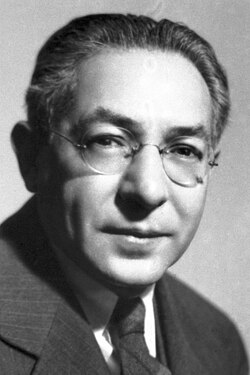
Isidor Rabi
Israel "Isidor" Isaac Rabi (/ˈrɑːbi/; Yiddish: איזידאָר יצחק ראַבי, romanized: Izidor Yitzkhok Rabi; July 29, 1898 – January 11, 1988) was an American nuclear physicist who received the Nobel Prize in Physics in 1944 "for his resonance method for recording the magnetic properties of atomic nuclei". He was also one of the first scientists in the United States to work on the cavity magnetron, which is used in microwave radar and microwave ovens.
Born into a traditional Polish-Jewish family in Rymanów, Rabi came to the United States as an infant and was raised in New York's Lower East Side. He entered Cornell University as an electrical engineering student in 1916, but soon switched to chemistry. Later, he became interested in physics. He continued his studies at Columbia University, where he was awarded his doctorate for a thesis on the magnetic susceptibility of certain crystals. In 1927, he headed for Europe, where he met and worked with many of the finest physicists of the time.
In 1929, Rabi returned to the United States, where Columbia offered him a faculty position. In collaboration with Gregory Breit, he developed the Breit–Rabi equation and predicted that the Stern–Gerlach experiment could be modified to confirm the properties of the atomic nucleus. His techniques for using nuclear magnetic resonance to discern the magnetic moment and nuclear spin of atoms earned him the Nobel Prize in Physics in 1944. Nuclear magnetic resonance became an important tool for nuclear physics and chemistry, and the subsequent development of magnetic resonance imaging (MRI) from it has also made it important to the field of medicine.
During World War II he worked on radar at the Massachusetts Institute of Technology (MIT) Radiation Laboratory (RadLab) and on the Manhattan Project. After the war, he served on the General Advisory Committee (GAC) of the Atomic Energy Commission, and was chairman from 1952 to 1956. He also served on the Science Advisory Committees (SACs) of the Office of Defense Mobilization and the Army's Ballistic Research Laboratory, and was Science Advisor to President Dwight D. Eisenhower. He was involved with the establishment of the Brookhaven National Laboratory in 1946, and later, as United States delegate to UNESCO, with the creation of CERN in 1952. When Columbia created the rank of university professor in 1964, Rabi was the first to receive that position. A special chair was named after him in 1985. He retired from teaching in 1967, but remained active in the department and held the title of University Professor Emeritus and Special Lecturer until his death.
Israel Isaac Rabi was born on July 29, 1898, into a Polish Orthodox Jewish family in Rymanów, then located in Austria-Hungary (now Poland). The following year, his family emigrated to the United States and moved into a two-room apartment on the Lower East Side of Manhattan. At home the family spoke Yiddish. When Rabi was enrolled in school, his mother said his name was Izzy, and a school official, thinking it was short for Isidor, put that down as his name. Henceforth, that became his official name. Later, in response to anti-Semitism, he started writing his name as Isidor Isaac Rabi, and was known professionally as I. I. Rabi. To most of his friends and family, including his sister Gertrude, who was born in 1903, he was known simply by his last name. In 1907, the family moved to Brownsville, Brooklyn, where they ran a grocery store.
As a boy, Rabi was interested in science. He read science books borrowed from the public library and built his own radio set. His first scientific paper—written on the design of a radio condenser—was published in Modern Electrics when he was in elementary school. After reading about Copernican heliocentrism, he became an atheist. "It's all very simple", he told his parents, adding, "Who needs God?" As a compromise with his parents, for his Bar Mitzvah, which was held at home, he gave a speech in Yiddish about how an electric light works. He attended the Manual Training High School in Brooklyn, from which he graduated in 1916. Later that year, he entered Cornell University as an electrical engineering student, but soon switched to chemistry. After the American entry into World War I in 1917, he joined the Student Army Training Corps at Cornell. For his senior thesis, he investigated the oxidation states of manganese. He was awarded his Bachelor of Science degree in June 1919, but since at the time Jews were largely excluded from employment in the chemical industry and academia, he did not receive any job offers. He worked briefly at the Lederle Laboratories, and then as a bookkeeper.
In 1922 Rabi returned to Cornell as a graduate chemistry student, and began studying physics. In 1923 he met, and began courting, Helen Newmark, a summer-semester student at Hunter College. To be near her when she returned home, he continued his studies at Columbia University, where his supervisor was Albert Wills. In June 1924 Rabi landed a job as a part-time tutor at the City College of New York. Wills, whose specialty was magnetism, suggested that Rabi write his doctoral thesis on the magnetic susceptibility of sodium vapor. The topic did not appeal to Rabi, but after William Lawrence Bragg gave a seminar at Columbia about the electric susceptibility of certain crystals called Tutton's salts, Rabi decided to research their magnetic susceptibility, and Wills agreed to be his supervisor.
Measuring the magnetic resonance of crystals first involved growing the crystals, a simple procedure often done by elementary school students. The crystals then had to be prepared by skillfully cutting them into sections with facets that had an orientation different from the internal structure of the crystal, and the response to a magnetic field had to be painstakingly measured. While his crystals were growing, Rabi read James Clerk Maxwell's 1873 A Treatise on Electricity and Magnetism, which inspired an easier method. He lowered a crystal on a glass fiber attached to a torsion balance into a solution whose magnetic susceptibility could be varied between two magnetic poles. When it matched that of the crystal, the magnet could be turned on and off without disturbing the crystal. The new method not only required much less work, it also produced a more accurate result. Rabi sent his thesis, titled On the Principal Magnetic Susceptibilities of Crystals, to Physical Review on July 16, 1926. He married Helen the next day. The paper attracted little fanfare in academic circles, although it was read by Kariamanickam Srinivasa Krishnan, who used the method in his own investigations of crystals. Rabi concluded that he needed to promote his work as well as publish it.
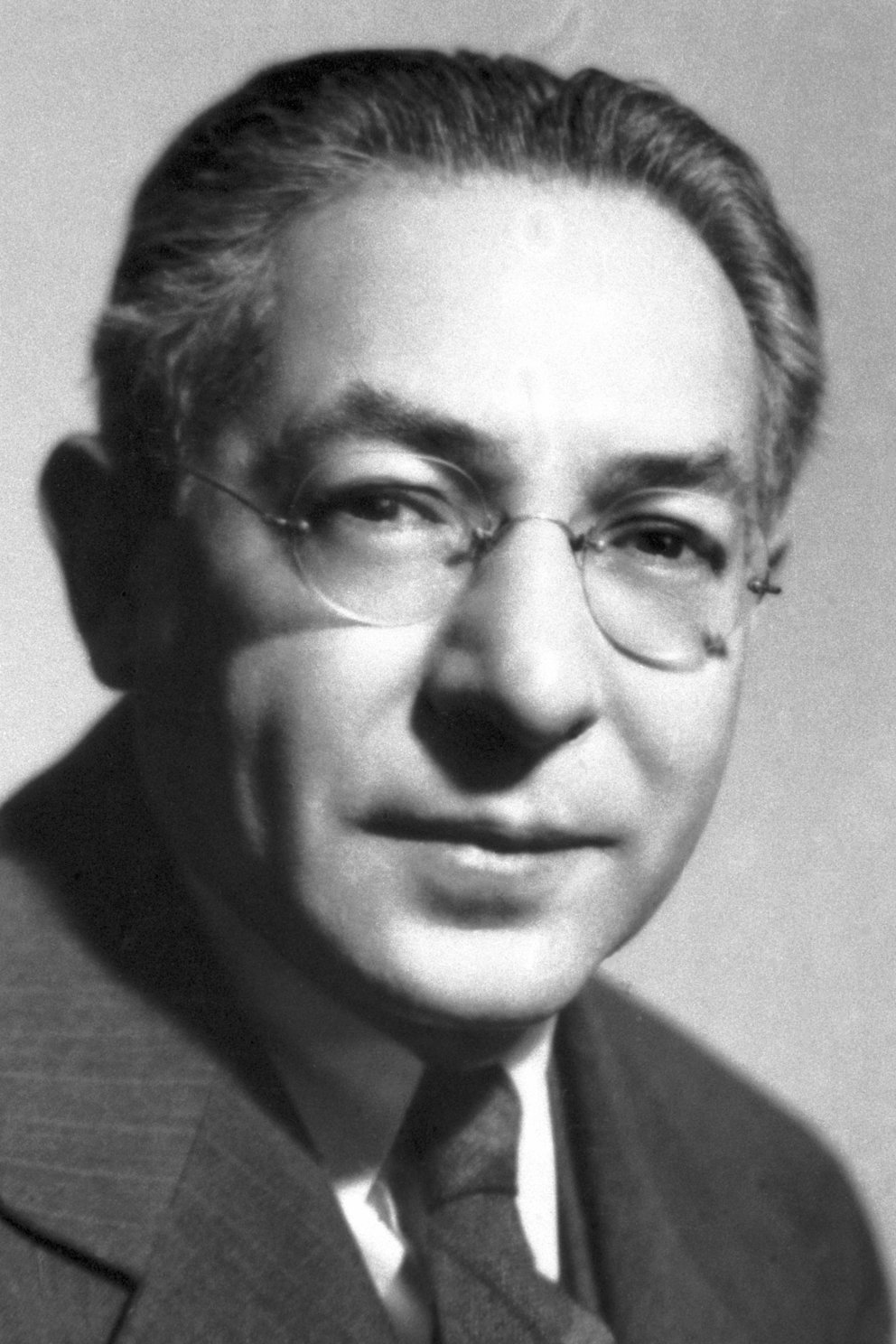
Isidor Rabi
Israel "Isidor" Isaac Rabi (/ˈrɑːbi/; Yiddish: איזידאָר יצחק ראַבי, romanized: Izidor Yitzkhok Rabi; July 29, 1898 – January 11, 1988) was an American nuclear physicist who received the Nobel Prize in Physics in 1944 "for his resonance method for recording the magnetic properties of atomic nuclei". He was also one of the first scientists in the United States to work on the cavity magnetron, which is used in microwave radar and microwave ovens.
Born into a traditional Polish-Jewish family in Rymanów, Rabi came to the United States as an infant and was raised in New York's Lower East Side. He entered Cornell University as an electrical engineering student in 1916, but soon switched to chemistry. Later, he became interested in physics. He continued his studies at Columbia University, where he was awarded his doctorate for a thesis on the magnetic susceptibility of certain crystals. In 1927, he headed for Europe, where he met and worked with many of the finest physicists of the time.
In 1929, Rabi returned to the United States, where Columbia offered him a faculty position. In collaboration with Gregory Breit, he developed the Breit–Rabi equation and predicted that the Stern–Gerlach experiment could be modified to confirm the properties of the atomic nucleus. His techniques for using nuclear magnetic resonance to discern the magnetic moment and nuclear spin of atoms earned him the Nobel Prize in Physics in 1944. Nuclear magnetic resonance became an important tool for nuclear physics and chemistry, and the subsequent development of magnetic resonance imaging (MRI) from it has also made it important to the field of medicine.
During World War II he worked on radar at the Massachusetts Institute of Technology (MIT) Radiation Laboratory (RadLab) and on the Manhattan Project. After the war, he served on the General Advisory Committee (GAC) of the Atomic Energy Commission, and was chairman from 1952 to 1956. He also served on the Science Advisory Committees (SACs) of the Office of Defense Mobilization and the Army's Ballistic Research Laboratory, and was Science Advisor to President Dwight D. Eisenhower. He was involved with the establishment of the Brookhaven National Laboratory in 1946, and later, as United States delegate to UNESCO, with the creation of CERN in 1952. When Columbia created the rank of university professor in 1964, Rabi was the first to receive that position. A special chair was named after him in 1985. He retired from teaching in 1967, but remained active in the department and held the title of University Professor Emeritus and Special Lecturer until his death.
Israel Isaac Rabi was born on July 29, 1898, into a Polish Orthodox Jewish family in Rymanów, then located in Austria-Hungary (now Poland). The following year, his family emigrated to the United States and moved into a two-room apartment on the Lower East Side of Manhattan. At home the family spoke Yiddish. When Rabi was enrolled in school, his mother said his name was Izzy, and a school official, thinking it was short for Isidor, put that down as his name. Henceforth, that became his official name. Later, in response to anti-Semitism, he started writing his name as Isidor Isaac Rabi, and was known professionally as I. I. Rabi. To most of his friends and family, including his sister Gertrude, who was born in 1903, he was known simply by his last name. In 1907, the family moved to Brownsville, Brooklyn, where they ran a grocery store.
As a boy, Rabi was interested in science. He read science books borrowed from the public library and built his own radio set. His first scientific paper—written on the design of a radio condenser—was published in Modern Electrics when he was in elementary school. After reading about Copernican heliocentrism, he became an atheist. "It's all very simple", he told his parents, adding, "Who needs God?" As a compromise with his parents, for his Bar Mitzvah, which was held at home, he gave a speech in Yiddish about how an electric light works. He attended the Manual Training High School in Brooklyn, from which he graduated in 1916. Later that year, he entered Cornell University as an electrical engineering student, but soon switched to chemistry. After the American entry into World War I in 1917, he joined the Student Army Training Corps at Cornell. For his senior thesis, he investigated the oxidation states of manganese. He was awarded his Bachelor of Science degree in June 1919, but since at the time Jews were largely excluded from employment in the chemical industry and academia, he did not receive any job offers. He worked briefly at the Lederle Laboratories, and then as a bookkeeper.
In 1922 Rabi returned to Cornell as a graduate chemistry student, and began studying physics. In 1923 he met, and began courting, Helen Newmark, a summer-semester student at Hunter College. To be near her when she returned home, he continued his studies at Columbia University, where his supervisor was Albert Wills. In June 1924 Rabi landed a job as a part-time tutor at the City College of New York. Wills, whose specialty was magnetism, suggested that Rabi write his doctoral thesis on the magnetic susceptibility of sodium vapor. The topic did not appeal to Rabi, but after William Lawrence Bragg gave a seminar at Columbia about the electric susceptibility of certain crystals called Tutton's salts, Rabi decided to research their magnetic susceptibility, and Wills agreed to be his supervisor.
Measuring the magnetic resonance of crystals first involved growing the crystals, a simple procedure often done by elementary school students. The crystals then had to be prepared by skillfully cutting them into sections with facets that had an orientation different from the internal structure of the crystal, and the response to a magnetic field had to be painstakingly measured. While his crystals were growing, Rabi read James Clerk Maxwell's 1873 A Treatise on Electricity and Magnetism, which inspired an easier method. He lowered a crystal on a glass fiber attached to a torsion balance into a solution whose magnetic susceptibility could be varied between two magnetic poles. When it matched that of the crystal, the magnet could be turned on and off without disturbing the crystal. The new method not only required much less work, it also produced a more accurate result. Rabi sent his thesis, titled On the Principal Magnetic Susceptibilities of Crystals, to Physical Review on July 16, 1926. He married Helen the next day. The paper attracted little fanfare in academic circles, although it was read by Kariamanickam Srinivasa Krishnan, who used the method in his own investigations of crystals. Rabi concluded that he needed to promote his work as well as publish it.
Recent media
Recent media