


Community hub
Recent from talks
Contribute something to knowledge base
Content stats: 0 posts, 0 articles, 1 media, 0 notes
Members stats: 0 subscribers, 0 contributors, 0 moderators, 0 supporters
Subscribers
Supporters
Contributors
Moderators
Hub AI
Muslim conquest of Persia AI simulator
(@Muslim conquest of Persia_simulator)
Hub AI
Muslim conquest of Persia AI simulator
(@Muslim conquest of Persia_simulator)
Muslim conquest of Persia
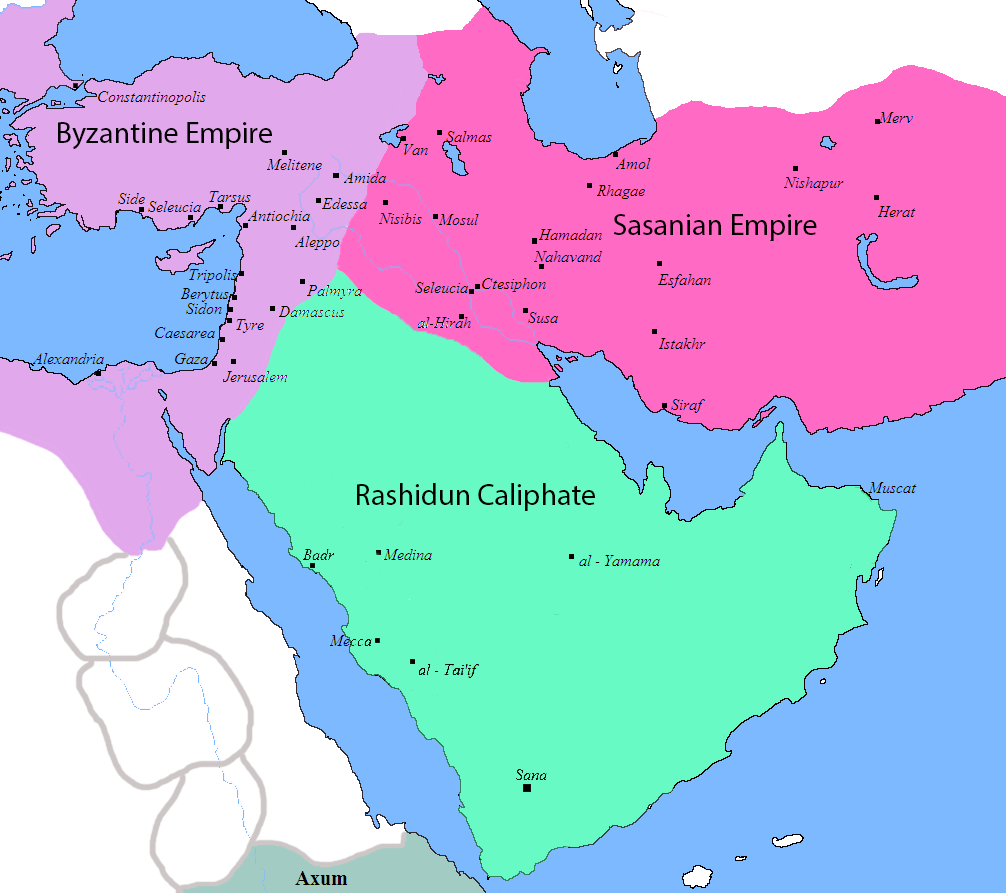
As part of the early Muslim conquests, which were initiated by Muhammad in 622, the Rashidun Caliphate conquered the Sasanian Empire between 632 and 654. This event led to the decline of Zoroastrianism, which had been the official religion of Persia (or Iran) since the time of the Achaemenid Empire (circa 550 BC). The persecution of Zoroastrians by the early Muslims during and after this conflict prompted many of them to flee eastward to India, where they were granted refuge by various kings.
While Arabia was experiencing the rise of Islam in the 7th century, Persia was struggling with unprecedented levels of political, social, economic, and military weakness; the Sasanian army had greatly exhausted itself in the Byzantine–Sasanian War of 602–628. Following the execution of Sasanian shah Khosrow II in 628, Persia's internal political stability began deteriorating at a rapid pace. Subsequently, ten new royal claimants were enthroned within the next four years. Shortly afterwards, Persia was further devastated by the Sasanian Interregnum, a large-scale civil war that began in 628 and resulted in the government's decentralization by 632.
Amidst Persia's turmoil, the first Rashidun invasion of Sasanian territory took place in 633, when the Rashidun army conquered parts of Asoristan, which was the Sasanians' political and economic centre in Mesopotamia. Later, the regional Rashidun army commander Khalid ibn al-Walid was transferred to oversee the Muslim conquest of the Levant, and as the Rashidun army became increasingly focused on the Byzantine Empire, the newly conquered Mesopotamian territories were retaken by the Sasanian army. The second Rashidun invasion began in 636, under Sa'd ibn Abi Waqqas, when a key victory at the Battle of al-Qadisiyyah permanently ended all Sasanian control to the west of modern-day Iran. For the next six years, the Zagros Mountains, a natural barrier, marked the political boundary between the Rashidun Caliphate and the Sasanian Empire. In 642, Umar ibn al-Khattab, eight years into his reign as Islam's second caliph, ordered a full-scale invasion of the rest of the Sasanian Empire. Directing the war from the city of Medina in Arabia, Umar's quick conquest of Persia in a series of coordinated and multi-pronged attacks became his greatest triumph, contributing to his reputation as a great military and political strategist. In 644, however, he was assassinated by the Persian craftsman Abu Lu'lu'a Firuz, who had been captured by Rashidun troops and brought to Arabia as a slave.
Some Iranian historians have defended their forebears by using Arab sources to illustrate that "contrary to the claims of some historians, Iranians, in fact, fought long and hard against the invading Arabs." By 651, most of the urban centres in Iranian lands, with the notable exception of the provinces along the Caspian Sea (i.e., in Tabaristan and Transoxiana), had come under Muslim domination. Many localities fought against the invaders; although the Rashidun army had established hegemony over most of the country, many cities rose in rebellion by killing their Arab governors or attacking their garrisons. Eventually, military reinforcements quashed the Iranian insurgencies and imposed complete control. The Islamization of Iran was gradual and incentivized in various ways over a period of centuries, though some Iranians never converted and there is widespread evidence of Zoroastrian scriptures and all other pre-Islamic being systematically burnt and Zoroastrian priests being executed, particularly in areas that were centers of resistance. Islam had become Iran's predominant religion by the Late Middle Ages; the majority of Iranians were Sunni Muslims until the Safavids forcefully converted Iran to Shia Islam in the 16th century.
This was the first time since the collapse of the Neo-Babylonian Empire in 539 BC with the Battle of Opis, that Mesopotamia was ruled again by Semitic-speaking people, after centuries of Persian (Achaemenid, Parthian and Sasanian empires), and Roman-Greek (Macedonian, Seleucid, and Roman empires) ruling periods.
When Western academics first investigated the Muslim conquest of Persia, they relied solely on the accounts of the Armenian Christian bishop Sebeos, and accounts in Arabic written some time after the events they describe. The most significant work was probably that of Arthur Christensen, and his L’Iran sous les Sassanides, published in Copenhagen and Paris in 1944.
Recent scholarship has begun to question the traditional narrative: Parvaneh Pourshariati, in her Decline and Fall of the Sasanian Empire: The Sasanian-Parthian Confederacy and the Arab Conquest of Iran, published in 2008, provides both a detailed overview of the problematic nature of trying to establish exactly what happened, and a great deal of original research that questions fundamental facts of the traditional narrative, including the timeline and specific dates.
Pourshariati's central thesis is that contrary to what was commonly assumed, the Sassanian Empire was highly decentralized, and was in fact a "confederation" with the Parthians, who themselves retained a high level of independence. Despite their recent victories over the Byzantine Empire, the Parthians unexpectedly withdrew from the confederation, and the Sassanians were thus ill-prepared and ill-equipped to mount an effective and cohesive defense against the Muslim armies. Moreover, the powerful northern and eastern Parthian families, the kust-i khwarasan and kust-i adurbadagan, withdrew to their respective strongholds and made peace with the Arabs, refusing to fight alongside the Sassanians.
Muslim conquest of Persia
As part of the early Muslim conquests, which were initiated by Muhammad in 622, the Rashidun Caliphate conquered the Sasanian Empire between 632 and 654. This event led to the decline of Zoroastrianism, which had been the official religion of Persia (or Iran) since the time of the Achaemenid Empire (circa 550 BC). The persecution of Zoroastrians by the early Muslims during and after this conflict prompted many of them to flee eastward to India, where they were granted refuge by various kings.
While Arabia was experiencing the rise of Islam in the 7th century, Persia was struggling with unprecedented levels of political, social, economic, and military weakness; the Sasanian army had greatly exhausted itself in the Byzantine–Sasanian War of 602–628. Following the execution of Sasanian shah Khosrow II in 628, Persia's internal political stability began deteriorating at a rapid pace. Subsequently, ten new royal claimants were enthroned within the next four years. Shortly afterwards, Persia was further devastated by the Sasanian Interregnum, a large-scale civil war that began in 628 and resulted in the government's decentralization by 632.
Amidst Persia's turmoil, the first Rashidun invasion of Sasanian territory took place in 633, when the Rashidun army conquered parts of Asoristan, which was the Sasanians' political and economic centre in Mesopotamia. Later, the regional Rashidun army commander Khalid ibn al-Walid was transferred to oversee the Muslim conquest of the Levant, and as the Rashidun army became increasingly focused on the Byzantine Empire, the newly conquered Mesopotamian territories were retaken by the Sasanian army. The second Rashidun invasion began in 636, under Sa'd ibn Abi Waqqas, when a key victory at the Battle of al-Qadisiyyah permanently ended all Sasanian control to the west of modern-day Iran. For the next six years, the Zagros Mountains, a natural barrier, marked the political boundary between the Rashidun Caliphate and the Sasanian Empire. In 642, Umar ibn al-Khattab, eight years into his reign as Islam's second caliph, ordered a full-scale invasion of the rest of the Sasanian Empire. Directing the war from the city of Medina in Arabia, Umar's quick conquest of Persia in a series of coordinated and multi-pronged attacks became his greatest triumph, contributing to his reputation as a great military and political strategist. In 644, however, he was assassinated by the Persian craftsman Abu Lu'lu'a Firuz, who had been captured by Rashidun troops and brought to Arabia as a slave.
Some Iranian historians have defended their forebears by using Arab sources to illustrate that "contrary to the claims of some historians, Iranians, in fact, fought long and hard against the invading Arabs." By 651, most of the urban centres in Iranian lands, with the notable exception of the provinces along the Caspian Sea (i.e., in Tabaristan and Transoxiana), had come under Muslim domination. Many localities fought against the invaders; although the Rashidun army had established hegemony over most of the country, many cities rose in rebellion by killing their Arab governors or attacking their garrisons. Eventually, military reinforcements quashed the Iranian insurgencies and imposed complete control. The Islamization of Iran was gradual and incentivized in various ways over a period of centuries, though some Iranians never converted and there is widespread evidence of Zoroastrian scriptures and all other pre-Islamic being systematically burnt and Zoroastrian priests being executed, particularly in areas that were centers of resistance. Islam had become Iran's predominant religion by the Late Middle Ages; the majority of Iranians were Sunni Muslims until the Safavids forcefully converted Iran to Shia Islam in the 16th century.
This was the first time since the collapse of the Neo-Babylonian Empire in 539 BC with the Battle of Opis, that Mesopotamia was ruled again by Semitic-speaking people, after centuries of Persian (Achaemenid, Parthian and Sasanian empires), and Roman-Greek (Macedonian, Seleucid, and Roman empires) ruling periods.
When Western academics first investigated the Muslim conquest of Persia, they relied solely on the accounts of the Armenian Christian bishop Sebeos, and accounts in Arabic written some time after the events they describe. The most significant work was probably that of Arthur Christensen, and his L’Iran sous les Sassanides, published in Copenhagen and Paris in 1944.
Recent scholarship has begun to question the traditional narrative: Parvaneh Pourshariati, in her Decline and Fall of the Sasanian Empire: The Sasanian-Parthian Confederacy and the Arab Conquest of Iran, published in 2008, provides both a detailed overview of the problematic nature of trying to establish exactly what happened, and a great deal of original research that questions fundamental facts of the traditional narrative, including the timeline and specific dates.
Pourshariati's central thesis is that contrary to what was commonly assumed, the Sassanian Empire was highly decentralized, and was in fact a "confederation" with the Parthians, who themselves retained a high level of independence. Despite their recent victories over the Byzantine Empire, the Parthians unexpectedly withdrew from the confederation, and the Sassanians were thus ill-prepared and ill-equipped to mount an effective and cohesive defense against the Muslim armies. Moreover, the powerful northern and eastern Parthian families, the kust-i khwarasan and kust-i adurbadagan, withdrew to their respective strongholds and made peace with the Arabs, refusing to fight alongside the Sassanians.
Recent media
Recent media