



Community hub
Recent from talks
Knowledge base stats:
Talk channels stats:
Members stats:
Islamic views on concubinage
In classical Islamic law, a concubine was an unmarried slave-woman with whom her master engaged in sexual relations. Concubinage was widely accepted by Muslim scholars until the abolition of slavery in the 20th century. Most modern Muslims, both scholars and laypersons, believe that Islam no longer permits concubinage and that sexual relations are religiously permissible only within marriage.
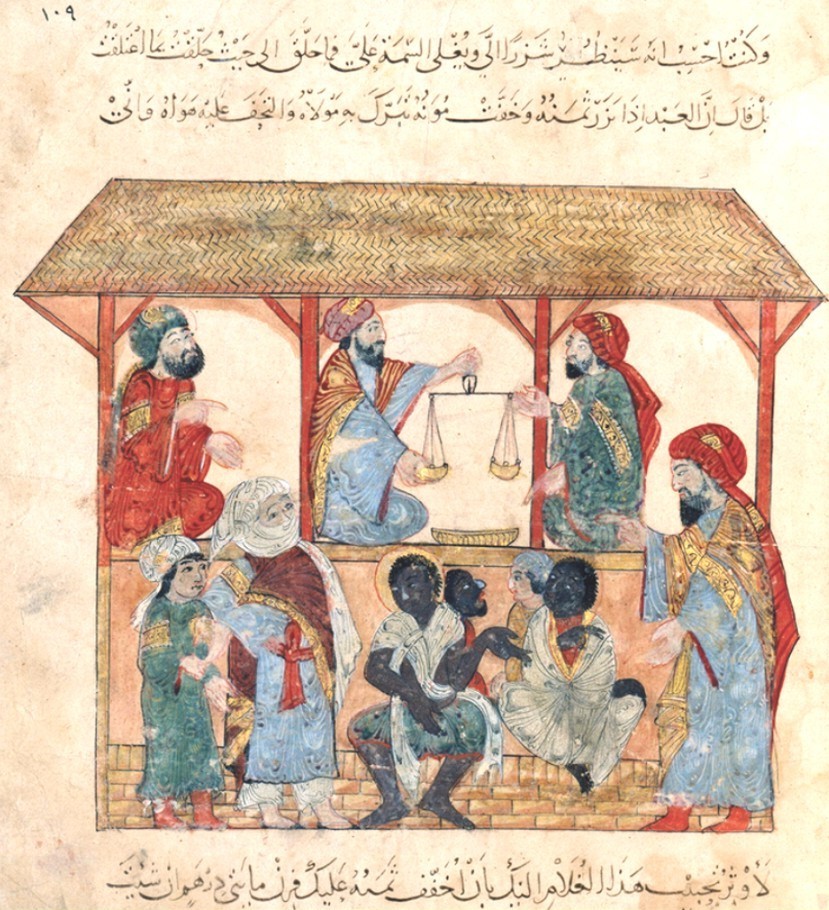
Concubinage was a custom practiced in both pre-Islamic Arabia and the wider Near East and Mediterranean. The Quran allowed this custom by requiring a man not to have sexual relations with anyone except for his wife or concubine [citation needed]. Muhammad had a concubine Maria the Copt who had been given to him as a gift by al-Muqawqis with whom he had a son. Some sources say he later freed and married her, while others dispute this. Classical Islamic jurists did not place any limits on how many concubines a man could have. Prostitution of concubines was prohibited. A concubine who gave birth to a child acknowledged by the father was given the special status of an umm al-walad; she could not be sold and was automatically free after her master's death. The acknowledged children of a concubine were considered free, legitimate and equal in status to the children from a man's wife.
With abolition of slavery in the Muslim world, the practice of concubinage came to an end. Many modern Muslims see slavery as contrary to Islamic principles of justice and equality.
In the context of Islamic law, a concubine is a man's slave-woman with whom he has a sexual relationship. The classical Arabic term for it is surriyya, although the terms jariya, ama, mamluka could also refer to a concubine. Various etymologies of the term are proposed for surriyya, each relating to an aspect of concubinage:
Most Western scholarship translates surriyya as "concubine", though some use the term "slave-concubine". Neither the word surriyya nor any dedicated term for a concubine or female slave appears in the Qur'an, which only uses the phrase ma malakat aymanukum in broad reference to slaves in general. The word ama does appear in the Quran 2:221.
Concubinage of female slaves was an accepted practice in the ancient Mediterranean and Near East. Slave concubinage was practiced in the Byzantine Empire. However, this practice was banned by Christian clergy. Concubines in Jewish communities are known as pilegesh; slave concubinage is mentioned in Biblical texts. Concubinage was also practiced by wealthy men in pre-Islamic Buddhism and Hinduism.
There are similarities and differences in concubinage in Islam and other communities. Whereas in Islam the children of concubines (if acknowledged by the father) were automatically legitimate this was not necessarily the case in Sassanian Persia or among the Mazdeans. Instead the Sassanian shah chose a chief wife and only her children were legitimate. Similarly, Christians living in Persia did not see the children of slave concubine as legitimate. Concubinage practiced by Romans was generally monogamous, whereas Islam did not place limits on number of concubines. On the other hand, the Islamic practice of freeing the concubine who had borne a child on the death of the master was also found among Persian Christians.
In pre-Islamic Arabia concubinage was practiced. The child of a concubine remained a slave unless liberated by the father. The child would also not be considered a member of the tribe unless liberated by the father; pre-Islamic Arab fathers were reluctant to recognize their children from black concubines. By contrast under Islam recognizing children of concubines as tribe members became mandatory. Bernard Lewis argues that many pre-Islamic Arabs were born of concubines. By contrast, Majied Robinson argues that concubinage was not widely practiced in pre-Islamic Arabia. He argues that large-scale concubinage in the early Umayyad period was rooted neither in pre-Islamic Quraysh traditions, nor in the Quran, nor in the practice of Muhammad - rather large scale concubinage was caused by Umayyad desire to have more sons.
Hub AI
Islamic views on concubinage AI simulator
(@Islamic views on concubinage_simulator)
Islamic views on concubinage
In classical Islamic law, a concubine was an unmarried slave-woman with whom her master engaged in sexual relations. Concubinage was widely accepted by Muslim scholars until the abolition of slavery in the 20th century. Most modern Muslims, both scholars and laypersons, believe that Islam no longer permits concubinage and that sexual relations are religiously permissible only within marriage.
Concubinage was a custom practiced in both pre-Islamic Arabia and the wider Near East and Mediterranean. The Quran allowed this custom by requiring a man not to have sexual relations with anyone except for his wife or concubine [citation needed]. Muhammad had a concubine Maria the Copt who had been given to him as a gift by al-Muqawqis with whom he had a son. Some sources say he later freed and married her, while others dispute this. Classical Islamic jurists did not place any limits on how many concubines a man could have. Prostitution of concubines was prohibited. A concubine who gave birth to a child acknowledged by the father was given the special status of an umm al-walad; she could not be sold and was automatically free after her master's death. The acknowledged children of a concubine were considered free, legitimate and equal in status to the children from a man's wife.
With abolition of slavery in the Muslim world, the practice of concubinage came to an end. Many modern Muslims see slavery as contrary to Islamic principles of justice and equality.
In the context of Islamic law, a concubine is a man's slave-woman with whom he has a sexual relationship. The classical Arabic term for it is surriyya, although the terms jariya, ama, mamluka could also refer to a concubine. Various etymologies of the term are proposed for surriyya, each relating to an aspect of concubinage:
Most Western scholarship translates surriyya as "concubine", though some use the term "slave-concubine". Neither the word surriyya nor any dedicated term for a concubine or female slave appears in the Qur'an, which only uses the phrase ma malakat aymanukum in broad reference to slaves in general. The word ama does appear in the Quran 2:221.
Concubinage of female slaves was an accepted practice in the ancient Mediterranean and Near East. Slave concubinage was practiced in the Byzantine Empire. However, this practice was banned by Christian clergy. Concubines in Jewish communities are known as pilegesh; slave concubinage is mentioned in Biblical texts. Concubinage was also practiced by wealthy men in pre-Islamic Buddhism and Hinduism.
There are similarities and differences in concubinage in Islam and other communities. Whereas in Islam the children of concubines (if acknowledged by the father) were automatically legitimate this was not necessarily the case in Sassanian Persia or among the Mazdeans. Instead the Sassanian shah chose a chief wife and only her children were legitimate. Similarly, Christians living in Persia did not see the children of slave concubine as legitimate. Concubinage practiced by Romans was generally monogamous, whereas Islam did not place limits on number of concubines. On the other hand, the Islamic practice of freeing the concubine who had borne a child on the death of the master was also found among Persian Christians.
In pre-Islamic Arabia concubinage was practiced. The child of a concubine remained a slave unless liberated by the father. The child would also not be considered a member of the tribe unless liberated by the father; pre-Islamic Arab fathers were reluctant to recognize their children from black concubines. By contrast under Islam recognizing children of concubines as tribe members became mandatory. Bernard Lewis argues that many pre-Islamic Arabs were born of concubines. By contrast, Majied Robinson argues that concubinage was not widely practiced in pre-Islamic Arabia. He argues that large-scale concubinage in the early Umayyad period was rooted neither in pre-Islamic Quraysh traditions, nor in the Quran, nor in the practice of Muhammad - rather large scale concubinage was caused by Umayyad desire to have more sons.