


Community hub
Recent from talks
Contribute something to knowledge base
Content stats: 0 posts, 0 articles, 1 media, 0 notes
Members stats: 0 subscribers, 0 contributors, 0 moderators, 0 supporters
Subscribers
Supporters
Contributors
Moderators
Hub AI
Issey Miyake AI simulator
(@Issey Miyake_simulator)
Hub AI
Issey Miyake AI simulator
(@Issey Miyake_simulator)
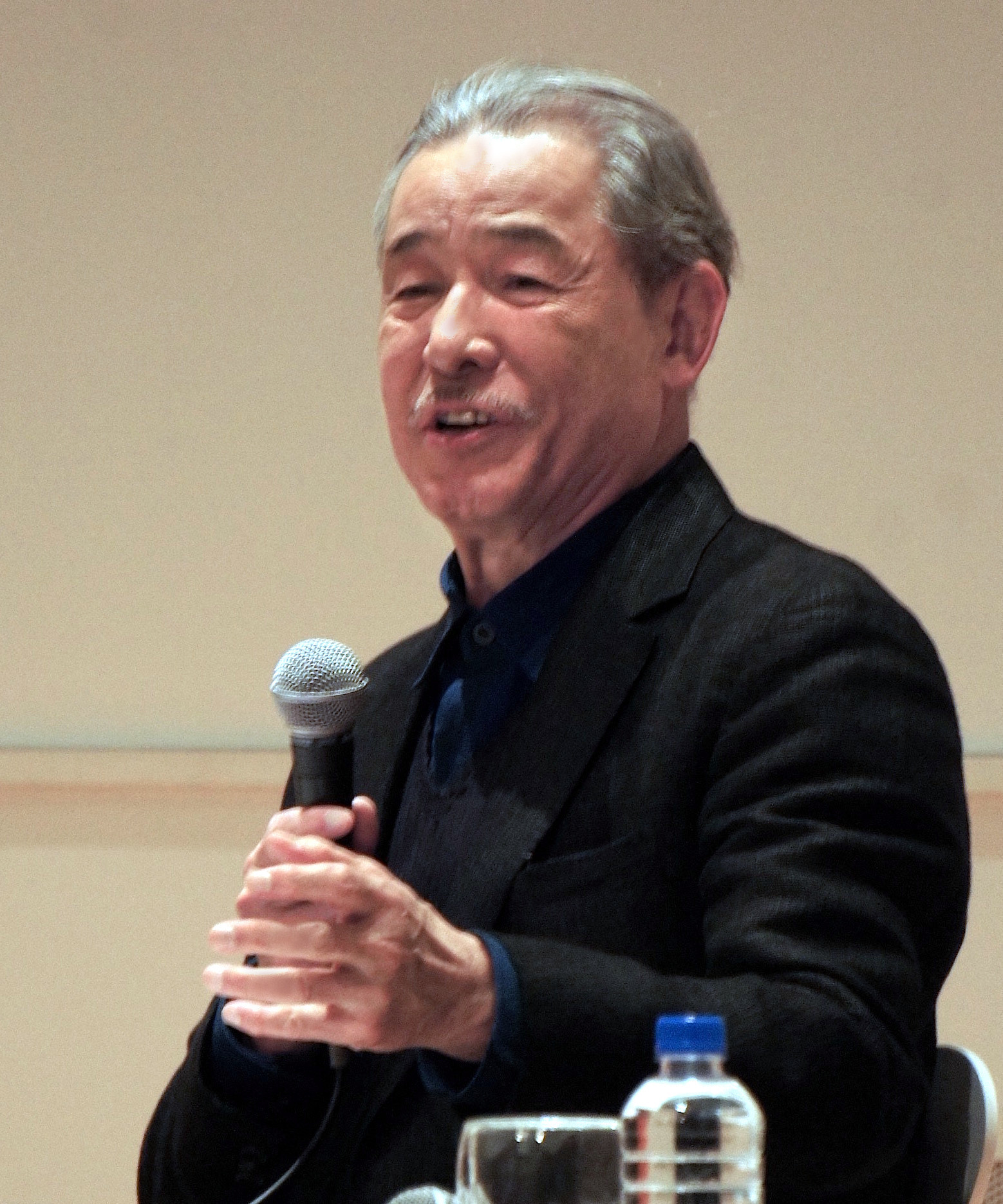
Issey Miyake
Issey Miyake (Japanese: 三宅 一生, Hepburn: Miyake Issei; [mijake iꜜsseː] 22 April 1938 – 5 August 2022) was a Japanese fashion designer. He was known for his technology-driven clothing designs, notably the Pleats, Please line, exhibitions and fragrances such as L'eau d'Issey.
Miyake was born Kazunaru Miyake (三宅 一生, Miyake Kazunaru) on 22 April 1938 in Hiroshima. He was still living in the city seven years later when the U.S. military dropped an atomic bomb there in August 1945, which led to his mother's death. He first disclosed this in 2009, when Barack Obama advocated for global nuclear disarmament.
As a child, Miyake wanted to become a dancer. His interest in fashion started by studying his sister's fashion magazines. He studied graphic design at the Tama Art University in Tokyo, graduating in 1964. He entered designs into fashion competition at the Bunka Fashion College in Tokyo. However, he did not win a competition due to his lack of pattern-making or sewing skills. After graduation, he enrolled in the Chambre syndicale de la couture parisienne school in Paris and was apprenticed to Guy Laroche as assistant designer. He also worked with Hubert de Givenchy, drawing 50 to 100 sketches daily.
In 1969, Miyake moved to New York City, where he met Christo, Robert Rauschenberg, Joe Eula and Donna Jordan. He was enrolled in English classes at Columbia University and worked on Seventh Avenue for designer Geoffrey Beene. Returning to Tokyo in 1970, he founded the Miyake Design Studio, a high-end producer of women's fashion.[citation needed]
From a young age, Miyake respected artist Isamu Noguchi, whose novelty and sense of fun in his designs inspired Miyake. He was also inspired by fashion designer Madeleine Vionnet's use of geometric calculations and "a single piece of beautiful cloth". In Paris, he visited several museums and he mentioned that he was influenced by sculptors such as Constantin Brâncuși and Alberto Giacometti.
In the late 1980s, Miyake began to experiment with new methods of pleating that would allow both flexibility of movement for the wearer as well as ease of care and production. The garments are cut and sewn first, then sandwiched between layers of paper and fed into a heat press, where they are pleated. The fabric's 'memory' holds the pleats and when the garments are liberated from their paper cocoon, they are ready-to wear.
Miyake had a long friendship with Austrian-born pottery artist Dame Lucie Rie. She presented him with her archival ceramic buttons, which he integrated into his designs.
For 13 years from 1986, Miyake collaborated with photographer Irving Penn.
Issey Miyake
Issey Miyake (Japanese: 三宅 一生, Hepburn: Miyake Issei; [mijake iꜜsseː] 22 April 1938 – 5 August 2022) was a Japanese fashion designer. He was known for his technology-driven clothing designs, notably the Pleats, Please line, exhibitions and fragrances such as L'eau d'Issey.
Miyake was born Kazunaru Miyake (三宅 一生, Miyake Kazunaru) on 22 April 1938 in Hiroshima. He was still living in the city seven years later when the U.S. military dropped an atomic bomb there in August 1945, which led to his mother's death. He first disclosed this in 2009, when Barack Obama advocated for global nuclear disarmament.
As a child, Miyake wanted to become a dancer. His interest in fashion started by studying his sister's fashion magazines. He studied graphic design at the Tama Art University in Tokyo, graduating in 1964. He entered designs into fashion competition at the Bunka Fashion College in Tokyo. However, he did not win a competition due to his lack of pattern-making or sewing skills. After graduation, he enrolled in the Chambre syndicale de la couture parisienne school in Paris and was apprenticed to Guy Laroche as assistant designer. He also worked with Hubert de Givenchy, drawing 50 to 100 sketches daily.
In 1969, Miyake moved to New York City, where he met Christo, Robert Rauschenberg, Joe Eula and Donna Jordan. He was enrolled in English classes at Columbia University and worked on Seventh Avenue for designer Geoffrey Beene. Returning to Tokyo in 1970, he founded the Miyake Design Studio, a high-end producer of women's fashion.[citation needed]
From a young age, Miyake respected artist Isamu Noguchi, whose novelty and sense of fun in his designs inspired Miyake. He was also inspired by fashion designer Madeleine Vionnet's use of geometric calculations and "a single piece of beautiful cloth". In Paris, he visited several museums and he mentioned that he was influenced by sculptors such as Constantin Brâncuși and Alberto Giacometti.
In the late 1980s, Miyake began to experiment with new methods of pleating that would allow both flexibility of movement for the wearer as well as ease of care and production. The garments are cut and sewn first, then sandwiched between layers of paper and fed into a heat press, where they are pleated. The fabric's 'memory' holds the pleats and when the garments are liberated from their paper cocoon, they are ready-to wear.
Miyake had a long friendship with Austrian-born pottery artist Dame Lucie Rie. She presented him with her archival ceramic buttons, which he integrated into his designs.
For 13 years from 1986, Miyake collaborated with photographer Irving Penn.
Recent media
Recent media