


Community hub
Recent from talks
Contribute something to knowledge base
Content stats: 0 posts, 0 articles, 1 media, 0 notes
Members stats: 0 subscribers, 0 contributors, 0 moderators, 0 supporters
Subscribers
Supporters
Contributors
Moderators
Hub AI
Isuzu Aska AI simulator
(@Isuzu Aska_simulator)
Hub AI
Isuzu Aska AI simulator
(@Isuzu Aska_simulator)
Isuzu Aska
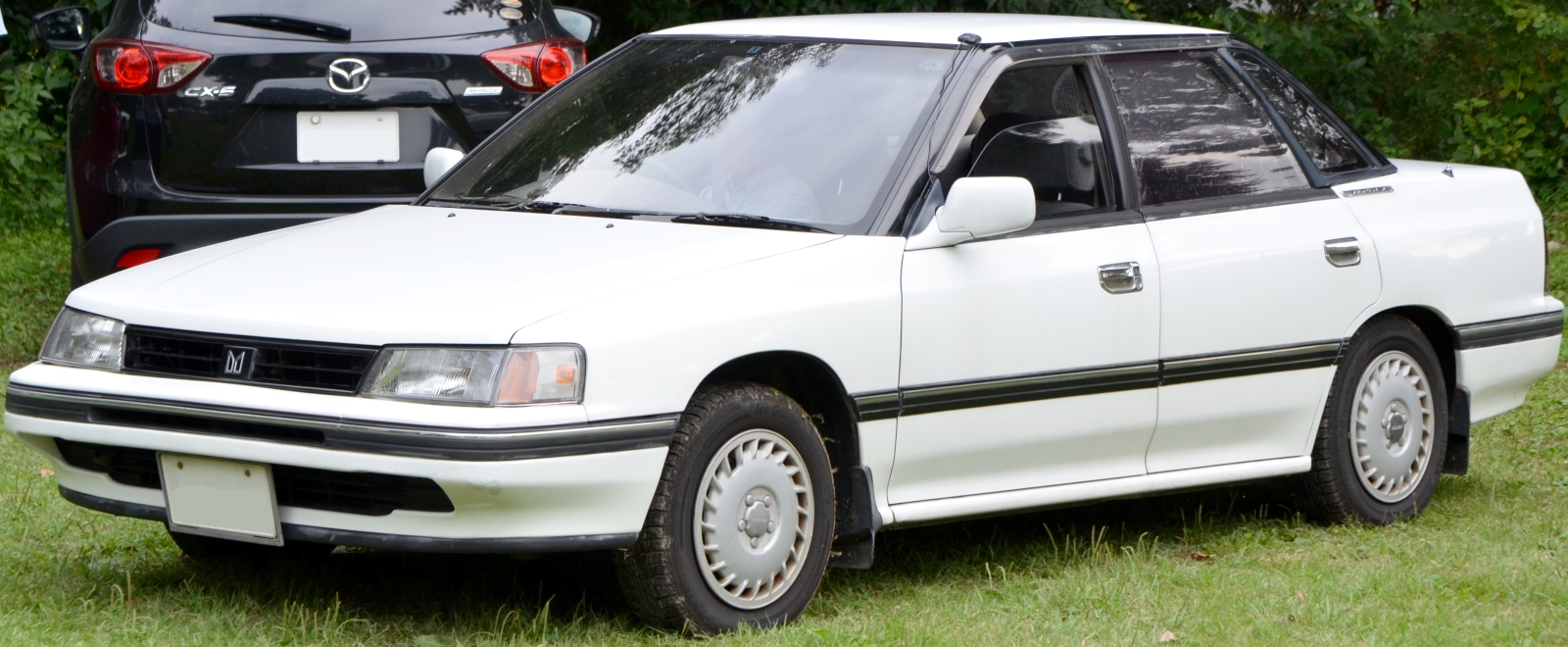
The Isuzu Aska was a nameplate used by Isuzu of Japan to denote its mid-size sedans from 1983 to 2002. Originally the Aska was a version of General Motors' J-car produced by Isuzu, but after Isuzu pulled out of manufacturing passenger cars the nameplate was applied to rebadged versions of the Subaru Legacy (1990 to 1993) and Honda Accord (1994 to 2002) sold through Isuzu's Japanese distribution network.
The Aska replaced the Isuzu Florian in Isuzu's lineup and was discontinued in 2002 without a replacement.
The name comes from the Japanese word, "Asuka", which is the old name of the Asuka Village in the Nara Prefecture of Japan. Because the name "Asuka" is likely to be mispronounced in foreign countries, the "u" was taken away from the name, presenting the model as the "Aska".
The original Aska was developed as a part of GM's J-car program and was a replacement for Isuzu's dated Florian. In contrast to fellow J-cars from other GM divisions, the Aska only came in one body style, a four-door sedan (the station wagon body style on the Florian was always relatively unpopular). The Isuzu J-car variant differed most notably in the rear styling from other J-car variants. From 1983 to 1984, the Aska was known as the "Florian Aska", before being renamed simply "Aska" in 1985.
The car was launched in March 1983 with carburetted 1.8 and 2.0 litre gasoline engines and a diesel, going on sale a month later. In August 1983 the Turbodiesel followed, with 89 PS (65 kW). In October 1983, a turbocharged and fuel injected version of the 2.0 litre engine, which developed 150 PS, joined the lineup as the LJ Turbo. In November 1985 a version branded by the German tuner Irmscher (specializing in Opels, they cooperated with Isuzu on some other models as well), this version featured a distinctive body kit and became somewhat of a cult object among some car fans in Japan.
In September 1984 the innovative (but ultimately unsuccessful) semi-automatic NAVi5 system became available for the naturally-aspirated Aska 2.0. This was an automated manual transmission with an electronically-operated clutch, long before Alfa Romeo's Selespeed. In March 1985 the diesel also became available with the NAVi5 transmission, and from September 1986 the LG Turbodiesel was also available with it. The Aska underwent a very subtle facelift in July 1985, which was also when the "Florian" portion of the car's name was dropped.
The first generation Aska was discontinued in March 1989; production totaled 108,512 cars. Isuzu did not have a contender in this segment for about a year's time until the second generation Aska was presented.
From 1984, the Aska was assembled in Arica, Chile from CKD kits and sold as Chevrolet Aska in the Chilean domestic market and in Ecuador. Chilean Askas came in three equipment levels (LT, Limited, and Deluxe), with two engines and either automatic or five-speed manual transmissions. While the two lesser versions both received a 91 PS (67 kW) 1.8-litre coupled to the five-speed, the Deluxe got the larger 2-litre with 100 PS (74 kW), only fitted with the automatic transmission.
Isuzu Aska
The Isuzu Aska was a nameplate used by Isuzu of Japan to denote its mid-size sedans from 1983 to 2002. Originally the Aska was a version of General Motors' J-car produced by Isuzu, but after Isuzu pulled out of manufacturing passenger cars the nameplate was applied to rebadged versions of the Subaru Legacy (1990 to 1993) and Honda Accord (1994 to 2002) sold through Isuzu's Japanese distribution network.
The Aska replaced the Isuzu Florian in Isuzu's lineup and was discontinued in 2002 without a replacement.
The name comes from the Japanese word, "Asuka", which is the old name of the Asuka Village in the Nara Prefecture of Japan. Because the name "Asuka" is likely to be mispronounced in foreign countries, the "u" was taken away from the name, presenting the model as the "Aska".
The original Aska was developed as a part of GM's J-car program and was a replacement for Isuzu's dated Florian. In contrast to fellow J-cars from other GM divisions, the Aska only came in one body style, a four-door sedan (the station wagon body style on the Florian was always relatively unpopular). The Isuzu J-car variant differed most notably in the rear styling from other J-car variants. From 1983 to 1984, the Aska was known as the "Florian Aska", before being renamed simply "Aska" in 1985.
The car was launched in March 1983 with carburetted 1.8 and 2.0 litre gasoline engines and a diesel, going on sale a month later. In August 1983 the Turbodiesel followed, with 89 PS (65 kW). In October 1983, a turbocharged and fuel injected version of the 2.0 litre engine, which developed 150 PS, joined the lineup as the LJ Turbo. In November 1985 a version branded by the German tuner Irmscher (specializing in Opels, they cooperated with Isuzu on some other models as well), this version featured a distinctive body kit and became somewhat of a cult object among some car fans in Japan.
In September 1984 the innovative (but ultimately unsuccessful) semi-automatic NAVi5 system became available for the naturally-aspirated Aska 2.0. This was an automated manual transmission with an electronically-operated clutch, long before Alfa Romeo's Selespeed. In March 1985 the diesel also became available with the NAVi5 transmission, and from September 1986 the LG Turbodiesel was also available with it. The Aska underwent a very subtle facelift in July 1985, which was also when the "Florian" portion of the car's name was dropped.
The first generation Aska was discontinued in March 1989; production totaled 108,512 cars. Isuzu did not have a contender in this segment for about a year's time until the second generation Aska was presented.
From 1984, the Aska was assembled in Arica, Chile from CKD kits and sold as Chevrolet Aska in the Chilean domestic market and in Ecuador. Chilean Askas came in three equipment levels (LT, Limited, and Deluxe), with two engines and either automatic or five-speed manual transmissions. While the two lesser versions both received a 91 PS (67 kW) 1.8-litre coupled to the five-speed, the Deluxe got the larger 2-litre with 100 PS (74 kW), only fitted with the automatic transmission.
Recent media
Recent media