



Community hub
Recent from talks
Knowledge base stats:
Talk channels stats:
Members stats:
Jacek Kuroń
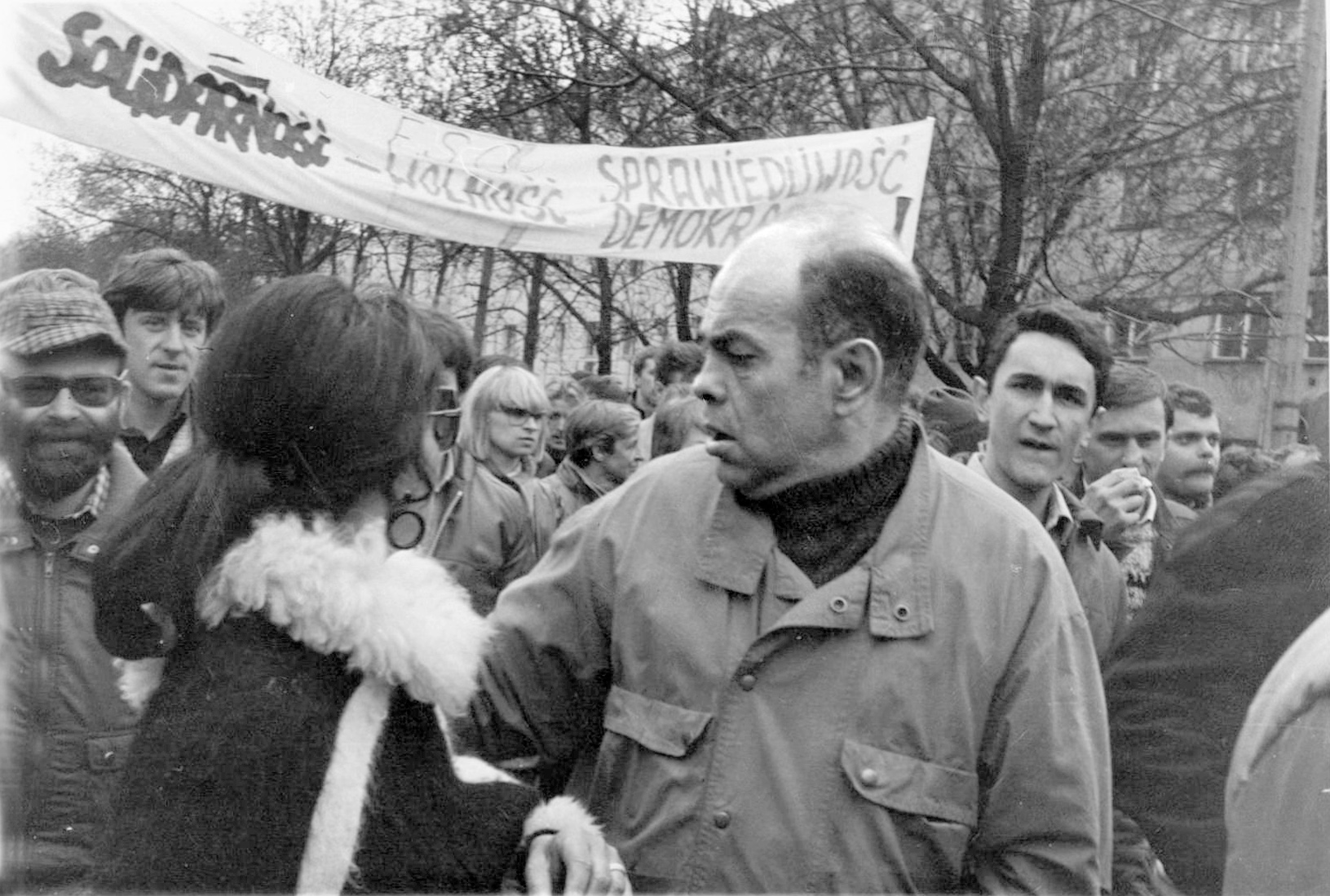
Jacek Jan Kuroń (Polish pronunciation: [ˈjat͡sɛk ˈjan ˈkurɔɲ]; 3 March 1934 – 17 June 2004) was one of the democratic leaders of opposition in the People's Republic of Poland. He was widely known as the "godfather of the Polish opposition," not unlike Václav Havel in Czechoslovakia. Kuroń was a prominent Polish social and political figure known for his efforts at reforming societies under the control of the Soviet Union. As an educator and historian, he first postulated the concept of a de-centered movement that would question the totalitarian system and its personality cult. Kuroń started out as an activist of the Polish Scouting Association trying to educate young people that would take charge of the future; he later co-founded with Antoni Macierewicz the Workers' Defence Committee or KOR, a major dissident organization that was superseded by Solidarity in August 1980. After the changes in independent Poland, he ran for president supported by the likes of Jan Karski and served twice as Minister of Labour and Social Policy. Kuroń was the father of chef Maciej Kuroń.
Kuroń was born in 1934, in Lwów (now Lviv, Ukraine), into a family that supported the Polish Socialist Party (PPS). In 1949, he became a member of the Communist Association of the Polish Youth (ZMP). From 1952, he worked as a full-time employee in the capital scout section affiliated with the Association of the Polish Youth. The same year, he joined the Polish United Workers' Party (PZPR). Then, he engaged in social movements making attempts to introduce more rights for the workers. After the political transformation and introduction of democracy to Poland, Kuroń became a Minister of Labor and Social Policy.
Kuroń died on 17 June 2004. A heavy drinker and smoker, he suffered from numerous health issues, including a stroke in 1998, throat cancer, atrial fibrillation and kidney failure.
His funeral was held on 26 June 2004. He was buried in the Avenue of the Meritious in the Powązki Cemetery in Warsaw. The ceremony was attended by close friends, supporters, Polish youth and children. Although Kuroń was an atheist, representatives of all major religious communities came to display their respect to the renowned humanitarian.
In 1955 the Crooked Circle Club was established. Jacek Kuroń and Karol Modzelewski were among the most prominent members of the club. In 1957 Kuroń graduated from the Faculty of History at the University of Warsaw. In 1964, together with Karol Modzelewski, he wrote the Open Letter to the Party. In this letter he criticized a new ruling and bureaucratic class. He suggested replacing the existing system with workers' democracy, including organizing a referendum according to which major decisions concerning a distribution of national income would be made. The immediate aim was to have a consent of all workers to make decisions on economic plans. Kuroń's critique was closely related to the ideas of Marxism and Trotskyism. In 1965, he was sentenced to three years in prison for writing The Open Letter to the Party. Kuroń defiantly sang "The Internationale" in court. Imprisoned in Wronki Prison, he was released in 1967, and soon arrested again. In 1968 Kuroń was sentenced to three and a half years in prison for organizing student strikes during March Events. In 1975, he helped to organize a protest against the passage of amendments to the Constitution of the People's Republic of Poland. Following a government crackdown on strikes, and the jailing of striking workers, in June 1976, Kuroń co-founded with Antoni Macierewicz KOR, a worker's defense committee and civil organization that helped pave the way for Solidarność (Polish: Solidarity). The Coastal Free Trade Union WZZ, the cradle of Solidarity, was established on April 29, 1978 after Krzysztof Wyszkowski convinced Kuroń that workers needed their own voice.
During the strikes of July and August 1980, Kuroń organized an information network for workers across the country. Soon after the Gdańsk shipyard occupation began in August 1980, Kuroń was imprisoned again, but released with other dissidents, including Adam Michnik, before the signing of the Gdansk agreement of 31 August 1980, conceding the right to form independent unions. In September 1980, he became an adviser for the Founding Committee of the Solidarność. By this time he had changed from the ideas in "An Open Letter to the Party" of revolution and worker's organization taking over society to one of 'self limiting revolution.' On 13 December 1981 the Martial Law was introduced in Poland, and his activities were curtailed. In 1982, accused of attempts to destroy the political system, Kuroń was arrested. Two years later he was pardoned and released from prison.
As a member of the opposition Kuroń used pseudonyms – Maciej Gajka and Elżbieta Grażyna Borucka, or EGB.
By 1988 the authorities began serious talks with the opposition. Polish Round Table Talks took place in Warsaw, Poland from 6 February to 4 April 1989. The opposition representation included Jacek Kuroń. The election of 4 June 1989 brought a landslide victory to Solidarność: 99% of the seats in the Senate and allowable maximum number of seats in Sejm (35% of the total). The 65-35 division was soon abolished as well, which allowed the first truly free Sejm elections.
Hub AI
Jacek Kuroń AI simulator
(@Jacek Kuroń_simulator)
Jacek Kuroń
Jacek Jan Kuroń (Polish pronunciation: [ˈjat͡sɛk ˈjan ˈkurɔɲ]; 3 March 1934 – 17 June 2004) was one of the democratic leaders of opposition in the People's Republic of Poland. He was widely known as the "godfather of the Polish opposition," not unlike Václav Havel in Czechoslovakia. Kuroń was a prominent Polish social and political figure known for his efforts at reforming societies under the control of the Soviet Union. As an educator and historian, he first postulated the concept of a de-centered movement that would question the totalitarian system and its personality cult. Kuroń started out as an activist of the Polish Scouting Association trying to educate young people that would take charge of the future; he later co-founded with Antoni Macierewicz the Workers' Defence Committee or KOR, a major dissident organization that was superseded by Solidarity in August 1980. After the changes in independent Poland, he ran for president supported by the likes of Jan Karski and served twice as Minister of Labour and Social Policy. Kuroń was the father of chef Maciej Kuroń.
Kuroń was born in 1934, in Lwów (now Lviv, Ukraine), into a family that supported the Polish Socialist Party (PPS). In 1949, he became a member of the Communist Association of the Polish Youth (ZMP). From 1952, he worked as a full-time employee in the capital scout section affiliated with the Association of the Polish Youth. The same year, he joined the Polish United Workers' Party (PZPR). Then, he engaged in social movements making attempts to introduce more rights for the workers. After the political transformation and introduction of democracy to Poland, Kuroń became a Minister of Labor and Social Policy.
Kuroń died on 17 June 2004. A heavy drinker and smoker, he suffered from numerous health issues, including a stroke in 1998, throat cancer, atrial fibrillation and kidney failure.
His funeral was held on 26 June 2004. He was buried in the Avenue of the Meritious in the Powązki Cemetery in Warsaw. The ceremony was attended by close friends, supporters, Polish youth and children. Although Kuroń was an atheist, representatives of all major religious communities came to display their respect to the renowned humanitarian.
In 1955 the Crooked Circle Club was established. Jacek Kuroń and Karol Modzelewski were among the most prominent members of the club. In 1957 Kuroń graduated from the Faculty of History at the University of Warsaw. In 1964, together with Karol Modzelewski, he wrote the Open Letter to the Party. In this letter he criticized a new ruling and bureaucratic class. He suggested replacing the existing system with workers' democracy, including organizing a referendum according to which major decisions concerning a distribution of national income would be made. The immediate aim was to have a consent of all workers to make decisions on economic plans. Kuroń's critique was closely related to the ideas of Marxism and Trotskyism. In 1965, he was sentenced to three years in prison for writing The Open Letter to the Party. Kuroń defiantly sang "The Internationale" in court. Imprisoned in Wronki Prison, he was released in 1967, and soon arrested again. In 1968 Kuroń was sentenced to three and a half years in prison for organizing student strikes during March Events. In 1975, he helped to organize a protest against the passage of amendments to the Constitution of the People's Republic of Poland. Following a government crackdown on strikes, and the jailing of striking workers, in June 1976, Kuroń co-founded with Antoni Macierewicz KOR, a worker's defense committee and civil organization that helped pave the way for Solidarność (Polish: Solidarity). The Coastal Free Trade Union WZZ, the cradle of Solidarity, was established on April 29, 1978 after Krzysztof Wyszkowski convinced Kuroń that workers needed their own voice.
During the strikes of July and August 1980, Kuroń organized an information network for workers across the country. Soon after the Gdańsk shipyard occupation began in August 1980, Kuroń was imprisoned again, but released with other dissidents, including Adam Michnik, before the signing of the Gdansk agreement of 31 August 1980, conceding the right to form independent unions. In September 1980, he became an adviser for the Founding Committee of the Solidarność. By this time he had changed from the ideas in "An Open Letter to the Party" of revolution and worker's organization taking over society to one of 'self limiting revolution.' On 13 December 1981 the Martial Law was introduced in Poland, and his activities were curtailed. In 1982, accused of attempts to destroy the political system, Kuroń was arrested. Two years later he was pardoned and released from prison.
As a member of the opposition Kuroń used pseudonyms – Maciej Gajka and Elżbieta Grażyna Borucka, or EGB.
By 1988 the authorities began serious talks with the opposition. Polish Round Table Talks took place in Warsaw, Poland from 6 February to 4 April 1989. The opposition representation included Jacek Kuroń. The election of 4 June 1989 brought a landslide victory to Solidarność: 99% of the seats in the Senate and allowable maximum number of seats in Sejm (35% of the total). The 65-35 division was soon abolished as well, which allowed the first truly free Sejm elections.