Hubbry Logo
Jack BinionJack BinionMain
Open search
Jack Binion
Community hub
Jack Binion
logo
8 pages, 0 posts
0 subscribers
Be the first to start a discussion here.
Jack Binion
Jack Binion
from Wikipedia

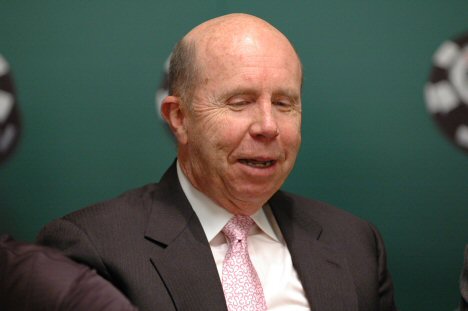
Johnny Moss and Jack Binion.

Key Information

Jack Binion (born 1937) is an American businessman and was chairman of Wynn Resorts (2006–2018).[2] He is the son of casino magnate Benny Binion. Jack worked for his father at Binion's Horseshoe, a casino and hotel in Las Vegas, Nevada.

Biography

[edit]

Binion became president of the Horseshoe casino in 1963 at the age of 26.[3][4] His stature within the organization grew following the Horseshoe's 1970 hosting of the first World Series of Poker, which would become the largest poker tournament in the world.[5] Privately held, Binion's Horseshoe was one of Nevada's most successful casino operations.

In 1998, following the death of Benny Binion, there was a protracted legal battle for control of the casino among the heirs. Jack Binion, as one of the heirs, sold his interest in Binion's Horseshoe to his sister, Becky Behnen, while retaining a token 1% interest in the operation so that he could lawfully retain his Nevada Gaming License. He also acquired the rights to the Horseshoe brand outside of the state of Nevada.

Binion went on to form Horseshoe Gaming Holding Corporation, which developed and operated several riverboat casinos under the Horseshoe name. Binion continued to promote the casinos for Harrah's Entertainment following his sale of the company in 2004 to Harrah's. As of 2008, Binion's name appears on the "Jack Binion's Steakhouse" at Horseshoe Tunica and Horseshoe Hammond and several of the Horseshoe-branded casinos still carry slot machines bearing Binion's likeness called "Who Wants To Be A Binionaire?", which originated before the Harrah's acquisition.

While running Horseshoe Gaming, Binion started the World Poker Open, which at one time was a major feeder tournament for the World Series of Poker.

Binion was inducted into the American Gaming Association's Gaming Hall of Fame on June 11, 2004.[6] The following year on July 6, 2005, the World Series of Poker, inducted him into the Poker Hall of Fame.[7]

In July 2006, Binion became chairman of Wynn Resorts. His responsibilities included opening the Wynn Macau.[8] He has since resigned from the position but has remained with Wynn Resorts in a consulting role.

References

[edit]
[edit]
Revisions and contributorsEdit on WikipediaRead on Wikipedia
from Grokipedia
Jack Binion, born February 21, 1937, in Dallas, Texas, is an American casino executive and businessman renowned for his leadership at Binion's Horseshoe in Las Vegas and his foundational role in establishing the World Series of Poker. As the eldest son of gambling pioneer Benny Binion and his wife Teddy Jane, Jack grew up immersed in the industry, moving to Las Vegas in 1947. His family opened the Horseshoe Casino in 1951, a downtown landmark emphasizing fair play and high-limit gambling. At age 21, Binion began working at the Horseshoe as an office boy, rising to become its president by age 26, a position he held for nearly four decades until 1998. Under his stewardship, the casino became a hub for high-stakes poker, and in 1970, Binion and his father launched the inaugural at the Horseshoe, introducing the freezeout tournament format that transformed professional poker into a global spectacle. He expanded the Horseshoe brand beyond , opening successful properties in (1995), (1995), and (1996), pioneering and regional gaming ventures while navigating family disputes over control, culminating in a 1998 settlement where he sold his Las Vegas stake to his sister Becky Behnen for $20 million. In 2004, Binion sold his out-of-state Horseshoe casinos to , retaining rights to the brand and , which he later licensed back to the company. That same year, he was inducted into the for his contributions to the game. From 2006 to 2018, Binion served as Chairman of Wynn International, guiding the luxury resort operator's expansion into Asian markets, including . Today, at age 88, he remains an influential figure in gaming, occasionally appearing at WSOP events to present awards and uphold the legacy of his family's innovations.

Early Life

Childhood and Family Background

Jack Binion was born on February 21, 1937, in Dallas, Texas, to Lester Ben "Benny" Binion and his wife, Teddy Jane Binion. Benny Binion, born in 1904 in Pilot Grove, Texas, had established himself as a prominent figure in the underworld as a gambler and bootlegger during the era, operating illegal gambling houses and facing repeated legal troubles, including a 1931 conviction for after shooting a rival rumrunner, for which he received a two-year . Benny and Teddy Jane had five children together: daughters Barbara and Brenda, sons Jack and Lonnie Theodore "Ted" (born November 28, 1943, in ), and youngest daughter . The family dynamics were shaped by 's high-stakes lifestyle and the constant threat of scrutiny, which influenced the children's early years amid a backdrop of from illicit activities. In 1946, when Jack was nine years old, the Binion family relocated from to , , as Benny sought to evade intensifying legal pressures in —where remained illegal—and pursue opportunities in the state's nascent legal casino industry. This move exposed Jack from a young age to his father's operations, first in the shadowy Texas underworld and then in Nevada's emerging regulated environment, laying the groundwork for his future involvement in the industry.

Entry into the Gaming Industry

Jack Binion entered the gaming industry through his family's Binion's Horseshoe casino in Las Vegas, which his father Benny opened in 1951. He briefly attended the University of Arizona before beginning work at the Horseshoe at age 21 in 1958, starting as a blackjack dealer. In 1953, Benny Binion was convicted of tax evasion related to his earlier gambling activities in Texas and sentenced to prison, serving from 1953 to 1957; during this time, he transferred operational control of the Horseshoe to associate Joe W. Brown while retaining a minority interest. As a teenager during Benny's incarceration, Jack assisted the family informally amid efforts to maintain involvement in the business. Following Benny's release in 1957, the Binion family worked to repurchase shares and regain full control of the Horseshoe. Jack Binion's responsibilities grew steadily in the late 1950s; by 1960, at age 23, he received state gaming approval for a 2.5 percent ownership stake and was positioned as president, marking his transition to leadership.

Career at Binion's Horseshoe

Leadership and Management

Jack Binion assumed the presidency of Binion's Horseshoe in 1963 at the age of 26, following his father Benny Binion's semi-retirement. In June 1964, he secured full family ownership by buying out minority shareholders for $1.3 million. Building on his early experiences working various roles at the since the late 1950s, Binion took a hands-on approach to operations, focusing on restoring the property's prominence in . Binion's management style emphasized high-limit gambling to attract serious players, exceptional customer service through personal interactions by floor managers, and preservation of the casino's rustic "frontier" theme inspired by his father's Texas roots, including elements like cowboy decor and a welcoming saloon atmosphere. He prioritized "good food, good service, and good gaming" with the best odds in town, fostering loyalty among high rollers who appreciated the no-limit betting policies and friendly environment that set the Horseshoe apart from Strip competitors. This approach helped maintain the casino's reputation as a haven for big bets, where patrons could wager without artificial caps, contributing to its enduring appeal. Throughout his tenure, Binion navigated family dynamics, including a protracted dispute with his sister Becky Behnen over management control that escalated after their mother's death in 1994, leading to a two-year legal battle and his eventual sale of a 99% interest in the Horseshoe to her in 1998. Under his leadership, the casino expanded its facilities, such as connecting additional buildings to the original structure by 1970 to increase room capacity and integrating nearby properties like the Mint Casino in later years to double the operation's size. Binion's oversight drove substantial financial growth, solidifying the Horseshoe's status as a profitable mainstay amid from newer resorts. By the mid-1990s, the broader Horseshoe operations under his direction reported net revenues of $298.2 million and pretax income of $53.7 million.

Key Operational Innovations

Under Jack Binion's leadership as president starting in 1963, Binion's Horseshoe implemented high-stakes betting policies that distinguished it from other casinos, including maximum limits of $500 on tables upon opening in 1951 and a general policy of no artificial caps to draw elite seeking unrestricted action. A signature attraction was the Million Dollar Display, featuring a of $1 million in rare $10,000 bills and coins atop a poker table, which Binion positioned near the entrance starting in 1964 to captivate passersby and symbolize the casino's commitment to big . To build loyalty, Binion introduced customer-centric policies such as free parking for players and line passes allowing valued patrons to bypass queues at popular tables, reinforcing an accessible environment for repeat visitors. He oversaw expansions that accommodated growing interest in poker, including the addition of a dedicated poker room following the acquisition of the Mint Casino, laying the groundwork for major tournaments. These changes cultivated a no-frills, gambler-focused atmosphere at the Horseshoe—marked by straightforward amenities, personal service from floor bosses, and an absence of lavish entertainment—that contrasted sharply with the opulent, show-driven Strip resorts, prioritizing player comfort and high-volume wagering over spectacle.

Contributions to Poker

Establishment of the

In the late , , founder of Binion's Horseshoe in , conceived the idea of hosting a to determine the world's best poker player by inviting top professionals to compete. His son, Jack Binion, who served as president of the Horseshoe, took the lead in organizing the inaugural event in , transforming his father's vision into reality at the family-owned . This marked a significant shift from informal to a structured gathering aimed at crowning a champion, drawing on the Horseshoe's growing reputation as a poker hub following the addition of its dedicated poker room in the . Jack Binion personally selected and invited seven of the era's most skilled poker professionals, including legends like , , and Preston, to participate in a series of high-stakes across various poker variants. Rather than a traditional freeze-out with a buy-in, the event consisted of extended sessions over several days, allowing players to showcase their skills in a high-stakes environment without a formal entry fee. At the conclusion, Binion facilitated a peer vote to select the overall champion, a democratic process he introduced to resolve the competition; each player initially voted for themselves, but a follow-up ballot for the "second-best" player unanimously chose , awarding him a silver cup as the first World Series of Poker winner. Binion's hands-on role extended to establishing the basic ground rules for the gathering, ensuring fair play among the invitees while promoting the event as an elite showdown among pros, which helped elevate poker's visibility beyond underground circles. The 1970 event's success prompted its annualization by 1971, when it evolved into a more formalized tournament structure, solidifying the as a cornerstone of the game and Binion's lasting contribution to its professionalization.

Development of Other Poker Events

In addition to establishing the , Jack Binion expanded poker offerings through the launch of the World Poker Open in 2000 at the Horseshoe Casino in , positioning it as a significant precursor and feeder event to the WSOP. This annual series featured approximately 20 tournaments across various formats, including Limit Hold'em, No Limit Hold'em, and , with buy-ins ranging from free satellites to $5,000 for the flagship No Limit Hold'em championship. Prize pools varied by event, but the championship often guaranteed substantial payouts, such as over $1 million in later editions, with winners receiving seats to the WSOP Main Event to funnel talent and excitement toward the flagship series. By 2003, the event integrated with the , elevating its visibility and attracting hundreds of entrants, including professionals from and , which helped broaden poker's international appeal during the early 2000s boom. Binion also organized the Mid-America Poker Classic, another recurring tournament series at Horseshoe Tunica starting in the early 2000s, designed to complement the World Poker Open and provide year-round poker action. This event included multi-day formats like $500 No Limit Hold'em and Pot Limit Omaha, with prize structures offering top payouts around $36,000 for first place in select brackets, alongside smaller fields for limit games yielding 20,00020,000-25,000 to winners. These tournaments emphasized accessible buy-ins to draw a diverse field, including emerging international competitors, and reinforced Binion's strategy of using poker as a cornerstone for his properties. Under Binion's oversight of Horseshoe properties, poker rooms hosted expanded daily and side , particularly during WSOP periods in , featuring low-stakes satellites and variant games that mirrored WSOP structures to build player pipelines. Invitational elements, such as media-only within the World Poker Open, further diversified participation and media coverage, contributing to poker's global surge by showcasing high-profile play and drawing players from over 20 countries in peak years. These initiatives collectively amplified poker's popularity, transitioning it from a niche U.S. pursuit to an international spectacle with increased viewership and participation.

Business Expansions

Founding of Horseshoe Gaming Corporation

In 1993, Jack Binion founded Horseshoe Gaming as a private to extend the beyond the original property, leveraging his extensive experience in casino operations while separating it from family-managed assets in . As the primary owner and executive leader, Binion positioned the corporation to capitalize on the emerging legalization of gaming in other states, focusing initially on riverboat casinos to comply with regional restrictions on land-based facilities. The company's first expansion occurred with the opening of Horseshoe Bossier City in on June 9, 1994, marking the inaugural out-of-state Horseshoe as a named the Queen of the Red, docked along the Red River in Bossier City. Binion played a central role in securing the necessary regulatory approvals from the , adapting the Horseshoe's signature high-limit gaming and customer-focused atmosphere to the format amid strict docking and excursion requirements. This venture quickly established the brand's viability in southern markets, drawing patrons from nearby and . Subsequent developments included the February 1995 opening of Horseshoe Casino Center in , a operation on the that formed part of a multi-casino complex and targeted Memphis-area visitors with expanded poker rooms and entertainment options. Binion's strategy emphasized replicating the Las Vegas Horseshoe's reputation for generous player rewards and poker innovation while navigating Mississippi's Gaming Commission approvals for river-based gaming. Further growth came in December 1999 with the acquisition of the existing Empress Casino in , which Binion rebranded and relaunched as Horseshoe Hammond in 2001 after obtaining Indiana Gaming Commission licensure, converting it into a prominent serving the market. Throughout these expansions, Binion's leadership focused on adapting the Horseshoe brand to diverse regulatory environments, blending riverboat constraints with land-based elements where possible, such as integrated hotels and dining venues like Jack Binion's Steakhouse, to maintain the brand's emphasis on player loyalty and high-stakes gaming. His hands-on involvement in securing approvals across , , and ensured compliance with state-specific rules on gaming excursions and ownership structures, solidifying Horseshoe Gaming as a regional powerhouse.

Sale and Post-Sale Ventures

In September 2003, Horseshoe Gaming Holding Corp., the company founded by Jack Binion in 1993 to operate regional casino properties, agreed to be acquired by for $1.45 billion in cash and assumed debt, with the transaction closing in the first quarter of 2004. The deal encompassed three key Horseshoe-branded casinos: those in ; ; and , adding significant gaming space and rooms to Harrah's portfolio while allowing Binion to exit his operational role in these out-of-state ventures. The Binion family retained ownership of the original Binion's Horseshoe in , , separate from the regional assets sold to Harrah's; this property had been under the control of Binion's sister, Becky Behnen, since Jack sold his majority interest to her in 1998 to resolve a family dispute, while he maintained a nominal 1% stake to preserve his Nevada gaming license. Binion had stepped down as president of the Las Vegas Horseshoe following that 1998 transaction, marking his departure from day-to-day management of the flagship property. Following the 2004 sale, Binion retained rights to the Horseshoe brand for use outside and licensed it back to , remaining involved in promoting the acquired properties and contributing to the brand's expansion to additional locations such as the rebranded Horseshoe Council Bluffs in , where Harrah's renamed the former Bluffs Run Casino (which began operations in 1995) as Horseshoe in 2006. This post-sale period allowed Binion a brief semi-retirement, during which he focused on personal projects and family matters away from active casino operations.

Later Career

Role at Wynn Resorts

In 2006, following the sale of his family's Horseshoe casinos in 2004, Jack Binion joined as Chairman of Wynn International, a key subsidiary focused on the company's Asian operations and development initiatives. This appointment leveraged Binion's decades of experience in the gaming industry, where he had built a reputation for innovative casino management at Binion's Horseshoe in . As a senior executive, Binion brought strategic oversight to ' international expansion efforts, emphasizing operational excellence in high-stakes gaming environments. Binion played a pivotal role in the development and opening of , which debuted in September 2006 as ' first international property. His responsibilities included providing expert guidance on gaming operations, particularly in navigating the regulatory and cultural complexities of the market. Drawing from his background in fostering high-limit play and player loyalty, Binion advised on establishing premium gaming experiences tailored to affluent clientele, contributing to the resort's successful launch and early revenue growth. Throughout his tenure, which extended until 2018, Binion oversaw aspects of ' international strategy and expansions at , including enhancements to high-stakes gaming facilities that aligned with the company's luxury positioning. His advisory input focused on optimizing operations for elite players, ensuring seamless integration of gaming floors with broader resort amenities. In 2018, amid shifts in company leadership, Binion resigned as chairman but continued in a consulting capacity, maintaining his influence on strategic gaming decisions.

Consulting and Ongoing Influence

After resigning as chairman of in 2018, Jack Binion maintained an advisory role, providing guidance to on operational strategies and practices. His expertise, drawn from decades in the industry, focused on enhancing gaming establishment efficiency and guest experiences, continuing a pattern of informal influence beyond structured executive positions. Binion has remained active in poker advocacy, making occasional appearances at (WSOP) events to support the tournament's legacy, which he helped establish. In 2024, he visited the during the WSOP, engaging with participants and underscoring his enduring connection to the event. These involvements highlight his role in promoting poker as a cornerstone of gaming culture. The "Jack Binion's Steakhouse" brand, introduced at Horseshoe properties in 2008, continues to operate across multiple locations, including , Horseshoe Council Bluffs, and Horseshoe Bossier City, maintaining his association with in casino environments. The restaurants feature premium steaks and , preserving the Binion family legacy in . In recent years, Binion has participated in and interviews on gaming history. He appeared on the Gaming Legacy in April 2025, discussing his career and industry insights. Additionally, in December 2024, he was interviewed by Casino Life & Operator TV, sharing perspectives on modern casino management. Binion's philanthropy in the gaming sphere includes co-hosting the annual Keep Memory Alive charity , benefiting the Lou Ruvo Center for Brain Health. In 2024, he partnered with to host the event on November 8 in , raising funds through poker competitions. This ongoing initiative ties his poker heritage to medical research support.

Legacy and Recognition

Awards and Inductions

Jack Binion was inducted into the American Gaming Association's on June 11, 2004, recognizing his pivotal role in advancing the gaming industry through the expansion of the Horseshoe casino brand and innovative business practices that elevated casino entertainment. The following year, on July 6, 2005, Binion was inducted into the during the , honoring his foundational work in establishing the WSOP in 1970 and pioneering structured poker tournaments that transformed the game into a global spectacle. In 2012, Binion received the Lifetime Achievement Award from the American Gaming Association as part of its annual Communications Awards, acknowledging his enduring influence on the gaming sector, including the development of landmark events and properties that shaped modern operations.

Impact on the Gaming Industry

The Horseshoe's model, established by with high betting limits such as a $500 table—ten times higher than competitors at the time—and continued under Jack Binion's management, emphasized an inclusive environment for serious gamblers while maintaining low minimums for accessibility. This approach revitalized downtown Las Vegas's gaming scene by attracting high-rollers and fostering a among players, differentiating it from the more restrictive Strip venues and boosting overall patronage in the district. Through co-founding the (WSOP) in 1970, Binion played a pivotal role in elevating poker from a niche activity to a global phenomenon, standardizing tournament formats like the freezeout and inspiring the proliferation of live events and online platforms worldwide. The WSOP's success under his oversight drew international competitors and media attention, influencing the development of major circuits such as the and contributing to poker's mainstream integration into digital gaming ecosystems. Binion expanded the Horseshoe brand beyond by founding Horseshoe Gaming Holding Corporation in 1993, establishing properties in emerging regional markets like ; ; and , which capitalized on newly legalized gaming and became top performers in their locales. These ventures demonstrated a scalable model for and land-based casinos, promoting in non-Las Vegas areas and setting precedents for branded regional operations. As a respected industry elder, Binion mentored emerging casino executives on player-focused strategies, such as treating patrons as valued guests to build loyalty, and advocated for policies prioritizing fair play and amid growing corporate consolidation. His guidance influenced figures in the sector, including those at major operators, by emphasizing personal engagement over purely profit-driven approaches. In May 2025, he was featured in the Gaming Legacy Podcast, discussing his career and the future of gaming. As of 2025, the Horseshoe legacy endures under , which acquired the brand through the 2005 Harrah's merger and has revived it on the Las Vegas Strip by rebranding Bally's as in 2023, while launching in multiple states starting in to extend its reach into iGaming markets. This ongoing integration underscores Binion's foundational contributions to a unified national gaming landscape.

References

Add your contribution
Related Hubs
User Avatar
No comments yet.