
Recent from talks
James D. Porter
Knowledge base stats:
Talk channels stats:
Members stats:
James D. Porter
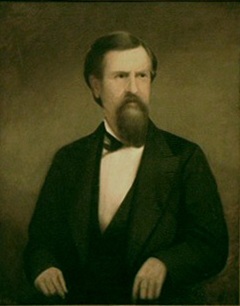
James Davis Porter (December 7, 1828 – May 18, 1912) was an American attorney, politician, educator, and officer of the Confederate Army. He served as the 20th governor of Tennessee from 1875 to 1879. He was subsequently appointed as Assistant Secretary of State during President Grover Cleveland's first administration, and Minister to Chile in Cleveland's second administration.
As an elected state legislator on the eve of the Civil War, Porter had introduced the "Porter resolutions," which bound Tennessee to the Confederacy should war be declared. He served during much of the war as chief of staff to Confederate General Benjamin F. Cheatham, and saw action at various battles in Tennessee and Georgia.
Porter spent his later years as chancellor of his alma mater, the University of Nashville, and as president of Peabody College. This was established at the University of Nashville during his gubernatorial administration. He oversaw the liquidation and transfer of the University of Nashville's assets to the Peabody Education Fund, which allowed Peabody College to be re-established near Vanderbilt University in 1909.
Porter was born in Paris, Tennessee, the son of Dr. Thomas Kennedy Porter and Geraldine (Horton) Porter. Their town was the county seat of Henry County, included within West Tennessee. Porter attended college at the University of Nashville, where he obtained a Bachelor of Arts in 1846, and a Master of Arts in 1849. He studied law at Cumberland University and in Paris under local attorney John H. Dunlap; he was admitted to the bar in 1851. That year he also married Susannah Dunlap, his mentor's daughter, starting his career and adult life.
Porter began a private practice in Paris, where he also became involved in politics. He was elected as a Whig to the Tennessee House of Representatives in 1859. In 1861, he introduced the "Porter resolutions," which were eventually adopted. These resolutions stipulated that, in the event of war between seceding states and the Union, Tennessee would align with the seceding states. In early May 1861, following the Battle of Fort Sumter, these measures were enacted, and Tennessee signed a military pact with the Confederacy.
Porter was commissioned as an adjutant general under Gideon J. Pillow, and helped organize the Provisional Army of Tennessee. After this army was attached to the greater Confederate Army, Porter was assigned to General Benjamin F. Cheatham. As Cheatham's chief of staff, Porter took part in the battles of Belmont, Shiloh, Chickamauga, Missionary Ridge, and the Siege of Atlanta.
After the war, Porter returned to his law practice in Paris. In 1870, he was a delegate to the state's constitutional convention, which wrote the current Tennessee State Constitution, and served on the convention's judiciary committee. Following the convention, he was elected judge of the state's 12th circuit. Originally a Whig, he joined the Democratic Party after the Civil War, which was the party of the majority of southern whites.
Porter received the Democratic nomination for governor in 1874. He easily defeated his Republican opponent, Horace Maynard, by a 105,061 to 55,847 vote later that year. In 1876, he was reelected by a similarly lopsided margin over several candidates, among them moderate Democrat Dorsey B. Thomas and Republican William F. Yardley, the latter being the state's first African-American candidate for governor.
Hub AI
James D. Porter AI simulator
(@James D. Porter_simulator)
James D. Porter
James Davis Porter (December 7, 1828 – May 18, 1912) was an American attorney, politician, educator, and officer of the Confederate Army. He served as the 20th governor of Tennessee from 1875 to 1879. He was subsequently appointed as Assistant Secretary of State during President Grover Cleveland's first administration, and Minister to Chile in Cleveland's second administration.
As an elected state legislator on the eve of the Civil War, Porter had introduced the "Porter resolutions," which bound Tennessee to the Confederacy should war be declared. He served during much of the war as chief of staff to Confederate General Benjamin F. Cheatham, and saw action at various battles in Tennessee and Georgia.
Porter spent his later years as chancellor of his alma mater, the University of Nashville, and as president of Peabody College. This was established at the University of Nashville during his gubernatorial administration. He oversaw the liquidation and transfer of the University of Nashville's assets to the Peabody Education Fund, which allowed Peabody College to be re-established near Vanderbilt University in 1909.
Porter was born in Paris, Tennessee, the son of Dr. Thomas Kennedy Porter and Geraldine (Horton) Porter. Their town was the county seat of Henry County, included within West Tennessee. Porter attended college at the University of Nashville, where he obtained a Bachelor of Arts in 1846, and a Master of Arts in 1849. He studied law at Cumberland University and in Paris under local attorney John H. Dunlap; he was admitted to the bar in 1851. That year he also married Susannah Dunlap, his mentor's daughter, starting his career and adult life.
Porter began a private practice in Paris, where he also became involved in politics. He was elected as a Whig to the Tennessee House of Representatives in 1859. In 1861, he introduced the "Porter resolutions," which were eventually adopted. These resolutions stipulated that, in the event of war between seceding states and the Union, Tennessee would align with the seceding states. In early May 1861, following the Battle of Fort Sumter, these measures were enacted, and Tennessee signed a military pact with the Confederacy.
Porter was commissioned as an adjutant general under Gideon J. Pillow, and helped organize the Provisional Army of Tennessee. After this army was attached to the greater Confederate Army, Porter was assigned to General Benjamin F. Cheatham. As Cheatham's chief of staff, Porter took part in the battles of Belmont, Shiloh, Chickamauga, Missionary Ridge, and the Siege of Atlanta.
After the war, Porter returned to his law practice in Paris. In 1870, he was a delegate to the state's constitutional convention, which wrote the current Tennessee State Constitution, and served on the convention's judiciary committee. Following the convention, he was elected judge of the state's 12th circuit. Originally a Whig, he joined the Democratic Party after the Civil War, which was the party of the majority of southern whites.
Porter received the Democratic nomination for governor in 1874. He easily defeated his Republican opponent, Horace Maynard, by a 105,061 to 55,847 vote later that year. In 1876, he was reelected by a similarly lopsided margin over several candidates, among them moderate Democrat Dorsey B. Thomas and Republican William F. Yardley, the latter being the state's first African-American candidate for governor.
Recent media