



Community hub
Recent from talks
Contribute something
Nothing was collected or created yet.
Vanderbilt University
View on Wikipedia
Vanderbilt University (informally Vandy or VU) is a private research university in Nashville, Tennessee, United States. Founded in 1873, it was named in honor of shipping and railroad magnate Cornelius Vanderbilt, who provided the school with its initial $1 million endowment in the hopes that his gift, and the greater work of the university would help to heal the sectional wounds inflicted by the American Civil War.[8] Vanderbilt is a founding member of the Southeastern Conference and has been the conference's only private school since 1966.[9]
Key Information


The university comprises ten schools and enrolls nearly 13,800 students from the US and 70 foreign countries.[10][11] Vanderbilt is classified among "R1: Doctoral Universities – Very high research activity".[12] Several research centers and institutes are affiliated with the university, including the Robert Penn Warren Center for the Humanities, the Freedom Forum First Amendment Center, and Dyer Observatory. Vanderbilt University Medical Center, formerly part of the university, became a separate institution in 2016. With the exception of the off-campus observatory, all of the university's facilities are situated on its 330-acre (1.3 km2) campus in the heart of Nashville, 1.5 miles (2.4 km) from downtown.
Vanderbilt alumni, faculty, and staff have included 54 current and former members of the United States Congress, 18 US ambassadors, 13 governors, 9 Nobel Prize winners, 2 vice presidents of the United States, and 2 US Supreme Court justices. Other notable alumni include 3 Pulitzer Prize winners, 27 Rhodes Scholars,[13] 2 Academy Award winners, 1 Grammy Award winner, 6 MacArthur Fellows, 4 foreign heads of state, and 5 Olympic medalists. Vanderbilt has more than 145,000 alumni, with 40 alumni clubs established worldwide.[14]
History
[edit]Founding and early years
[edit]


In the years before the American Civil War of 1861–1865, the Methodist Episcopal Church South had been considering the creation of a regional university for the training of ministers in a location central to its congregations.[15] Following lobbying by Nashville bishop Holland Nimmons McTyeire, church leaders voted to found "The Central University of the Methodist Episcopal Church, South" in Nashville in 1872.[15][16] However, lack of funds and the ravaged state of the Reconstruction Era South delayed the opening of the college.[15]
The following year, McTyeire stayed at the New York City residence of Cornelius Vanderbilt. Vanderbilt's second wife, Frank Armstrong Crawford Vanderbilt (1839–1885), was a cousin of McTyeire's wife, Amelia Townsend McTyeire (1827–1891), and both women were from Mobile, Alabama.[17][18][19] Cornelius Vanderbilt, the wealthiest man in the United States at the time, had been planning to establish a university on Staten Island, New York.[15] However, McTyeire convinced him to donate $500,000 to endow Central University in order to "contribute to strengthening the ties which should exist between all sections of our common country".[15][20]
Vanderbilt eventually increased the endowment to $1 million (roughly $26 million in 2024), and though he never expressed any desire that the university be named after him,[15] McTyeire and his fellow trustees rechristened the school in the Spring of 1873 in his honor.[15][21] They acquired land from Confederate Congressman Henry S. Foote, who had built Old Central, a house still standing on campus.[22]
The first building, Main Building, later known as Kirkland Hall, was designed by William Crawford Smith, and its construction began in 1874.[23][24] In the fall of 1875, about 200 students enrolled at Vanderbilt, and in October the university was dedicated.[15] Bishop McTyeire was named chairman of the Board of Trust for life by Vanderbilt as a stipulation of his endowment.[15] McTyeire named Landon Garland (1810–1895), his mentor from Randolph-Macon College, as chancellor. Garland shaped the school's structure and hired the school's faculty.[20] Most of this faculty left after disputes with Bishop McTyeire, including over pay rates.[15] When the first fraternity chapter, Phi Delta Theta, was established on campus in 1876, it was shut down by the faculty, only to be reestablished as a secret society in 1877.[25] In 1880, Old Gym, a Victorian building designed by Peter J. Williamson, was completed and became the university's first gymnasium.[24] By 1883, the Board of Trust passed a resolution allowing fraternities on campus, and more chapters were established in 1884.[25]
Following the Tennessee Centennial and International Exposition, a statue of Cornelius Vanderbilt, designed by Italian sculptor Giuseppe Moretti,[26] was moved from the grounds of the Parthenon to the Vanderbilt campus.[27]
In 1905, Main Building (Kirkland Hall), which originally had two Victorian towers, burnt down and was rebuilt in an Italianate design with a single 170-foot tower after the university received donations totaling over $50,000.[28] There is speculation that the school initially intended to rebuild both towers of the original Kirkland Hall but lacked the funds to do so.[24]
Connections to slavery
[edit]Many of the university's early leaders had prominent ties to slavery and the Confederacy before the Civil War. Frank Vanderbilt was "a Confederate sympathizer" during the Civil War.[29] McTyeire was born into a slave-owning family and authored an essay in favor of slavery.[30] Garland owned "up to 60 slaves" before the Civil War.[30]
One of the founding trustees, Hezekiah William Foote, was a Confederate veteran and the owner of four plantations in Mississippi, including Mount Holly.[31] The Treasurer of the Board of Trust from 1872 to 1875, Alexander Little Page Green, whose portrait hangs in Kirkland Hall,[32] was a Methodist preacher and a former slave owner.[33] His son-in-law, Robert A. Young, was a Methodist minister who served as the Financial Secretary on the Board of Trust from 1874 to 1882, retiring from the board in 1902.[23] The Elliston family, who owned slaves, donated some of their Burlington Plantation, in one of the first expansions of the campus.[when?][34]
Split with the Methodist Church
[edit]During the first 40 years, the Board of Trust, and therefore the university, was under the control of the General Conference (the governing body) of the Methodist Episcopal Church, South.[15] Tension grew between the university administration and the Conference over the future of the school, particularly over the methods by which members of the Vanderbilt Board of Trust would be chosen, and the extent that non-Methodists could teach at the school.[15]
Conflicts escalated after James H. Kirkland was appointed chancellor in 1893.[15] Then the Southern Methodist Church congregations raised just $50,000 in a campaign to raise $300,000.[15]
Meanwhile, the Board of Trust voted to limit Methodist representation on the board to just five bishops.[15] Former faculty member and bishop Elijah Hoss led a group attempting to assert Methodist control.[15] In 1910, the board refused to seat three Methodist bishops.[15] The Methodist Church took the issue to court and won at the local level. On March 21, 1914, the Tennessee Supreme Court ruled that the Commodore, and not the Methodist Church, was the university's founder and that the board could therefore seat whomever it wished.[15] The General Conference in 1914 voted 151 to 140 to sever its ties with Vanderbilt; it also voted to establish a new university, Southern Methodist University, and to greatly expand Emory University.[15][35]
Colonel Edmund William Cole, the treasurer of the Board of Trust, was a Confederate veteran and a railroad executive.[36][37] He is the namesake of the annual Cole Lecture; his marble bust and his wife's portrait can be seen in Kirkland Hall.[37][38] His son, Whitefoord Russell Cole, who was the chairman of the Board of Trust from 1915 to 1934, defended Chancellor Kirkland's decision to split with the Methodist Church.[39][40] He is the namesake of Cole Hall, completed in 1949.[40]

1920s through World War II
[edit].jpg)

In the 1920s and 1930s, Vanderbilt University hosted two partly overlapping groups of scholars who had a large impact on American thought and letters: the Fugitives and the Agrarians.[15] Meanwhile, Frank C. Rand, who served as the President and later Chairman of the International Shoe Company, donated US$150,000 to the university in 1925;[41] Rand Hall was subsequently named for him.
In 1928, the construction of three more buildings was completed: Garland Hall, named for Chancellor Landon Garland; Buttrick Hall, named for Wallace Buttrick of the General Education Board; and Calhoun Hall, named for William Henry Calhoun, a silversmith and Odd Fellows Grand Master.[42]
In 1933, the United Daughters of the Confederacy donated $50,000 (roughly $925,166 in 2015 dollars[43]) for the construction of Confederate Memorial Hall, designed by architect Henry C. Hibbs.[44] It was completed in 1935.[44]
In the 1930s, Ernest William Goodpasture and his colleagues in the School of Medicine invented methods for cultivating viruses and rickettsiae in fertilized chicken eggs.[45] This work made possible the production of vaccines against chicken pox, smallpox, yellow fever, typhus, Rocky mountain spotted fever and other diseases caused by agents that only propagate in living cells.[45] Alfred Blalock, Professor of Surgery, and his assistant Vivian Thomas identified a decrease in blood volume and fluid loss outside the vascular bed as a key factor in traumatic shock and pioneered the use of replacement fluids for its treatment.[46] This treatment saved countless lives in World War II,[46] during which Vanderbilt was one of 131 colleges and universities nationally that took part in the V-12 Navy College Training Program which offered students a path to a Navy commission.[47]
German biophysicist Max Delbrück joined the Department of Physics in 1940, and in the following year, he met Italian microbiologist Salvador Luria.[48] In 1942, they published on bacterial resistance to virus infection mediated by random mutation. The culminating Luria–Delbrück experiment, also called the Fluctuation Test, demonstrated that Darwin's theory of natural selection acting on random mutations applies to bacteria as well as to more complex organisms. The 1969 Nobel Prize in Physiology or Medicine was awarded to both scientists.[49]
Shortly after the war, from 1945 to 1947, researchers at Vanderbilt University conducted an experiment funded by the Rockefeller Foundation where they gave 800 pregnant women radioactive iron[50][51][52] without their consent.[51][52] In a lawsuit the women received $9.1 million from Vanderbilt University and $900,000 from the Rockefeller Foundation in 1998.[51]
1950s and 1960s
[edit]

In the early 1950s, some of the first women graduated as engineers. Women's rights advocate Maryly Van Leer Peck graduated as the first chemical engineer in 1951 after not being able to study this field at Georgia Tech where her father was president.[53][54] In 1953, Chancellor Branscomb orchestrated admission of the first African American student to Vanderbilt, in the School of Divinity.[55] In 1960, under intense pressure from the Vanderbilt Board of Trust, especially James G. Stahlman, a Trustee and the influential editor of the local newspaper, Branscomb expelled Divinity student James Lawson. Lawson was a Congress of Racial Equality leader who organized sit-ins in defiance of Nashville's segregation laws. A dozen faculty members resigned in protest. Branscomb later re-examined his decision, regretting he did not consider referring it to committee to delay action for three months until Lawson's graduation.[56] The school was placed on probation for a year by the American Association of Theological Schools, and the power of trustees was curtailed.[57] The university took Stahlman's $5 million donation in 1972–1973,[58] and named a professorship in his honor.[59] In 2005, Lawson was re-hired as a Distinguished University Professor for the 2006–2007 academic year. He was named a Distinguished Alumnus for his achievements.[60]
In May 1962 the Board of Trustees approved a recommendation from Chancellor Branscomb to admit African Americans in all of the university's educational schools.[56] The first black undergraduates entered the school in the fall of 1964.[55] The university drew national attention in 1966 when it recruited Perry Wallace, the first African American to play varsity basketball in the Southeastern Conference (SEC).[61] Wallace, from Nashville, played varsity basketball for Vanderbilt from 1967 to 1970, and faced considerable opposition from segregationists when playing at other SEC venues.[62] In 2004, a student-led drive to retire Wallace's jersey finally succeeded.[62][a]
In 1964, Vanderbilt held its first IMPACT Symposium, which has since become a university tradition of hosting speakers in a multi-day annual symposium to discuss current events and topics of a controversial nature.[68] Participants have included Martin Luther King Jr., Allen Ginsberg, Stokely Carmichael, Strom Thurmond, Robert F. Kennedy, Margaret Thatcher, Madeleine Albright, Vicente Fox, Ehud Barak, and multiple Presidents of the United States.[69]
1970s to present
[edit]In March 1978, Vanderbilt hosted the South African tennis team in Memorial Gymnasium for the Davis Cup.[70] The match was disrupted by anti-apartheid protesters who chanted "Don't play with apartheid",[70] and a copy editor for The Tennessean was removed by police.[71]
In 1979, Vanderbilt acquired Peabody College, then called the "George Peabody College for Teachers", residing on 53 acres adjacent to the university.[72] Peabody College traces its history to the 1785 Davidson Academy.


In the early 1980s, Vanderbilt University was an investor the Corrections Corporation of America prior to its IPO.[73][74] The company was co-founded by Thomas W. Beasley, a Vanderbilt Law School alumnus who was honored with a Distinguished Alumnus Award.[74][75]
In 1989, the university began offering Posse Foundation scholarships to groups of promising young leaders from urban backgrounds to increase their share of diverse students.[76] By 1995, 4.23% of the undergraduate student body was African-American.[76]
In 2001, the university determined to remodel the undergraduate experience by creating an academic residential college system. Since then Vanderbilt has been constructing new buildings and renovating existing structures to support the college system.[77][78]
In 2002, the university decided to rename Confederate Memorial Hall, a residence hall on the Peabody campus to Memorial Hall.[79] Nationwide attention resulted, in part due to a lawsuit by the Tennessee chapter of the United Daughters of the Confederacy.[80] The Davidson County Chancery Court dismissed the lawsuit in 2003, but the Tennessee Court of Appeals ruled in May 2005 that the university must pay damages based on the present value of the United Daughters of the Confederacy's contribution if the inscription bearing the name "Confederate Memorial Hall" was removed from the building or altered.[81] The Court of Appeals' decision has been critiqued by legal scholars.[82] In late July 2005, the university announced that although it had officially renamed the building, and all university publications and offices will refer to it solely as Memorial Hall, the university would neither appeal the matter further, nor remove the inscription and pay damages.[83] In August 2016, the university agreed to remove the word "Confederate" from the building after "anonymous donors" donated $1.2 million to repay the United Daughters of the Confederacy.[84]
In 2009, Vanderbilt instituted a no-loan policy. The policy states that any student granted admission and a need-based aid package will have an award that includes no student loans.[85] Following this, in 2015, Vanderbilt implemented Opportunity Vanderbilt, which committed the university to need-blind admissions, meeting 100% of demonstrated financial need of admitted students, and including only grants in awards.[86]
In 2011, the Oakland Institute exposed a university investment in EMVest Asset Management, a private equity firm "accused of 'land grabbing,' or taking over agricultural land used by local communities through exploitative practices for large-scale commercial export farming in five sub-Saharan African countries.[87] The revelation led to student protests in 2012.[87][88] By 2013, Vanderbilt administrators had divested from EMVest.[87]
In 2012, Vanderbilt built Elliston Hall in honor of Elizabeth Boddie Elliston of the Burlington Plantation.[34]
In 2015, Vanderbilt opened a new innovation center, the Wond'ry, as part of its Academic Strategic Plan. The three-story, 13,000-square foot building is meant to serve as an interdisciplinary hub of knowledge for the Vanderbilt community, serving as the location of hackathons, partnerships with the Nashville Entrepreneurship Center, and several social venture programs.[89]
In April 2024, Vanderbilt University students joined other campuses[90] in support of Palestine by setting up an encampment on campus.[91] The protestors demanded that the university boycott companies that do business in Israel and demanded an end to what they call a Palestinian genocide.[92] The protests escalated when the administration blocked a student vote on a BDS resolution.[93][94] Students were forcibly removed by police from a building and three were arrested for misdemeanor assault, with those three students later expelled.[95] More than 170 faculty members opposed the university's response to the protests.[95] With the start of the 2024–25 academic year, Vanderbilt required all first-year undergraduate students to attend mandatory meetings about the university's approach to free speech[96]
Academics
[edit]| Undergraduate admissions statistics | |
|---|---|
| Admit rate | 6.1% |
| Yield rate | 52.3% |
| Test scores middle 50% | |
| SAT EBRW | 730-770 |
| SAT Math | 760-800 |
| ACT Composite | 34-35 |
| |


As of 2021, Vanderbilt had an enrollment of 7,111 undergraduate and 6,685 graduate and professional students, for a total of 13,796 students.[14] Students from all 50 states and more than 100 countries attend Vanderbilt, with approximately 68% of the undergraduate student body coming from outside the South and 10% from outside of the United States.[14] As of 2022, the incoming undergraduate class was 49% male and 51% female.[14] Moreover, 12.7% of the class was classified as Hispanic, 11.9% Black or African American, 16.9% Asian, 6% other/two or more races, and 10.4% international.[14] 88% of Vanderbilt's students graduate in four years and 93% within six years.[14] 97% of first-years return for their second year.[99]
Vanderbilt lets undergraduates choose among 70 majors, or create their own, in its four undergraduate schools and colleges: the College of Arts and Science, the School of Engineering, Peabody College of Education and Human Development, and Blair School of Music.[8] The university also has six graduate and professional schools, including the Divinity School, Graduate School, Law School, School of Medicine, School of Nursing, and Owen Graduate School of Management.[8][100] As of 2021, Vanderbilt has a student-to-faculty ratio of 8:1.[101]
The university's undergraduate programs are highly selective: in 2022, Vanderbilt's acceptance rate and yield rate were 6.1% and 52.3%, respectively. Vanderbilt is one of the most selective universities in the United States.[102][14][103]
In 2015, Vanderbilt was ranked fifth overall and fourth among private universities in enrollment of National Merit Scholars.[104] In its most recent annual comparison of admissions selectivity, The Princeton Review gave Vanderbilt a rating of 99 out of 99.[105] The class of 2023 included 231 National Merit Scholars and 116 valedictorians or salutatorians.[14] Additionally, the class had standardized test scores that were well above average: the interquartile range (25th percentile – 75th percentile) of SAT scores was 1460–1560, while the interquartile range of ACT scores was 33–35.[14] For students of the class of 2016 whose schools reported exact class rankings, 93% ranked in the top 10% of their class.[106]
Research
[edit]According to the National Science Foundation, Vanderbilt spent $1 billion on research and development in 2021, ranking it 24th among American universities.[107][108] In 2013, Vanderbilt University was ranked 12th in the country in funding from the National Institutes of Health.[109] Its Institute for Space and Defense Electronics, housed in the Department of Electrical Engineering and Computer Science, includes the largest academic facility in the world involved in radiation-effects research.[110]


Among its more unusual activities, the university has institutes devoted to the study of coffee and of bridge.[111] Indeed, the modern form of the latter was developed by Harold Stirling Vanderbilt, a former president of the university's Board of Trust and a great-grandson of the Commodore.[111] In addition, in mid-2004 it was announced that Vanderbilt's chemical biology research may have serendipitously opened the door to the breeding of a blue rose, something that has long been coveted by horticulturalists and rose lovers.[112]
In 2010, the Center for Intelligent Mechatronics at Vanderbilt began testing a powered exoskeleton intended to assist paraplegics, stroke victims and other paralyzed or semi-paralyzed people to walk independently.[113] The Vanderbilt exoskeleton received funding from Parker Hannifin Corporation in 2012 and has since gone to market internationally.[114]
Vanderbilt was involved in the discovery of tennessine (Ts), element 117 on the periodic table, in collaboration with the Joint Institute for Nuclear Research in Moscow Oblast, Russia and the Oak Ridge National Laboratory.[115] It was officially named after the state of Tennessee by the International Union of Pure and Applied Physics in 2016.[116]
The university's research record is blemished, however, by a study university researchers, in conjunction with the Tennessee Department of Health, conducted on iron metabolism during pregnancy in the 1940s.[117] Between 1945 and 1949, over 800 pregnant women were given radioactive iron. Standards of informed consent for research subjects were not rigorously enforced at that time,[b] and many of the women were not informed of the potential risks. The injections were later suspected to have caused cancer in at least three of the children who were born to these mothers.[118] In 1998, the university settled a class action lawsuit with the mothers and surviving children for $10.3 million.[119]
Rankings
[edit]
|
|
| ||||||||||||||||||||||||||||||||||||||||||||||||||||||||||||||||||||||||||||||||||||||||||||||||||||||||||||||||||||||||


Vanderbilt consistently ranks among the top universities in the United States. In the 2025 edition of 'Best National Universities' by U.S. News & World Report, Vanderbilt ranked 18th in a tie with Rice University and the University of Notre Dame.[130] In 2024, Niche ranked Vanderbilt the 14th best college in America, and the 16th hardest college to get into in America.[131][132]
In the 2024 graduate program rankings, U.S. News & World Report ranked the Peabody College of Education the 2nd best national school of education,[133] the Vanderbilt University Law School the 14th best national law school,[134] the Vanderbilt University School of Medicine the 5th best national research-oriented medical school,[135] the Vanderbilt University School of Nursing the 4th best national nursing school,[136] the School of Engineering the 41st best national engineering school,[137] and the Owen Graduate School of Management the 18th best national business school.[138] Additionally, U.S. News & World Report ranked Vanderbilt 1st in the nation in the fields of special education, educational administration, and audiology.[139] In 2024, the Owen Graduate School of Management was ranked 25th by Bloomberg Businessweek among full-time MBA programs.[140]
The Academic Ranking of World Universities ranks Vanderbilt as the 64th-best university in the world. Additionally the ARWU Field rankings in 2022 placed Vanderbilt as fourth best in the world for Education and Library & Information Science, 14th in Law, and 20th in Political Science.[141] In the Times Higher Education 2016 World University Rankings, Vanderbilt is 87th. The 2023 QS World University Rankings ranked Vanderbilt 199th in the world.[142] Human Resources & Labor Review, a national human competitiveness index & analysis, ranked the university as one of 50 Best World Universities in 2011.[143] Poets & Writers ranked Vanderbilt's English Department's MFA Program in Creative Writing 18th among the top 50 writing programs in the United States in 2010 and 14th in the United States in 2011.[144] Fortune magazine ranked Vanderbilt among the top 100 places to work in the United States, the only university on their list.[145] In 2018, Kiplinger's Best College Values rankings listed Vanderbilt as one of the top ten "best value" universities and one of the top five private universities for value.[146] In 2020, Money's "Best Colleges in America, Ranked by Value" rankings listed Vanderbilt as being the eighth-best value university in the nation.[147]
Vanderbilt is ranked the 98th best university in the world in the Times Higher Education World University Rankings. Reuters ranked it the 19th most innovative university in the world.[148]
Vanderbilt does well in non-academic rankings as well. In 2017 alone, the university was ranked first for happiest students, second for quality of life, fifth for most beautiful campus, and fifth for best-run college by The Princeton Review.[149] In 2016, the university was listed by Travel + Leisure as having one of the most beautiful campuses in the country.[150] In 2016, Vanderbilt was ranked the third most intense college in the nation by Business Insider.[151] In 2018, the magazine listed Vanderbilt as the fifth smartest college in America.[152]
Campus
[edit]
The Vanderbilt campus is located approximately 1.5 miles (2.4 km) southwest of downtown in Midtown along both the city's bustling West End Avenue and 21st Avenue corridors. It has an area of 330 acres (1.3 km2), though this figure includes large tracts of sparsely used land in the southwest part of the main campus, as well as the Medical Center.[153] The historical core of campus encompasses approximately 75 acres (0.3 km2).[154]
The oldest part of the Vanderbilt campus is known for its abundance of trees and green space, which stand in contrast to the surrounding cityscape of urban Nashville.[155] The campus was designated as a national arboretum in 1988 by the Association of Botanical Gardens and Arboreta, and in 2020 it was accredited as a Level II arboretum by ArbNet.[156] Approximately 190 species of trees and shrubs can be found on campus.[155] One tree, the Bicentennial Oak between Rand Hall and Garland Hall, was certified to have lived during the American Revolution and was the oldest living thing on the campus.[155] The Bicentennial Oak succumbed to age-related decay and fell on November 12, 2022.[157] In December 2015, a hackberry tree fell, leaving 10 students injured with "broken bones and stitches."[158][159] Additionally, in August 2022, a tree fell on Peabody Lawn, leaving two students injured.[160]
Main campus
[edit]

In the northeast corner of the campus (the base of the fan) is the original campus.[161] This section stretches from West End Avenue south to the Stevenson Center and west from 21st Avenue to Alumni Lawn. The majority of the buildings of the arts and humanities departments of the College of Arts and Science, as well as the facilities of the law school, Owen Graduate School of Management, and the divinity school, are located in the original campus. Additionally, the Heard Central Library and Sarratt Student Center/Rand Hall can be found on the original campus.[161]
Flanking the original campus to the south are the Stevenson Center for Science and Mathematics—built on a woodland once known as the Sacred Grove[162]—and the School of Engineering complex (Jacobs Hall-Featheringill Hall). Housing the Science Library, the School of Engineering, and all the science and math departments of the College of Arts and Science, this complex sits between the original campus and the Medical Center.[161] The Vanderbilt University Medical Center itself takes up the southeastern part of the campus.[161] Besides the various associated hospitals and clinics and the facilities of the Schools of Medicine and Nursing, the medical center also houses many major research facilities.
West of the original campus and the Medical Center, Greek Row and the bulk of the Vanderbilt residence halls are found.[161] From north to south, Carmichael Towers, Greek Row, Branscomb Quadrangle, and Highland Quadrangle house the vast majority of on-campus residents in facilities ranging from the double-occupancy, shared-bathroom dorms in Branscomb and Towers to the apartments and lodges in Highland Quadrangle.[161] There are 20 residence halls and apartments across both campuses.[99]
The design of the campus and buildings can be described as eclectic, with buildings of various styles and eras. The original 75-acre campus included 11 structures situated along ridge lines with sprawling views of downtown Nashville. The original campus gates are still located off 21st Avenue. Currently four of the original 11 campus structures still exist. One of these is Kirkland Hall, one of the more recognizable buildings on campus. Built in 1873, the original building had two Victorian towers. A major fire in 1905 severely damaged the building, and it was rebuilt in an Italianate design with only one tower. The building was named after Chancellor James Hampton Kirkland, who served as Vanderbilt's chancellor from 1893 to 1937.[163] In recent years campus planners have strived to preserve the landscape and buildings like Kirkland Hall to keep the original core and maintain a compact, walkable campus.[164]
Memorial Gymnasium, Vanderbilt Stadium, Hawkins Field, McGugin Center, and all the other varsity athletic fields and facilities are to be found in the extreme west of campus.[161] The Student Recreation Center and its associated intramural fields are located south of the varsity facilities.[161]


Commons campus
[edit]Directly across 21st Avenue from the Medical Center sits "Commons", home to the Peabody College of Education and Human Development.[161] The design of the Commons campus was inspired by the classical lines of Thomas Jefferson's design for the University of Virginia and the architecture of the 1893 World's Columbian Exposition in Chicago, Illinois. The National Historic Landmarks program designated the central lawn and surrounding buildings as a historic district in 1965.[165] The Commons campus also includes the Martha Rivers Ingram Commons freshman residences. All freshmen live across the 10 various dormitories of the Ingram Commons.
New York campus
[edit]On September 6, 2024, Vanderbilt University entered into a lease agreement to occupy the General Theological Seminary campus in Chelsea, Manhattan pending approval from the government authorities. Vanderbilt made it clear that General Theological Seminary would continue to occupy some space on the New York City campus, but would remain a separate entity. The use of this location has not been announced.[166]
Palm Beach campus
[edit]Vanderbilt is currently planning a $520 million campus to be located in Palm Beach, Florida to hold around 1,000 students. The decision came after the University of Florida considered a similar plan for West Palm Beach, but backed out. In 2024, the city of Palm Beach approved two acres to be donated.[167]
San Francisco campus
[edit]On July 28, 2025, Vanderbilt was revealed to be in talks with the city of San Francisco about opening a downtown campus.[168]
Organization and administration
[edit]| College/school | Year founded
|
| Arts and Science | 1873
|
| Law | 1874
|
| Medicine | 1874
|
| Divinity | 1875
|
| Education and Human Development | 1875, incorporated into Vanderbilt 1979
|
| Graduate School | 1879
|
| Engineering | 1886
|
| Nursing | 1908
|
| Music | 1964, incorporated into Vanderbilt 1986
|
| Management | 1969
|
Vanderbilt University, as a private corporation, is wholly governed by an independent, self-perpetuating Board of Trust. The board comprises 45 regular members (plus any number of trustees emeriti) and the chancellor, the university's chief executive officer.[169] Each trustee serves a five-year term (except for four recently graduated alumni, who serve two two-year terms). Bruce R. Evans is the board's chairman.[170]
Daniel Diermeier has served as chancellor of Vanderbilt University since July 1, 2020.
Administration history
[edit]Since the opening of the university in 1875, only nine individuals have served as chancellor.[171] Landon Garland was the university's first chancellor, serving from 1875 to 1893.[171] Garland organized the university and hired its first faculty. Garland Hall, an academic building on campus, is named in his honor.[171]
The next chancellor was James Kirkland—serving from 1893 to 1937, he had the longest tenure of any Vanderbilt chancellor.[171] He was responsible for severing the university's ties with the Methodist Church and relocating the medical school to the main campus.[171] Vanderbilt's Main Building was renamed Kirkland Hall after Kirkland left in 1937.[171]
The longest-tenured chancellor was followed by one of the shortest-tenured.[171] Oliver Carmichael served Vanderbilt for just nine years, 1937 to 1946.[171] Carmichael developed the graduate school, and established the Joint University Libraries for Vanderbilt, Peabody, and Scarritt College.[171] Carmichael Towers, a set of high-rise dormitories on the northern edge of campus, were named for Chancellor Carmichael.[171]
Carmichael's successor was Harvie Branscomb.[171] Branscomb presided over a period of major growth and improvement at the university that lasted from 1946 until 1963.[171] He was responsible for opening the admissions policy to all races.[171] Branscomb Quadrangle is a residence hall complex named for the chancellor.[171]
Alexander Heard, for whom the campus's 10-library system (with 3.3 million total volumes) is named, served as chancellor from 1963 to 1982.[171] During his 20-year tenure, the Owen Graduate School of Management was founded, and Vanderbilt's merger with Peabody College was negotiated.[171] He also survived calls for his ouster because of his accommodating stance on desegregation.[171]
Joe B. Wyatt was the chancellor who served immediately after Heard, from 1982 until 2000.[171] Wyatt oversaw a great increase in the university's endowment, an increase in student diversity, and the renovation of many campus buildings.[171] Wyatt placed great emphasis on improving the quality of faculty and instruction, and during his tenure Vanderbilt rose to the top 25 in the U.S. News & World Report's annual rankings for the first time.[172] The Wyatt Center on Peabody's campus is named for Wyatt and his wife.
Gee was appointed chancellor by the Board of Trust in February 2000.[171] After allegations of lavish spending in 2005, the Board of Trust established a committee to monitor his personal spending more closely.[173]
After Gordon Gee's departure in 2007, Zeppos was named interim chancellor.[174] He was named chancellor suo jure on March 1, 2008, by the university's Board of Trust.[175] In April 2019, Zeppos announced his intention to resign from the chancellorship on August 1, 2019.[176] On December 4, 2019, it was announced that Daniel Diermeier would be the next chancellor. Diermeier took office on July 1 of the next year.
Medical Center
[edit]

Until April 2016 Vanderbilt University Medical Center (VUMC) was a component of the university, but is now an independent organization. The Medical Center continues to cooperate with the university and many clinical staff serve as faculty members at Vanderbilt University School of Medicine and Vanderbilt University School of Nursing.[177] As of April 2016, VUMC comprised the following units: Vanderbilt University Hospital, Monroe Carell Jr. Children's Hospital at Vanderbilt, Vanderbilt-Ingram Cancer Center, Vanderbilt Psychiatric Hospital, Vanderbilt Clinic, Vanderbilt Bill Wilkerson Center, Vanderbilt Stallworth Rehabilitation Hospital, Eskind Biomedical Library, Vanderbilt Sports Medicine, Dayani Human Performance Center, Vanderbilt Page Campbell and Heart Institute.[178]
Before splitting with VUMC, Vanderbilt was the largest private employer in Middle Tennessee and the second largest in the state with over 23,000 employees.[179][180] Approximately 74% of the university's faculty and staff were employed by the Medical Center.[8] In 2008, the medical center was placed on the Honor Roll of U.S. News & World Report's annual rating of the nation's best hospitals, ranking 15th overall in the country.[181]
Undergraduate schools and colleges
[edit]The College of Arts and Science confers the Bachelor of Arts degree on undergraduates, and, in conjunction with the Graduate School, the Master of Arts, Master of Science, and the Doctor of Philosophy degrees on graduate students.[8] The college occupies nearly 1.1 million square feet in 23 buildings across the Nashville campus.[182]
The school is the oldest and the largest of Vanderbilt's constituent colleges.[183] The college played host to two notable literary movements, the Fugitives and the Southern Agrarians; John Crowe Ransom was a member of the English department.[184] Robert Penn Warren is an alumnus of the college,[185] and the school still hosts the Robert Penn Warren Center for the Humanities.[186]
The college provides a liberal-arts-based education that requires the completion of 14 courses. The general requirements of the curriculum are outlined in the AXLE (Achieving Excellence in Liberal Education) framework. These include courses in Humanities and the Creative Arts, International Cultures (along with proficiency in a foreign language), History and Culture of the United States, Mathematics and Natural Sciences, Social and Behavioral Sciences, Perspectives, and three writing courses.[187]
The college provides academic resources and funding to several research centers, including the Center for Latin American Studies, the Center for the Study of Democratic Institutions (CSDI), the Robert Penn Warren Center for the Humanities, and the Max Kade Center for European and German Studies.[188][189]
The most popular majors are economics; medicine, health, and society; political science; neuroscience; and psychology. The college also provides advising for pre-professional tracks, such as pre-med, pre-law, and pre-nursing.[190][191]
Student life
[edit]| Race and ethnicity[192] | Total | ||
|---|---|---|---|
| White | 41% | ||
| Asian | 17% | ||
| Black | 11% | ||
| Other[c] | 11% | ||
| Hispanic | 11% | ||
| Foreign national | 9% | ||
| Economic diversity | |||
| Low-income[d] | 16% | ||
| Affluent[e] | 84% | ||
Residential college system
[edit]


In the early 2000s, Vanderbilt made a decision to convert its residence halls into an academic residential college system.[193][77] The intent is to form "a cohesive and growing network of residences that spark creativity, build community, support student success, and extend educational opportunities beyond the classroom."[194] The first phase of this conversion was opening in 2008 of The Martha Rivers Ingram Commons, which brought together all first-year students in 10 adjacent houses, each house guided by a faculty head of house, living among the students in a faculty apartment. It is planned that in their sophomore year, students will enter a Residential College that will be their home for the remainder of their undergraduate years. This residential option expands on the experience provided during students' first year on The Commons. The first two upperclass colleges are Warren College and Moore College, which opened in 2014.[194] They were constructed on the site of pre-existing dormitories known as the Kissam Quadrangle[194] E. Bronson Ingram College, on the site of the former Vanderbilt and Barnard Halls, opened in 2018.[194][78] Zeppos College, Rothschild College, and Carmichael College opened in 2020, 2022, and 2024 respectively - on the former site of the Carmichael Towers.[195][196][197][194][78] The new College Halls are intended to complement the earlier communities, The McGill Project, Mayfield Lodges, and McTyeire International House.[194]
Two of the new residence halls have received LEED silver certification and the new Commons Dining Center has received gold certification, making Vanderbilt the only university in the state to be recognized by the US Green Building Council.[198][199] The university expects all five of the new residence halls and one renovated residence hall to eventually receive LEED recognition.[200] The total cost of The Commons construction project is expected to be over $150 million.[201]
Generally, undergraduate students are required to live in dorms on campus, with first-year students all living in the ten resident halls of The Martha Rivers Ingram Commons and all upperclassmen living on the main campus.[202] Exceptions are made for students living with relatives in Davidson County, students with health exemptions, married students, and some students with senior standing.[202]
Organizations
[edit]
The university has over 430 student organizations, ranging from academic major societies and honoraries to recreational sports clubs, the oldest of which is the Vanderbilt Sailing Club.[203]
One publication, The Vanderbilt Hustler, was established in 1888 and is the oldest continuously published newspaper in Nashville.[204] In Langford v. Vanderbilt University (1956), a student sued the university for libel;[205] the Tennessee court dismissed the lawsuit, concluding the university was not the owner of the newspaper.[206] Additional student publications include those published by the College of Arts & Science, such as the Vanderbilt Political Review and the Vanderbilt Historical Review, as well as the Vanderbilt University Law School, which publishes three law reviews; the flagship journal is the Vanderbilt Law Review. The on-campus radio station, WRVU, represents the student body by playing a range of music from bluegrass to choral, with a focus on non-mainstream music.[207]
Vanderbilt also has a large performing arts community spanning every genre of the arts with multiple organizations representing each category. There are dance groups covering contemporary, tap, hip hop, Latin, and Bhangra styles as well as numerous theatre, improvisation, spoken word, music and singing groups including the 2014 Sing-Off champion male a cappella group, The Melodores.[208] Performing arts organizations comprise over 1,000 students and are represented by the Vanderbilt Performing Arts Community, which supports groups by sponsoring performances and awards.
The student body is governed by Vanderbilt Student Government, which includes Senate, Judicial, and Executive branches. The organization is responsible for the distribution of nearly $2 million in funds set aside by the university to fund student organizations.
Greek life
[edit]Vanderbilt's Greek system consists of 14 fraternities and 14 sororities.[209][210] As of the 2021–22 academic year, 20% of men were members of fraternities and 26% of women were members of sororities, or 23% of total undergraduates were actively involved in the Greek system.
Student controversies
[edit]In 1980, several Vanderbilt students, one of whom was African-American, decided to hold Nat Turner Day to protest Kappa Alpha Order's celebration of Old South Day, when KA brothers dressed as Confederate States Army personnel.[211] The university administrators sided with KA, banned Nat Turner Day, and let KA parade in their Confederate costumes.[212] The African-American student was called a homophobic slur and beaten up by the KA chapter.[212]
On November 4, 2010, two anonymous former members of the Vanderbilt chapter, an alumnus and a senior student, alleged they were evicted from Beta Upsilon Chi, a Christian fraternity, for being gay.[213][214][215]
In the wake of a US Supreme Court decision in 2011, four Christian student organizations were placed on probation due to non-compliance with the university's nondiscrimination policy, which requires student groups to accept all students and forbids them from requiring that their officers share the "beliefs, goals and values" embodied in the group.[216] Controversy continued to surround this issue throughout 2011 and 2012, culminating in a proposed state law exempting student organizations from nondiscrimination policies. Although the bill passed both houses of the Tennessee Legislature, it was vetoed by Governor Bill Haslam.[217]
In March 2015, three swastikas, a symbol of Nazi antisemitism, were found spray-painted in the elevator and basement inside the house of Alpha Epsilon Pi, one of the historically Jewish fraternities on campus.[218][219][220] The campus Hillel chapter called it "a malicious attack intended to bring to mind the horrors of the Holocaust, to force us to feel different, endangered and isolated."[221] The news, characterized as a "hate crime" by university officials, made national and international headlines, including in Israel.[218][219][220]
A 2015 survey reported that 20% of undergraduate students were sexually assaulted in 2014–2015.[222] Meanwhile, as of 2015, The Tennessean reports that the university is "under review by federal education officials, spurred by six current and former female students who filed a complaint about how Vanderbilt has handled cases of sexual misconduct."[222]
In April 2016 and June 2016, two former Vanderbilt football players were found guilty of charges related to the videotaped rape of an unconscious woman in a dorm room.[223] Cory Batey was convicted of aggravated rape, aggravated sexual battery, facilitation of aggravated rape, and attempted aggravated rape,[224] while Brandon Vandenburg was convicted of aggravated rape, aggravated sexual battery, and unlawful photography.[223][225] The two are among four former football players charged with crimes related to the case.[226]
In July 2020, a white fraternity brother from Delta Kappa Epsilon was caught on video utilizing a racial slur along with white Kappa Alpha Theta sisters, wearing what appeared to be a mock durags. Hundreds of students dropped out of their fraternities and sororities, writing op-eds condemning their own fraternities and sororities for the student newspaper, The Vanderbilt Hustler.[227] The controversy surrounding this sparked a national "Abolish Greek Life" movement at multiple other universities, including but not limited to the University of Richmond, Duke University, Emory University, American University, Northwestern University, and the University of North Carolina at Chapel Hill.[228]
In February 2021, the university released a statement regarding the death of a construction worker at the Rothschild College construction site.[229] Additionally, the university confirmed in February 2023 to The Vanderbilt Hustler that there had been another on-campus construction death in July 2021 at the Owen Graduate School of Management. The university stated that the deaths were of natural causes and not work-site related. Students have since organized the "Dores Worker Solidarity Network", which aims to improve construction practices in Nashville amid worker deaths and wage disputes on campus.[230]
In 2024, university administrators blocked the Vanderbilt Student Government from voting on a Boycott, Divestment and Sanctions resolution following Israeli invasion of Gaza. Students protested with sit-ins, including a protest in which the university expelled three, suspended one, placed 22 students on disciplinary probation.[231] Additionally, the university police department arrested a Nashville Scene reporter, who was released just hours later after a judge found no probable cause for his arrest; The Nashville district attorney additionally stated that he wouldn't charge a reporter for doing their job.[232][233]
Athletics
[edit]


Vanderbilt is a founding member of the Southeastern Conference and for a half-century has been the conference's only private school.[234] The university fields six men's and ten women's intercollegiate teams and has won six NCAA championships.[235][236] With about 7,000 undergraduates, the school is also the smallest in the conference; the SEC's next-smallest school, Mississippi State University, has nearly twice as many undergraduate students. Additionally, the school has outside conference memberships in two women's sports that the SEC does not sponsor. The women's lacrosse team plays in the American Athletic Conference.[237] In bowling, a sport which the NCAA sanctions only for women, Vanderbilt is a member of Conference USA. Conversely, Vanderbilt is the only SEC school not to field teams in softball and volleyball, though the university plans to reintroduce the latter during the 2025–26 academic year.[238][239]
Both basketball teams play in Memorial Gym, built in 1952.[240] Vanderbilt's home court advantage has been nicknamed "Memorial Magic".[241]
Athletics restructuring
[edit]The university is unique in NCAA Division I in that for several years the athletics department was not administered separately from other aspects of campus life; Vice Chancellor David Williams, who was over intercollegiate athletics, also was university counsel and in charge of other aspects of undergraduate campus life such as intramural sports.[242] Despite fears that Vanderbilt would lose coaches and recruits or would be forced out of the SEC, the university experienced considerable success after the change; 2006–07 was one of the best in the school's athletic history. At one point, seven of Vanderbilt's 16 teams were concurrently ranked in the Top 25 of their respective sports.[243] Women's bowling won the NCAA championship, bringing the university its first team championship since the advent of the NCAA.[244] The baseball team qualified for the NCAA Super Regionals in 2004, had the nation's top recruiting class in 2005 according to Baseball America,[245] made the NCAA field again in 2006, and won the 2007 SEC regular-season and tournament championships. Vanderbilt was ranked first in most polls for a large portion of the 2007 season, and the team secured the top seed in the 2007 NCAA tournament.[246] In more recent years, the team has reached the pinnacle of college baseball winning the College World Series in both 2014 and 2019. The team's triumph in 2014 was the school's first national championship in a men's sport.
Mascot
[edit]Vanderbilt's intercollegiate athletics teams are nicknamed the Commodores, in honor of the nickname given to Cornelius Vanderbilt, who made his fortune in shipping.[247] The term commodore was used by the Navy during the mid-to-late 19th century. A commodore was the commanding officer of a task force of ships, and therefore higher in rank than a captain but lower in rank than an admiral. The rank is still used by the British Royal Navy and other Commonwealth countries, but the equivalent modern-day rank in the US Navy is rear admiral lower half. Since the term was used most during the 19th century, Vanderbilt's mascot, "Mr. C", is usually portrayed as a naval officer from the late 19th century, complete with mutton chops, cutlass, and uniform.
In addition to Mr. C, Vanderbilt fans often use the cheer "Anchor down!" accompanied by the "VU" hand sign, created by extending the thumb along with the index and middle fingers (essentially identical to the Serbian three-finger salute).[248]
| Men's | Women's |
|---|---|
| Baseball | Basketball |
| Basketball | Bowling |
| Cross country | Cross country |
| Football | Golf |
| Golf | Lacrosse |
| Tennis | Soccer |
| Swimming | |
| Spirit - Cheer and Dance | |
| Tennis | |
| Track and field | |
| Volleyball |
Notable people
[edit]Alumni
[edit]- Notable Vanderbilt alumni include:
-

-
 32nd Vice President of the United States John Nance Garner (Law, 1886)
 -
![45th Vice President of the United States and Nobel Peace Prize laureate Al Gore (Div, 1971–72)[f]](//upload.wikimedia.org/wikipedia/commons/thumb/c/c5/Al_Gore%2C_Vice_President_of_the_United_States%2C_official_portrait_1994.jpg/120px-Al_Gore%2C_Vice_President_of_the_United_States%2C_official_portrait_1994.jpg)
-

-
 American author James Patterson (MA, 1970)
 -

-
 President and CEO of Nasdaq, Inc. Adena Friedman (MBA, 1993)
 -

-
 63rd Governor of Kentucky Andy Beshear (BA, 2000)
 -
 48th Governor of Texas Greg Abbott (JD, 1984)
 -
 Actress Kim Dickens (BA, 1987)
 -
 Chinese businessman and patriarch of the Soong family Charlie Soong (Div, 1885)
 -
 Billionaire physician and entrepreneur Thomas F. Frist Jr. (BA, 1961)
 -
 Founder of Bain & Company Bill Bain (BA, 1959)


![45th Vice President of the United States and Nobel Peace Prize laureate Al Gore (Div, 1971–72)[f]](https://en.wikipedia.org/wiki/File:Al_Gore,_Vice_President_of_the_United_States,_official_portrait_1994.jpg)


.jpg)

.jpg)
.jpg)
_(cropped).jpg)


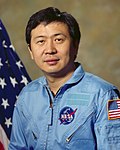
Alumni who have served as heads of state, prime ministers, and heads of government include José Ramón Guizado, 17th President of Panama,[249] Thomas C. Jefferson, first Premier of the Cayman Islands,[250] Abdiweli Mohamed Ali, 15th Prime Minister of Somalia,[251] and Chung Won-shik, 21st Prime Minister of South Korea.[252]
Notable US political figures who have attended Vanderbilt include two US Vice Presidents (John Nance Garner[253] and Nobel Laureate Al Gore[254]), Supreme Court Justice and US Attorney General James Clark McReynolds[255] US Secretary of Commerce Mickey Kantor,[256] Director of the National Economic Council Allan B. Hubbard,[257] US Commissioner of Education John J. Tigert,[258] US Secretary of the Treasury John Wesley Snyder,[259] US Secretary of Education Lamar Alexander,[260] two White House Chiefs of Staff, John R. Steelman[261] and Jack Watson,[262] as well as 53 members of the United States Congress, 18 ambassadors, and 13 governors, including Governor of Texas Greg Abbott[263] and Governor of Kentucky Andy Beshear.[264]
Other leaders in foreign government who graduated from Vanderbilt include Baso Sangqu, President of the United Nations Security Council;[265] Redley A. Killion, Vice President of Micronesia;[266] Pedro Pinto Rubianes, Vice President of Ecuador;[266] Yoo Myung-hee, Minister for Trade of South Korea,[267] Yeda Crusius, Governor of the Brazilian state of Rio Grande do Sul;[268] Wang Tso-jung, President of the Control Yuan of the Government of the Republic of China;[269] Soemarno Sosroatmodjo, Governor of Jakarta, Indonesia;[270] Kwon Hyouk-se, Governor of the Financial Supervisory Service of South Korea;[271] and Ihor Petrashko, Minister of Economic Development and Trade of Ukraine.[272]
Influential figures outside of elected office include civil rights movement pioneer James Lawson,[273] Nobel Peace Prize-winning father of microfinance Muhammad Yunus,[274][275] Scopes Trial chief counsel John Randolph Neal Jr.,[276] Chinese theologian T. C. Chao,[277] Watergate prosecutor James F. Neal,[278] Yun Chi-ho, Korean political activist and thinker during the Joseon Dynasty,[279] and Charlie Soong, who played a significant role in the Xinhai Revolution.[280]
Prominent alumni in business and finance include Time Inc. Chairman and CEO Ann S. Moore,[281] American Airlines Group CEO Doug Parker,[282] Hilton Hotels CEO Matthew J. Hart,[283] NASDAQ CEO Adena Friedman,[284] J.P. Morgan & Co. CEO Henry C. Alexander,[285] American Express Chairman Ralph Owen,[286] founding engineer of Facebook Jeffrey J. Rothschild,[287] General Motors President Mark Reuss,[288] Bain and Company founder Bill Bain,[289] Boston Consulting Group founder Bruce Henderson,[290] Perot Systems Chairman Ross Perot Jr.,[291] Dollar General CEO Cal Turner Jr.,[292] iHeartMedia CEO Mark P. Mays,[293] Emerson Electric CEO David Farr,[294] Eastman Kodak President William S. Vaughn,[295] and Sotheby's CEO Michael Ainslie.[296] In addition, Vanderbilt has educated several heads of central banks, including Süreyya Serdengeçti (Central Bank of Turkey);[297] Syahril Sabirin (Bank of Indonesia);[298] Moshe Mendelbaum (Bank of Israel);[299] Ibrahim Eris (Central Bank of Brazil);[300] and Liang Kuo-shu (Central Bank of the Republic of China).[301]
In academia and the sciences, distinguished Vanderbilt alumni include University of Pennsylvania president Sheldon Hackney,[302] founding dean of Harvard University's John F. Kennedy School of Government Don K. Price,[303] Nobel Prize in Chemistry winner Stanford Moore,[304] astronomers E. E. Barnard[305] and J. Davy Kirkpatrick,[306] Platonist philosopher Richard M. Weaver,[307] founder of New Criticism Cleanth Brooks,[308] mathematician Lawrence C. Evans,[309] Index of Sustainable Economic Welfare developer Herman Daly,[310] Haskell programming language designer Paul Hudak,[311] Director of the Simons Center for the Social Brain at MIT Mriganka Sur,[312] founder of the NASA Astrobiology Institute and Chairman of the SpaceX Safety Advisory Panel G. Scott Hubbard,[313] Mendel L. Peterson, "the father of underwater archaeology",[314] John Ridley Stroop, who discovered the Stroop effect,[315] and NASA astronauts Michael L. Gernhardt[316] and Charles R. Chappell.[317]
Vanderbilt graduates in medicine have pioneered and attained several "firsts" within their fields, including Norman Shumway, first to perform a successful heart transplant in the United States,[318] Levi Watkins, first to successfully implant an automatic defibrillator in a human patient,[319] Mildred T. Stahlman, founder of the first NICU,[320] James Tayloe Gwathmey, the "Father of Modern Anesthesia,"[321] and Ernest William Goodpasture, who invented methods for growing viruses and rickettsiae, enabling the development of vaccination.[45]
Alumni have made significant contributions to literature. Most notably, the Southern Agrarians and Fugitive Poets were two overlapping groups of influential American poets and writers in the early 1900s based at Vanderbilt.[322] Three US Poets Laureate are alums: Allen Tate, Robert Penn Warren, and Randall Jarrell. Warren later won the Pulitzer Prize twice for poetry and for All the King's Men. Other important novelists include James Dickey (Deliverance),[323] James Still (River of Earth),[324] Elizabeth Spencer (The Light in the Piazza),[325] and James Patterson, who topped Forbes's list of global highest grossing authors in multiple years.[326] Journalists who have attended Vanderbilt include Pulitzer Prize winners Ralph McGill and Wendell Rawls Jr., Morning Joe host Willie Geist, Vogue Director of Communications Hildy Kuryk,[327] NBC newscaster David Brinkley, CNN International anchor Richard Quest, and head writer of The Daily Show Zhubin Parang.[328]
In popular culture, Dinah Shore, James Melton, Rosanne Cash, Amy Grant, Kim Dickens, Logan Browning, Dierks Bentley, Joe Bob Briggs, and film directors Rod Daniel and BAFTA winner Duncan Jones, Skip Bayless all attended Vanderbilt,[329] as well as Academy Award winners Delbert Mann and Tom Schulman.[329][330]
Additionally, Vanderbilt counts among its alumni base current and former athletes in the NFL, MLB, and NBA, as well as on the PGA Tour. Alumni in the NFL include Jay Cutler,[331] Bill Wade,[332] Casey Hayward,[333] Ke'Shawn Vaughn,[334] and Trent Sherfield.[335] Vanderbilt's entrants into the NBA include Will Perdue,[336] Charles Davis,[337] Festus Ezeli,[338] Darius Garland,[339] Dan Langhi,[340] Clyde Lee,[341] Luke Kornet,[342] and Aaron Nesmith.[343] Vanderbilt baseball stars include Sonny Gray,[344] Walker Buehler,[345] Pedro Alvarez,[346] Dansby Swanson,[347] David Price,[348] Scotti Madison,[349] and Mike Minor.[350] Carter Hawkins, general manager of the Chicago Cubs, played baseball at Vanderbilt from 2004 to 2007.[351] Brandt Snedeker was the PGA Tour Rookie of the Year in 2007.[352] Olympians who attended Vanderbilt include Jeff Turner, member of the gold medal-winning 1984 United States men's Olympic basketball team,[353] gold medalist Shannon Vreeland in the 4×200-meter freestyle relay at the 2012 Summer Olympics,[354] and rower Peter Sharis in the men's coxless pair event at the 1992 Summer Olympics.[355]
Faculty
[edit]- Notable past and present Vanderbilt faculty include:
-
-

-
 Biophysicist and Nobel Prize laureate Max Delbrück
 -
 New Zealand mathematician and Fields medalist Vaughan Jones
 -
 French mathematician and Fields medalist Alain Connes
 -
 Pathologist and physician Ernest Goodpasture
 -


See also
[edit]Notes
[edit]- ^ Contrary to widely stated belief, however, Wallace was not the first African-American athlete in the SEC:
- Stephen Martin, who was attending Tulane University on an academic scholarship, walked on to Tulane's baseball team in his sophomore season of 1966 (1965–66 school year), and earned letters in that season as well as the 1967 and 1968 seasons. Martin is often overlooked as an SEC integration pioneer because his first season of 1966 was Tulane's last as an SEC member.[63][64]
- At the same time that Wallace and another African-American basketball player, Godfrey Dillard (who transferred from Vanderbilt before playing in a varsity game),[65] enrolled as scholarship athletes at Vanderbilt, the University of Kentucky enrolled two African-American scholarship football players, Nate Northington and Greg Page. Since freshmen were not eligible to play varsity sports at the time, players who enrolled in school in 1966 could not play on varsity teams until 1967. Because the football season precedes the basketball season within the school year, both were set to become the first African-American scholarship athletes in the SEC, but Page suffered a paralyzing spinal cord injury in a 1967 preseason practice and died from the complications on September 29, less than a week after Northington became the SEC's first black scholarship athlete when he played his first game for Kentucky.[66][67]
- ^ See article on the Declaration of Helsinki.
- ^ Other consists of Multiracial Americans & those who prefer to not say.
- ^ The percentage of students who received an income-based federal Pell grant intended for low-income students.
- ^ The percentage of students who are a part of the American middle class at the bare minimum.
- ^ No degree earned.
References
[edit]- ^ a b "Vanderbilt University launches refreshed visual identity". March 22, 2022. Archived from the original on March 22, 2022. Retrieved March 23, 2022.
- ^ "NAICU – Membership". Archived from the original on November 9, 2015.
- ^ Kozlowski, Rob (November 6, 2024). Vanderbilt University endowment returns 9.2% for fiscal year (Report). Pensions & Investments. Retrieved April 1, 2025.
- ^ a b "Staff Factbook". Vanderbilt University. Retrieved January 6, 2025.
- ^ a b c "Vanderbilt At A Glance". Vanderbilt University. Retrieved January 6, 2025.
- ^ "College Navigator – Vanderbilt University". National Center for Education Statistics. Archived from the original on April 14, 2023. Retrieved November 7, 2021.
- ^ "Athletics". Vanderbilt University Brand Style Guide. Retrieved March 23, 2022.
- ^ a b c d e "Quick Facts". Vanderbilt University. Archived from the original on August 19, 2015. Retrieved February 17, 2020.
- ^ Walker, Teresa M. "SEC's only private school, Vanderbilt, thriving without athletic director | Lubbock Online | Lubbock Avalanche-Journal". lubbockonline.com. Archived from the original on January 25, 2008. Retrieved October 10, 2017.
- ^ "Quick Facts". Vanderbilt University. Archived from the original on February 25, 2022. Retrieved October 12, 2023.
- ^ "Vanderbilt At A Glance". Vanderbilt University. Archived from the original on March 1, 2022. Retrieved October 12, 2023.
- ^ "Carnegie Classifications Institution Lookup". carnegieclassifications.iu.edu. Center for Postsecondary Education. Archived from the original on February 24, 2021. Retrieved July 26, 2020.
- ^ "Winning Institution Search". The Rhodes Trust. Archived from the original on August 12, 2020. Retrieved August 20, 2020.
- ^ a b c d e f g h i "Vanderbilt at a Glance". Undergraduate Admissions. Archived from the original on March 1, 2022. Retrieved May 16, 2022.
- ^ a b c d e f g h i j k l m n o p q r s t Carey, Bill (2003). Chancellors, Commodores & Coeds: A History of Vanderbilt University. Nashville, TN: Clearbrook Press Publishing. ISBN 978-0-9725680-0-5.
- ^ Stowell, Daniel W. (1998). Rebuilding Zion: The Religious Reconstruction of the South, 1863–1877. Oxford, UK: Oxford University Press. ISBN 978-0-19-514981-4.
- ^ "Women to the Rescue | Vanderbilt Magazine | Vanderbilt University". October 17, 2015. Archived from the original on October 17, 2015. Retrieved February 5, 2022.
- ^ "Tennessee Portrait Project: Amelia Townsend McTyeire". Tnportraits.org. Archived from the original on March 4, 2016. Retrieved April 23, 2014.
- ^ "Tennessee Portrait Project: Frank Crawford Vanderbilt". Tnportraits.org. Archived from the original on March 4, 2016. Retrieved April 23, 2014.
- ^ a b "The History of Vanderbilt". Vanderbilt University. Archived from the original on May 23, 2007. Retrieved May 24, 2007.
- ^ Renehan, Edward J. Jr. (2007). Commodore: The Life of Cornelius Vanderbilt. Basic Books. p. XV.
- ^ Carey, Bill (April 8, 2002). "Old Central built by former governor who slugged Jefferson Davis". Vanderbilt Register. Archived from the original on November 15, 2002. Retrieved November 5, 2015.
- ^ a b "The Vanderbilt. Laying of the Corner Stone of the Great University Yesterday. Interesting Ceremonies and a Large Attendance. Addressed by Bishops McTyeire and Wrightman, Gov. Brown and Chancellor Morgan". Nashville Union and American. Nashville, Tennessee. April 29, 1874. p. 8. Archived from the original on January 5, 2016. Retrieved November 22, 2015 – via Newspapers.com.
- ^ a b c Hoobler, James A. (2008). A Guide to Historic Nashville, Tennessee. Charleston, South Carolina: The History Press. p. 145. ISBN 978-1-59629-404-2.[permanent dead link]
- ^ a b "The Story of the Frats at Vanderbilt University". The Tennessean. Nashville, Tennessee. January 12, 1908. p. 16. Archived from the original on February 8, 2016. Retrieved January 5, 2016 – via Newspapers.com.
- ^ Goff, Reda C. (Spring 1972). "The Confederate Veteran Magazine". Tennessee Historical Quarterly. 31 (1): 60. JSTOR 42623281.
- ^ ""Cornelius Vanderbilt" G. Moretti". Vanderbilt University. Archived from the original on November 16, 2012. Retrieved December 23, 2015.
- ^ Sterkenburg, Sara (October 17, 2018). "The History of Kirkland Hall Topic of New Exhibition". Vanderbilt University. Archived from the original on June 6, 2024. Retrieved June 29, 2024.
- ^ Mediratta, Avi; Bub, Sydney (October 5, 2016). "The Legacy of Slavery at Vanderbilt". Vanderbilt Political Review. Archived from the original on June 17, 2018. Retrieved June 16, 2018.
Although Cornelius Vanderbilt originally supported the Union, it was Frank Armstrong Crawford Vanderbilt, the Commodore's wife and a Confederate sympathizer, who supposedly convinced him to donate money for the founding of Vanderbilt University. The university named Crawford House, on the Martha Rivers Ingram Commons, in her honor.
- ^ a b Fuselier, Kathryn; Yee, Robert (October 17, 2016). "The Legacy of Slavery at Vanderbilt: Our Forgotten Past". Vanderbilt Historical Review. Archived from the original on October 2, 2017. Retrieved September 19, 2017.
- ^ Glenn, Justin (2015). The Washingtons: A Family History: Volume 1: Seven Generations of the Presidential Branch. El Dorado Hills, California: Savas Beatie. p. 1895. ISBN 978-1-61121-285-3. OCLC 898163692.
- ^ "Vanderbilt Collection — Kirkland Hall: A.L.P. Green 1806–1875". Tennessee Portrait Project. Colonial Dames of America in Tennessee. Archived from the original on January 5, 2016. Retrieved November 9, 2015.
- ^ "Slaves Buried Between 1846–1865". Nashville City Cemetery. Archived from the original on December 22, 2017. Retrieved November 9, 2015.
- ^ a b Epstein Ojalvo, Holly (February 13, 2017). "Beyond Yale: These other university buildings have ties to slavery and white supremacy". USA Today. Archived from the original on April 8, 2018. Retrieved April 7, 2018.
But in 2012, a new college hall was dedicated to Elizabeth Boddie Elliston, whose family owned slaves and who, according to the university website, "donated segments of her plantation for the formation of the Vanderbilt campus."
- ^ Gulley, Frank. "Vanderbilt University and Southern Methodism". Archived from the original on August 22, 2010. Retrieved February 20, 2008.
- ^ Burt, Jesse C. Jr. (June 1954). "Anna Russell Cole: A Study of a Grande Dame". Tennessee Historical Quarterly. 13 (2): 127–155. JSTOR 42621182.
- ^ a b "Cole Lectures". Divinity School. Vanderbilt University. Archived from the original on October 2, 2017. Retrieved September 19, 2017.
- ^ "Vanderbilt Collection – Kirkland Hall: Anna Virginia Russell (Mrs. E.W.) Cole 1846 – 1926". Tennessee Portrait Project. National Society of Colonial Dames of America in Tennessee. Archived from the original on September 15, 2015. Retrieved September 30, 2017.
- ^ Burt, Jesse C. Jr (January 1954). "Whitefoord Russell Cole: A Study in Character". Filson Club History Quarterly. 28: 28–48.
- ^ a b "Whitefoord Russell Cole 1874 – 1934". Tennessee Portrait Project. National Society of Colonial Dames of America in Tennessee. Archived from the original on November 20, 2008. Retrieved October 24, 2017.
- ^ Hale Rand, Nettie (1940). Rand-Hale, Strong and Allied Families: A Genealogical Study with the Autobiography of Nettie Hale Rand. New York City: The American Historical Company, Inc. pp. 15–20.
- ^ "Buildings Bear Leaders' Names. Garland, Buttrick and Calhoun To Be Honored at Vanderbilt". The Tennessean. March 25, 1928. p. 7. Archived from the original on March 8, 2021. Retrieved June 16, 2018 – via Newspapers.com.
- ^ "The Inflation Calculator". Archived from the original on July 18, 2011. Retrieved May 18, 2016.
- ^ a b Jaschik, Scott (May 5, 2005). "Confederates Defeat Vanderbilt: Appeals court says university must pay – if it wants to change controversial name of a dormitory". Inside Higher Ed. Archived from the original on March 8, 2021. Retrieved November 21, 2015.
- ^ a b c "Obituary (AP): Dr. Ernest Goodpasture Dead; Developed Vaccine for Mumps: Pathologist's Chicken Embryo Virus Led to Immunization Against Many Diseases". New York Times; September 22, 1960; ProQuest Historical Newspapers: pg. 27.
- ^ a b McCabe, Katie "Like Something the Lord Made." Archived February 12, 2012, at the Wayback Machine The Washingtonian, 1999.
- ^ "U.S. Naval Administration in World War II". HyperWar Foundation. 2011. Archived from the original on January 12, 2012. Retrieved September 29, 2011.
- ^ "Max Delbruck at Vanderbilt". Department of Physics and Astronomy. Retrieved February 5, 2022.
- ^ "The Nobel Prize in Physiology or Medicine 1969". NobelPrize.org. Archived from the original on June 12, 2018. Retrieved March 26, 2019.
- ^ Pacchioli, David, (March 1996) "Subjected to Science" Archived January 10, 2013, at the Wayback Machine, Research/Penn State, Vol. 17, no. 1
- ^ a b c Miller, Karin (July 28, 1998). "Experiment subjects to get $10.3 million from university". The Santa Cruz Sentinel. Santa Cruz, California. p. 7. Archived from the original on March 8, 2021. Retrieved October 12, 2015 – via Newspapers.com.
- ^ a b "1940s study gave radioactive pills to 751 pregnant women". The Galveston Daily News. Galveston, Texas. December 21, 1993. p. 3. Archived from the original on March 8, 2021. Retrieved October 12, 2015 – via Newspapers.com.
- ^ Girls Coming to Tech. MIT Press. January 14, 2014. ISBN 978-0-262-32027-6. Archived from the original on July 9, 2024. Retrieved January 14, 2014.
- ^ "Name". frontweb.vuse.vanderbilt.edu. Archived from the original on March 27, 2023. Retrieved February 5, 2022.
- ^ a b Carey, Bill (February 12, 2003). "First African-American student left many legacies". Vanderbilt University. Archived from the original on December 28, 2015. Retrieved May 10, 2015.
- ^ a b Branscomb, Harvie (1978). Purely Academic: An Autobiography. Nashville, TN: Vanderbilt University. pp. 152–65.
- ^ Sumner, David E. (Spring 1997). "The Publisher and the Preacher: Racial Conflict at Vanderbilt University". Tennessee Historical Quarterly. 56 (1): 34–43. JSTOR 42627327.
- ^ Fontenay, Charles L. (May 1, 1976). "Stahlman Suffers Stroke; Condition Termed Critical". The Tennessean. pp. 1, 8. Archived from the original on March 8, 2021. Retrieved December 17, 2017 – via Newspapers.com.
- ^ "Jefferson Cowie, James G. Stahlman Professor of History". Department of History. Vanderbilt University. Archived from the original on March 8, 2021. Retrieved December 18, 2017.
- ^ Patterson, Jim (January 30, 2006). "The Rev James Lawson to return as visiting professor". The Vanderbilt Register. Archived from the original on March 5, 2016. Retrieved January 10, 2007.
- ^ "Perry Wallace". Tennessee Sports Hall of Fame. 2003. Archived from the original on July 24, 2011. Retrieved August 17, 2007.
- ^ a b "Wallace was first black player in SEC". Archived from the original on October 17, 2015. Retrieved August 3, 2015.
- ^ "Tulane Mourns the Passing of Integration Pioneer Stephen Martin Sr" (Press release). Tulane Green Wave. May 16, 2013. Archived from the original on January 30, 2018. Retrieved January 30, 2018.
- ^ Maraniss, Andrew (2014). Strong Inside: Perry Wallace and the Collision of Race and Sports in the South. Vanderbilt University Press. p. 221. ISBN 978-0-8265-2024-1.
- ^ Carey, Jack (February 19, 2004). "An SEC trailblazer gets his due". USA Today. Archived from the original on June 4, 2011. Retrieved March 7, 2010.
- ^ Story, Mark (September 22, 2016). "UK reveals sculpture honoring first black football players". Lexington Herald-Leader. Archived from the original on December 1, 2017. Retrieved January 30, 2018.
- ^ "Pioneers of Integration in the SEC" (PDF). 2018 UK Football Record Book. Kentucky Wildcats. Archived from the original (PDF) on September 13, 2018. Retrieved September 12, 2018.
- ^ "Speakers". September 28, 2010. Archived from the original on March 8, 2021. Retrieved March 26, 2019.
- ^ "IMPACT through the Decades". February 19, 2014. Archived from the original on March 8, 2021. Retrieved March 26, 2019.
- ^ a b Lorge, Barry (February 1, 1978). "USTA: No Choice On Davis Clash With S. Africa". The Washington Post. Archived from the original on August 28, 2017. Retrieved July 10, 2017.
- ^ Amdur, Neil (March 20, 1978). "U.S. Davis Cup Team Beats South Africa". The New York Times. Archived from the original on June 17, 2018. Retrieved July 10, 2017.
- ^ "History of Vanderbilt University". Archived from the original on April 11, 2021. Retrieved March 23, 2015.
- ^ Harmon L. Wray Jr., Cells for Sale Archived February 1, 2016, at the Wayback Machine, Southern Changes: The Journal of the Southern Regional Council, Volume 8, Number 3, 1989
- ^ a b Donna Selman; Paul Leighton (2010). Punishment for Sale: Private Prisons, Big Business, and the Incarceration Binge. New York City: Rowman & Littlefield Publishers. pp. 81–82. ISBN 978-1-4422-0174-3. Archived from the original on July 9, 2024. Retrieved September 17, 2017.
Pre-IPO shareholders included Vanderbilt University, where Thomas Beasley received a law degree (and which has done some research favorable to private prisons).
- ^ "Distinguished Award Recipients". Vanderbilt Law School. Archived from the original on June 17, 2018. Retrieved June 16, 2018.
- ^ a b "How VU tackles tough job of lasooing more diversity". The Tennessean. November 19, 1995. p. 58. Archived from the original on August 15, 2020. Retrieved June 16, 2018 – via Newspapers.com.
- ^ a b Dobie, Bruce (April 18, 2002). "Campus Revolution". Nashville Scene. Archived from the original on February 5, 2022. Retrieved February 5, 2022.
- ^ a b c "Vanderbilt to add 4 residential colleges in $600M project". The Associated Press. January 24, 2018. Archived from the original on February 5, 2022. Retrieved February 5, 2022.
- ^ "Confederate Memorial Hall renamed Memorial Hall". The Vanderbilt Register. September 19, 2002. Archived from the original on February 12, 2012. Retrieved May 24, 2007.
- ^ Latt, Elizabeth P (October 1, 2003). "Court ruling supports Vanderbilt decision to change name of building". The Vanderbilt Register. Archived from the original on February 12, 2012. Retrieved May 24, 2007.
- ^ "Appeals court rules on Memorial Hall dispute". The Vanderbilt Register. May 5, 2005. Archived from the original on February 12, 2012. Retrieved May 24, 2007.
- ^ Brophy, Alfred L. (2010). "The Law and Morality of Building Renaming" (PDF). South Texas Law Review. Archived (PDF) from the original on January 12, 2013. Retrieved May 26, 2013. Brophy's article "concludes with a caution that renaming can lead to the forgetting of historical context and an observation that memory is more important than renaming" (p. 37).
- ^ "Vanderbilt drops suit over Memorial Hall". The Vanderbilt Register. July 25, 2005. Archived from the original on February 12, 2012. Retrieved May 24, 2007.
- ^ Tamburin, Adam (August 15, 2016). "Vanderbilt to remove 'Confederate' from building name". The Tennessean. Archived from the original on July 9, 2024. Retrieved August 15, 2016.
Anonymous donors recently gave the university the $1.2 million needed for that purpose; the Vanderbilt Board of Trust authorized the move this summer.
- ^ "Need-Based Financial Aid at Vanderbilt". Vanderbilt.edu. Archived from the original on July 24, 2015. Retrieved July 24, 2015.
- ^ "Donors give $200 million to support Vanderbilt financial aid program". The Tennessean. May 14, 2015. p. A5. Archived from the original on August 14, 2020. Retrieved June 16, 2018 – via Newspapers.com.
- ^ a b c "Vanderbilt University Divests from "Land Grab" in Africa". oaklandinstitute.org. February 13, 2013. Archived from the original on February 5, 2022. Retrieved February 5, 2022.
- ^ "US universities in Africa 'land grab'". the Guardian. June 8, 2011. Archived from the original on July 9, 2024. Retrieved February 5, 2022.
- ^ "Vanderbilt's Wond'ry spurs school-wide innovation". The Tennessean. Archived from the original on July 9, 2024. Retrieved December 28, 2016.
- ^ "From LA to NY, pro-Palestine college campus protests grow strong in US". Al Jazeera. Retrieved September 22, 2024.
- ^ Miller, Kaitlin (April 26, 2024). "Vanderbilt University students protest in support of Palestine by camping on campus". WZTV. Retrieved September 22, 2024.
- ^ "Vanderbilt University students mark 1 month in Pro-Palestinian tent encampment". WKRN News 2. May 1, 2024. Retrieved September 22, 2024.
- ^ Bacallao, Marianna (May 9, 2024). "What sets Vanderbilt's response to pro-Palestinian protests apart from other colleges". wpln.org. Retrieved September 22, 2024.
- ^ Latham, Angele. "Vanderbilt University students protest, arrested at sit-in: What to know". The Tennessean. Retrieved September 22, 2024.
- ^ a b Bacallao, Marianna (May 10, 2024). "Talking with a Vanderbilt senior expelled for role in pro-Palestinian protests". NPR. Archived from the original on May 10, 2024. Retrieved September 22, 2024.
- ^ "How College Campuses Are Trying to Manage Protests During an Election Year - The New York Times". The New York Times. August 24, 2024. Archived from the original on August 24, 2024. Retrieved September 22, 2024.
- ^ "2022-2023 Common Data Set". Vanderbilt University. August 26, 2022. Archived from the original on May 15, 2023. Retrieved May 16, 2023.
- ^ "Vanderbilt At A Glance". Vanderbilt University. August 26, 2022. Archived from the original on March 1, 2022. Retrieved May 16, 2023.
- ^ a b "The Vanderbilt Profile*". Undergraduate Admissions. Archived from the original on March 1, 2022. Retrieved November 7, 2018.
- ^ "Vanderbilt University". Vanderbilt University. Archived from the original on August 19, 2015. Retrieved October 10, 2017.
- ^ "The Vanderbilt Profile | Undergraduate Admissions | Vanderbilt University". admissions.vanderbilt.edu. Archived from the original on March 1, 2022. Retrieved February 9, 2018.
- ^ Perrotta, Rachael. "'This class gives me hope': Class of 2026 overall acceptance rate drops to 6.1%, record low". The Vanderbilt Hustler. Archived from the original on June 16, 2022. Retrieved June 27, 2021.
- ^ Dado, Natasha (September 15, 2022). "The hardest colleges to get into for 2023, ranked". CBS News. Archived from the original on May 16, 2023. Retrieved May 16, 2023.
- ^ "National Merit Scholarship Corporation Annual Report, 2015–2016" (PDF). National Merit Scholarship Corporation. Archived (PDF) from the original on November 7, 2017. Retrieved November 3, 2017.
- ^ "Vanderbilt University". The Princeton Review. Archived from the original on February 28, 2022. Retrieved February 28, 2022.
- ^ "Class of 2026 Regular Decisions Mailed Today | The Vandy Admissions Blog | Vanderbilt University". Admissions.vanderbilt.edu. March 23, 2012. Archived from the original on April 2, 2022. Retrieved March 5, 2013.
- ^ "Rankings by total R&D expenditures". ncsesdata.nsf.gov. National Science Foundation. Archived from the original on January 13, 2017. Retrieved May 16, 2023.
- ^ Zalaznick, Matt (January 6, 2023). "Billion-dollar business: These are higher ed's top 30 R&D performers". University Business. Archived from the original on December 24, 2023. Retrieved December 28, 2023.
- ^ "Vanderbilt ranks 12th in annual survey of NIH funding; 2021 awards topped $445M". Vanderbilt University. March 31, 2022. Archived from the original on May 16, 2023. Retrieved May 16, 2023.
- ^ "Nuclear & Plasma Sciences Society". Archived from the original on May 17, 2022. Retrieved August 3, 2015.
- ^ a b "Harold Stirling Vanderbilt". Archived from the original on March 6, 2016. Retrieved August 3, 2015.
- ^ Harrison, David (May 23, 2004). "A true scientific breakthrough: the blue rose". The Daily Telegraph. London. Archived from the original on January 11, 2022. Retrieved June 30, 2011.
- ^ "Advanced exoskeleton promises more independence for people with paraplegia". Vanderbilt University. October 30, 2012. Archived from the original on November 5, 2012. Retrieved November 29, 2012.
- ^ "Lightweight Robotic Exoskeleton Approved By FDA". Popular Science. March 12, 2016. Archived from the original on October 20, 2020. Retrieved July 26, 2020.
- ^ "Nations Work Together to Discover New Element". US Department of Energy. US DOE Office of Science. 2011. Archived from the original on September 14, 2015. Retrieved January 5, 2020.
- ^ "Periodic table elements named for Moscow, Japan, Tennessee". Associated Press News. June 8, 2016. Archived from the original on October 22, 2019. Retrieved January 12, 2020.
- ^ "$10 Million Settlement In Radiation Suit". The New York Times. May 29, 1998. Archived from the original on July 9, 2024. Retrieved September 20, 2007.
- ^ Schneider, Keith (March 2, 1994). "Scientists Share in Pain Of Experiment Debates". The New York Times. Retrieved July 5, 2007.
- ^ "Vanderbilt University Radiation Class Action". Lieff Cabraser. July 27, 1998. Archived from the original on April 5, 2014. Retrieved April 22, 2014.
- ^ "America's Top Colleges 2025". Forbes. September 6, 2025. Retrieved October 3, 2025.
- ^ "2025-2026 Best National Universities Rankings". U.S. News & World Report. September 23, 2025. Retrieved October 3, 2025.
- ^ "2024 National University Rankings". Washington Monthly. August 25, 2024. Retrieved August 29, 2024.
- ^ "2025 Best Colleges in the U.S." The Wall Street Journal/College Pulse. September 4, 2025. Retrieved October 3, 2025.
- ^ "2024 Academic Ranking of World Universities". ShanghaiRanking Consultancy. August 15, 2024. Retrieved August 21, 2024.
- ^ "QS World University Rankings 2026". Quacquarelli Symonds. June 19, 2025. Retrieved June 19, 2025.
- ^ "World University Rankings 2025". Times Higher Education. October 9, 2024. Retrieved June 19, 2025.
- ^ "2025-2026 Best Global Universities Rankings". U.S. News & World Report. June 17, 2025. Retrieved June 17, 2025.
- ^ "Vanderbilt University – U.S. News Best National University Rankings". U.S. News & World Report. Archived from the original on December 23, 2019. Retrieved February 28, 2022.
- ^ "Vanderbilt University – U.S. News Best Global University Rankings". U.S. News & World Report. Archived from the original on October 28, 2014. Retrieved February 28, 2022.
- ^ "Vanderbilt University". Archived from the original on December 23, 2019. Retrieved September 12, 2017.
- ^ "2024 Best Colleges in America". Niche. Archived from the original on September 18, 2019. Retrieved June 29, 2024.
- ^ "2024 Hardest Colleges to Get Into in America". Niche. Archived from the original on May 11, 2024. Retrieved June 29, 2024.
- ^ "2024 Best Education Schools". Archived from the original on October 6, 2021. Retrieved June 29, 2024.
- ^ "2024 Best Law Schools". Archived from the original on March 20, 2017. Retrieved June 29, 2024.
- ^ "2023-2024 Best Medical Schools: Research". Archived from the original on June 14, 2019. Retrieved June 29, 2024.
- ^ "2024 Best Nursing Schools: Master's". Archived from the original on November 5, 2023. Retrieved June 29, 2024.
- ^ "2024 Best Engineering Schools". Archived from the original on March 10, 2023. Retrieved June 29, 2024.
- ^ "2024 Best Business Schools". Archived from the original on March 14, 2012. Retrieved June 29, 2024.
- ^ "Vanderbilt University". U.S. News & World Report. 2014. Archived from the original on June 6, 2014. Retrieved June 5, 2014.
- ^ "US B-Schools Ranking". Bloomberg Businessweek. Archived from the original on April 19, 2020. Retrieved June 29, 2024.
- ^ "Academic Ranking of World Universities: Vanderbilt University". ShanghaiRanking Consultancy. May 16, 2023. Archived from the original on May 16, 2023. Retrieved May 16, 2023.
- ^ "QS World University Rankings 2023: Top global universities". TopUniversities. May 16, 2023. Archived from the original on September 17, 2012. Retrieved May 16, 2023.
- ^ "50 Best World Universities 2011". ChaseCareer Network. Archived from the original on May 11, 2011.
- ^ Abramson, Seth (November–December 2009). "The Top Fifty MFA Programs in the United States: A Comprehensive Guide". pw.org. Archived from the original on December 3, 2010. Retrieved November 28, 2010.
- ^ Levering, Robert; Moskowitz, Milton (February 2, 2009). "100 Best Companies To Work For". Fortune. 159 (2): 78. Retrieved April 22, 2018.
- ^ "Kiplinger's Best College Values". www.kiplinger.com. Archived from the original on February 21, 2018. Retrieved February 22, 2018.
- ^ "The Best Colleges in America of 2020 by Money". money.com. Archived from the original on July 8, 2022. Retrieved August 28, 2020.
- ^ Ewalt, David (October 23, 2019). "The World's Most Innovative Universities 2019". Reuters. Archived from the original on May 16, 2023. Retrieved May 16, 2023.
- ^ "Vanderbilt University – The Princeton Review College Rankings & Reviews". www.princetonreview.com. Archived from the original on August 20, 2017. Retrieved August 3, 2017.
- ^ "America's Most Beautiful College Campuses". Travel + Leisure. Archived from the original on April 21, 2018. Retrieved February 22, 2018.
- ^ "Work Hard, Play Hard: The 30 most intense colleges in America". Business Insider. Archived from the original on October 11, 2017. Retrieved October 10, 2017.
- ^ "Here are the 50 smartest colleges in America". Business Insider. Archived from the original on August 25, 2018. Retrieved August 24, 2018.
- ^ "Land Use". Archived from the original on September 9, 2015. Retrieved August 3, 2015.
- ^ "History". vanderbilt.edu. Archived from the original on April 11, 2021. Retrieved March 22, 2015.
- ^ a b c "Facts about the Arboretum". Vanderbilt University. Archived from the original on March 12, 2014. Retrieved March 12, 2014.
- ^ "ArbNet, the Interactive Community of Arboreta: Vanderbilt University Arboretum". The Morton Arboretum. Archived from the original on March 2, 2022. Retrieved October 30, 2020.
- ^ "Bicentennial Oak, beloved campus landmark, has died". Vanderbilt University. November 16, 2022. Archived from the original on January 31, 2023. Retrieved January 31, 2023.
- ^ Sherman, Najahe (December 22, 2015). "Broken bones and stitches: Parents injured by tree falling at Vanderbilt". WKRN-TV. Archived from the original on December 24, 2015. Retrieved December 24, 2015.
- ^ "10 Hurt When Tree Falls During Vanderbilt Tour". Inside Higher Ed. December 22, 2015. Archived from the original on December 25, 2015. Retrieved December 24, 2015.
- ^ Roslin, Noah (August 23, 2022). "Tree falls on Peabody Lawn, two students injured". The Vanderbilt Hustler. Archived from the original on February 28, 2023. Retrieved February 28, 2023.
- ^ a b c d e f g h i "Archived copy" (PDF). Archived from the original (PDF) on September 12, 2014. Retrieved August 22, 2014.
{{cite web}}: CS1 maint: archived copy as title (link) - ^ Lagemann, Robert T.; Holladay, Wendell G. (2000). To Quarks and Quasars: A History of Physics and Astronomy at Vanderbilt University. p. 32.
They agreed that the preferred location would be the popularly named "Sacred Grove," a wooded, open area east of the Engineering School and north of the Medical School, more or less where the Stevenson Center now stands.
- ^ Sterkenburg, Sara (October 17, 2018). "The History of Kirkland Hall Topic of New Exhibition". Archived from the original on August 8, 2020. Retrieved November 21, 2019.
- ^ Campus Land Use / Master Planning History at Vanderbilt Archived February 10, 2018, at the Wayback Machine Downloaded February 9, 2018.
- ^ "NY Architects Design Vanderbilt University's Historic Peabody College for Teachers - Education Update". www.educationupdate.com. Archived from the original on June 6, 2018. Retrieved February 5, 2022.
- ^ Hitson, Hadley (September 26, 2024). "Vanderbilt takes over New York seminary for nationwide expansion". The Tennessean. Retrieved September 30, 2024.
- ^ "Vanderbilt Moves Forward on Florida Expansion Plans". Retrieved August 22, 2025.
- ^ "Vanderbilt University Is Exploring A Downtown Campus In San Francisco". Forbes. Retrieved August 22, 2025.
- ^ "Membership and Procedures of the Board of Trust". Vanderbilt University. November 21, 2008. Archived from the original on February 1, 2009. Retrieved January 7, 2009.
- ^ "Members". Board of Trust. Archived from the original on December 3, 2017. Retrieved December 2, 2017.
- ^ a b c d e f g h i j k l m n o p q r s t "History of the Office". Vanderbilt University. Archived from the original on September 8, 2006. Retrieved January 10, 2007.
- ^ "Joe B. Wyatt 1982–2000". Vanderbilt University. Archived from the original on April 2, 2012. Retrieved December 13, 2008.
- ^ Duncan, Walker (September 26, 2006). "WSJ: Vandy Making Sure Gee isn't Puffing Away Millions". The Nashville Post. Archived from the original on January 14, 2010. Retrieved January 10, 2007.
- ^ "Register". Vanderbilt.edu. Archived from the original on October 23, 2013. Retrieved April 23, 2014.
- ^ "Longtime Vanderbilt academic Nicholas Zeppos appointed chancellor". Wate.com. Archived from the original on March 9, 2014. Retrieved March 5, 2013.
- ^ Zipporah Osei (April 2, 2019). "Vanderbilt's Chancellor Will Step Down". The Chronicle of Higher Education. Archived from the original on December 10, 2019. Retrieved June 12, 2019.
- ^ Fletcher, Holly. "VUMC's split ushers in 'bright' era of change, growth". The Tennessean. Retrieved February 5, 2022.
- ^ "Vanderbilt University Medical Center". Vanderbilt University. Archived from the original on April 7, 2008. Retrieved July 2, 2007.
- ^ "Major Employers". Archived from the original on July 28, 2015. Retrieved August 3, 2015.
- ^ "Middle Tennessee's Largest Private Employer Bolsters Veteran Hiring Initiative with Paychecks for Patriots — TN.gov Newsroom". Archived from the original on July 14, 2015. Retrieved August 3, 2015.
- ^ "Best Hospitals Honor Roll 2008". U.S. News & World Report. Archived from the original on October 17, 2015. Retrieved August 3, 2015.
- ^ "Overview | College of Arts and Science | Vanderbilt University". Archived from the original on November 11, 2019. Retrieved November 11, 2019.
- ^ "College of Arts and Science". Archived from the original on May 23, 2019. Retrieved November 11, 2019.
- ^ "A John Crowe Ransom Chronology". www.english.illinois.edu. Archived from the original on February 8, 2014. Retrieved November 11, 2019.
- ^ "Robert Penn Warren". Archived from the original on October 23, 2019. Retrieved November 11, 2019.
- ^ "Home Page". Archived from the original on February 20, 2020. Retrieved November 11, 2019.
- ^ "AXLE". Archived from the original on May 23, 2019. Retrieved November 11, 2019.
- ^ "Research Centers | Academics | College of Arts and Science | Vanderbilt University". Archived from the original on May 23, 2019. Retrieved November 11, 2019.
- ^ "Max Kade Center for European and German Studies". Archived from the original on May 23, 2019. Retrieved November 11, 2019.
- ^ "Pre-Professional Studies at Vanderbilt". Archived from the original on November 11, 2019. Retrieved November 11, 2019.
- ^ "Home". Archived from the original on December 27, 2016. Retrieved November 11, 2019.
- ^ "College Scorecard: Vanderbilt University". United States Department of Education. Archived from the original on June 15, 2022. Retrieved May 8, 2022.
- ^ Weber, Bruce (July 29, 2007). "The Residential Collage". The New York Times. ISSN 0362-4331. Archived from the original on September 21, 2017. Retrieved February 5, 2022.
- ^ a b c d e f "About the College Halls". Archived from the original on July 22, 2015. Retrieved August 3, 2015.
- ^ "Rothschild College". November 4, 2022.
- ^ "Nicholas S. Zeppos College". December 18, 2019.
- ^ "Oliver C. Carmichael College". August 19, 2024.
- ^ "Vanderbilt first university in Tennessee recognized for "green" building" (Press release). Vanderbilt University. August 17, 2007. Archived from the original on February 9, 2012. Retrieved September 2, 2007.
- ^ "Vanderbilt University goes for the gold and wins for 'green' building efforts" (Press release). Vanderbilt University. June 18, 2008. Archived from the original on September 6, 2008. Retrieved June 18, 2008.
- ^ Sisk, Chas (September 3, 2007). "Seven Vanderbilt buildings to get 'green' certification". The Tennessean. Retrieved September 3, 2007.[dead link]
- ^ Lewis, Princine (June 13, 2005). "Living and learning at Vanderbilt to undergo major transformation". The Vanderbilt Register. Archived from the original on March 28, 2013. Retrieved July 1, 2007.
- ^ a b "Residential Requirement". vanderbilt.edu. Archived from the original on April 2, 2015. Retrieved March 22, 2015.
- ^ "Vanderbilt Sailing Club – Historical Background". Vanderbilt Sailing Club. Archived from the original on August 8, 2016. Retrieved July 8, 2016.
- ^ "Vanderbilt Hustler". Archived from the original on July 9, 2024. Retrieved August 3, 2015.
- ^ "Langford v. Vanderbilt University". Justia Law. Archived from the original on February 5, 2022. Retrieved February 5, 2022.
- ^ Russell, Kirk (January 15, 1969). "Who is responsible for student press?". The Argus (Fremont, California). p. 4. Archived from the original on October 17, 2015. Retrieved July 16, 2015 – via Newspapers.com.

- ^ Taylor, Kelly; Sam Patton (April 4, 2007). "Letter: Greer column fails to mention diversity of campus radio station". The Vanderbilt Hustler. Archived from the original on November 28, 2011. Retrieved April 26, 2007.
- ^ Kara Furlong. "Melodores are 'Sing-Off' champs". Vanderbilt University. Archived from the original on July 30, 2015. Retrieved August 3, 2015.
- ^ "National Pan-Hellenic Council". Vanderbilt University. Retrieved July 23, 2024.
- ^ "Interfraternity Council". Vanderbilt University. Archived from the original on October 2, 2017. Retrieved October 2, 2017.
- ^ Shoulders, Carolyn (April 2, 1980). "Black To Lead Protest of Fraternity Dixie Ball". The Tennessean. Archived from the original on August 15, 2020. Retrieved June 16, 2018.
- ^ a b Suddath, Claire (August 26, 2004). "Where the Freaks Are". Nashville Scene. Archived from the original on June 17, 2018. Retrieved June 2, 2018.
- ^ "Former Beta Upsilon Chi members allege unfair treatment based on sexual orientation | InsideVandy". December 9, 2011. Archived from the original on December 9, 2011. Retrieved February 5, 2022.
- ^ "Vanderbilt Christian Frat Ousted Gays | News | The Advocate". November 12, 2010. Archived from the original on November 12, 2010. Retrieved February 5, 2022.
- ^ Wright, Melissa (November 10, 2010). "US fraternity comes under fire for expelling gay members". Pink Paper. Archived from the original on March 19, 2012.
- ^ "Professor Says Vanderbilt Suppressing Christian Student Groups Amid Shutdown Threats". Fox News. September 26, 2011. Archived from the original on October 15, 2011. Retrieved October 12, 2011.
- ^ "Tennessee Senate Bill 3597 History". Archived from the original on July 11, 2012. Retrieved July 25, 2012.
- ^ a b Tamburin, Adam. "Swastikas painted in Jewish fraternity at Vanderbilt". The Tennessean. Archived from the original on July 9, 2024. Retrieved February 5, 2022.
- ^ a b "Three swastikas were spray-painted in a Jewish fraternity at Vanderbilt University". Business Insider. Reuters. Archived from the original on February 5, 2022. Retrieved February 5, 2022.
- ^ a b "Vanderbilt University investigating Swastikas painted in Jewish fraternity". The Jerusalem Post | JPost.com. Archived from the original on February 5, 2022. Retrieved February 5, 2022.
- ^ "Swastikas painted on Jewish frat house at Vanderbilt". Jewish Telegraphic Agency. March 17, 2015. Archived from the original on February 5, 2022. Retrieved February 5, 2022.
- ^ a b Tamburin, Adam (January 26, 2016). "Vanderbilt survey: Hundreds encounter sexual assault". The Tennessean. Archived from the original on July 9, 2024. Retrieved January 30, 2016.
- ^ a b Barchenger, Stacey (June 19, 2016). "Brandon Vandenburg guilty on all counts in Vanderbilt rape retrial". The Tennessean. Retrieved June 20, 2016.
- ^ Barchenger, Stacey (April 9, 2016). "Cory Batey found guilty of aggravated rape in retrial". The Tennessean. Archived from the original on July 9, 2024. Retrieved June 20, 2016.
- ^ "Brandon Vandenburg found guilty on all charges in Vanderbilt rape case". WREG-TV. June 18, 2016. Archived from the original on June 20, 2016. Retrieved June 20, 2016.
- ^ "Former Vanderbilt football player again convicted of rape". Los Angeles Times. June 18, 2016. Archived from the original on June 20, 2016. Retrieved June 20, 2016.
- ^ Schulman, Max (July 14, 2020). "SCHULMAN: Drop. - The Vanderbilt Hustler". Archived from the original on August 29, 2023. Retrieved August 29, 2023.
- ^ Marcus, Ezra (August 1, 2020). "The War on Frats". The New York Times. ISSN 0362-4331. Archived from the original on August 25, 2023. Retrieved August 25, 2023.
- ^ Lele, Aaditi; Oung, Katherine (February 23, 2022). "Construction worker found dead on Rothschild College construction site". The Vanderbilt Hustler. Archived from the original on April 28, 2023. Retrieved April 27, 2023.
- ^ Freed, Benjamin (February 23, 2023). "University acknowledges another on-campus construction death, students launch Dores Worker Solidarity Network". The Vanderbilt Hustler. Archived from the original on February 28, 2023. Retrieved February 28, 2023.
- ^ Ratangee, Brina (April 6, 2024). "Three students expelled following Student Accountability hearings, faculty criticize university response - The Vanderbilt Hustler". Retrieved July 23, 2024.
- ^ Friedman, Adam (June 5, 2024). "Vanderbilt-commissioned report on Nashville Scene reporter's arrest continues to blame him • Tennessee Lookout". Tennessee Lookout. Retrieved July 23, 2024.
- ^ Ramirez, Alejandro (March 26, 2024). "Scene Reporter Arrested at Vanderbilt University". Nashville Scene. Archived from the original on July 9, 2024. Retrieved March 26, 2024.
- ^ Walker, Teresa M. "SEC's only private school, Vanderbilt, thriving without athletic director – Lubbock Online – Lubbock Avalanche-Journal". lubbockonline.com. Archived from the original on January 25, 2008. Retrieved August 22, 2014.
- ^ "Sports". Vanderbilt University Athletics. Archived from the original on March 16, 2009. Retrieved May 20, 2009.
- ^ "College Navigator – Varsity Athletic Teams". National Center for Education Statistics, US Department of Education. Archived from the original on June 4, 2011. Retrieved May 20, 2009.
- ^ "American Athletic Conference to Sponsor Women's Lacrosse Beginning in 2019" (Press release). American Athletic Conference. October 11, 2017. Archived from the original on February 26, 2019. Retrieved October 16, 2017.
- ^ Patton, Maurice (May 14, 2007). "Success may add teams at Vandy". The Tennessean. Archived from the original on July 15, 2012. Retrieved May 24, 2007.
- ^ "Vanderbilt Adds Volleyball as Varsity Sport". Vanderbilt University Athletics - Official Athletics Website. April 19, 2022. Archived from the original on April 20, 2022. Retrieved March 2, 2023.
- ^ "Vanderbilt Official Athletic Site — Facilities". Vucommodores.com. Archived from the original on March 15, 2015. Retrieved March 23, 2015.
- ^ "The Magic of Memorial is Historical". Vucommodores.com. Archived from the original on May 27, 2013. Retrieved March 5, 2013.
- ^ Bechtel, Mark (June 6, 2007). "A Process of Elimination: Vanderbilt has found greater sports success since losing its athletics department". Sports Illustrated.
- ^ "Seven Vanderbilt teams ranked in Top 25" (Press release). Vanderbilt University. February 23, 2007. Archived from the original on March 27, 2008. Retrieved May 24, 2007.
- ^ "Vanderbilt Bowlers Make History". Vanderbilt University. Archived from the original on September 29, 2011. Retrieved April 14, 2007.
- ^ Kimmey, Will (October 11, 2005). "Vandy Recruits Stay For Top Recruiting Class". Baseball America. Archived from the original on September 26, 2007. Retrieved January 10, 2007.
- ^ "Vanderbilt Awarded No. 1 National Seed" (Press release). Vanderbilt University. May 28, 2007. Archived from the original on July 27, 2011. Retrieved May 29, 2007.
- ^ "Commodore Vanderbilt's Life" (PDF). New York Times. January 5, 1877. Archived (PDF) from the original on March 8, 2021. Retrieved June 13, 2018.
- ^ "VU Football Traditions 101". Archived from the original on July 17, 2015. Retrieved August 3, 2015.
- ^ "Jose Guizado, 65, Ex-Panama Head – President in '55—Jailed in Murder, Then Exonerated". The New York Times. November 3, 1964. Archived from the original on November 14, 2019. Retrieved November 14, 2019.
- ^ "Home". Vanderbilt University. Archived from the original on July 13, 2022. Retrieved July 13, 2022.
- ^ Gettleman, Jeffrey (June 23, 2011). "Somalia Names New Prime Minister". The New York Times. Archived from the original on June 26, 2011. Retrieved June 23, 2011.
- ^ "Students Rough Up S. Korea's Premier: Unrest: Newly appointed Chung Won Shik is kicked, pelted with flour, eggs on campus". Los Angeles Times. June 4, 1991. Archived from the original on March 8, 2021. Retrieved June 4, 2020.
- ^ Patenaude, Lionel V. (March 8, 2002). "Garner, John Nance". The Handbook of Texas Online. Texas State Historical Association. Archived from the original on July 21, 2020. Retrieved April 5, 2007.
- ^ Gore, Al. "Al's Bio". Archived from the original on May 17, 2007. Retrieved May 24, 2007.
- ^ "Timeline of the Justices: Associate Justices". The Supreme Court Historical Society. Archived from the original on October 7, 2021. Retrieved October 8, 2021.
- ^ "Mickey Kantor to discuss role of politics in trade policy, Also will examine outsourcing of jobs in Vanderbilt speech". Vanderbilt University. Archived from the original on June 4, 2020. Retrieved June 4, 2020.
- ^ "Allan Hubbard, Former Assistant to the President for Economic Policy and Director, National Economic Council". georgewbush-whitehouse.archives.gov. Archived from the original on October 3, 2020. Retrieved June 4, 2020.
- ^ "John J. Tigert - President - University of Florida". president.ufl.edu. Archived from the original on April 6, 2020. Retrieved June 4, 2020.
- ^ "Encyclopedia of Arkansas". Encyclopedia of Arkansas. Archived from the original on June 4, 2020. Retrieved July 26, 2020.
- ^ "Notable Alumni: Politics/Government". Vanderbilt University. Archived from the original on April 9, 2009. Retrieved May 24, 2007.
- ^ "Steelman, John R. Papers | Harry S. Truman". www.trumanlibrary.gov. Archived from the original on November 2, 2021. Retrieved June 4, 2020.
- ^ "Formidable Leader of Carter Transition Team". The New York Times. November 23, 1976. Archived from the original on June 4, 2020. Retrieved June 4, 2020.
- ^ "Greg Abbott '84 elected governor of Texas". Vanderbilt University. November 5, 2014. Archived from the original on February 24, 2021. Retrieved June 4, 2020.
- ^ Schreiner, Bruce (November 14, 2019). "Beshear set for 'next chapter' as Bevin concedes in Kentucky". The Associated Press. Archived from the original on November 17, 2019. Retrieved June 4, 2020.
- ^ "New Permanent Representative of South Africa Presents Credentials | Meetings Coverage and Press Releases". www.un.org. Archived from the original on August 21, 2018. Retrieved August 21, 2018.
- ^ a b "Vanderbilt Graduates | Undergraduate Admissions | Vanderbilt University". admissions.vanderbilt.edu. Archived from the original on July 28, 2017. Retrieved April 28, 2017.
- ^ "Minister For Trade | Minister & Vice Ministers | Ministry of Trade, Industry and Energy". motie.go.kr. Archived from the original on June 4, 2020. Retrieved June 4, 2020.
- ^ "A Conversation with Governor of the State of Rio Grande do Sul, Yeda Crusius". www.wilsoncenter.org. April 2008. Archived from the original on June 4, 2020. Retrieved June 4, 2020.
- ^ Chang, Yun-Ping (June 15, 2003). "DPP decries Soong's proposal". Taipei Times. Archived from the original on June 4, 2020. Retrieved May 1, 2017.
- ^ "Visit to Singapore - Governor of Jakarta Dr. Soemarno …". www.nas.gov.sg. Archived from the original on June 4, 2020. Retrieved June 4, 2020.
- ^ "Preventing an economic ice age". koreatimes. November 27, 2011. Archived from the original on June 12, 2024. Retrieved May 1, 2024.
- ^ "Agricultural Executive Takes Over As Ukraine's New Economy Minister". rferl.org. March 18, 2020. Archived from the original on July 9, 2024. Retrieved April 15, 2020.
- ^ Emery, Theo (October 4, 2006). "Activist Ousted From Vanderbilt Is Back, as a Teacher". The New York Times. ISSN 0362-4331. Archived from the original on November 7, 2017. Retrieved November 5, 2017.
- ^ "Muhammad Yunus, PhD '71, awarded George Washington University President's Medal". Vanderbilt University. Archived from the original on June 4, 2020. Retrieved June 4, 2020.
- ^ "Muhammad Yunus takes oath as head of Bangladesh's interim government". Al Jazeera. Retrieved August 8, 2024.
- ^ Ruuska, Luis (January 12, 2016). "The law professor who rarely bathed, got fired from UT, and was lead counsel in the Scopes Monkey trial". University of Tennessee College of Law. Archived from the original on April 17, 2022. Retrieved October 8, 2021.
- ^ Glüer, Winfried (1982). "The Legacy of T. C. Chao". International Bulletin of Missionary Research. 6 (4): 165–169. doi:10.1177/239693938200600406. S2CID 148575716.
- ^ Weber, Bruce (October 22, 2010). "James F. Neal, Litigated Historic Cases, Dies at 81". The New York Times. Archived from the original on June 24, 2019. Retrieved June 4, 2020.
- ^ "100 Koreans Freed; But Baron Yun Chi-ho and Other Prominent Men Are Found Guilty," Archived March 8, 2021, at the Wayback Machine New York Times. March 21, 1913.
- ^ McDonald, Amy (May 29, 2014). "Charlie Soong Returns to China". The Devil's Tale. Archived from the original on June 26, 2019. Retrieved March 2, 2019.
- ^ "Story Details - Alumni - Harvard Business School". www.alumni.hbs.edu. January 2006. Archived from the original on June 4, 2020. Retrieved June 4, 2020.
- ^ "Bio Non Faculty DB Page". Archived from the original on June 4, 2020. Retrieved July 26, 2020.
- ^ "Matthew J Hart, Hilton Hotels Corp: Profile and Biography". Bloomberg.com. Archived from the original on March 22, 2020. Retrieved June 4, 2020.
- ^ "Adena Friedman returns to Nasdaq". Reuters. May 12, 2014. Archived from the original on May 17, 2021. Retrieved July 10, 2021.
- ^ "Henry C. Alexander, First Head Of Morgan Guaranty, Dies at 67; Law Partner Was Turned Into Banker by J. P. Morgan 2d -- Developed New Tactics". The New York Times. December 15, 1969. Archived from the original on June 12, 2022. Retrieved June 13, 2022.
- ^ "Vanderbilt University Daily Register". news.vanderbilt.edu. Archived from the original on September 21, 2015. Retrieved January 11, 2018.
- ^ Mac, Ryan. "Meet New Billionaire Jeff Rothschild, The Engineer Who Saved Facebook From Crashing". Forbes. Archived from the original on June 4, 2020. Retrieved June 4, 2020.
- ^ "General Motors names alumnus Mark Reuss company president". Vanderbilt University. Archived from the original on February 23, 2019. Retrieved February 22, 2019.
- ^ Owens, Ann Marie Deer (January 22, 2018). "Vanderbilt alumnus who founded Bain & Company dies". Vanderbilt University. Archived from the original on July 9, 2024. Retrieved June 4, 2020.
- ^ "Bruce D. Henderson". Harvard Business School. Archived from the original on September 1, 2022. Retrieved September 1, 2022.
- ^ "H. Ross Perot, Jr". Forbes. Archived from the original on June 4, 2020. Retrieved June 4, 2020.
- ^ "Cal Turner, Jr". Cal Turner Program. Archived from the original on June 4, 2020. Retrieved June 4, 2020.
- ^ "Alumni Award: Previous Recipient". The Hotchkiss School. 2004. Archived from the original on March 10, 2015. Retrieved March 8, 2015.
- ^ "David N. Farr | Emerson US". www.emerson.com. Archived from the original on March 8, 2021. Retrieved September 24, 2018.
- ^ "Kodak history". Archived from the original on August 31, 2016. Retrieved November 19, 2018.
- ^ Dargan, Michele. "Michael Ainslie remains a vital force years after his retirement". Palm Beach Daily News. Archived from the original on April 1, 2019. Retrieved April 1, 2019.
- ^ "TCMB - Governors of the CBRT". www.tcmb.gov.tr. Archived from the original on June 4, 2020. Retrieved June 4, 2020.
- ^ Landler, Mark (September 29, 1999). "Baligate, and Why It Matters; Indonesia's Recovery, and Democracy, Tested by Scandal". The New York Times. Archived from the original on April 26, 2023. Retrieved June 4, 2020.
- ^ "Israel Names Chief Banker". The New York Times. June 16, 1986. Archived from the original on November 11, 2019. Retrieved June 4, 2020.
- ^ Brooke, James (March 15, 1990). "A New Assault On Brazil's Woes". The New York Times. Archived from the original on November 11, 2019. Retrieved June 4, 2020.
- ^ "Chinese economist discusses country's future, state domination". December 9, 2011. Archived from the original on June 4, 2020. Retrieved June 4, 2020.
- ^ "Passages: F. Sheldon Hackney, BA'55". Vanderbilt University. Archived from the original on August 22, 2018. Retrieved August 21, 2018.
- ^ Binder, David (July 10, 1995). "Don K. Price, 85, Educator And Science Promoter, Dies". The New York Times. Archived from the original on October 31, 2018. Retrieved October 31, 2018.
- ^ "Moore College". Vanderbilt University. Archived from the original on June 4, 2020. Retrieved June 4, 2020.
- ^ Mitchell, S. A. (1923). "1923Obs....46..158M Page 158". The Observatory. 46: 158. Bibcode:1923Obs....46..158M.
- ^ "#66: Found: Stars Cool Enough to Touch". Discover Magazine. Archived from the original on September 25, 2020. Retrieved July 26, 2020.
- ^ "Richard M. Weaver, Jr. (1910–1962) – North Carolina History Project". North Carolina History Project. Archived from the original on August 21, 2018. Retrieved August 21, 2018.
- ^ "Cleanth Brooks". Tennessee Encyclopedia. Archived from the original on August 21, 2018. Retrieved August 21, 2018.
- ^ "National Academy of Sciences Members and Foreign Associates Elected". National Academy of Sciences. April 29, 2014. Archived from the original on August 18, 2015.
- ^ "The Social Contract – Herman Daly's Ecological Economics – An Introductory Note". thesocialcontract.com. Archived from the original on August 22, 2018. Retrieved August 21, 2018.
- ^ "Curriculum Vita: Paul R. Hudak" (PDF). Yale University. Archived (PDF) from the original on September 18, 2020. Retrieved May 1, 2015.
- ^ "Mriganka – SUR LAB". Archived from the original on June 4, 2020. Retrieved June 4, 2020.
- ^ "SpaceX, Aiming At Carrying NASA Crews, Names Safety Panel". March 29, 2012. Archived from the original on March 8, 2021. Retrieved October 31, 2018.
- ^ Barnes, Bart (August 28, 2003). "Smithsonian's Mendel Peterson Dies". The Washington Post. Archived from the original on June 4, 2020. Retrieved June 4, 2020.
- ^ "Stroop Effect". Vanderbilt University. June 18, 2014. Archived from the original on August 6, 2020. Retrieved July 26, 2020.
- ^ Rojo, Sara (February 15, 2019). "Michael Gernhardt". NASA. Archived from the original on August 8, 2020. Retrieved July 26, 2020.
- ^ "Biographical Sketch: Charles Richard Chappell" (PDF). NASA. Archived (PDF) from the original on March 9, 2021. Retrieved October 8, 2021.
- ^ "Heart transplant pioneer Shumway dies at 83 (02/17/06)". www.mc.vanderbilt.edu. Archived from the original on June 4, 2020. Retrieved June 4, 2020.
- ^ Humphrey, Nancy (April 13, 2015). "Vanderbilt mourns loss of Levi Watkins Jr., M.D., pioneer of medicine and champion of racial equality". Vanderbilt University. Archived from the original on June 4, 2020. Retrieved July 26, 2020.
- ^ "Mildred Stahlman, M.D." Vanderbilt University. Archived from the original on June 4, 2020. Retrieved June 4, 2020.
- ^ "1863-James Tayloe Gwathmey, M.D., F.I.C.A.-1944 (Father of M...: Anesthesia & Analgesia". LWW. Archived from the original on June 4, 2020. Retrieved June 5, 2017.
- ^ "Southern Agrarians". www.encyclopedia.com. Archived from the original on June 10, 2020. Retrieved June 10, 2020.
- ^ "James Dickey; Prolific Poet, Author of 'Deliverance'". Los Angeles Times. January 21, 1997. Archived from the original on March 8, 2021. Retrieved June 4, 2020.
- ^ Stoneback, H.R. (1990). "Rivers of Earth and Troublesome Creeks: The Agrarianism of James Still". The Kentucky Review. 10 (3).
- ^ "Spencer, Elizabeth". Archived from the original on June 4, 2020.
- ^ "Girl on the Train carries Paula Hawkins into list of world's richest authors". The Guardian. August 3, 2016.
- ^ Hilary Moss (April 24, 2013). "Vogue's New Director of Communications Used to Work for Obama, the DNC". New York. Retrieved January 27, 2014.
- ^ "Zhubin Parang". ucbcomedy.com. Retrieved October 17, 2017.
- ^ a b "Notable Alumni: Arts & Entertainment". Vanderbilt University. Archived from the original on December 22, 2007. Retrieved May 24, 2007.
- ^ "Notable Alumni: Media". Vanderbilt University. Archived from the original on July 8, 2009. Retrieved May 24, 2007.
- ^ "Jay Cutler is going into the Vanderbilt Hall of Fame". NBC Sports Chicago. January 21, 2016.
- ^ Rexrode, Joe. "Vanderbilt football legend Bill Wade remains Nashville's best NFL Draft story". The Tennessean.
- ^ "Hayward pledges 10 years of scholarships". Nashville Post.
- ^ "Ke'Shawn Vaughn Stats, News, Bio". ESPN.
- ^ Hills, Drake. "Will Vanderbilt football have three players taken in NFL Draft for first time since 2014?". The Tennessean.
- ^ "Will Perdue". Vanderbilt University Athletics - Official Athletics Website. May 13, 2019.
- ^ "Charles Davis". Vanderbilt University Athletics - Official Athletics Website. May 13, 2019.
- ^ Sparks, Adam. "Vanderbilt's Festus Ezeli shares NBA title with family". The Tennessean.
- ^ Wilson, Mike. "Darius Garland goes No. 5 overall to Cavaliers in 2019 NBA Draft". The Tennessean.
- ^ "Dan Langhi College Stats". College Basketball at Sports-Reference.com.
- ^ "Clyde Lee". Vanderbilt University Athletics - Official Athletics Website. May 13, 2019.
- ^ Organ, Mike. "Vanderbilt's Luke Kornet signs with New York Knicks". The Tennessean.
- ^ Grenham, Chris. "Aaron Nesmith Is Making Steady Improvements For The Boston Celtics". Forbes. Retrieved February 2, 2021.
- ^ Backus, Will. "Former Vanderbilt pitcher Sonny Gray off to a blistering pace in second season with Cincinnati Reds". The Tennessean.
- ^ Callis, Jim (September 6, 2017). "What to expect from Dodgers' Buehler in big leagues". mlb.com. Archived from the original on September 13, 2017. Retrieved September 7, 2017.
- ^ "Vanderbilt baseball's first-round draft picks over the years. Who will be next?". www.tennessean.com.
- ^ Sparks, Adam. "Dansby Swanson: Vanderbilt's big-league character". The Tennessean.
- ^ Sparks, Adam. "David Price makes $2.5 million donation to Vanderbilt". The Tennessean.
- ^ "Scotti Madison". Vanderbilt University Athletics - Official Athletics Website. May 13, 2019.
- ^ "Plenty of Vandy alumni playing on MLB opening day". Nashville Post. July 24, 2020.
- ^ "Chicago Cubs hire former Vanderbilt catcher Carter Hawkins as general manager". Vandy247. Retrieved October 15, 2021.
- ^ "Bridgestone Golf to sponsor Brandt Snedeker AJGA event". AJGA. January 28, 2013.
- ^ "Vanderbilt opened Olympic, NBA doors for Turner". Vanderbilt University Athletics - Official Athletics Website. February 19, 2014.
- ^ "Shannon Vreeland Retires, Starting Vanderbilt Law School in the Fall". SwimSwam. July 3, 2016.
- ^ "Peter SHARIS - Olympic Rowing | United States of America". International Olympic Committee. June 14, 2016.

External links
[edit]
Located in Nashville, Tennessee – Founded 1873 | |||||||
| Schools and colleges |
| | |||||
| People | |||||||
| Athletics |
| ||||||
| Places |
| ||||||
| Publications | |||||||
| Affiliations | |||||||


Vanderbilt University
View on GrokipediaHistory
Founding and early development
Cornelius Vanderbilt, a shipping and railroad magnate known as "the Commodore," donated $1 million in the spring of 1873 to establish a university in Nashville, Tennessee, marking the largest charitable gift in U.S. history at the time.[1] At age 79, Vanderbilt envisioned the institution contributing to national reconciliation by strengthening ties between North and South following the Civil War, with an emphasis on practical education for the region's advancement.[2] The donation funded initial construction and operations under the auspices of the Methodist Episcopal Church South. Bishop Holland N. McTyeire, a Methodist leader connected to Vanderbilt through family ties—his wife was a cousin of Vanderbilt's second wife—secured the gift and served as the university's first chancellor.[11] McTyeire selected the 75-acre campus site west of Nashville, oversaw building construction including the Main Building, and planted many original trees.[11] Prior to Vanderbilt's death on January 4, 1877, he provided an additional $300,000 as an unencumbered endowment to support ongoing development.[12] Vanderbilt University opened in the fall of 1875 with 307 students enrolled across academic, biblical, medical, and law departments, issuing its first diplomas—61 Doctor of Medicine degrees—that year by incorporating an existing medical school.[1] The official dedication occurred on October 3-4, 1875.[2] Initially lacking on-campus dormitories, students boarded in Nashville; enrollment grew steadily, reaching 754 by 1900, reflecting a pattern of doubling every 25 years in the university's early decades.[1]Southern heritage and labor practices
Vanderbilt University was founded in 1873 in Nashville, Tennessee, a city that served as the Confederate capital during parts of the Civil War, embedding the institution within the cultural and social fabric of the postbellum South. Cornelius Vanderbilt, a Northern shipping and railroad magnate, provided the initial $1 million endowment with the explicit purpose of creating a university that would "contribute to strengthening the ties which should exist between all sections of our common country," reflecting an intent to bridge North-South divides amid Reconstruction-era tensions.[1] However, the university's early governance and ethos were shaped predominantly by Southern figures affiliated with the Methodist Episcopal Church, South—a denomination that had split from its northern counterpart in 1844 primarily over the issue of slavery—maintaining these ties until their formal severance in 1914 due to disputes over trustee control.[1] Central to this Southern heritage were key leaders whose backgrounds exemplified the region's prewar reliance on slavery. Holland N. McTyeire, the Methodist bishop who secured Vanderbilt's funding and supervised initial campus development, including the construction of the Main Building (now Kirkland Hall), grew up in a South Carolina slaveholding family that owned at least one enslaved person named Cyrus; he actively defended slavery as a biblically sanctioned institution in publications such as Duties of Christian Masters to their Servants (1859), arguing for paternalistic oversight of enslaved labor while serving as a Confederate chaplain during the war.[13][14] Similarly, Landon C. Garland, Vanderbilt's first chancellor from 1875 to 1893, who established the faculty and curriculum, owned nearly 60 enslaved people in Virginia prior to emancipation, though he later critiqued the practice post-Civil War; Garland had also trained Confederate officers at the University of Nashville during the conflict.[13][15] These affiliations highlight how Vanderbilt's origins intertwined with Southern elite networks that derived wealth and status from enslaved labor, even as the university itself emerged after the 13th Amendment's ratification in 1865 abolished chattel slavery nationwide. Early labor practices at Vanderbilt mirrored the exploitative economic structures of the Jim Crow South, where freed African Americans formed a significant portion of the manual workforce amid widespread sharecropping, debt peonage, and segregation that limited opportunities and enforced racial hierarchies. While specific payroll records for the 1870s campus construction—overseen by McTyeire—are scarce, the project's timing in Reconstruction Tennessee placed it within a labor market dominated by underpaid Black workers transitioning from slavery to coerced systems like convict leasing, which effectively perpetuated forced labor for profit in Southern infrastructure projects.[1] The university maintained segregated facilities and policies into the mid-20th century, aligning with regional norms that subordinated Black labor; for instance, early custodians and service staff were predominantly African American, operating under conditions of economic disparity without union protections. By the 20th century, attempts at organized labor on campus, such as service worker unions, encountered persistent racial cleavages, with skilled trades (largely white) resisting integration with unskilled roles held by Black employees, contributing to fragmented organizing efforts.[16] This history reflects causal continuities from slavery's labor regime to post-emancipation disparities, though Vanderbilt's official narratives emphasize institutional growth over these foundational inequities.[1]Methodist ties and independence
Vanderbilt University was established in 1873 through a $1 million endowment from Cornelius Vanderbilt, solicited by Bishop Holland N. McTyeire of the Methodist Episcopal Church, South (MECS), with the institution initially chartered under MECS oversight to promote denominational education in the post-Civil War South.[1][17] The university's board of trust originally included Methodist bishops who held veto power over trustee elections, ensuring church influence over governance and reflecting the era's common model for Protestant-affiliated higher education.[18] Early faculty and students were predominantly Methodist, and the institution operated as a key center for Southern Methodist scholarship, though Vanderbilt's charter emphasized broad educational aims beyond strict doctrinal control.[17] Tensions arose in the late 19th century under Chancellor James H. Kirkland, appointed in 1893, as the university pursued academic expansion, including hiring non-Methodist faculty and emphasizing research over evangelism, which clashed with increasing MECS demands for tighter denominational oversight.[1][17] The conflict intensified after 1910, when the MECS General Conference sought to assert control by electing a majority of trustees and amending the charter to prioritize church-appointed bishops, prompting university leaders to resist what they viewed as interference with institutional autonomy.[18] A lower court initially ruled in favor of the church in 1912, but the Tennessee Supreme Court overturned this on March 21, 1914, determining that Vanderbilt himself was the legal founder and that the board retained self-perpetuating election rights under the original charter, free from ecclesiastical veto.[18][1] In June 1914, the Vanderbilt Board of Trust formally severed ties with the MECS, marking the university's transition to full independence and enabling unfettered growth in secular academics, though it retained some cultural Methodist influences in its early decades.[1] The MECS General Conference responded by voting 151 to 140 to establish alternative institutions, such as Southern Methodist University and Duke University, to replace Vanderbilt's role in denominational higher education.[18] This separation underscored broader early 20th-century trends in American universities shifting from religious control toward professionalized, nondenominational models, prioritizing empirical inquiry over confessional priorities.[17]Mid-20th century growth
Following World War II, Vanderbilt University underwent substantial expansion under Chancellor Harvie Branscomb, who assumed office in 1946 and served until 1963.[19] The Servicemen's Readjustment Act of 1944, commonly known as the G.I. Bill, drove a postwar influx of veterans, boosting enrollment to 3,529 students by 1950 and tripling undergraduate numbers across the university's four undergraduate schools during Branscomb's tenure.[1][19] This growth reflected broader national trends in higher education access but positioned Vanderbilt to elevate its academic profile beyond regional confines.[20] Campus infrastructure expanded markedly to accommodate the rising student body, including the construction of Memorial Gymnasium between 1950 and 1952, dedicated with a capacity for competitive athletics.[2] Branscomb oversaw a building campaign aligned with campus planner Jamieson Doig Stone's vision, incorporating new facilities around the perimeter and initiating westward development in the 1950s by acquiring adjacent properties.[21][22] These efforts enhanced research and teaching capacities, with the university prioritizing national benchmarks for faculty recruitment and program development in the sciences and humanities.[1] Vanderbilt achieved key milestones in academic prestige, including election to the Association of American Universities in 1949, signaling peer recognition among elite research institutions.[1] In 1954, Joseph Johnson became the first African American graduate, following Branscomb's policy of open admissions to qualified applicants regardless of race—a pioneering step amid Southern segregation.[2] By Branscomb's final year in 1963, Vanderbilt ranked for the first time among the top 20 private universities in the United States, embodying its motto Crescere aude ("Dare to grow").[23][24]Post-1970s expansion and challenges
In 1979, Vanderbilt University merged with the financially strained George Peabody College for Teachers, annexing its programs in education and human development and integrating its adjacent campus facilities, thereby expanding academic offerings and physical footprint despite initial resistance from Peabody stakeholders concerned about institutional identity.[25][26] This was followed in 1981 by the merger with the Blair School of Music, establishing it as a degree-granting undergraduate entity within the university.[2] Infrastructure developments included the 1980 opening of a new Vanderbilt University Hospital, replacing the prior facility redesignated as Medical Center North, and the 1985 addition of the Vanderbilt Psychiatric Hospital.[27] Research expenditures expanded markedly, with academic funding growing to over $450 million annually by the mid-2000s under Chancellor Gordon Gee (2000–2007), and combined university-medical center outlays surpassing $800 million by fiscal year 2019, outpacing national averages over the decade prior.[1][28][29] Enrollment rose from about 10,127 total students in 1999 to approximately 13,100 by the 2020s, including roughly 6,900 undergraduates, accompanied by heightened admissions selectivity and initiatives like the 2008 Opportunity Vanderbilt program offering loan-free aid to qualifying students.[1][30][2] Campus growth featured the 2008 debut of Martha Rivers Ingram Commons, inaugurating a residential college system, alongside ongoing FutureVU master planning for neighborhood clusters and facilities like The Wond'ry innovation center.[1][31] Challenges encompassed the 2016 legal and operational separation from Vanderbilt University Medical Center to enable autonomous expansion amid diverging priorities.[1] The university navigated the COVID-19 pandemic in 2020 by swiftly establishing specialized medical units and adapting research efforts, including vaccine development contributions.[2] More recently, campus disruptions arose from 2024 protests demanding divestment from Israel-linked firms, where participants forcibly entered administrative buildings, prompting suspensions and expulsions under conduct policies prohibiting property damage and disruption.[32][33] In 2025, Vanderbilt came under a U.S. Department of Education Office for Civil Rights investigation alongside other institutions for potential mishandling of discrimination complaints.[9] Institutional neutrality debates intensified, with the administration rejecting partisan stances on issues like federal higher education compacts proposed under the Trump administration, emphasizing merit-based research competition over ideological alignments.[34][35]Academics
Colleges, schools, and programs
Vanderbilt University organizes its academic offerings across five undergraduate schools and six graduate and professional schools, providing more than 65 undergraduate majors, numerous minors, and a spectrum of master's, doctoral, and professional degrees in fields ranging from liberal arts to engineering, medicine, and management.[36] The undergraduate schools emphasize interdisciplinary flexibility, allowing students to pursue majors across divisions with advisor approval, while graduate programs often integrate research with professional training. Enrollment across these units totals approximately 13,800 students, with undergraduates comprising about half.[37] The College of Arts and Science, established at the university's founding in 1873, serves as the core liberal arts institution and enrolls the largest number of undergraduates, offering over 100 majors and minors in more than 70 fields including biology, economics, history, and foreign languages.[38] [39] It emphasizes foundational coursework in humanities, social sciences, and natural sciences, with requirements for breadth and depth through departmental majors. Graduate programs under its umbrella, administered via the Graduate School, award Ph.D.s in disciplines such as chemistry and English. The School of Engineering, formalized as a department in 1886, provides undergraduate degrees including the Bachelor of Engineering and Bachelor of Science in areas like biomedical, chemical and biomolecular, civil, computer, electrical, and mechanical engineering.[40] Graduate offerings include master's and doctoral programs focused on interdisciplinary applications, such as materials science and computational engineering, with enrollment supported by facilities like the W.M. Keck Free-electron Laser.[41] Peabody College of Education and Human Development, integrated into Vanderbilt in 1915 after operating independently since 1875, delivers undergraduate majors in child studies, cognitive studies, education, and human development, alongside graduate degrees in special education, leadership, and psychological sciences.[42] It prioritizes evidence-based training for educators and researchers, with programs accredited by bodies like the Council for the Accreditation of Educator Preparation. The Blair School of Music, founded in 1894, specializes in undergraduate music majors emphasizing performance, composition, and musicology, requiring rigorous auditions for admission and private lessons for all students. Graduate programs are limited, focusing on artist diplomas and master's in music education. The College of Connected Computing, launched in 2023, introduces undergraduate degrees in computer science, data science, and related interdisciplinary fields, aiming to integrate computing with arts, sciences, and engineering to address technological convergence.[37] Among graduate and professional schools, the Owen Graduate School of Management confers MBA, MS in finance, and executive education programs, emphasizing analytics and leadership since its establishment in 1969. The Law School, operational since 1874, offers the J.D. and advanced law degrees with a curriculum centered on doctrinal and experiential learning. The Divinity School, founded in 1875, provides M.Div., M.T.S., and Th.M. degrees rooted in Methodist tradition but open to diverse theological perspectives. The School of Medicine, dating to 1874, grants M.D., Ph.D., and combined degrees through its Medical Scientist Training Program, integrated with Vanderbilt University Medical Center for clinical training. The School of Nursing, established in 1939, awards DNP, MSN, and Ph.D. degrees with specialties in nurse anesthesia and primary care. The Graduate School oversees interdisciplinary Ph.D. programs across humanities, sciences, and social sciences, distinct from school-specific doctorates.[36]Research institutes and outputs
Vanderbilt University hosts more than 85 interdisciplinary research centers and institutes dedicated to addressing societal challenges through collaborative faculty efforts and advanced methodologies.[43] These entities span fields including medicine, engineering, neuroscience, and computational sciences, often integrating resources from the university's schools and the Vanderbilt University Medical Center (VUMC).[44] Key institutes include the Vanderbilt Institute for Clinical and Translational Research (VICTR), established to accelerate the translation of basic discoveries into clinical applications by providing infrastructure, education, and funding support to investigators at Vanderbilt, VUMC, and Meharry Medical College.[45] The Vanderbilt Brain Institute (VBI) coordinates neuroscience initiatives across departments, fostering research on brain function, disorders, and related therapies.[46] In engineering, the Vanderbilt Institute of Imaging Science advances magnetic resonance imaging techniques for diagnosing conditions such as cancer and metabolic diseases.[47] The Advanced Computing Center for Research and Education (ACCRE) delivers high-performance computing capabilities to support data-intensive projects in sciences and engineering.[48] The Vanderbilt Kennedy Center investigates developmental disabilities and human potential through interdisciplinary studies on genetics, behavior, and interventions.[48] Additionally, the Wond'ry innovation center promotes applied research by bridging academia, industry, and entrepreneurship for technology commercialization.[44] Research outputs reflect substantial investment and impact, with annual research and development expenditures surpassing $1 billion.[4] In fiscal year 2023, Vanderbilt secured 1,259 external awards totaling $298 million.[4] The School of Medicine received $586 million in National Institutes of Health (NIH) funding in FY2024, placing fifth among U.S. medical schools and marking an 11% increase from the prior year; this funding supported top-ranked departments in areas like medicine (first nationally) and cell biology (second).[49] Intellectual property activities yielded over 1,400 patent applications, industry license agreements, and material transfer agreements in FY2025.[4] Notable achievements include affiliations with seven Nobel laureates: Earl W. Sutherland Jr. (1971, Physiology or Medicine, faculty; discovered cyclic AMP's role in hormone action), Max Delbrück (1969, Physiology or Medicine, faculty; advanced viral genetics), Stanford Moore (1972, Chemistry, alumnus; elucidated enzyme structures), Muhammad Yunus (2006, Peace, alumnus; pioneered microlending), Al Gore (2007, Peace, alumnus; climate advocacy), Stanley Cohen (1986, Physiology or Medicine, faculty; identified growth factors influencing cell proliferation), and John M. Jumper (2024, Chemistry, alumnus; co-developed AlphaFold2 for protein folding prediction, enabling widespread structural biology applications).[50] In 2024, eleven Vanderbilt researchers were designated highly cited by Clarivate for exceptional influence in their fields, underscoring contributions to global scientific discourse.[51]Rankings and academic reputation
Vanderbilt University maintains a strong academic reputation as a highly selective private research institution, often described as a "Southern Ivy" due to its rigorous admissions and academic excellence.[52] Its selectivity is reflected in an acceptance rate of approximately 6-7% for recent undergraduate classes, ranking it sixth nationally for lowest acceptance rates among U.S. universities.[7][53] The university attracts high-achieving students, with middle-50% SAT scores typically ranging from 1480-1570 and ACT scores from 34-35, contributing to its prestige in peer assessments of academic quality.[7] In national rankings, Vanderbilt placed 17th among 436 national universities in the 2026 U.S. News & World Report Best Colleges edition, an improvement from 18th the prior year, based on factors including graduation rates, faculty resources, and financial aid.[54][55] Forbes ranked it 11th in its 2026 America's Top Colleges list, emphasizing alumni outcomes such as salaries and low debt levels.[56] The Wall Street Journal/College Pulse 2025 Best Colleges ranking, however, positioned it at 44th, a decline from previous years due to heavier weighting of post-graduation metrics like earnings and debt repayment over traditional academic inputs; university leadership has criticized this methodology for de-emphasizing factors like selectivity and research impact.[57][58]| Ranking Organization | Year | Position | Notes |
|---|---|---|---|
| U.S. News & World Report (National Universities) | 2026 | #17 | Evaluates academic reputation, graduation outcomes, and faculty resources.[54] |
| Forbes (America's Top Colleges) | 2026 | #11 | Focuses on return on investment, including alumni salaries and debt.[56] |
| Wall Street Journal/College Pulse (Best Colleges in the U.S.) | 2025 | #44 | Prioritizes salary impact and value; lower rank prompted methodological critiques.[57] |
Campus and infrastructure
Nashville main campus
The Nashville main campus of Vanderbilt University occupies 340.7 acres in the West End neighborhood of Nashville, Tennessee, within an urban setting that integrates academic facilities with the city's cultural and residential fabric.[4] Originally established on 75 acres of former farmland and nursery land acquired in the early 1870s, the campus layout was designed under the oversight of Bishop Holland McTyeire, who prioritized symmetrical placement of initial buildings around a central quadrangle to foster a collegiate atmosphere.[63][64] Construction of the first structures began in 1874, with the Main Building—later renamed Kirkland Hall—dedicated in 1875 as the campus's foundational academic edifice, housing classrooms, laboratories, and administrative offices until a fire in 1905 necessitated rebuilding.[65] Over subsequent decades, the campus expanded through acquisitions and new constructions, incorporating Gothic Revival and Georgian architectural styles in buildings such as Rand Hall and Furman Hall, while preserving green spaces that evolved into a designated arboretum in 1878, featuring over 300 tree species and the Bicentennial Oak, estimated at 240 years old.[66][67] Notable landscape elements include the Magnolia Curtain along West End Avenue, planted in the late 19th century for aesthetic and screening purposes, and over 80 public sculptures distributed across the grounds, contributing to an environment that supports both education and recreation.[68][69] The campus's arboreal diversity, initiated by early plantings from McTyeire and augmented by donations, underscores its role as a living laboratory, with more than 6,000 trees enhancing biodiversity and visual appeal amid ongoing infrastructural developments.[70] Central to the campus is a network of residential colleges, academic halls, and research facilities clustered around pedestrian pathways and quads, with recent enhancements focusing on the West End Neighborhood to integrate vehicular access with communal green areas, reflecting adaptive growth without altering the core historic footprint.[71] This configuration supports Vanderbilt's emphasis on interdisciplinary interaction, bounded by major thoroughfares like West End Avenue and 21st Avenue South, while maintaining proximity to downtown Nashville approximately two miles away.[7]Satellite facilities and expansions
Vanderbilt University has initiated national expansions beyond its Nashville campus, marking its first off-site degree-granting facilities as of 2025. These efforts focus on graduate programs in high-demand fields such as business, artificial intelligence, and data science, aiming to leverage regional economic hubs for enhanced recruitment and research collaboration.[72][73] In West Palm Beach, Florida, Vanderbilt secured approval in October 2024 for a $520 million graduate campus on a 10-acre site, emphasizing business education and computing programs. The facility, designed under a 99-year ground lease, includes academic buildings, collaborative spaces, and housing for approximately 500 students, with construction slated to begin in 2026 and operations by 2028. This expansion targets the region's growing tech and finance sectors, positioning Vanderbilt to compete with institutions like NYU and Cornell Tech in attracting talent.[73][74][75] Vanderbilt leased space in New York City's Chelsea neighborhood in September 2024 to establish a presence for executive education and graduate initiatives, though specific programming details remain under development. This move complements the Florida site by tapping into Manhattan's professional networks in finance and media.[76][72] In January 2026, Vanderbilt announced an agreement to acquire the campus of the California College of the Arts in San Francisco's Potrero Hill neighborhood after the college winds down operations by the end of the 2026-2027 academic year, establishing a full-time undergraduate and graduate campus focused on interdisciplinary programs integrating engineering, entrepreneurship, design, arts, humanities, social sciences, and natural sciences. The campus is anticipated to open in the 2027-2028 academic year pending regulatory approvals, with capacity for approximately 1,000 students and permanent faculty and staff; Vanderbilt will honor CCA's legacy through the California College of the Arts Institute at Vanderbilt, preserving the Wattis Institute and archives.[77] Concurrently, Vanderbilt plans a 40-acre expansion of its Nashville campus to accommodate residential colleges and additional infrastructure, integrating with ongoing neighborhood developments. These initiatives, driven by Chancellor Daniel Diermeier, respond to enrollment pressures and federal research funding opportunities while navigating higher education's competitive landscape.[75][78]Governance and administration
Historical leadership
Vanderbilt University traces its origins to 1873, when Methodist Bishop Holland N. McTyeire persuaded shipping and railroad magnate Cornelius Vanderbilt to donate $1 million for its establishment as a nonsectarian institution in Nashville, Tennessee, though initially affiliated with the Methodist Episcopal Church, South. McTyeire, as president of the Board of Trust, oversaw early planning but delegated academic leadership to Chancellor Landon C. Garland, appointed in 1875, who organized the curriculum into departments of biblical literature, law, literature/science/philosophy, and medicine while emphasizing moral character in education. Garland's tenure laid the administrative foundation amid post-Civil War challenges, including limited enrollment and financial constraints.[1] James H. Kirkland succeeded Garland in 1893 and served until 1937, the longest tenure in university history, during which enrollment grew from 307 to over 2,000 students and the institution rebuilt after a 1905 fire that destroyed the Main Building (later renamed Kirkland Hall in his honor). Kirkland navigated the pivotal 1914 separation from Methodist control via a lawsuit, affirming institutional independence after church demands for oversight threatened academic freedom; the Tennessee Supreme Court ruled in Vanderbilt's favor, severing ties despite initial reliance on church funding. His leadership elevated standards across the South, fostering graduate programs and faculty recruitment from elite institutions.[1][79] Oliver C. Carmichael (1937–1946) advanced research and graduate education, establishing the Joint University Library in collaboration with nearby Peabody and Scarritt Colleges to pool resources during economic hardship. Harvie Branscomb (1946–1963) positioned Vanderbilt among the top 20 private U.S. universities by prioritizing national academic benchmarks, admitting its first Black undergraduates in 1953 amid desegregation pressures, and securing membership in the Association of American Universities in 1958, which required rigorous peer evaluation of research output and facilities.[1][79] Alexander Heard (1963–1982) managed campus stability during 1960s unrest, integrating the Board of Trust with figures like the first woman trustee in 1966 and merging Peabody College in 1979 for education expertise; he also added the Owen Graduate School of Management and constructed 36 buildings, expanding infrastructure by over 20%. Joe B. Wyatt (1982–2000) drove technological integration and physical growth, overseeing one-third of the current campus footprint (more than 4 million square feet) through acquisitions and new constructions, while enhancing diversity initiatives and national service programs.[1][79] Gordon Gee (2000–2007) boosted research expenditures to over $450 million annually and admissions selectivity, investing $700 million in facilities like the Martha Rivers Ingram Commons for undergraduate housing. Nicholas S. Zeppos (2008–2019) responded to the 2008 recession by launching Opportunity Vanderbilt, eliminating loans for need-based aid and increasing accessibility; he also formalized separation from Vanderbilt University Medical Center in 2016 to streamline governance and initiated the FutureVU campus master plan.[1][79]| Chancellor | Tenure | Key Developments |
|---|---|---|
| Landon C. Garland | 1875–1893 | Faculty selection; departmental structure |
| James H. Kirkland | 1893–1937 | Fire recovery; Methodist separation (1914) |
| Oliver C. Carmichael | 1937–1946 | Graduate emphasis; Joint University Library |
| Harvie Branscomb | 1946–1963 | Desegregation (1953); AAU membership |
| Alexander Heard | 1963–1982 | Peabody merger; 36 buildings added |
| Joe B. Wyatt | 1982–2000 | Tech focus; one-third campus expansion |
| Gordon Gee | 2000–2007 | Research growth to $450M; selectivity rise |
| Nicholas S. Zeppos | 2008–2019 | Loan-free aid; Med Center separation |
Current organizational structure
Vanderbilt University is governed by its Board of Trust, the primary fiduciary and policy-making body responsible for overseeing the institution's strategic direction, approving major appointments, and ensuring alignment with its mission of advancing knowledge through scholarly research, teaching, and service. The Board elects the Chancellor as the chief executive officer, who reports directly to it and holds ultimate responsibility for university operations, including delegating authority and collaborating with faculty on policy matters.[80][81] The current Chancellor is Daniel Diermeier, Ph.D., a political scientist and management scholar appointed in 2021, whose contract was extended by the Board through 2035 in recognition of his leadership in areas such as crisis management and institutional resilience.[82][83] Beneath the Chancellor, the Provost and Vice Chancellor for Academic Affairs, C. Cybele Raver, Ph.D., manages academic affairs, including oversight of faculty appointments, curriculum, research initiatives, admissions, and the ten schools and colleges; Raver assumed the role in 2023 and has led transitions such as searches for specialized vice provosts.[84][85] Key vice provosts under the Provost include those for student affairs (G.L. Black, also Dean of Students), graduate education (C. André Christie-Mizell), and emerging roles like senior associate provost for the New York City campus (Kevin Stack, appointed October 2024); a search for a new vice provost for research and innovation was underway as of September 2025.[86][87][88] Each of the university's schools and colleges is led by a dean reporting to the Provost, with responsibilities for academic programs, faculty, and budgets within their units; examples include Jeffrey R. Balser, M.D., Ph.D. (School of Medicine), Camilla Persson Benbow, Ed.D. (Peabody College of Education and Human Development), Chris Guthrie, J.D. (Law School), Melissa K. Rose (Blair School of Music), and Matthew Johnson-Roberson (College of Connected Computing).[89][90] The structure incorporates shared governance principles, where the Chancellor chairs faculty bodies, and the Faculty Senate—a representative assembly of elected faculty, deans, and ex officio members—advises on educational policies, degree recommendations, and internal standards, meeting at least quarterly with terms of three years for senators.[81] Administrative divisions, such as the Division of Administration, support operations through vice chancellors handling finance, facilities, and human resources, recently restructured in 2025 to enhance campus efficiency.[91]Medical Center operations
Vanderbilt University Medical Center (VUMC) operates as an independent nonprofit health system affiliated with Vanderbilt University, managing multiple hospitals and over 180 ambulatory clinics in Nashville, Tennessee. It handles more than 3.2 million patient visits annually and performs approximately 79,000 surgical procedures each year. Core facilities include Vanderbilt University Hospital, an adult acute-care hospital with 1,019 beds, and Monroe Carell Jr. Children's Hospital, a pediatric facility with 333 beds specializing in complex cases such as organ transplants and cancer treatment. VUMC's clinical operations emphasize integrated care across specialties like cardiology, oncology, and neurology, supported by advanced diagnostic and surgical technologies.[92][93] Research operations are deeply intertwined with clinical activities, with Vanderbilt University School of Medicine receiving $586 million in National Institutes of Health funding in fiscal year 2024, ranking fifth nationally. This supports translational research initiatives, including patient-centered outcomes studies funded by a $26.4 million Patient-Centered Outcomes Research Institute award in December 2024. However, facing fiscal pressures, VUMC announced a $250 million reduction in its research budget for fiscal year 2025, alongside broader cuts including 650 layoffs and over $300 million in operational reductions in June 2025. These measures follow operating income of $168.3 million (2.2% margin) in fiscal 2024, an improvement from prior years but amid rising costs and federal grant uncertainties.[49][94][95] Patient safety and operational governance have faced scrutiny in notable incidents. In 2017, nurse RaDonda Vaught diverted and administered vecuronium instead of versed to a patient, resulting in respiratory arrest and death; Vaught was convicted of criminally negligent homicide in 2022, prompting criticism of VUMC's response and calls to revoke its Magnet recognition for nursing excellence. Separately, in 2023, Tennessee's Attorney General launched investigations into VUMC for potential medical billing fraud related to transgender surgeries and for sharing non-anonymized patient records on transgender procedures with state officials without consent, as alleged in lawsuits. These events highlight challenges in medication management, record handling, and compliance amid VUMC's high-volume operations. VUMC maintains shared governance structures, particularly in nursing, through councils and committees to involve staff in policy decisions.[96][97][98][99] Since becoming fully independent in 2016 with its own board and capital access, VUMC has expanded outpatient services and technology integration, such as Epic electronic health records, while navigating financial strains from post-pandemic recovery and policy shifts.[100]Student life and culture
Housing and residential system
All unmarried undergraduate students at Vanderbilt University are required to reside in on-campus residence halls during the academic year, May session, and summer sessions, with limited exceptions for off-campus authorization.[101][102] First-year students are randomly assigned to one of ten houses within the Martha Rivers Ingram Commons, a dedicated residential area designed to foster community and integrate academic and social experiences.[103] These houses include facilities such as Crawford House, Gillette House, Hank Ingram House, and Memorial House, each equipped with Commodore Card access, central air conditioning, and campus network connectivity.[104] Upper-division undergraduates participate in a residential college system, which emphasizes small-group living, faculty involvement, and interdisciplinary programming to enhance the academic environment.[105] Existing residential colleges include E. Bronson Ingram College, Moore College, and Warren College, alongside traditional halls like Barnard Hall, Cole Hall, and Lupton House.[104][106] The university plans to construct four additional residential colleges in the Central Neighborhood, involving the demolition of Branscomb Quadrangle and related structures, with groundbreaking scheduled for May 2025.[107]Extracurricular activities and organizations
Vanderbilt University maintains over 500 registered student organizations, coordinated through the Student Organizations, Leadership, and Service (SOLS) office and accessible via the Anchor Link platform, which facilitates event discovery, membership, and administrative support.[108][109] These groups span diverse interests, including academic and professional societies, cultural and identity-based associations, political organizations, religious communities, service initiatives, and recreational clubs, enabling students to pursue extracurricular engagement beyond coursework.[108] In the 2024-2025 academic year, SOLS allocated over $2 million in funding to approximately 298 organizations, drawn from student fees and university resources, to support operations, events, and programming.[110] The Vanderbilt Student Government (VSG), the primary undergraduate representative body, advocates for student interests in university governance, including policy input to administrators and faculty.[111][112] VSG operates through branches such as the executive cabinet, senate, committees, and judicial system, organizing events like discussion panels on higher education policy and maintaining programs such as a universal test bank for academic resources.[111][113] Political organizations, including the Vanderbilt College Democrats and Vanderbilt College Republicans, engage in partisan activities, voter outreach, and debates, with VSG occasionally moderating joint events on topics like federal higher education compacts.[114] Service-oriented groups emphasize community impact, such as Vanderbilt Students Volunteer for Science, which deploys undergraduates to teach STEM in local elementary schools, and Relay for Life, an annual event raising funds for cancer research through student-led walks and activities.[115] Cultural and affinity organizations, numbering over 40 under the Student Center for Belonging and Communities, foster identity-based engagement, including groups for international students, religious life, and multicultural programming.[116] Media outlets like The Vanderbilt Hustler (student newspaper) and Vandy Radio provide platforms for journalism, commentary, and broadcasting, while performing arts clubs offer outlets for theater, music, and dance outside varsity athletics.[108] Annual events, such as the Student Involvement Fair hosted by SOLS, connect incoming students with these opportunities, promoting leadership development and campus integration.[108]Greek life and social traditions
Greek life at Vanderbilt University predates the institution's founding in 1873, with early fraternities establishing chapters on campus shortly after its opening.[117] Today, the university hosts 20 national fraternities and 16 national sororities, governed by organizations including the Interfraternity Council (IFC), Panhellenic Association, National Pan-Hellenic Council (NPHC), and Intercultural Greek Council (IGC).[118] Participation rates have fluctuated historically, peaking at approximately 85% of undergraduates in the late 1960s before declining to around 43% (2,775 students) by 2010.[118] More recently, involvement reached a 20-year low in 2019, with Panhellenic sorority membership for women dropping from 55.9% in 2013 to lower levels amid broader national trends questioning Greek exclusivity.[119] By the 2023-2024 academic year, total Greek membership stood at 1,947 students out of 7,008 undergraduates, equating to roughly 27.8%, with women comprising 27.4% of eligible participants.[120] Formal recruitment processes, such as IFC rush and Panhellenic spring recruitment, continue annually, though total IFC and Panhellenic membership fell 16.6% from 2021 to 2022.[121] Membership involves financial commitments, with IFC and Panhellenic dues ranging from $750 to $1,500 per semester, plus additional fees for chapter housing and events; NPHC and multicultural groups often have lower costs but emphasize service over social aspects.[122] Greek organizations report higher average family incomes among members—64% from households exceeding $200,000 annually—compared to 45% of independent students, reflecting socioeconomic selectivity in recruitment.[123] Social traditions within Vanderbilt's Greek community center on chapter events, philanthropy drives, and formals, which historically dominated campus social life, particularly in the 2000s when over 60% participation fueled a party-oriented culture.[124] These include intramural sports, themed parties, and leadership programming aimed at personal development, though critics note a legacy of exclusivity and hazing risks, prompting ongoing reforms like dry recruitment policies enforced by the Office of Greek Life.[125] Despite declines, Greek life remains a primary avenue for networking and alumni connections, with chapters maintaining traditions of academic support and community service amid evolving campus dynamics.[126]Intellectual climate and free speech
Vanderbilt University has adopted policies emphasizing open forums, institutional neutrality, and civil discourse as pillars of its free expression framework, articulated through the Dialogue Vanderbilt initiative.[127] Chancellor Daniel Diermeier has prioritized these principles, including mandatory discussions on free expression for first-year students starting in August 2024 and firm enforcement against disruptions, such as the April 2024 expulsion of three students for assaulting staff during a forceful occupation of Kirkland Hall by pro-BDS protesters, which Diermeier described as transgressing free speech boundaries.[128] [129] [130] In the Foundation for Individual Rights and Expression (FIRE) 2025 College Free Speech Rankings, Vanderbilt placed 140th out of 257 institutions, reflecting prior policy restrictions and student perceptions of a challenging speech environment.[131] By the 2026 rankings, the university surged to 7th place with a score of 74 and a "C" grade, attributed to policy reforms promoting open discourse and the absence of reported speech controversies in the preceding year.[132] [133] This improvement aligns with Diermeier's resistance to ideological pressures post-October 7, 2023, Hamas attacks, where he upheld academic norms amid national campus unrest.[34] The university hosted the Global Free Speech Forum in October 2025, featuring discussions on cancel culture and First Amendment pressures, signaling institutional commitment to broader free speech advocacy.[134] In response to President Trump's October 2025 "Compact for Academic Excellence" proposal, Vanderbilt affirmed institutional neutrality while engaging on issues like free speech and student discipline, avoiding outright rejection.[35] Earlier incidents include a student investigation for a jesting racial slur within a fraternity context, highlighting tensions between protected speech and conduct codes.[135] FIRE CEO Greg Lukianoff addressed cancel culture's scholarly impacts during a January 2025 campus event, underscoring ongoing scrutiny of viewpoint diversity amid academia's prevailing left-leaning biases.[136] Vanderbilt's intellectual climate reflects Diermeier's efforts to foster rigorous debate insulated from external political conformity, as evidenced by hosting speakers like Lukianoff and maintaining neutrality on contested issues, though student surveys indicate persistent self-censorship concerns typical of elite institutions.[137]Athletics
Teams and competitions
Vanderbilt University's intercollegiate athletics program, known as the Commodores, competes in NCAA Division I as a member of the Southeastern Conference (SEC). As of 2025, the university sponsors 17 varsity teams: six for men and eleven for women, including the recently added women's volleyball program that began competition in the fall semester.[138][139] The program emphasizes competition across a range of sports, with particular success in non-revenue categories like baseball, women's tennis, and women's bowling.| Sport | Men | Women |
|---|---|---|
| Baseball | ✓ | |
| Basketball | ✓ | ✓ |
| Cross country | ✓ | ✓ |
| Football | ✓ | |
| Golf | ✓ | ✓ |
| Lacrosse | ✓ | |
| Soccer | ✓ | |
| Swimming & diving | ✓ | |
| Tennis | ✓ | ✓ |
| Track & field | ✓ | |
| Volleyball | ✓ | |
| Bowling | ✓ |