


Community hub
Recent from talks
Contribute something
Nothing was collected or created yet.
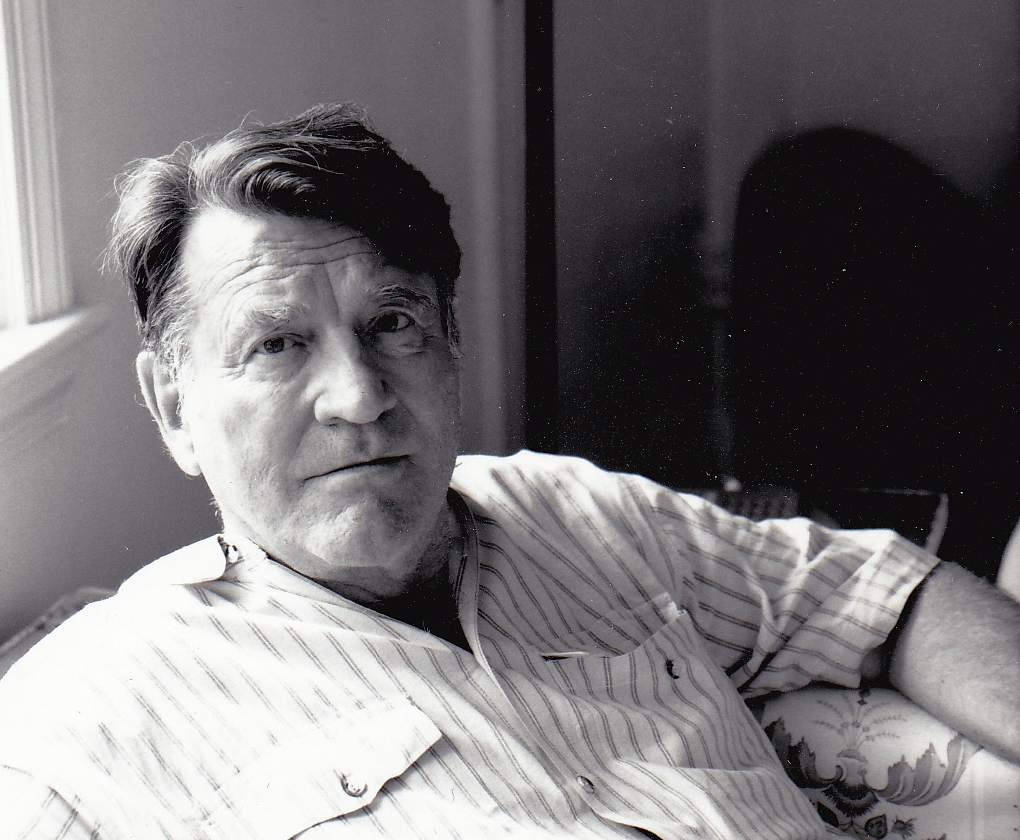
Jay Haley
View on Wikipedia | A major contributor to this article appears to have a close connection with its subject. (February 2024) |
 | This article's tone or style may not reflect the encyclopedic tone used on Wikipedia. (February 2024) |

Jay Douglas Haley (July 19, 1923 – February 13, 2007)[1] was one of the founding figures of Problem-solving brief therapy and family therapy in general and of the strategic model of psychotherapy, and he was one of the more accomplished teachers, clinical supervisors, and authors in these disciplines.[2][3]
Life and works
[edit] | This section needs additional citations for verification. (February 2024) |
Haley was born at his family's homestead in Midwest, Wyoming. His family moved to Berkeley, California, when he was four years old. After serving in the United States Army Air Forces during World War II, he attended UCLA where he received a BA in Theater Arts. During his undergraduate years, Haley published a short story in The New Yorker.[4]
After a year spent in pursuit of a career as a playwright, he returned to California and received a Bachelor of Library Science degree from University of California at Berkeley and then a master's degree in communication from Stanford University. He was married for the first time in 1950 and had three children, Kathleen, Gregory, and Andrew, with his wife Elizabeth.
While at Stanford, Haley met the anthropologist Gregory Bateson who invited him to join a communications research project that later became known as The Bateson Project, a collaboration that became one of the driving factors in the creation of family therapy and that published the single most important paper in the history of family therapy,[5] "Towards a Theory of Schizophrenia."[6] The central members of this project were Gregory Bateson, Donald deAvila Jackson, Jay Haley, John Weakland, and Bill Fry.
In addition to his personal involvement in the birth and evolution of family therapy, Haley was an observational researcher of psychotherapy in the 1950s and early 1960s. The Bateson Project arranged for Jay and John Weakland to observe and record clinicians including Milton Erickson, Joseph Wolpe, John Rosen, Don Jackson, Charles Fulweiler, Frieda Fromm-Reichmann, and others.
In 1962, while working at the Mental Research Institute in Palo Alto, Haley became the founding editor of the family therapy journal Family Process (assisted by his first wife, Elizabeth Haley, an experienced journalist). While at MRI, Jay continued the professional relationship with Milton Erickson that had been established in the earliest years of the Bateson Project. Jay helped to introduce Erickson to the clinical public with such important books as Uncommon Therapy. Haley also worked closely with Salvador Minuchin, who developed Structural Family Therapy.
Haley moved to Philadelphia in the mid-1960s to take a position at the Philadelphia Child Guidance Clinic. Through his collaboration with Salvador Minuchin and Braulio Montalvo, he influenced (and was influenced by) the evolution of Structural Family Therapy in the early 1970s.

After founding the Family Therapy Institute of Washington, DC, with second wife Cloe Madanes in 1976, Haley continued to be a central force in the evolution of Strategic Family Therapy. His publications from the years at the Family Therapy Institute include one of the field's most influential best selling books, Problem Solving Therapy.
After leaving the Family Therapy Institute in the 1990s, Haley moved to the San Diego area and, in collaboration with his third wife Madeleine Richeport-Haley, produced a number of films relating to both anthropology and psychotherapy. Madeleine also collaborated in the writing of his final book, Directive Family Therapy. At the time of his death, he was also a Scholar In Residence at California School of Professional Psychology at Alliant International University.
Haley combined a systemic understanding of human problems and strengths with a pragmatic approach to intervention. His method of therapy — he claimed not to have a theory of therapy — emphasizes creative and sometimes provocative instructions to which clients react. The approach emphasizes careful contracting between clients and the therapist, experimenting with possible solutions (in a manner sometimes inspired by the therapist and sometimes inspired by the client), review of the results and informed resumption of experimentation until the goal of therapy is achieved. In the 1960s and 1970s when psychodynamic approaches to therapy dominated, such practicality was commonly seen as heretical. The here-and-now emphasis of Haley and others of his generation of pragmatic practitioners is now the norm for the field of psychotherapy.
Haley's Strategic Therapy
[edit]Strategic Therapy is any type of therapy where the therapist initiates what happens during therapy and designs a particular approach for each problem. As Haley wrote in Uncommon Therapy: The Psychiatric Techniques Of Milton H. Erickson MD: "Strategic therapy isn't a particular approach or theory, but a name for the types of therapy where the therapist takes responsibility for directly influencing people" (p. 17).[7]
Strategic family therapists may sometimes explore understanding ways in which a patient's symptoms might be viewed as benevolent attempts to deal with other family issues. This a variation of Don Jackson's view of symptoms as "love gone wrong."[8] Haley's strategic therapy focuses on short-term, targeted efforts to solve a specific problem.
A therapist employing strategic therapy must:
- Identify solvable problems.
- Set goals.
- Design interventions to achieve those goals.
- Examine the responses.
- Examine the outcome of the therapy.
Bibliography
[edit]By Haley
[edit]- Uncommon Therapy: The Psychiatric Techniques of Milton H. Erickson, M.D. (W.W. Norton 1973)
- The Art of Strategic Therapy
- The Power Tactics of Jesus Christ and Other Essays (Avon Books 1969)
- Strategies of Psychotherapy (Grune & Stratton 1963)
- Problem-Solving Therapy
- Ordeal Therapy: Unusual Ways to Change Behavior (Jossey-Bass 1984)
- Learning and Teaching Therapy (Guilford Press 1996)
- Directive Family Therapy (written with Madeleine Richeport-Haley)
- Leaving Home: The Therapy of Disturbed Young People, Second Edition. (Brunner/Routledge 1997) ISBN 978-0-87630-845-5
Coauthored
[edit]- Techniques of family therapy (written with Lynn Hoffman) (1967; 1994). New York: Basic Books. (1994 printing – Northvale, NJ: Aronson.)
- Changing Directives: The Strategic Therapy of Jay Haley (written with Jeffrey K. Zeig) (2001)
See also
[edit]References
[edit]- ^ Holley, J. (2007, March 3). Jay Haley, pioneer in family therapy. Washington Post.
- ^ Ray, W. A. (2007). Jay Haley – a memorial. Journal of Marital and Family Therapy, 33(3), 291-292.
- ^ Nichols, M., & Schwartz, R. (2005). Family Therapy: Concepts and Methods (7th Ed.). New York: Prentice Hall.
- ^ Haley, J. (1947, July 5). The Eastern question. The New Yorker, p. 53.
- ^ Keim, J., & Lappin, J. (2002). Structural-strategic marital therapy. In A. S. Gurman & N. S. Jacobson (Eds.), Clinical Handbook of Couple Therapy (3rd Ed.) (pp. 86-117, here p. 88). New York: Guilford.
- ^ Bateson, G., Jackson, D., Haley, J., & Weakland, J. (1956). Toward a theory of schizophrenia. Behavioral Science, 1(4), 251-264.
- ^ "Jay Haley: The Strategic Therapist". Jay Haley On Therapy. Retrieved May 23, 2019.
- ^ Rambo, West, Schooley, Boyd (2012). Family Therapy Review: Contrasting Contemporary Models. Routledge. p. 90.
{{cite book}}: CS1 maint: multiple names: authors list (link)
External links
[edit]
Jay Haley
View on GrokipediaBiography
Early Life and Education
Jay Haley was born on July 19, 1923, in Midwest, Wyoming, to Andrew J. Haley, a clerk who sought work in the oil fields, and Mary Sneddon Haley, a teacher.[5][4] The family, from a working-class background, relocated to Berkeley, California, when Haley was four years old, where his father later worked as a welder in shipyards during World War II.[2][4] During his childhood in California, Haley developed an early interest in communication patterns, influenced by the dynamics within his family environment.[4] This foundation in observing interpersonal interactions foreshadowed his later academic pursuits. Following high school, Haley served in the U.S. Army during World War II, an experience that exposed him to diverse human behaviors under stress and contributed to his evolving perspective on social dynamics.[2] After his military service, Haley pursued higher education, beginning with a Bachelor of Arts in Theater Arts from the University of California, Los Angeles, in 1948, which initially drew him toward performative aspects of communication.[2][1] He then earned a Bachelor of Library Science from the University of California, Berkeley, in 1951, broadening his analytical skills in organizing information.[2][5] Finally, he completed a Master of Arts in Communication at Stanford University in 1953, marking a pivotal shift from artistic expression to the study of interpersonal and systemic interactions.[2][1] This educational trajectory laid the groundwork for his subsequent involvement in the Gregory Bateson research project on schizophrenia, serving as a bridge to his therapeutic career.[2]Professional Career
Jay Haley's professional career in psychotherapy began in the early 1950s when he joined the Bateson Project at the Mental Research Institute (MRI) in Palo Alto, California, from 1952 to 1962. As a key researcher, he collaborated with Gregory Bateson, Don D. Jackson, and John Weakland to investigate schizophrenia through the lens of family communication patterns, applying cybernetics and systems theory to understand relational dynamics in affected families.[6] This work marked his entry into the field, emphasizing interactional processes over individual pathology.[6] At the MRI, Haley advanced to Director of Research in 1959, where he continued exploring brief therapy models influenced by his observations of clinical practice.[3] In 1962, he co-founded the journal Family Process with Don D. Jackson and Nathan Ackerman, serving as its editor for the first decade and establishing a key platform for family therapy scholarship.[7] During this period, Haley's focus shifted from pure research toward integrating clinical observation, laying groundwork for strategic approaches. He briefly referenced influences from hypnotist Milton Erickson in adapting communication tactics for therapy.[3] From 1967 to 1976, Haley served as Director of Family Therapy Research at the Philadelphia Child Guidance Clinic, where he directed training programs and collaborated with Salvador Minuchin and Braulio Montalvo on structural family therapy methods.[7] This role emphasized practical training for therapists, including paraprofessionals from diverse communities, and marked a transition to hands-on clinical supervision.[7] In 1976, Haley co-founded the Family Therapy Institute of Washington, DC, with Cloe Madanes, assuming directorship until his retirement and focusing on strategic therapy training.[8] In his later career during the 2000s, Haley held the position of Scholar in Residence at the California School of Professional Psychology at Alliant International University, contributing to education and mentorship until his death in 2007.[9] Throughout these decades, his career evolved from research-oriented investigations to leadership in clinical practice and therapist training, shaping institutional developments in family therapy.[3]Personal Life and Death
Jay Haley married Elizabeth Kuehn, a musician, on December 25, 1950; the couple had three children—Kathleen, Andrew, and Gregory—and divorced in 1971.[5] His second marriage was to Cloe Madanes in 1975; they co-founded the Family Therapy Institute of Washington, D.C., but later divorced, with Haley leaving the institute in 1994.[10] In his later years, Haley married anthropologist and filmmaker Madeleine Richeport-Haley around 1995, a union that lasted until his death and deeply influenced his views on family dynamics through their collaborative work on relational patterns and therapy.[11] Haley's personal experiences with multiple marriages and raising children amid relational challenges fostered his pragmatic approach to therapy, emphasizing practical solutions to family conflicts drawn from real-life observations of interpersonal tensions.[4] Haley's family life included four grandchildren and one great-grandchild from his first marriage, providing him with ongoing insights into generational dynamics that reinforced his belief in addressing family systems holistically.[4] In his later years, he faced significant health struggles, including cardiopulmonary issues stemming from heart problems. He died of cardiopulmonary failure on February 13, 2007, at age 83 in his home in La Jolla, California.[2][1] Following his death, Haley's wife Madeleine Richeport-Haley donated his extensive personal archives, including correspondence, writings, and training materials, to the Online Archive of California in multiple installments between 2009 and 2016, preserving his legacy for researchers.[12] Together, they had produced 25 documentary films on topics such as strategic therapy and hypnosis, with posthumous tributes highlighting these works as enduring contributions to family therapy education.[13] Haley requested no formal funeral, instead urging his students and family to perform kind acts for their loved ones in his memory, a reflection of his emphasis on practical, relational gestures.[4]Influences and Collaborations
Key Intellectual Influences
Jay Haley's intellectual framework was profoundly shaped by his participation in the Bateson Project, a research initiative led by anthropologist Gregory Bateson at the Veterans Administration Hospital in Palo Alto starting in 1952. Haley, along with Don D. Jackson and John Weakland, collaborated with Bateson to explore communication patterns in families, particularly in relation to schizophrenia. This work introduced Haley to Bateson's double-bind theory, which posits that schizophrenic symptoms may arise from contradictory messages within family interactions—such as a command paired with a denial of the command's validity—creating inescapable paradoxes that distort relational dynamics.[14] The theory, detailed in their seminal 1956 paper "Toward a Theory of Schizophrenia," emphasized how such paradoxical communication sustains dysfunctional family hierarchies and informed Haley's later emphasis on interactional sequences over individual pathology.[10] Bateson's integration of cybernetics further influenced Haley, providing a systems-oriented lens on human behavior as feedback loops within larger ecological contexts. Drawing from Norbert Wiener's cybernetic principles, Bateson viewed families as self-regulating systems where communication errors, like double binds, propagate instability, much like noise in a mechanical circuit. This cybernetic perspective, explored during the project through analyses of film, animal behavior, and clinical sessions, shifted Haley's focus from linear cause-and-effect to circular causality in human interactions.[10] Complementing this was Bateson's anthropological background, which profoundly impacted Haley's understanding of cultural patterns in human relations. As an anthropologist, Bateson advocated observing social systems without interference, treating families as microcultures governed by implicit rules and rituals; Haley credited this approach with teaching him to analyze relational "data" holistically, revealing how cultural norms underpin paradoxical family communications.[10] Haley's early exposure to the pragmatics of human communication deepened through the 1950s Palo Alto group, an extension of the Bateson Project that evolved into the Mental Research Institute (MRI). This collective, including Paul Watzlawick and Janet Beavin, examined how messages function beyond content to shape relationships, culminating in concepts like metacommunication—Bateson's term for communication about communication itself, which clarifies or confuses relational levels. Haley's involvement in these discussions, as documented in the group's foundational text Pragmatics of Human Communication (1967), honed his view of therapy as intervening in the pragmatic rules governing family interactions, such as unspoken injunctions that maintain symptoms.[15] A broader influence stemmed from Haley's undergraduate background in theater arts, earned as a Bachelor of Arts from UCLA in 1948. Initially aspiring to be a playwright, Haley pursued creative storytelling in New York before pivoting to communications studies, but his theatrical training informed a performative sensibility in his therapeutic outlook. He likened family therapy sessions to dramatic enactments, where therapists direct "scenes" of interaction to provoke change, emphasizing the live, improvisational quality of human exchanges over scripted analysis. This perspective, evident in his descriptions of supervision as an "exciting" observational drama, underscored therapy's role in staging shifts in relational performances.[2][15]Major Professional Collaborations
Jay Haley's professional collaborations were pivotal in shaping the fields of brief and family therapy, often involving joint research, publications, and training initiatives that emphasized directive and strategic approaches. One of his most influential partnerships was with hypnotist Milton H. Erickson, beginning in the 1950s when Haley studied Erickson's techniques during seminars organized through the Mental Research Institute (MRI).[16] This collaboration extended to co-edited volumes of transcribed conversations, such as Conversations with Milton H. Erickson, M.D.: Changing Individuals (1985), where Haley and Erickson, along with associates like John Weakland, explored hypnotic interventions for individual change.[17] Their joint seminars in the 1960s and 1970s further disseminated Erickson's strategic methods, influencing Haley's development of brief therapy frameworks, as detailed in Haley's seminal book Uncommon Therapy: The Psychiatric Techniques of Milton H. Erickson, M.D. (1973), which analyzed Erickson's case studies across life stages.[18] In the mid-1960s, Haley collaborated closely with Salvador Minuchin at the Philadelphia Child Guidance Clinic, where he served as a senior staff member and contributed to the clinic's research on family dynamics in low-income and minority families.[19] Their partnership focused on distinguishing strategic and structural family therapy approaches, with Haley emphasizing directive interventions while Minuchin prioritized family hierarchies and boundaries; this work informed Minuchin's Families and Family Therapy (1974), which acknowledges Haley's influence on clinical strategies.[20] Together, they co-led training programs and workshops at the clinic during the late 1960s and early 1970s, training hundreds of therapists in systemic interventions that integrated individual and family perspectives.[21] Haley's collaboration with Cloe Madanes, his second wife, began in the 1970s and culminated in the co-founding of the Family Therapy Institute of Washington, D.C., in 1976, where they developed and taught innovative strategic techniques.[3] Their joint efforts advanced concepts like ordeal therapy, an approach using prescribed, effortful tasks to disrupt symptomatic behaviors, as outlined in Haley's Ordeal Therapy: Unusual Ways to Change Behavior (1984), which drew on their shared clinical cases and training seminars. Through institute workshops in the 1970s and 1980s, they trained practitioners worldwide, emphasizing paradoxical and directive methods that built on Ericksonian principles. Earlier in his career, Haley co-founded key institutions and publications with Don D. Jackson at the MRI, established by Jackson in 1958, where Haley served as research director starting in 1959 and collaborated on the institute's brief therapy projects.[22] Their partnership included co-founding the journal Family Process in 1962 with Nathan Ackerman, with Haley as founding editor, which became a cornerstone for publishing systemic family therapy research.[23] Jackson and Haley's joint work at the MRI in the 1960s produced early models of problem-solving therapy, tested through team-supervised cases and documented in MRI reports that influenced global brief therapy practices.[24] In his later years, Haley partnered with Madeleine Richeport-Haley, his third wife, on advancing directive family therapy, co-authoring Directive Family Therapy (2007), which presents case-based techniques for addressing lifecycle problems through prescriptive interventions.[25] Their collaboration included co-leading training programs at the Family Therapy Institute in the 1990s and 2000s, focusing on integrating hypnosis and strategic elements into family work, as demonstrated in instructional videos and seminars that trained therapists in practical, outcome-oriented methods.[26] These efforts built on Haley's earlier influences, such as his initial work with Gregory Bateson at the MRI, which laid the groundwork for his systemic collaborations.[16]Therapeutic Contributions
Development of Strategic Therapy
Jay Haley's development of strategic therapy emerged from his work with the research group in Palo Alto, California, during the 1950s and 1960s, where he collaborated with figures like Don Jackson, John Weakland, and Paul Watzlawick to pioneer brief therapy approaches.[27] Haley joined the Bateson research project in 1953 at the Veterans Administration Hospital, contributing to the efforts that led to the founding of the Mental Research Institute (MRI) in 1958, where he served as a key researcher and Director of Research starting in 1959. He contributed to research emphasizing problem-solving over long-term exploration, drawing on cybernetic ideas from Gregory Bateson's group to view symptoms as maintained by family interaction patterns.[28] This period culminated in the establishment of MRI's Brief Therapy Center in 1966, which formalized strategic methods as a distinct, short-term model for resolving presenting issues efficiently.[22] Haley's seminal book, Strategies of Psychotherapy (1963), articulated these ideas, defining strategic therapy as one where "the therapist initiates what happens during the therapy and designs a particular approach for each problem."[27] At its core, strategic therapy is directive and goal-oriented, positioning the therapist as an active strategist who crafts interventions to disrupt dysfunctional family dynamics and achieve rapid symptom relief.[27] Unlike passive listening models, Haley emphasized altering family hierarchies—such as restoring parental authority—and sequences of interaction that perpetuate problems, viewing symptoms as serving a stabilizing function within the system.[29] This approach prioritizes behavioral change over insight, with the therapist taking responsibility for outcomes by tailoring strategies to the client's context.[28] Haley also integrated the concept of the family life cycle, recognizing that transitions across developmental stages—like leaving home or parenting young adults—often trigger hierarchical disruptions and symptom onset, which therapy must address to facilitate normal progression.[27] Key techniques in Haley's model include paradoxical interventions, where the therapist prescribes the symptom or its continuation to provoke resistance and change, such as instructing a child to deliberately misbehave to highlight parental inconsistencies.[27] Prescriptions for ordeals involve assigning effortful tasks tied to symptom relief, making the problem costlier to maintain than resolving it, as outlined in Haley's Ordeal Therapy (1984).[29] Contracting with clients establishes clear, measurable behavioral goals, ensuring accountability and focus on present actions rather than historical narratives.[28] These methods reflect Haley's brief consultation with Milton Erickson, incorporating indirect suggestions to bypass resistance.[27] In contrast to traditional psychoanalysis, which delves into past etiologies and unconscious conflicts through extended sessions, Haley's strategic therapy concentrates on current problems and interactional solutions, typically limiting treatment to 10 sessions or fewer for demonstrated efficacy.[27] This present-focused orientation rejects etiological digging, instead using targeted directives to realign family structures quickly, as evidenced by MRI's early outcomes showing symptom resolution without exhaustive history-taking.[29] Such brevity underscores Haley's belief that "symptoms serve a function in families and carry metaphorical information about hierarchical dysfunction," resolvable through strategic maneuvering rather than interpretive depth.[27]Advancements in Family Therapy
Jay Haley played a pivotal role in the 1950s family therapy revolution, particularly through his involvement in the Bateson Research Project at the Veterans Administration Hospital in Palo Alto, California, where he collaborated with Gregory Bateson, Don D. Jackson, and John H. Weakland. This group shifted the focus from individual psychopathology to systemic family interactions, proposing that schizophrenia could be understood as a disorder stemming from dysfunctional family communication patterns. Their seminal work introduced the double-bind hypothesis, which posits that contradictory messages within family relationships—such as a parent simultaneously expressing love and rejection—create inescapable conflicts that contribute to schizophrenic symptoms.[30] This perspective marked a foundational advancement in viewing mental illness as a product of relational dynamics rather than isolated individual pathology, influencing the broader movement toward family-based interventions.[31] Haley advanced directive family therapy by developing approaches that actively intervene in family structures, with a strong emphasis on power dynamics and generational boundaries. In his problem-solving therapy model, therapists take an active role in reorganizing family hierarchies to resolve presenting issues, recognizing that imbalances in authority—such as blurred parent-child boundaries or struggles for control—often perpetuate problems. For instance, Haley advocated for techniques that clarify roles and restore appropriate power distributions, enabling families to function more adaptively without prolonged exploration of past traumas. This directive stance contrasted with earlier nondirective methods, prioritizing rapid, targeted changes in interaction patterns to address symptoms systemically.[27] His framework, outlined in key works, underscored how maintaining rigid or inverted hierarchies could sustain dysfunction, making boundary realignment central to therapeutic success.[32] At the Philadelphia Child Guidance Clinic, where Haley served as Director of Family Therapy Research from 1967 to 1977, he made significant contributions to training models for family therapists, particularly through innovative supervision techniques. Collaborating with Salvador Minuchin, Haley pioneered live supervision methods, including behind-the-mirror observation and in-session interruptions, to provide real-time guidance that enhanced therapists' ability to navigate complex family dynamics. These approaches emphasized experiential learning, allowing trainees to observe and adjust interventions on the spot, which improved clinical efficacy in treating diverse family issues. Haley's supervision philosophy, detailed in his writings, stressed the importance of directive feedback to build therapists' confidence in addressing power and relational challenges, setting standards for family therapy education that prioritized practical skill development over theoretical abstraction.[33] Haley introduced the concept of "leaving home" as a critical developmental milestone in adolescent therapy, framing disturbances in young people as failures in the family's process of launching independence. In this model, therapy focuses on renegotiating family boundaries to facilitate the adolescent's separation, addressing how enmeshed or rejecting parental dynamics hinder this transition. His classification of troubled youth based on relational patterns—such as those involving perverse triangles or power reversals—provided a systemic lens for intervention, influencing modern family systems theory by highlighting generational transitions as key to overall family health. This work has enduring impact, informing contemporary approaches that integrate developmental stages into systemic treatments for youth mental health.[34]Integration of Hypnosis Techniques
Jay Haley began studying Milton Erickson's indirect hypnosis techniques in 1954, initially through seminars and later by analyzing films of Erickson's sessions, which allowed him to observe and adapt methods like utilization—where the therapist incorporates the client's behaviors and resistances into the therapeutic process—and storytelling to induce trance states subtly without formal rituals.[16][35] This observational learning, spanning over 17 years of collaboration and discussion, emphasized Erickson's approach to trance as an interpersonal communication tool rather than a rigid procedure, focusing on distraction, rapid commands, and metaphors to bypass conscious resistance.[16] In applying these techniques to family therapy, Haley integrated hypnosis to disrupt rigid interactional patterns, such as prescribing symptoms paradoxically to children to alter family dynamics—for instance, instructing a child to exaggerate thumbsucking deliberately, which often led to its spontaneous cessation by reframing the behavior as under parental control rather than a problem.[16][35] He adapted Erickson's utilization in family settings by leveraging existing resources, like shifting spatial positions during sessions to highlight hierarchical imbalances or using storytelling to empower individual family members, thereby fostering systemic change in brief interventions.[16] Haley's key writings on hypnosis, particularly in Uncommon Therapy: The Psychiatric Techniques of Milton H. Erickson (1973), analyze these methods through case studies, underscoring ethical directives that prioritize client autonomy and empowerment, such as offering choices in trance work to ensure the patient retains agency and credits themselves for progress.[16] In this text, he highlights how Erickson's techniques, adapted for ethical use, avoid coercion by inspiring self-initiated actions, as seen in examples where patients were directed to "find things they can do that are good for them," promoting long-term resilience.[16] Haley's evolution from passive observation—rooted in his time with the Bateson research group from 1952 to 1962—to active integration occurred by 1956 in his private practice, where he incorporated hypnotic elements into brief strategic sessions to accelerate problem resolution in family contexts, shortening therapy durations while maintaining focus on action over insight.[35] This practical application, detailed in works like Problem-Solving Therapy (1976), demonstrated hypnosis's role in provoking autonomous family decisions, such as through provocative tasks that mirrored Erickson's indirect suggestions.[35]Legacy and Key Works
Impact on Modern Psychotherapy
Jay Haley's development of strategic therapy profoundly shaped brief therapies, emphasizing targeted interventions to resolve problems efficiently rather than exploring historical causes. His work at the Mental Research Institute (MRI) influenced the evolution of solution-focused brief therapy (SFBT), where therapists like Steve de Shazer built upon Haley's strategic principles by shifting emphasis to client strengths and future-oriented solutions. De Shazer, inspired by Haley's interpretations of Milton Erickson's techniques in books like Strategies of Psychotherapy, adapted these ideas to create SFBT, which prioritizes exceptions to problems and goal-setting in short-term sessions, typically 6-10, making it a cornerstone of evidence-based practice in substance abuse and family counseling.[27][36] Haley's contributions earned significant recognition from professional organizations, underscoring his role in advancing family therapy. He received the American Association for Marriage and Family Therapy (AAMFT) Cumulative Contributions to Marriage and Family Therapy Research Award in 1982 for his innovative approaches to therapeutic change.[9] Additionally, he was awarded the AAMFT Article of the Year, highlighting the impact of his publications on clinical practice and theory. He also received the Lifetime Achievement Award from the Milton H. Erickson Foundation.[37][5] These honors reflect his status as a pioneer who bridged hypnosis, systems theory, and directive methods in marital and family therapy. Posthumously, Haley's strategic principles continue to inform child psychiatry and couples therapy, with adaptations in evidence-based models like Brief Strategic Family Therapy (BSFT), which integrates his ideas with structural approaches to address adolescent behavioral issues and family hierarchies. In child psychiatry, his techniques for involving peripheral parents and disrupting symptomatic cycles remain relevant in treating low-income families, as seen in ongoing applications at clinics modeled after his directorship at the University of Pennsylvania's Child Guidance Clinic. For couples therapy, his emphasis on paradoxical directives and ordeal methods—prescribing behaviors to highlight their futility—persists in interventions for relational conflicts, supported by over 40 years of research validating BSFT's efficacy in reducing symptoms through systemic change. Recent studies post-2007, including those on BSFT, demonstrate sustained effectiveness in diverse populations, though specific validations of ordeal therapy are integrated within broader strategic efficacy findings.[4][38] Haley's pragmatic, directive style countered the dominance of psychodynamic therapies by prioritizing observable interactions and rapid outcomes over unconscious exploration, fostering a shift toward action-oriented models in the field. This approach influenced modern training programs, where strategic therapy is taught as a core component in family therapy curricula, emphasizing therapist control and tailored directives to realign family dynamics. In 21st-century applications, his models have adapted to digital therapy platforms, enabling remote assignment and monitoring of behavioral tasks via apps and telehealth, enhancing accessibility for brief interventions in couples and family settings.[28][39][40]Selected Publications and Bibliography
Jay Haley's prolific output shaped the fields of family therapy, strategic psychotherapy, and hypnosis, with over a dozen books and numerous articles that emphasized directive, problem-solving approaches. His works often drew from collaborations with key figures like Milton H. Erickson and evolved from early explorations of family dynamics to later practical guides for clinicians. Many of his publications were translated into multiple languages, influencing global therapeutic practices.[41] His early solo book, Strategies of Psychotherapy (1963), laid foundational principles for directive interventions in individual therapy, critiquing traditional nondirective methods and advocating for strategic maneuvers to resolve client problems quickly.[42] This was followed by co-authored Techniques of Family Therapy: Maintenance and Change (1967, with Lynn Hoffman), which analyzed family interactions through case studies from the Mental Research Institute, highlighting patterns of stability and disruption.[4] In 1973, Uncommon Therapy: The Psychiatric Techniques of Milton H. Erickson, M.D. provided an in-depth examination of Erickson's indirect hypnosis and storytelling methods, organizing them into developmental stages of life for therapeutic application.[41] Haley's mid-career works focused on family systems. Problem-Solving Therapy: New Strategies for Effective Family Therapy (1976, second edition 1992) outlined his model for brief, goal-oriented interventions, using directives to alter family hierarchies and symptom maintenance.[4] Leaving Home: The Treatment of Disturbed Young People (1980) addressed adolescent issues like schizophrenia and delinquency through family restructuring, emphasizing parental involvement in ordeals to foster independence.[41] Ordeal Therapy: Unusual Ways to Change Behavior (1984) expanded on prescribing difficult tasks to disrupt symptom reinforcement, drawing from clinical examples to demonstrate rapid change.[4] Later publications included Learning and Teaching Therapy (1996), a practical guide for training therapists in strategic methods, based on Haley's supervisory experiences.[41] In co-authored efforts, Directive Family Therapy (1997, with Madeleine Richeport-Haley) synthesized their work at the Family Therapy Institute of California, featuring transcripts of sessions using paradoxical directives and ordeals for diverse family problems.[43] Haley contributed foundational articles to Family Process, the journal he edited from 1962 to 1974. Key pieces include "The Art of Being a Failure as a Therapist" (1969), which humorously dissected common therapeutic pitfalls like over-identification with clients, influencing training programs worldwide.[44] In the 1960s, articles such as "Marriage Therapy" (1963) and "Research on Family Patterns: An Instrumental Measurement" (1965, with others) explored paradoxical interventions, using double binds to shift rigid family roles and promote flexibility.[4] His collaborations with Cloe Madanes, co-founder of the Family Therapy Institute of Washington, D.C., appeared in joint articles on strategic techniques, including contributions to conference proceedings and therapy manuals in the 1970s and 1980s.[45] In media, Haley produced demonstration videos later in his career, including Whither Family Therapy—A Jay Haley Version (1997, with Madeleine Richeport-Haley), a VHS/DVD featuring live sessions illustrating strategic ordeals and hypnosis integrations.[41] Earlier films documented Erickson sessions, such as those in Advanced Techniques of Hypnosis and Therapy: Selected Papers of Milton H. Erickson, M.D. (1967, edited by Haley), with accompanying visual aids for training.[42]Comprehensive Bibliography (Selected Works)
| Year | Title | Author(s) | Notes |
|---|---|---|---|
| 1959 | The Family of the Schizophrenic: A Model System | Jay Haley | Article in Journal of Nervous & Mental Disease; early family dynamics model.[41] |
| 1963 | Strategies of Psychotherapy | Jay Haley | Crown House Publishing reprint 2007; 2nd ed. 1969.[42] |
| 1963 | Marriage Therapy | Jay Haley | Article in Family Process.[4] |
| 1965 | Research on Family Patterns: An Instrumental Measurement | Jay Haley et al. | Article in Family Process.[4] |
| 1967 | Techniques of Family Therapy: Maintenance and Change | Jay Haley, Lynn Hoffman | Basic Books; case-based analysis.[4] |
| 1967 | Advanced Techniques of Hypnosis and Therapy (ed.) | Jay Haley (ed.) | Selected papers of Milton H. Erickson.[42] |
| 1969 | The Art of Being a Failure as a Therapist | Jay Haley | Article in Family Process.[44] |
| 1973 | Uncommon Therapy: The Psychiatric Techniques of Milton H. Erickson, M.D. | Jay Haley | W.W. Norton; multiple editions.[41] |
| 1976 | Problem-Solving Therapy: New Strategies for Effective Family Therapy | Jay Haley | Jossey-Bass; 2nd ed. 1992.[4] |
| 1980 | Leaving Home: The Treatment of Disturbed Young People | Jay Haley | McGraw-Hill.[41] |
| 1984 | Ordeal Therapy: Unusual Ways to Change Behavior | Jay Haley | Jossey-Bass.[4] |
| 1996 | Learning and Teaching Therapy | Jay Haley | Guilford Press.[41] |
| 1997 | Directive Family Therapy | Jay Haley, Madeleine Richeport-Haley | Triangle Productions; includes session transcripts.[43] |
| 1997 | Whither Family Therapy—A Jay Haley Version | Jay Haley, Madeleine Richeport-Haley | DVD/VHS film.[41] |