



Community hub
Recent from talks
Contribute something to knowledge base
Content stats: 0 posts, 0 articles, 1 media, 0 notes
Members stats: 0 subscribers, 0 contributors, 0 moderators, 0 supporters
Subscribers
Supporters
Contributors
Moderators
Hub AI
Jeanne Guyon AI simulator
(@Jeanne Guyon_simulator)
Hub AI
Jeanne Guyon AI simulator
(@Jeanne Guyon_simulator)
Jeanne Guyon
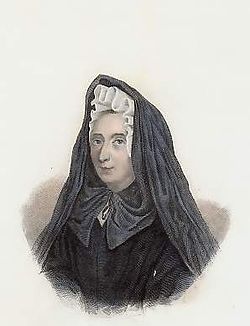
Jeanne-Marie Bouvier de La Motte Guyon (commonly known as Madame Guyon, French: [gɥi.jɔ̃]; 13 April 1648 – 9 June 1717) was a French Christian accused of advocating Quietism, which was considered heretical by the Roman Catholic Church. Madame Guyon was imprisoned from 1695 to 1703 after publishing the book A Short and Very Easy Method of Prayer.
Guyon was the daughter of Claude Bouvier, a procurator of the tribunal of Montargis, 110 kilometers south of Paris and 70 kilometers east of Orléans. She was sickly in her childhood, and her education was neglected. Her childhood was spent between the convent, and the home of her affluent parents, moving nine times in ten years. Guyon's parents were very religious, thus they gave her an especially pious upbringing. Other important impressions from her youth came from reading the works of St. Francis de Sales, and being educated by nuns. Prior to her marriage, she had wanted to become a nun, but this desire did not last long.
In 1664, when she was 15 years old, after turning down many other marriage proposals, she was forced into an arranged marriage to a wealthy gentleman of Montargis, Jacques Guyon, aged thirty eight. During their marriage, Guyon suffered at the hands of her mother-in-law and maidservant. Adding to her misery were the deaths of her half-sister, followed by her mother, and her son. Her daughter and father then died within days of each other in July 1672. She bore another son and daughter shortly before her husband's death in 1676. After twelve years of being unhappily married and after the birth of five children, of whom three survived, Madame Guyon became a widow at the age of 28.
There is controversy surrounding the date of birth of Madame Guyon, but 18 April 1648 given in the (highly condensed) English translation of Madame Guyon's autobiography, published by Moody Press, appears to be a typographical error—all French editions of the autobiography from the earliest one on, published in 1720, state 13 April 1648 as her birthday. Her date of birth, however, nonetheless remains unclear since Madame Guyon writes Je naquis, à ce que disent quelques uns, la veille de Pâques, le 13. d'Avril [...] de l'année 1648 ("I was born, as some say, on the Eve of Easter [...], the 13th of April of the year 1648"). The 13th of April 1648 was, however, the Monday after Easter of that year, and Holy Saturday did not fall on 13 April in the years around 1648 either.
Given that births in France were recorded only in the parish registers (registres paroissiaux) until 1792, it is possible that Madame Guyon was born on 11 April 1648 (Holy Saturday), but that her birth was not recorded in the parish register until 13 April (the Monday after Easter, which was established as a holiday only under Napoleon), and that the date of the entry (13 April 1648) was then handed down. It is, of course, also possible that those making the claims were mistaken, or that there were other reasons for naming the Eve of Easter as her birthday.
Already during her marriage, Guyon retained belief in God's perfect plan, fiercely believing that she would be blessed in suffering. This became true especially after being introduced to mysticism by Fr. François Lacombe, the superior of the Barnabite house in Thonon in Savoy. After her husband's death, Madame Guyon initially lived quietly as a wealthy widow in Montargis, before re-establishing contact with François Lacombe in 1679.
After three mystical experiences, Madame Guyon felt drawn to Geneva. The Bishop of Geneva, Jean d’Arenthon d’Alex, persuaded her to use her money to set up a house for "new Catholics" in Gex, in Savoy, as part of broader plans to convert Protestants in the region. In July 1680, Madame Guyon left Montargis with her young daughter and travelled to Gex.
The project was problematic, however, and Guyon clashed with the sisters who were in charge of the house. The Bishop of Geneva sent Father Lacombe to intervene. At this point, Guyon introduced Lacombe to a mysticism of interiority. While her daughter was in an Ursuline convent in Thonon as a pensioner, Madame Guyon continued in Gex, experiencing illness and great difficulties, including opposition from her family. She gave over guardianship of her two sons to her mother-in-law and took leave of her personal possessions, although keeping a sizeable annuity for herself.
Jeanne Guyon
Jeanne-Marie Bouvier de La Motte Guyon (commonly known as Madame Guyon, French: [gɥi.jɔ̃]; 13 April 1648 – 9 June 1717) was a French Christian accused of advocating Quietism, which was considered heretical by the Roman Catholic Church. Madame Guyon was imprisoned from 1695 to 1703 after publishing the book A Short and Very Easy Method of Prayer.
Guyon was the daughter of Claude Bouvier, a procurator of the tribunal of Montargis, 110 kilometers south of Paris and 70 kilometers east of Orléans. She was sickly in her childhood, and her education was neglected. Her childhood was spent between the convent, and the home of her affluent parents, moving nine times in ten years. Guyon's parents were very religious, thus they gave her an especially pious upbringing. Other important impressions from her youth came from reading the works of St. Francis de Sales, and being educated by nuns. Prior to her marriage, she had wanted to become a nun, but this desire did not last long.
In 1664, when she was 15 years old, after turning down many other marriage proposals, she was forced into an arranged marriage to a wealthy gentleman of Montargis, Jacques Guyon, aged thirty eight. During their marriage, Guyon suffered at the hands of her mother-in-law and maidservant. Adding to her misery were the deaths of her half-sister, followed by her mother, and her son. Her daughter and father then died within days of each other in July 1672. She bore another son and daughter shortly before her husband's death in 1676. After twelve years of being unhappily married and after the birth of five children, of whom three survived, Madame Guyon became a widow at the age of 28.
There is controversy surrounding the date of birth of Madame Guyon, but 18 April 1648 given in the (highly condensed) English translation of Madame Guyon's autobiography, published by Moody Press, appears to be a typographical error—all French editions of the autobiography from the earliest one on, published in 1720, state 13 April 1648 as her birthday. Her date of birth, however, nonetheless remains unclear since Madame Guyon writes Je naquis, à ce que disent quelques uns, la veille de Pâques, le 13. d'Avril [...] de l'année 1648 ("I was born, as some say, on the Eve of Easter [...], the 13th of April of the year 1648"). The 13th of April 1648 was, however, the Monday after Easter of that year, and Holy Saturday did not fall on 13 April in the years around 1648 either.
Given that births in France were recorded only in the parish registers (registres paroissiaux) until 1792, it is possible that Madame Guyon was born on 11 April 1648 (Holy Saturday), but that her birth was not recorded in the parish register until 13 April (the Monday after Easter, which was established as a holiday only under Napoleon), and that the date of the entry (13 April 1648) was then handed down. It is, of course, also possible that those making the claims were mistaken, or that there were other reasons for naming the Eve of Easter as her birthday.
Already during her marriage, Guyon retained belief in God's perfect plan, fiercely believing that she would be blessed in suffering. This became true especially after being introduced to mysticism by Fr. François Lacombe, the superior of the Barnabite house in Thonon in Savoy. After her husband's death, Madame Guyon initially lived quietly as a wealthy widow in Montargis, before re-establishing contact with François Lacombe in 1679.
After three mystical experiences, Madame Guyon felt drawn to Geneva. The Bishop of Geneva, Jean d’Arenthon d’Alex, persuaded her to use her money to set up a house for "new Catholics" in Gex, in Savoy, as part of broader plans to convert Protestants in the region. In July 1680, Madame Guyon left Montargis with her young daughter and travelled to Gex.
The project was problematic, however, and Guyon clashed with the sisters who were in charge of the house. The Bishop of Geneva sent Father Lacombe to intervene. At this point, Guyon introduced Lacombe to a mysticism of interiority. While her daughter was in an Ursuline convent in Thonon as a pensioner, Madame Guyon continued in Gex, experiencing illness and great difficulties, including opposition from her family. She gave over guardianship of her two sons to her mother-in-law and took leave of her personal possessions, although keeping a sizeable annuity for herself.
Recent media
Recent media