
Recent from talks
Jeremy Gilbert-Rolfe
Knowledge base stats:
Talk channels stats:
Members stats:
Jeremy Gilbert-Rolfe
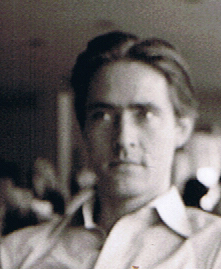
Jeremy Gilbert-Rolfe (4 August 1945 – 14 August 2024) was a British-born American painter, art critic, art theorist, and educator, born in Royal Tunbridge Wells, England. In 1968, he moved to the United States, where he remained.
Gilbert-Rolfe held several degrees, including a National Diploma in Painting from Tunbridge Wells School of Art (1965), an ATC from the London University Institute of Education (1967), and an MFA from Florida State University (1970). His work is in the permanent collections of the Albright-Knox Gallery of Art, Buffalo, NY; The Getty Study Center, Los Angeles; the Hammer Museum, Los Angeles; the Los Angeles County Museum of Art; the Museum of Contemporary Art, Los Angeles; the Museum of Contemporary Art, North Miami; the Frederick R. Weisman Foundation in Los Angeles and Minneapolis; the Whitney Museum of American Art, New York; and other public, corporate and private collections.
Starting out in Artforum, in 1973, he wrote something at least once for most of the art magazines over the years, and more often for Critical Inquiry and Bomb Magazine. A founding editor of October (journal), with Rosalind Krauss, Annette Michelson and Lucio Pozzi (who withdrew before the first issue was published,) Gilbert-Rolfe resigned from the journal after the third issue.
Gilbert-Rolfe died in Gainesville, Florida, on 14 August 2024, at the age of 79. He has two sons, Cyrus Gilbert-Rolfe and Cedric Gilbert-Rolfe.
Gilbert-Rolfe had shown in New York fairly regularly from 1970, and sporadically elsewhere. Regarding the general consensus that describes his work as Geometric abstraction, Gilbert-Rolfe said he wishes people would think about what he does with the category rather than how his work fits into it. He said he went to an exhibition at the Tate Gallery in London in 1963 to see the Pop Art that was in it but what caught his attention instead, causing him to decide he needed to go to America, were the paintings of the New York School and especially and specifically Barnett Newman's Vir Heroicus Sublimis (1951). The space in it felt as active as the space in Howard Hawks' Red River, which had entered his imagination when he was a child.
Rachel Kushner discussed Gilbert-Rolfe's indebtedness to Newman and Hawks and much else, going on to say that she made an "automatic and instinctive" association of his painting Hottest Part of the Day (2001) with a poem of Sappho's, and that it is her "sense that Gilbert-Rolfe had some uncanny mesh with feminine sensibilities. Gilbert-Rolfe said that "his paintings are about complexity and as such have come to be about logic as much as anything else. Not logic as in philosophy, logic as in music, where one talks of it making sense but does not mean it provides a riddle and its answer. I want the work to interact with the viewer, to take place in the space around itself and between itself and the person looking at it, and to hold the attention for some time." Gilbert-Rolfe has also said that seriousness is generally identified with terror, "but I want to identify it with questions of the formless... Art has to put you in touch with something that's not manageable.... (but) it's time to get rid of ... tough-guy rhetoric about the sublime. Among other things, it would permit us to get closer to the sublime or sublimes that tough guys are too scared to touch." As Kushner puts it, "Gilbert-Rolfe ... lays out his ante, but never knows where a painting will go."
In 2010 Gilbert-Rolfe and Rebecca Norton began to work together as the collaboration Awkward x 2, making paintings together and also writing occasional blogs. Awkward has shown in Brooklyn, Chicago and Louisville to date.
Gilbert-Rolfe wrote about art and related topics, including poetry, fiction, fashion, with particular regard to its interaction with photography, digital technology, and the general state of things in art and how the present situation seems to have emerged.
Hub AI
Jeremy Gilbert-Rolfe AI simulator
(@Jeremy Gilbert-Rolfe_simulator)
Jeremy Gilbert-Rolfe
Jeremy Gilbert-Rolfe (4 August 1945 – 14 August 2024) was a British-born American painter, art critic, art theorist, and educator, born in Royal Tunbridge Wells, England. In 1968, he moved to the United States, where he remained.
Gilbert-Rolfe held several degrees, including a National Diploma in Painting from Tunbridge Wells School of Art (1965), an ATC from the London University Institute of Education (1967), and an MFA from Florida State University (1970). His work is in the permanent collections of the Albright-Knox Gallery of Art, Buffalo, NY; The Getty Study Center, Los Angeles; the Hammer Museum, Los Angeles; the Los Angeles County Museum of Art; the Museum of Contemporary Art, Los Angeles; the Museum of Contemporary Art, North Miami; the Frederick R. Weisman Foundation in Los Angeles and Minneapolis; the Whitney Museum of American Art, New York; and other public, corporate and private collections.
Starting out in Artforum, in 1973, he wrote something at least once for most of the art magazines over the years, and more often for Critical Inquiry and Bomb Magazine. A founding editor of October (journal), with Rosalind Krauss, Annette Michelson and Lucio Pozzi (who withdrew before the first issue was published,) Gilbert-Rolfe resigned from the journal after the third issue.
Gilbert-Rolfe died in Gainesville, Florida, on 14 August 2024, at the age of 79. He has two sons, Cyrus Gilbert-Rolfe and Cedric Gilbert-Rolfe.
Gilbert-Rolfe had shown in New York fairly regularly from 1970, and sporadically elsewhere. Regarding the general consensus that describes his work as Geometric abstraction, Gilbert-Rolfe said he wishes people would think about what he does with the category rather than how his work fits into it. He said he went to an exhibition at the Tate Gallery in London in 1963 to see the Pop Art that was in it but what caught his attention instead, causing him to decide he needed to go to America, were the paintings of the New York School and especially and specifically Barnett Newman's Vir Heroicus Sublimis (1951). The space in it felt as active as the space in Howard Hawks' Red River, which had entered his imagination when he was a child.
Rachel Kushner discussed Gilbert-Rolfe's indebtedness to Newman and Hawks and much else, going on to say that she made an "automatic and instinctive" association of his painting Hottest Part of the Day (2001) with a poem of Sappho's, and that it is her "sense that Gilbert-Rolfe had some uncanny mesh with feminine sensibilities. Gilbert-Rolfe said that "his paintings are about complexity and as such have come to be about logic as much as anything else. Not logic as in philosophy, logic as in music, where one talks of it making sense but does not mean it provides a riddle and its answer. I want the work to interact with the viewer, to take place in the space around itself and between itself and the person looking at it, and to hold the attention for some time." Gilbert-Rolfe has also said that seriousness is generally identified with terror, "but I want to identify it with questions of the formless... Art has to put you in touch with something that's not manageable.... (but) it's time to get rid of ... tough-guy rhetoric about the sublime. Among other things, it would permit us to get closer to the sublime or sublimes that tough guys are too scared to touch." As Kushner puts it, "Gilbert-Rolfe ... lays out his ante, but never knows where a painting will go."
In 2010 Gilbert-Rolfe and Rebecca Norton began to work together as the collaboration Awkward x 2, making paintings together and also writing occasional blogs. Awkward has shown in Brooklyn, Chicago and Louisville to date.
Gilbert-Rolfe wrote about art and related topics, including poetry, fiction, fashion, with particular regard to its interaction with photography, digital technology, and the general state of things in art and how the present situation seems to have emerged.
Recent media