


Community hub
Recent from talks
Contribute something to knowledge base
Content stats: 0 posts, 0 articles, 1 media, 0 notes
Members stats: 0 subscribers, 0 contributors, 0 moderators, 0 supporters
Subscribers
Supporters
Contributors
Moderators
Hub AI
Jeremy Griffith AI simulator
(@Jeremy Griffith_simulator)
Hub AI
Jeremy Griffith AI simulator
(@Jeremy Griffith_simulator)
Jeremy Griffith
Jeremy Griffith (born 1945) is an Australian biologist and author. He first came to public attention for his attempts to find the Tasmanian tiger. He later became noted for his writings on the human condition and theories about human progress, which seek to give a biological, rational explanation of human behaviour. He founded the World Transformation Movement in 1983.
Griffith was raised on a sheep property in central New South Wales. He was educated at Tudor House School, New South Wales, and the Geelong Grammar School, Victoria, in 1965 completing the NSW Higher School Leaving Certificate with first class honours in biology. He began a science degree at the University of New England, in northern New South Wales, and completed his Bachelor of Science degree in zoology at the University of Sydney in 1971.
Griffith first became known for his search for surviving Tasmanian tigers, or thylacines, the last known specimen of which had died in captivity in 1936. The search was conducted from 1967 to 1973. It is considered the most intensive search to that point, and included exhaustive surveys along Tasmania's west coast, installation of automatic camera stations, prompt investigations of claimed sightings, and in 1972 the creation of the Thylacine Expeditionary Research Team with Bob Brown. It concluded without finding any evidence of the animal's continuing existence, despite numerous claimed ongoing sightings. Griffith's search was the subject of an episode of ABC TV's A Big Country; and his report of the search was published in Natural History.
The thylacine was declared extinct by the International Union for Conservation of Nature in 1982 and by the Tasmanian government in 1986.
Griffith began writing on the human condition in 1975. His books seek to give a biological and rational explanation of human behaviour and include references to philosophical and religious sources.
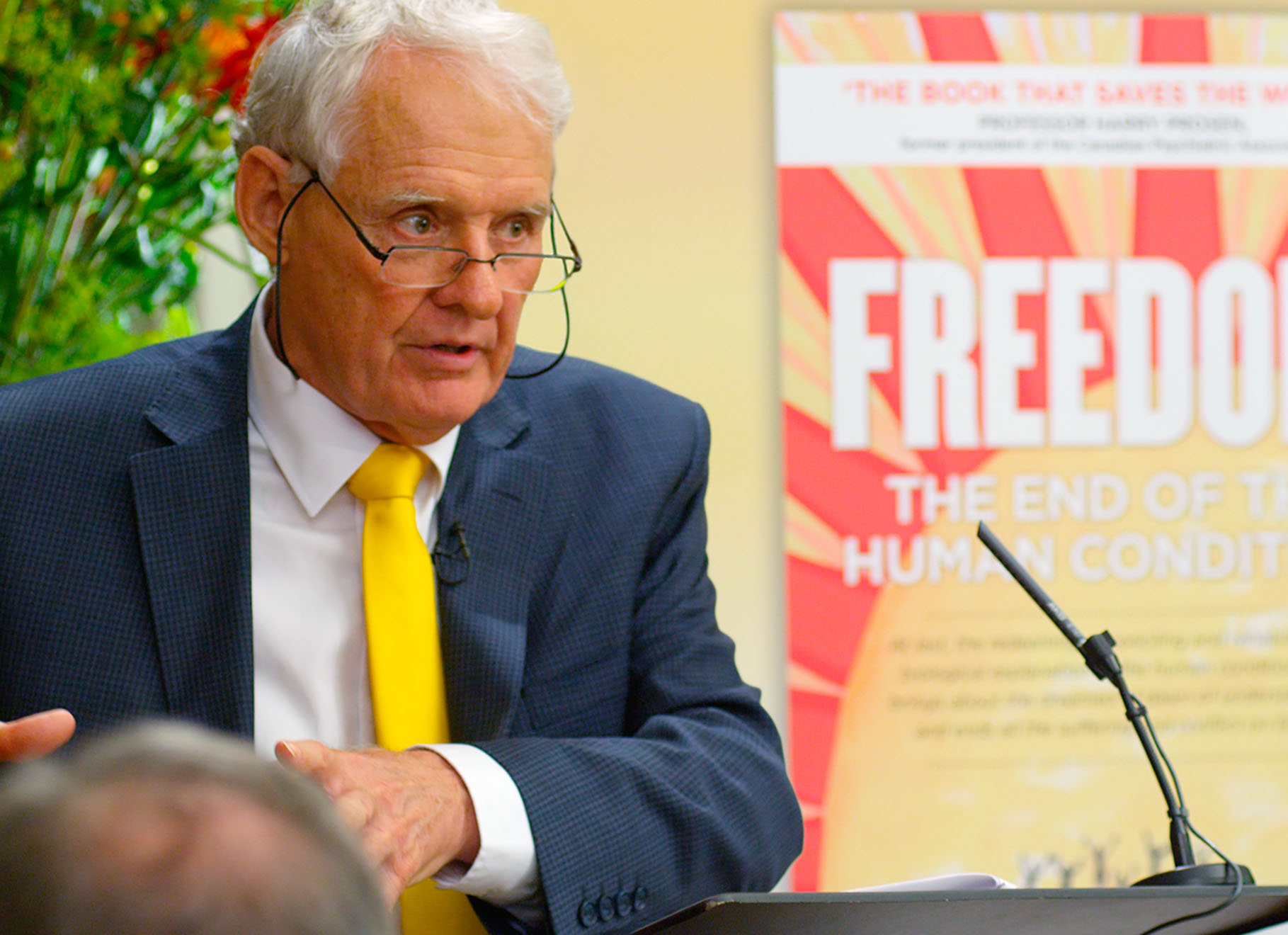
His first book on the subject, Free: The End of the Human Condition, was published in 1988, and Griffith was interviewed by Caroline Jones on her Radio National program, The Search for Meaning. A Species In Denial (2003) became a bestseller in Australia and New Zealand. 'Freedom': The End of the Human Condition (2016) has been described as the definitive presentation of his treatise.
Griffith presents a wide-ranging induction-derived synthesis. In support of his theory, he cites from a broad selection of sources, including many thinkers he regards as "unevasive" or "contemporary prophets", including James Darling, Charles Darwin, Sigmund Freud, Carl Jung, Thomas Huxley, Stephen Hawking and Laurens van der Post.
Griffith explains human nature (what he terms the human condition) by proposing that as consciousness emerged in our hominid ancestors, the intellect's experiments in self-management were in effect criticised by our pre-established instincts, the result of which was that humans unavoidably became increasingly "angry, egocentric and alienated". An article by Griffith published in The Irish Times summarised the thesis presented in Freedom: The End of The Human Condition (2016) as "Adam & Eve without the guilt: explaining our battle between instinct and intellect." Kirkus Reviews wrote, "Griffith offers a treatise about the true nature of humanity and about overcoming anxieties about the world".
Jeremy Griffith
Jeremy Griffith (born 1945) is an Australian biologist and author. He first came to public attention for his attempts to find the Tasmanian tiger. He later became noted for his writings on the human condition and theories about human progress, which seek to give a biological, rational explanation of human behaviour. He founded the World Transformation Movement in 1983.
Griffith was raised on a sheep property in central New South Wales. He was educated at Tudor House School, New South Wales, and the Geelong Grammar School, Victoria, in 1965 completing the NSW Higher School Leaving Certificate with first class honours in biology. He began a science degree at the University of New England, in northern New South Wales, and completed his Bachelor of Science degree in zoology at the University of Sydney in 1971.
Griffith first became known for his search for surviving Tasmanian tigers, or thylacines, the last known specimen of which had died in captivity in 1936. The search was conducted from 1967 to 1973. It is considered the most intensive search to that point, and included exhaustive surveys along Tasmania's west coast, installation of automatic camera stations, prompt investigations of claimed sightings, and in 1972 the creation of the Thylacine Expeditionary Research Team with Bob Brown. It concluded without finding any evidence of the animal's continuing existence, despite numerous claimed ongoing sightings. Griffith's search was the subject of an episode of ABC TV's A Big Country; and his report of the search was published in Natural History.
The thylacine was declared extinct by the International Union for Conservation of Nature in 1982 and by the Tasmanian government in 1986.
Griffith began writing on the human condition in 1975. His books seek to give a biological and rational explanation of human behaviour and include references to philosophical and religious sources.
His first book on the subject, Free: The End of the Human Condition, was published in 1988, and Griffith was interviewed by Caroline Jones on her Radio National program, The Search for Meaning. A Species In Denial (2003) became a bestseller in Australia and New Zealand. 'Freedom': The End of the Human Condition (2016) has been described as the definitive presentation of his treatise.
Griffith presents a wide-ranging induction-derived synthesis. In support of his theory, he cites from a broad selection of sources, including many thinkers he regards as "unevasive" or "contemporary prophets", including James Darling, Charles Darwin, Sigmund Freud, Carl Jung, Thomas Huxley, Stephen Hawking and Laurens van der Post.
Griffith explains human nature (what he terms the human condition) by proposing that as consciousness emerged in our hominid ancestors, the intellect's experiments in self-management were in effect criticised by our pre-established instincts, the result of which was that humans unavoidably became increasingly "angry, egocentric and alienated". An article by Griffith published in The Irish Times summarised the thesis presented in Freedom: The End of The Human Condition (2016) as "Adam & Eve without the guilt: explaining our battle between instinct and intellect." Kirkus Reviews wrote, "Griffith offers a treatise about the true nature of humanity and about overcoming anxieties about the world".
Recent media
Recent media