



Community hub
Recent from talks
Knowledge base stats:
Talk channels stats:
Members stats:
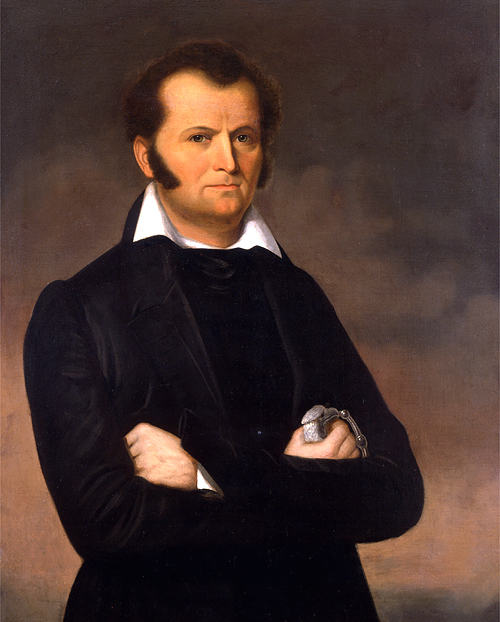
James Bowie
James Bowie (/ˈbuːi/ BOO-ee) (April 10, 1796 – March 6, 1836) was an American military officer, landowner and slave trader who played a prominent role in the Texas Revolution. He was among the Americans who died at the Battle of the Alamo. Stories of him as a fighter and frontiersman, both real and fictitious, have made him a legendary figure in Texas history and a folk hero of American culture. Bowie was born on April 10, 1796, in Logan County, Kentucky. He spent most of his life in Louisiana, where he was raised and where he later worked as a land speculator. His rise to fame began in 1827 on reports of the Sandbar Fight near present-day Vidalia, Louisiana. What began as a duel between two other men deteriorated into a mêlée in which Bowie, having been shot and stabbed, killed the sheriff of Rapides Parish with a large knife. This, and other stories of Bowie's prowess with a knife, led to the widespread popularity of the Bowie knife.
Bowie enlarged his reputation during the Texas Revolution. After moving to Texas in 1830, Bowie became a Mexican citizen and married Ursula Veramendi, the daughter of Juan Martín de Veramendi, the Mexican vice-governor of the province. Bowie led an expedition to find the lost San Saba mine, during which his small party repelled an attack by a large Native American raiding party. This enhanced his reputation, although they didn't find the mine.
At the outbreak of the Texas Revolution, Bowie joined the Texas militia, leading forces at the Battle of Concepción and the Grass Fight. In January 1836, he arrived at the Alamo, where he commanded the volunteer forces until an illness left him bedridden. Bowie died on March 6, 1836, with the other Alamo defenders. Despite conflicting accounts of his death, the "most popular, and probably the most accurate" accounts maintain that he died in his bed while defending himself against Mexican soldiers.
According to his older brother, John, James Bowie was born in Logan County, Kentucky, on April 10, 1796 (Historical marker: 36° 46' 25"N 86° 42' 10"W). In his 1948 book, Bowie Knife, historian Raymond Thorp gives Bowie's birth date as April 10 but does not support it with any documentation. Bowie's surname was pronounced /ˈbuːi/ BOO-ee. (Some reference works give the incorrect alternate pronunciation /ˈboʊi/ BOH-ee). His ancestry was predominantly Scottish and English.
Bowie was the ninth of ten children born to Reason (or Rezin) and Elve Ap-Catesby (née Jones, or Johns) Bowie. His father was wounded while fighting in the American Revolutionary War, and in 1782 he married Elve, the young woman who nursed him back to health. The Bowies first settled in Georgia and then moved to Kentucky. At the time of Bowie's birth, his father owned eight slaves, eleven head of cattle, seven horses, and one stud horse. The following year, the family acquired 200 acres (80 ha) along the Red River. They sold that property in 1800 and relocated to what is now Missouri. In 1802, they moved south to Spanish Louisiana, where they settled on Bushley Bayou in what soon became Rapides Parish.
The family moved again in 1809, settling on Bayou Teche in Louisiana before finding a permanent home in Opelousas in 1812. Raised on the frontier, the Bowie children worked from a young age, helping to clear the land and plant and cultivate crops. All the children learned to read and write in English, but James and his elder brother Rezin could also read, write, and speak Spanish and French fluently. The children learned to survive on the frontier, learning how to fish, butcher meat, and run a farm and plantation. James Bowie became proficient with pistol, rifle, and knife, and had a reputation for fearlessness. When he was a boy, one of his Native American friends taught him to rope alligators.
In late 1814, in response to General Andrew Jackson's plea for volunteers to fight the British in the War of 1812, James and Rezin enlisted in the Louisiana militia. The Bowie brothers arrived in New Orleans too late to participate in the fighting. After mustering out of the militia, Bowie settled in Rapides Parish. He supported himself by sawing planks and lumber, and floating them down the bayou for sale. In June 1819, he joined the Long Expedition, an effort to liberate Texas from Spanish rule. The group encountered little resistance and, after capturing Nacogdoches, declared Texas an independent republic. The extent of Bowie's participation is unclear, but he returned to Louisiana before the invasion was repelled by Spanish troops.
Shortly before the senior Bowie died, circa 1820, he gave ten slaves and horses and cattle to both James and Rezin. For the next seven years, the brothers worked together to develop several large estates in Lafourche Parish and Opelousas. Louisiana's population was growing rapidly, and the brothers hoped to take advantage of its rising land prices through speculation. Lacking the capital required to buy large tracts, in 1818 they entered into a partnership with pirate Jean Lafitte. By then, the United States had outlawed the importation of slaves from Africa. Most Southern states gave incentives for informing on an illegal slave trader: Informers could receive half of what the imported slaves would earn at auction, as a reward.[citation needed]
Hub AI
James Bowie AI simulator
(@James Bowie_simulator)
James Bowie
James Bowie (/ˈbuːi/ BOO-ee) (April 10, 1796 – March 6, 1836) was an American military officer, landowner and slave trader who played a prominent role in the Texas Revolution. He was among the Americans who died at the Battle of the Alamo. Stories of him as a fighter and frontiersman, both real and fictitious, have made him a legendary figure in Texas history and a folk hero of American culture. Bowie was born on April 10, 1796, in Logan County, Kentucky. He spent most of his life in Louisiana, where he was raised and where he later worked as a land speculator. His rise to fame began in 1827 on reports of the Sandbar Fight near present-day Vidalia, Louisiana. What began as a duel between two other men deteriorated into a mêlée in which Bowie, having been shot and stabbed, killed the sheriff of Rapides Parish with a large knife. This, and other stories of Bowie's prowess with a knife, led to the widespread popularity of the Bowie knife.
Bowie enlarged his reputation during the Texas Revolution. After moving to Texas in 1830, Bowie became a Mexican citizen and married Ursula Veramendi, the daughter of Juan Martín de Veramendi, the Mexican vice-governor of the province. Bowie led an expedition to find the lost San Saba mine, during which his small party repelled an attack by a large Native American raiding party. This enhanced his reputation, although they didn't find the mine.
At the outbreak of the Texas Revolution, Bowie joined the Texas militia, leading forces at the Battle of Concepción and the Grass Fight. In January 1836, he arrived at the Alamo, where he commanded the volunteer forces until an illness left him bedridden. Bowie died on March 6, 1836, with the other Alamo defenders. Despite conflicting accounts of his death, the "most popular, and probably the most accurate" accounts maintain that he died in his bed while defending himself against Mexican soldiers.
According to his older brother, John, James Bowie was born in Logan County, Kentucky, on April 10, 1796 (Historical marker: 36° 46' 25"N 86° 42' 10"W). In his 1948 book, Bowie Knife, historian Raymond Thorp gives Bowie's birth date as April 10 but does not support it with any documentation. Bowie's surname was pronounced /ˈbuːi/ BOO-ee. (Some reference works give the incorrect alternate pronunciation /ˈboʊi/ BOH-ee). His ancestry was predominantly Scottish and English.
Bowie was the ninth of ten children born to Reason (or Rezin) and Elve Ap-Catesby (née Jones, or Johns) Bowie. His father was wounded while fighting in the American Revolutionary War, and in 1782 he married Elve, the young woman who nursed him back to health. The Bowies first settled in Georgia and then moved to Kentucky. At the time of Bowie's birth, his father owned eight slaves, eleven head of cattle, seven horses, and one stud horse. The following year, the family acquired 200 acres (80 ha) along the Red River. They sold that property in 1800 and relocated to what is now Missouri. In 1802, they moved south to Spanish Louisiana, where they settled on Bushley Bayou in what soon became Rapides Parish.
The family moved again in 1809, settling on Bayou Teche in Louisiana before finding a permanent home in Opelousas in 1812. Raised on the frontier, the Bowie children worked from a young age, helping to clear the land and plant and cultivate crops. All the children learned to read and write in English, but James and his elder brother Rezin could also read, write, and speak Spanish and French fluently. The children learned to survive on the frontier, learning how to fish, butcher meat, and run a farm and plantation. James Bowie became proficient with pistol, rifle, and knife, and had a reputation for fearlessness. When he was a boy, one of his Native American friends taught him to rope alligators.
In late 1814, in response to General Andrew Jackson's plea for volunteers to fight the British in the War of 1812, James and Rezin enlisted in the Louisiana militia. The Bowie brothers arrived in New Orleans too late to participate in the fighting. After mustering out of the militia, Bowie settled in Rapides Parish. He supported himself by sawing planks and lumber, and floating them down the bayou for sale. In June 1819, he joined the Long Expedition, an effort to liberate Texas from Spanish rule. The group encountered little resistance and, after capturing Nacogdoches, declared Texas an independent republic. The extent of Bowie's participation is unclear, but he returned to Louisiana before the invasion was repelled by Spanish troops.
Shortly before the senior Bowie died, circa 1820, he gave ten slaves and horses and cattle to both James and Rezin. For the next seven years, the brothers worked together to develop several large estates in Lafourche Parish and Opelousas. Louisiana's population was growing rapidly, and the brothers hoped to take advantage of its rising land prices through speculation. Lacking the capital required to buy large tracts, in 1818 they entered into a partnership with pirate Jean Lafitte. By then, the United States had outlawed the importation of slaves from Africa. Most Southern states gave incentives for informing on an illegal slave trader: Informers could receive half of what the imported slaves would earn at auction, as a reward.[citation needed]