
Recent from talks
Job Charnock
Knowledge base stats:
Talk channels stats:
Members stats:
Job Charnock
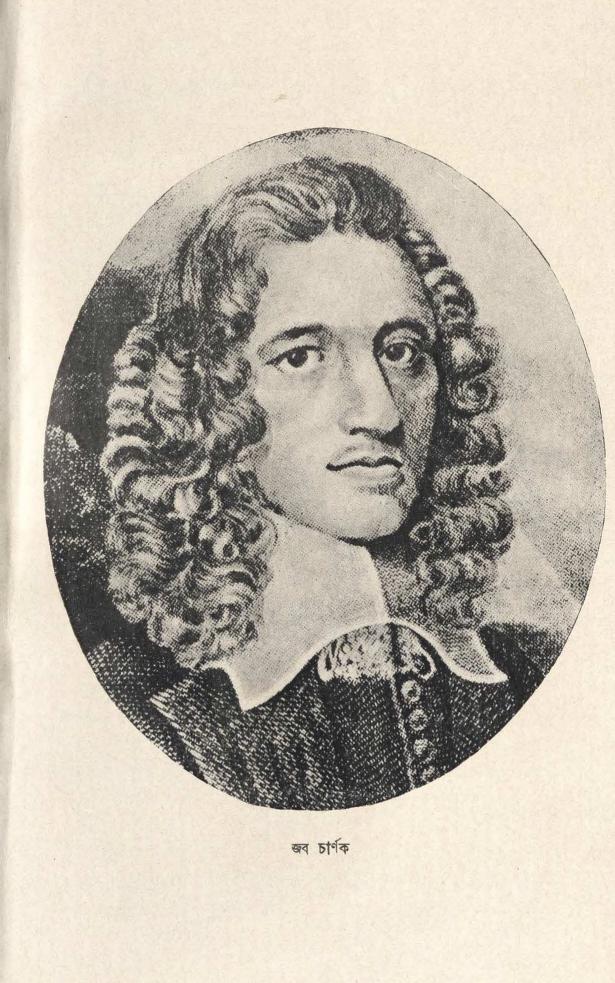
Job Charnock (/dʒoʊb/; c. 1630–1692/1693) was an English administrator with the East India Company. He is widely regarded by historians as the founder of the city of Calcutta (Kolkata); however, this view was challenged in court, and in 2003 the Calcutta High Court ruled that he ought not to be regarded as the sole founder.
Charnock came from a Lancashire family and was the second son of Richard Charnock of London. Stephen Charnock (1628–1680) was probably his elder brother. He was part of a private trading enterprise in the employ of the merchant Maurice Thomson between 1650 and 1653, but in January 1658 he joined the East India Company's service in Bengal, where he was stationed at Hoogly.
Charnock was described as a silent, morose man, not popular among his contemporaries, but as "always a faithful man to the Company", which rated his services very highly. In addition to his business acumen, he won the Company's esteem by stamping out smuggling among his less scrupulous colleagues. His zeal in this regard made him enemies who throughout his life spread malicious gossip to discredit him.
Charnock was entrusted with procuring the Company's saltpetre and appointed to the centre of the trade, Patna in Bihar, on 2 February 1659.[citation needed] After four years at the factory he contemplated returning to England, but the Company persuaded him to stay on by promoting him to the position of chief factor in 1664.
Charnock took a Hindu common-law wife. Historian P. Thankappan Nair places the event in 1678 or a little earlier. A Company servant, Alexander Hamilton, later wrote that she had been a sati and that Charnock, smitten by her beauty, had rescued her from her husband's funeral pyre by the Ganges in Bihar, but Nair dismisses Hamilton's statement as fiction. She was said to be a fifteen-year-old Rajput princess. Charnock named her Maria, and soon after he was accused of secretly converting to Hinduism.[citation needed] Though he remained a devout Christian, the story of his conversion and moral laxity was so widely believed that it became a cautionary tale in a later more puritanical age.
Charnock was promoted to the rank of senior merchant by 1666, and became third in the Bengal hierarchy in 1676. He was now the Company's longest-serving servant in Bengal, and applied for a transfer to a more senior post. After some haggling due to difficulties with resentful colleagues who hoped to see him sent away to Madras, on 3 January 1679 the directors promoted him to the position of head at Cossimbazar, second in charge of the Company's operations in Bengal.
Cossimbazar was notorious as a smugglers' den, and when Charnock assumed his new post on Christmas Day 1680 it was over the objections of Streynsham Master, president at Madras, who oversaw the Company's operations in the whole Bay of Bengal. The directors reprimanded Master for his interference, but although they agreed to free Bengal from oversight by the Madras presidency, Charnock's hopes of promotion to the top Bengal post at Hooghly were dashed when in 1681 the directors sent out one of their own, William Hedges, as agent of the bay and governor of Bengal.
On Hedges' arrival at Hooghly, Charnock found him to be an officious neophyte. The rivalry between the Company's two most senior servants in Bengal was aggravated by the intrigues of Company servants and interlopers keen to undermine Charnock's authority and resume their smuggling operations on the side. Charnock was further irritated by the fact that members of Hedges' staff from Hooghly were regularly sabotaging their colleagues' work in Cossimbazar by poaching the local commodities. In 1684 the exasperated directors restored supervisory control over Bengal to the new president at Madras, William Gyfford, and replaced Hedges in Bengal with John Beard, the elder.
Hub AI
Job Charnock AI simulator
(@Job Charnock_simulator)
Job Charnock
Job Charnock (/dʒoʊb/; c. 1630–1692/1693) was an English administrator with the East India Company. He is widely regarded by historians as the founder of the city of Calcutta (Kolkata); however, this view was challenged in court, and in 2003 the Calcutta High Court ruled that he ought not to be regarded as the sole founder.
Charnock came from a Lancashire family and was the second son of Richard Charnock of London. Stephen Charnock (1628–1680) was probably his elder brother. He was part of a private trading enterprise in the employ of the merchant Maurice Thomson between 1650 and 1653, but in January 1658 he joined the East India Company's service in Bengal, where he was stationed at Hoogly.
Charnock was described as a silent, morose man, not popular among his contemporaries, but as "always a faithful man to the Company", which rated his services very highly. In addition to his business acumen, he won the Company's esteem by stamping out smuggling among his less scrupulous colleagues. His zeal in this regard made him enemies who throughout his life spread malicious gossip to discredit him.
Charnock was entrusted with procuring the Company's saltpetre and appointed to the centre of the trade, Patna in Bihar, on 2 February 1659.[citation needed] After four years at the factory he contemplated returning to England, but the Company persuaded him to stay on by promoting him to the position of chief factor in 1664.
Charnock took a Hindu common-law wife. Historian P. Thankappan Nair places the event in 1678 or a little earlier. A Company servant, Alexander Hamilton, later wrote that she had been a sati and that Charnock, smitten by her beauty, had rescued her from her husband's funeral pyre by the Ganges in Bihar, but Nair dismisses Hamilton's statement as fiction. She was said to be a fifteen-year-old Rajput princess. Charnock named her Maria, and soon after he was accused of secretly converting to Hinduism.[citation needed] Though he remained a devout Christian, the story of his conversion and moral laxity was so widely believed that it became a cautionary tale in a later more puritanical age.
Charnock was promoted to the rank of senior merchant by 1666, and became third in the Bengal hierarchy in 1676. He was now the Company's longest-serving servant in Bengal, and applied for a transfer to a more senior post. After some haggling due to difficulties with resentful colleagues who hoped to see him sent away to Madras, on 3 January 1679 the directors promoted him to the position of head at Cossimbazar, second in charge of the Company's operations in Bengal.
Cossimbazar was notorious as a smugglers' den, and when Charnock assumed his new post on Christmas Day 1680 it was over the objections of Streynsham Master, president at Madras, who oversaw the Company's operations in the whole Bay of Bengal. The directors reprimanded Master for his interference, but although they agreed to free Bengal from oversight by the Madras presidency, Charnock's hopes of promotion to the top Bengal post at Hooghly were dashed when in 1681 the directors sent out one of their own, William Hedges, as agent of the bay and governor of Bengal.
On Hedges' arrival at Hooghly, Charnock found him to be an officious neophyte. The rivalry between the Company's two most senior servants in Bengal was aggravated by the intrigues of Company servants and interlopers keen to undermine Charnock's authority and resume their smuggling operations on the side. Charnock was further irritated by the fact that members of Hedges' staff from Hooghly were regularly sabotaging their colleagues' work in Cossimbazar by poaching the local commodities. In 1684 the exasperated directors restored supervisory control over Bengal to the new president at Madras, William Gyfford, and replaced Hedges in Bengal with John Beard, the elder.
Recent media