Hubbry Logo
Juhani AataminpoikaJuhani AataminpoikaMain
Open search
Juhani Aataminpoika
Community hub
Juhani Aataminpoika
logo
8 pages, 0 posts
0 subscribers
Be the first to start a discussion here.
Juhani Aataminpoika
Juhani Aataminpoika
from Wikipedia

Juhani Aataminpoika (Finnish pronunciation: [ˈjuhɑni ˈɑːtɑminˌpoi̯kɑ]; born 31 July 1826 – September 1854) alias Kerpeikkari (Finnish: [ˈkerpei̯kːɑri]), was a Finnish serial killer. He killed 12 people in southern Finland between October and November of 1849. He has been characterized as the first serial killer in Finland.

Key Information

Biography

[edit]

Juhani Aataminpoika left home at the age of 15,[clarification needed] living a nomadic life and committing petty crimes. In October 1849, he was charged with stealing horses and imprisoned. During his imprisonment, he was taken from the Hämeenlinna prison to Hauho, where the court was to be held on his crimes. During transport, he escaped, starting a homicidal spree. In Lammi he killed the master and mistress of the Helisevä croft with a man named Kustaa Kratula. From there, he went back to his home in Heinola, where he killed his stepfather and mother and their two children [clarification needed] before fleeing to the forest.[2][3]

Shortly afterwards, he killed a man to get his certificate to get a job at a canal site. Aataminpoika travelled to the Saimaa Canal killing more people on the way. He did not stay at the canal work site but killed a sailor in order to get his papers. [clarification needed]

At the beginning of November, Aataminpoika returned to Lammi, from which he left with his friend Antti Suikko to go to the Tyry croft in the village of Hattelmala. The men vandalized the house, maimed the tenants, and stole their money. The elderly mistress of the house died later from her injuries, but the others managed to survive the attack.[2]

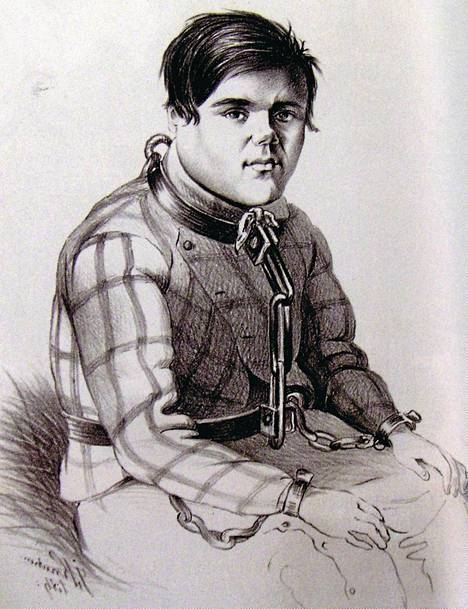
Shortly thereafter, on 20 November, Aataminpoika was caught in Palsa near the Lammi and Padasjoki border. At the end of the trial, the Vyborg Court of Appeal sentenced him to death. The sentence was upheld in the Senate's Department of Justice, but the Emperor commuted it to 40 lashes and a life imprisonment sentence. He was transferred to Sveaborg (Suomenlinna) in January 1853 and kept there, chained to a wall, until his death in 1854.[2][3]

Juhani Aataminpoika was also known by the nickname "Kerpeikkari", which is coined from Swedish word skarprättare, meaning 'executioner'.[2] He was famous in his own time, but his actions were eventually forgotten and he did not end up with the same level of fame as, for example, Matti Haapoja. In the 2000s, however, he once again sparked an interest in researchers.

Film

[edit]

A film about Juhani Aataminpoika's life is in the planning stages. The script is written by Kari Hietalahti, and the film is to be directed by Peter Franzén. Earlier plans were to see the movie released by the autumn of 2017, but as of 2022, the film has yet to be financed, putting it in production limbo.[4]

See also

[edit]

Sources

[edit]
  • Hämeenlinnan Kaupunkiuutisten artikkeli vuodelta 2003 (Archive.org)
  • Kaijus Ervasti (1992). The Murmansk Portrait: Matti Haapoja 1845-1895. Helsinki. ISBN 951-37-0976-0.{{cite book}}: CS1 maint: location missing publisher (link)

References

[edit]

Literature

[edit]
  • Jarmo Haapalainen (2007). Twelve murders in five weeks, Heinola's "beast" Finnish record (in Finnish). Heinola. ISBN 978-952-99946-0-1.{{cite book}}: CS1 maint: location missing publisher (link)
  • The only serial killer in Finland. Juhani Aataminpoika's crimes and punishment (in Finnish). Teemu Keskisarja. 2008. ISBN 978-951-796-538-5.
[edit]
Revisions and contributorsEdit on WikipediaRead on Wikipedia
from Grokipedia
Juhani Aataminpoika (31 July 1826 – September 1854), better known by his alias Kerpeikkari, was a Finnish serial killer and vagrant who murdered at least 12 people during a violent spree across southern Finland in October and November 1849. Born in Vesivehmaa, Asikkala, in the Päijänne Tavastia region, Aataminpoika left home at the age of 15 to live a nomadic life as a farmhand, during which he committed petty crimes and developed a reputation as a troublemaker within Finland's puukkojunkkari (knife-fighting) subculture. His killing spree began after he escaped custody in Hauho while charged with horse theft, leading him to partner with accomplices like Kustaa Kratula and Antti Suiko in a series of brutal attacks motivated by robbery and personal grudges. Among his most notorious crimes were the murders in Lammi, where he killed a farm owner and his spouse; in Hujansalo near Joenniemi, where he slaughtered his stepfather Alexander Bohm, his own mother, and other family members who fled into the forest; and along the Saimaa canal route, where he targeted travelers for items like work certificates. By November 1849, after returning to Lammi and causing the death of an elderly woman during a robbery at Tyryn torppa, Aataminpoika was captured in Padasjoki's Vesijaon kylä by local residents Erik Tervakoski and the miller of Palsa. Tried by the Viipuri Court of Appeal, Aataminpoika was initially sentenced to death, but Tsar Nicholas I commuted the penalty to 40 lashes and , after which he was transported to the fortress (then Viapori) in January 1853 and chained to a prison wall as punishment. He endured public display in prior to his transfer and reportedly suffered from , which forensic psychiatrist Hannu Lauerma has suggested may have influenced his erratic and violent behavior. Aataminpoika died in captivity in September 1854 at age 28, leaving a legacy as one of Finland's most infamous criminals of the and often regarded as the nation's first documented due to the premeditated and repetitive nature of his offenses.

Early Life

Birth and Family Background

Juhani Aataminpoika, originally named Johan Adamsson in accordance with the Swedish patronymic tradition prevalent in rural at the time, was born on 31 July 1826 in Pietilä rengintorppa, Vesivehmaa, Asikkala parish, in the under Russian imperial rule. His parents were Aatami, a crofter, and Eva Greta, and he was one of several children, including half-siblings Gustaf and Wilhelmina, in a large, impoverished typical of tenant farming families in southern . The family's existence as crofters—tenant farmers working small plots on larger estates—reflected the broader economic hardships faced by rural communities in 19th-century southern . Under the Russian Empire's semi-autonomous administration, tenant farmers endured high rents, dependence on landowners, frequent crop failures due to harsh winters and poor soil, and limited opportunities for , often leading to chronic and indebtedness. These conditions exacerbated family strains, with large households struggling to provide adequate sustenance and stability for children. Juhani's early life was marked by such instability, including his father's when he was four years old, which left the family fragmented and reliant on his mother's labor as a . Eva Greta faced additional social condemnation from the Lutheran Church, including penalties for perceived illicit relations, further stigmatizing the household. Juhani was primarily raised by indifferent grandparents following these upheavals, and later by a reportedly violent , fostering an environment of and abuse that shaped his formative years. Amid these challenges, he adopted the Finnish patronymic name Juhani Aataminpoika, aligning with emerging national linguistic shifts in the region during the mid-19th century.

Adolescence and Initial Offenses

At the age of 15, around 1841, Juhani Aataminpoika left his family home in Vesivehmaa, Asikkala, due to the pervasive that marked his upbringing, embarking on a nomadic existence wandering through southern . This period of independence saw him engaging in sporadic employment as a farmhand or day laborer, but it was overshadowed by a pattern of petty criminality, including thefts of food and minor items to sustain himself. His aggressive temperament during confrontations earned him the nickname "Kerpeikkari," derived from the Swedish word "skarprättare," meaning , reflecting his threatening behavior toward those who crossed him. Over the years, this lifestyle led to multiple short-term imprisonments for and , as authorities frequently apprehended like him under Finland's strict 19th-century laws on itinerancy. These early infractions, including an for in 1849, highlighted a growing pattern of defiance against societal norms, rooted in survival amid economic hardship, though they remained minor compared to the violence that would follow.

The 1849 Murder Spree

Prelude to the Crimes

In October 1849, Juhani Aataminpoika, a 23-year-old farmhand from southern , was charged with and escaped custody during transport to the Hauho court for trial, fleeing into the rural countryside and evading immediate recapture. This breakout marked a critical , transforming his pattern of petty theft into a violent rampage fueled by desperation and unresolved personal animosities. Shortly after his escape, Aataminpoika partnered with accomplice Kustaa Kratula and targeted remote rural in Lammi for , beginning with the murders of a farm owner and his at Helisevän torppa in a brutal assault driven by . He used an axe and other improvised weapons, leaving the bodies before taking items of value and continuing his flight. Historical accounts describe Aataminpoika's actions as propelled by escalating psychological rage, compounded by heavy alcohol consumption that impaired his judgment and intensified his grievances from years of and minor offenses. Following these initial murders, he continued systematically targeting isolated rural farms and travelers in southern for , employing lethal force against inhabitants who resisted or to eliminate witnesses, thus initiating a spree that would claim additional victims over the ensuing weeks. This shift reflected a deliberate progression from survival-driven to indiscriminate , as he navigated the sparsely populated woodlands and villages to avoid detection.

Sequence of Murders

Juhani Aataminpoika's murder spree began in October 1849, shortly after his escape from custody for , when he and accomplice Kustaa Kratula murdered a farm owner and his at Helisevän torppa in Lammi during a , using axes to bludgeon them and stealing possessions including garments and cash. These initial killings set the pattern for the subsequent crimes, which were driven by and committed at night in rural settings. Aataminpoika then traveled to Hujansalo near Joenniemi, where longstanding family grudges culminated in the slaughter of his Alexander Bohm, his , and stepsiblings; the children fled into the forest but were pursued and killed. Over the following weeks, he continued this pattern across southern Finland's rural areas, targeting isolated crofts and travelers for their vulnerability. En route to the , he murdered a to obtain his identity papers and belongings, allowing evasion of capture. By early November 1849, the spree had intensified; Aataminpoika, now with accomplice Antti Suiko, robbed residents at Tyryn torppa in Lammi, causing the death of an elderly woman through beating. Additional victims included crofters in scattered attacks across the region, bringing the total to at least 12, all slain through blunt force trauma or slashing wounds inflicted with improvised weapons during opportunistic robberies. The crimes were confined to southern Finland's agrarian communities, often occurring under cover of darkness, and involved the theft of practical items like clothing, tools, and modest sums of money to sustain his flight. Throughout the sequence, Aataminpoika displayed increasing brutality, as evidenced by his later confession, in which he expressed no for the killings and described pursuing and finishing off wounded victims without hesitation; historical records note no sexual motivations, with the acts centered on material gain and elimination of witnesses. This rapid escalation over approximately six weeks terrorized the local populace, prompting widespread searches before his eventual capture.

Arrest, Trial, and Sentencing

Capture and Investigation

Following the series of brutal murders in southern during October and November 1849, public alarm spread rapidly among rural communities, prompting local authorities in the Häme and Viipuri provinces to launch an organized manhunt for the unidentified killer. Reports of the slayings reached officials in and , where constables and civilian posses were mobilized to patrol forests and villages in the affected regions, including areas around Lammi and Padasjoki. The search efforts intensified as witnesses described a vagrant matching the suspect's profile, heightening fears of further violence. On November 20, 1849, Juhani Aataminpoika was apprehended in Vesijaon kylä, Padasjoki, by local residents Erik Tervakoski and the miller of after he sought refuge at a farmstead, where the residents recognized him from circulating descriptions and alerted authorities. Exhausted and cornered, Juhani offered no resistance during the , which marked the end of the two-month that had claimed 12 lives. In the immediate aftermath, during initial interrogations conducted by provincial officials, Juhani confessed fully to the 12 murders, recounting the precise locations of each and attributing his actions to motives such as for survival and personal revenge against perceived slights. His detailed admissions, given without , provided investigators with a comprehensive timeline that corroborated survivor testimonies and reports. Supporting the confession, authorities recovered several stolen items from Juhani's possession upon his arrest, including clothing, tools, and money taken from the victims, which directly linked him to multiple crime scenes across the provinces. These artifacts, such as a distinctive knife and fabric scraps, were inventoried as key physical evidence during the preliminary investigation.

Court Proceedings

The trial of Juhani Aataminpoika commenced at the Court of Appeal in 1850, following his capture and initial to authorities. He faced 12 counts of , multiple instances of , and escape from custody, all committed during his 1849 spree across southern . Proceedings relied heavily on witness testimonies from survivors and locals who encountered Aataminpoika, corroborated by his own detailed admissions during , which aligned with evidence from the crime scenes. No defense counsel is noted in contemporary records, reflecting the era's limited provisions for legal representation in capital cases under Russian administration. The court convicted him on all charges, emphasizing the premeditated and serial nature of the offenses. In 1850, the Court of Appeal sentenced Aataminpoika to death by beheading, a punishment prescribed by the Russian Empire's penal code for aggravated multiple homicides, which applied to the despite its autonomous status. The verdict was reviewed and upheld by the Senate's Department of Justice. However, in 1851, Emperor Nicholas I commuted the death sentence to at , augmented by 40 lashes, as executions had been effectively suspended in Finland since his 1826 prohibiting them except in extraordinary circumstances. This imperial intervention underscored the tsar's oversight of severe penalties in the region, prioritizing prolonged suffering over immediate execution for such crimes.

Imprisonment and Death

Life in Prison

Following his death sentence by the Viipuri Court of Appeal (date unknown, after his 1849 arrest), which was commuted by Tsar Nicholas I to 40 lashes and , Juhani Aataminpoika was transferred to the Viapori () fortress prison in in January 1853. There, he was placed in within a minuscule cell at the Hamilton bastion, measuring roughly the size of a small table, where he remained tightly chained to the wall, severely restricting his movement—the door was bricked up, with food delivered through a small hatch. Upon arrival, he received 40 lashes as part of the punitive regimen, following a conducted in prior to transfer. Aataminpoika's confinement epitomized the brutal conditions of 19th-century Finnish prisons for serious offenders. The tight chaining prevented even basic actions like scratching at festering sores from the flogging, exacerbating physical torment in the damp, exposed environment of the sea fortress. Poor nutrition—typically meager rations of , , and —combined with constant exposure to cold and moisture, contributed to his gradual health decline over the approximately 1.5 years of imprisonment from 1853 to 1854. Psychological strain from isolation intensified this deterioration, though reports noted his persistent defiance, including verbal outbursts against guards. Historical accounts suggest wounds from the chains became infected, possibly with maggots, further hastening his suffering. Interactions during his confinement were severely limited, reflecting the punitive isolation of Viapori's high-security cells. Contact with guards was minimal and strictly disciplinary, while encounters with other were nonexistent due to solitary placement. Aataminpoika was displayed to the public as a deterrent, first in prior to transfer and later in , where Helsinki residents were ferried to the island to view the chained murderer as a warning against , treating him akin to a "circus animal" in a macabre exhibit. No records indicate attempts at escape or further violent acts within the prison.

Cause of Death

Juhani Aataminpoika died in September 1854 (exact date unknown) in the fortress prison, aged 28, from complications arising from the grueling conditions of his incarceration, including infections from chaining wounds, repeated floggings, , and exposure. These factors left him in a profoundly weakened state, consistent with the high mortality rates in 19th-century European prisons due to inadequate and medical resources. Investigations at the time confirmed natural causes related to his imprisonment-induced decline, with no evidence suggesting or foul play. He was interred in an on the island shortly after his passing, following customary procedures for long-term prisoners under sentences.

Legacy and Cultural Impact

Historical Significance

Juhani Aataminpoika is recognized as 's first documented , responsible for 12 murders in southern during a five-week period in 1849. His actions exemplified the profound , rigid vagrancy laws that criminalized and mobility among the poor, and limited policing infrastructure under Russian imperial administration, where local tips often substituted for organized . These conditions fostered a vagrant lifestyle for individuals like Aataminpoika, who had left home as a teenager and engaged in petty crimes before escalating to violence. The murders generated intense fear across southern , resulting in heightened community vigilance through informal watches and renewed public discourse on . Although had abolished the death penalty for civilians in peacetime earlier in the century, Aataminpoika's case prompted exceptional calls for its revival, leading to a rare reinstatement for his punishment, which included public and a as a deterrent. This response underscored the era's reliance on exemplary severity to maintain amid weak state mechanisms. Scholarly analyses, such as Teemu Keskisarja's 2008 study, debate whether Aataminpoika's motivations arose from economic desperation—rooted in his impoverished background and survival-driven vagrancy—or inherent psychopathy, evidenced by the examining physician's observations of his profound emotional detachment and absence of remorse. Jarmo Haapalainen's 2007 biographical account affirms the historical accuracy of records detailing his 12 confirmed victims, portraying him as a "beast in human form" whose spree reflected unmitigated brutality rather than folklore exaggerations of higher victim counts. In the wider European landscape of 19th-century serial killings, Aataminpoika's rapid pace of 12 murders distinguished him among contemporaries, while highlighting Finland's notably low historical prevalence of such crimes, with his case remaining the most prolific and singularly documented until modern times. Keskisarja's work frames this rarity as tied to Finland's isolated rural and sparse population, contrasting with more urbanized patterns elsewhere in .

Depictions in Media

Juhani Aataminpoika, known as Kerpeikkari, has been portrayed in media as a symbol of 19th-century rural Finland's underbelly, with early depictions emerging in folk tales and sensational pamphlets that exaggerated his crimes to serve as moral warnings against and . These accounts often transformed his story into a legendary cautionary figure, blending fact with to depict him as a demonic wanderer preying on isolated communities. In the 20th and 21st centuries, has offered more grounded explorations of his life. Jarmo Haapalainen's 2007 biography Kaksitoista murhaa viidessä viikossa: Heinolan "pedolla" Suomen ennätys examines the murders in historical context, drawing on archival records to reconstruct the 1849 events and their societal impact. Similarly, Teemu Keskisarja's 2008 work Suomen ainoa sarjamurhaaja: Juhani Adaminpojan rikos ja rangaistus provides a microhistorical analysis, focusing on Aataminpoika's background as an illiterate farmhand and the era's punitive justice system. These books established foundational narratives for modern understandings of his crimes beyond . Television coverage includes the 2021 episode "Kerpeikkari" from the Finnish documentary series 10 suomalaista sarjamurhaajaa, which chronicles Aataminpoika's nomadic life, the sequence of killings, and his eventual capture through expert interviews and reenactments. The episode underscores his role as Finland's earliest documented , emphasizing psychological and social factors. A major cinematic depiction arrived with the film Kerpeikkari, directed by and scripted by Kari Hietalahti, which dramatizes the 1849 murder spree, including the killings of his family members and other victims across southern . Released in Finnish theaters in early , the film highlights themes of poverty and desperation, with Franzén's direction drawing on historical authenticity for its portrayal of 19th-century rural life; international streaming availability has expanded its reach beyond domestic audiences. Beyond traditional media, Aataminpoika features prominently in podcasts exploring , such as the 2021 episode "Suomi: 8. Juhani Aataminpoika 'Kerpeikkari'" from Rikos ja Ratkaisu, which recounts his 12 confirmed murders and surrounding his executioner's nickname. These audio formats, along with articles in Finnish outlets like Etelä-Suomen Sanomat, reinforce his status as a national true-crime icon, often comparing him to international figures while focusing on local historical resonance.

References

Add your contribution
Related Hubs
User Avatar
No comments yet.