



Community hub
Recent from talks
Knowledge base stats:
Talk channels stats:
Members stats:
John Adams (composer)
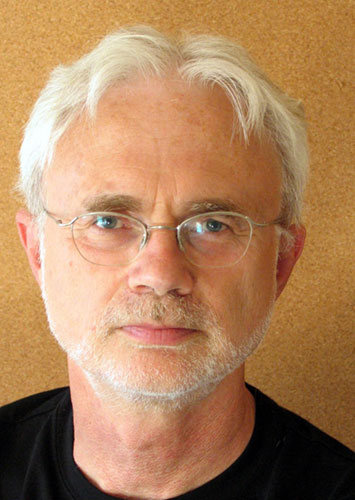
John Coolidge Adams (born February 15, 1947) is an American composer and conductor. Among the most regularly performed composers of contemporary classical music, he is particularly noted for his operas, many of which center around historical events. Apart from opera, his oeuvre includes orchestral, concertante, vocal, choral, chamber, electroacoustic, and piano music.
Born in Worcester, Massachusetts, Adams grew up in a musical family and was exposed to classical music, jazz, musical theatre, and rock music. He attended Harvard University, studying with Leon Kirchner, Roger Sessions, and David Del Tredici, among others. His earliest work was aligned with modernist music, but he began to disagree with its tenets upon reading John Cage's Silence: Lectures and Writings. Teaching at the San Francisco Conservatory of Music, Adams developed a minimalist aesthetic first fully realized in Phrygian Gates (1977) and later in the string septet Shaker Loops. Adams became increasingly active in San Francisco's contemporary music scene, and his orchestral works Harmonium (1980–1981) and Harmonielehre (1985) first gained him national attention. Other popular works from this time include the fanfare Short Ride in a Fast Machine (1986) and the orchestral work El Dorado (1991).
Adams's first opera was Nixon in China (1987), which recounts Richard Nixon's 1972 visit to China and was the first of many collaborations with theatre director Peter Sellars. Though the work's reception was initially mixed, it has become increasingly respected since its premiere, receiving performances worldwide. Begun soon after Nixon in China, the opera The Death of Klinghoffer (1991) was based on the Palestinian Liberation Front's 1985 hijacking and murder of Leon Klinghoffer and incited considerable controversy for its subject matter. His next notable works include a Chamber Symphony (1992), a Violin Concerto (1993), the opera-oratorio El Niño (2000), the orchestral piece My Father Knew Charles Ives (2003), and the six-string electric violin concerto The Dharma at Big Sur (2003). Adams won a Pulitzer Prize for Music for On the Transmigration of Souls (2002), a piece for orchestra and chorus commemorating the victims of the September 11, 2001 attacks. Continuing with historical subjects, Adams wrote the opera Doctor Atomic (2005), based on J. Robert Oppenheimer, the Manhattan Project, and the building of the first atomic bomb. Later operas include A Flowering Tree (2006), Girls of the Golden West (2017), and Antony and Cleopatra (2022).
In many ways, Adams's music is developed from the minimalist tradition of Steve Reich and Philip Glass, but he tends to more readily engage in the immense orchestral textures and climaxes of late Romanticism in the vein of Wagner and Mahler. His style is to a considerable extent a reaction against the modernism and serialism of the Second Viennese and Darmstadt Schools. In addition to the Pulitzer, Adams has received the Erasmus Prize, a Grawemeyer Award, five Grammy Awards, the Harvard Arts Medal, France's Ordre des Arts et des Lettres, and six honorary doctorates.
John Coolidge Adams was born in Worcester, Massachusetts, on February 15, 1947. As an adolescent, he lived in Woodstock, Vermont, for five years before moving to East Concord, New Hampshire, and his family spent summers on the shores of Lake Winnipesaukee, where his grandfather ran a dance hall. Adams's family did not own a television, and did not have a record player until he was ten. But both his parents were musicians, his mother a singer with big bands, and his father a clarinetist. He grew up with jazz, Americana, and Broadway musicals, once meeting Duke Ellington at his grandfather's dance hall. Adams also played baseball as a boy.
In the third grade, Adams took up the clarinet, initially taking lessons from his father, Carl Adams, and later with Boston Symphony Orchestra bass clarinetist Felix Viscuglia. He also played in various local orchestras, concert bands, and marching bands while a student. Adams began composing at age ten and first heard his music performed as a teenager. He graduated from Concord High School in 1965.
Adams next enrolled in Harvard University, where he earned a bachelor of arts, magna cum laude, in 1969 and a master of arts in 1971, studying composition with Leon Kirchner, Roger Sessions, Earl Kim, Harold Shapero, and David Del Tredici. As an undergraduate, he conducted Harvard's student ensemble, the Bach Society Orchestra, for a year and a half; his ambitious programming drew criticism in the student newspaper, where one of his concerts was called "the major disappointment of last week's musical offerings". Adams also became engrossed by the strict modernism of the 20th century (such as that of Boulez) while at Harvard, and believed that music had to continue progressing, to the extent that he once wrote a letter to Leonard Bernstein criticizing the supposed stylistic reactionism of Chichester Psalms. But by night, Adams enjoyed listening to The Beatles, Jimi Hendrix, and Bob Dylan, and has said he once stood in line at eight in the morning to purchase a copy of Sgt. Pepper's Lonely Hearts Club Band.
Adams was the first Harvard student to be allowed to write a musical composition for his senior thesis. For his thesis, he wrote The Electric Wake for "electric" (i.e., amplified) soprano accompanied by an ensemble of "electric" strings, keyboards, harp, and percussion. A performance could not be put together at the time, and Adams has never heard the piece performed.
Hub AI
John Adams (composer) AI simulator
(@John Adams (composer)_simulator)
John Adams (composer)
John Coolidge Adams (born February 15, 1947) is an American composer and conductor. Among the most regularly performed composers of contemporary classical music, he is particularly noted for his operas, many of which center around historical events. Apart from opera, his oeuvre includes orchestral, concertante, vocal, choral, chamber, electroacoustic, and piano music.
Born in Worcester, Massachusetts, Adams grew up in a musical family and was exposed to classical music, jazz, musical theatre, and rock music. He attended Harvard University, studying with Leon Kirchner, Roger Sessions, and David Del Tredici, among others. His earliest work was aligned with modernist music, but he began to disagree with its tenets upon reading John Cage's Silence: Lectures and Writings. Teaching at the San Francisco Conservatory of Music, Adams developed a minimalist aesthetic first fully realized in Phrygian Gates (1977) and later in the string septet Shaker Loops. Adams became increasingly active in San Francisco's contemporary music scene, and his orchestral works Harmonium (1980–1981) and Harmonielehre (1985) first gained him national attention. Other popular works from this time include the fanfare Short Ride in a Fast Machine (1986) and the orchestral work El Dorado (1991).
Adams's first opera was Nixon in China (1987), which recounts Richard Nixon's 1972 visit to China and was the first of many collaborations with theatre director Peter Sellars. Though the work's reception was initially mixed, it has become increasingly respected since its premiere, receiving performances worldwide. Begun soon after Nixon in China, the opera The Death of Klinghoffer (1991) was based on the Palestinian Liberation Front's 1985 hijacking and murder of Leon Klinghoffer and incited considerable controversy for its subject matter. His next notable works include a Chamber Symphony (1992), a Violin Concerto (1993), the opera-oratorio El Niño (2000), the orchestral piece My Father Knew Charles Ives (2003), and the six-string electric violin concerto The Dharma at Big Sur (2003). Adams won a Pulitzer Prize for Music for On the Transmigration of Souls (2002), a piece for orchestra and chorus commemorating the victims of the September 11, 2001 attacks. Continuing with historical subjects, Adams wrote the opera Doctor Atomic (2005), based on J. Robert Oppenheimer, the Manhattan Project, and the building of the first atomic bomb. Later operas include A Flowering Tree (2006), Girls of the Golden West (2017), and Antony and Cleopatra (2022).
In many ways, Adams's music is developed from the minimalist tradition of Steve Reich and Philip Glass, but he tends to more readily engage in the immense orchestral textures and climaxes of late Romanticism in the vein of Wagner and Mahler. His style is to a considerable extent a reaction against the modernism and serialism of the Second Viennese and Darmstadt Schools. In addition to the Pulitzer, Adams has received the Erasmus Prize, a Grawemeyer Award, five Grammy Awards, the Harvard Arts Medal, France's Ordre des Arts et des Lettres, and six honorary doctorates.
John Coolidge Adams was born in Worcester, Massachusetts, on February 15, 1947. As an adolescent, he lived in Woodstock, Vermont, for five years before moving to East Concord, New Hampshire, and his family spent summers on the shores of Lake Winnipesaukee, where his grandfather ran a dance hall. Adams's family did not own a television, and did not have a record player until he was ten. But both his parents were musicians, his mother a singer with big bands, and his father a clarinetist. He grew up with jazz, Americana, and Broadway musicals, once meeting Duke Ellington at his grandfather's dance hall. Adams also played baseball as a boy.
In the third grade, Adams took up the clarinet, initially taking lessons from his father, Carl Adams, and later with Boston Symphony Orchestra bass clarinetist Felix Viscuglia. He also played in various local orchestras, concert bands, and marching bands while a student. Adams began composing at age ten and first heard his music performed as a teenager. He graduated from Concord High School in 1965.
Adams next enrolled in Harvard University, where he earned a bachelor of arts, magna cum laude, in 1969 and a master of arts in 1971, studying composition with Leon Kirchner, Roger Sessions, Earl Kim, Harold Shapero, and David Del Tredici. As an undergraduate, he conducted Harvard's student ensemble, the Bach Society Orchestra, for a year and a half; his ambitious programming drew criticism in the student newspaper, where one of his concerts was called "the major disappointment of last week's musical offerings". Adams also became engrossed by the strict modernism of the 20th century (such as that of Boulez) while at Harvard, and believed that music had to continue progressing, to the extent that he once wrote a letter to Leonard Bernstein criticizing the supposed stylistic reactionism of Chichester Psalms. But by night, Adams enjoyed listening to The Beatles, Jimi Hendrix, and Bob Dylan, and has said he once stood in line at eight in the morning to purchase a copy of Sgt. Pepper's Lonely Hearts Club Band.
Adams was the first Harvard student to be allowed to write a musical composition for his senior thesis. For his thesis, he wrote The Electric Wake for "electric" (i.e., amplified) soprano accompanied by an ensemble of "electric" strings, keyboards, harp, and percussion. A performance could not be put together at the time, and Adams has never heard the piece performed.