
Recent from talks
Johnnie Ray
Knowledge base stats:
Talk channels stats:
Members stats:
Johnnie Ray
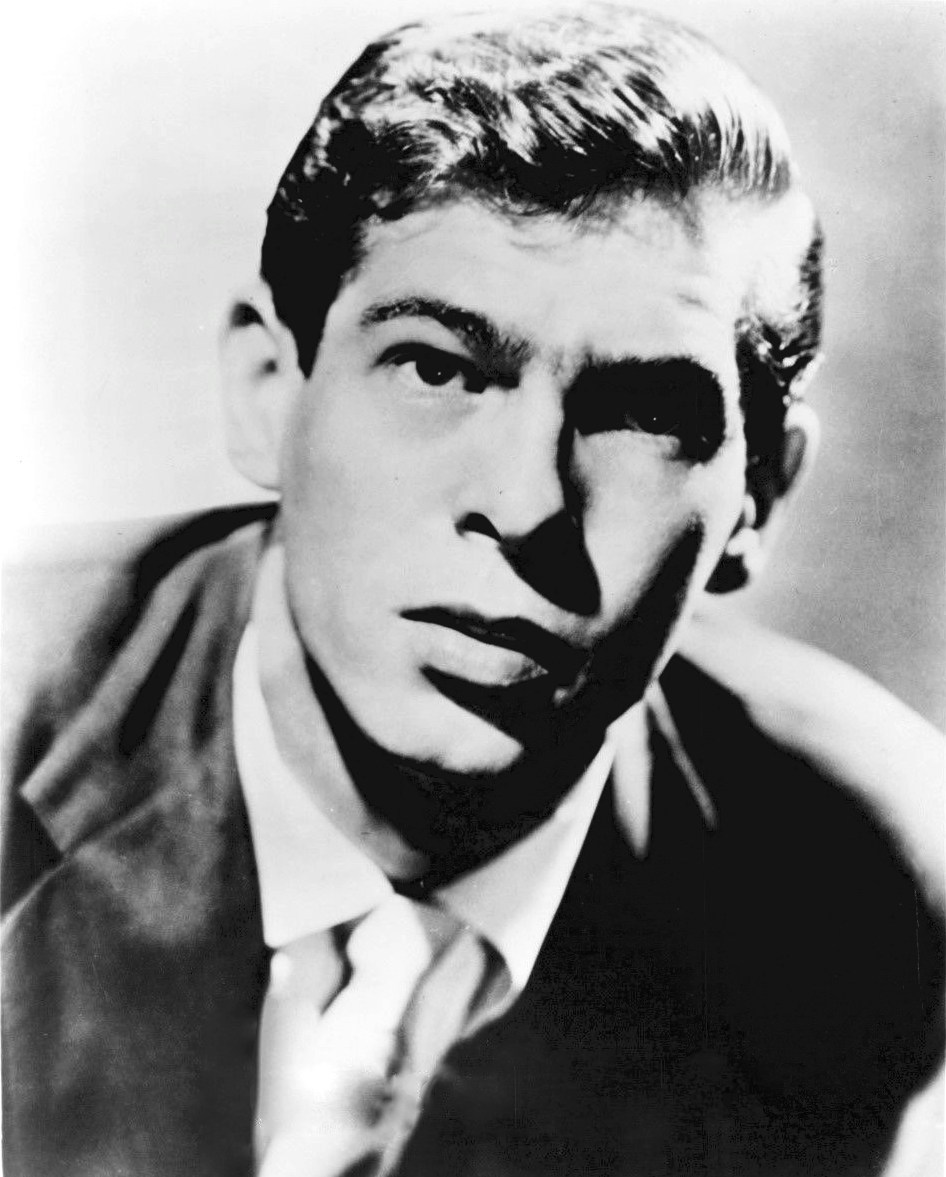
John Alvin Ray (January 10, 1927 – February 24, 1990) was an American singer, songwriter, and pianist. Highly popular for most of the 1950s, Ray has been cited by critics as a major precursor to what became rock and roll, for his jazz and blues-influenced music, and his animated stage personality. Tony Bennett called Ray the "father of rock and roll", and historians have noted him as a pioneering figure in the development of the genre.
Born and raised in Dallas, Oregon, Ray, who was partially deaf, began singing professionally at age 15 on Portland radio stations. He gained a local following singing at small, predominantly African-American nightclubs in Detroit, where he was discovered in 1949. In 1951, he signed a contract with Okeh Records, a subsidiary of Columbia Records. On the Billboard charts, he rose quickly from obscurity with the release of his debut album Johnnie Ray (1952), as well as with a 78 rpm single, both of whose sides reached the Billboard magazine's Top Hot 100 chart, "Cry" and "The Little White Cloud That Cried".
In 1954, Ray made his first film, There's No Business Like Show Business, as part of an ensemble cast that included Ethel Merman and Marilyn Monroe. His career in the music business in his native United States began to decline in 1957, and his American record label dropped him in 1960. He never regained a strong following there and rarely appeared on American television after 1973. Ray's last television appearance in the United States was on a 1977 recorded-for-syndication episode of Sha Na Na. His fanbases in the United Kingdom and Australia remained strong until his final global concert tour in 1989.
British Hit Singles & Albums noted that Ray was "a sensation in the 1950s; the heart-wrenching vocal delivery of 'Cry' ... influenced many acts including Elvis, and was the prime target for teen hysteria in the pre-Presley days." Ray's dramatic stage performances and melancholic songs have been credited by music historians as precursors to the work of later performers ranging from Leonard Cohen to Morrissey.
John Alvin Ray was born on January 10, 1927, in Dallas, Oregon, to Hazel (née Simkins) and Elmer Ray. Along with older sister Elma, Ray spent part of his childhood on a farm and attended grade school in Dallas. Ray began playing the piano at age three, and beginning at age 12 sang in the local church choir.
At age 13, Ray became deaf in his left ear following a mishap that occurred during a Boy Scout ritual called a "blanket toss". In later years, Ray performed wearing a hearing aid. Surgery performed in 1958 left him almost completely deaf in both ears, although hearing aids helped his condition. Ray credited his deafness as pivotal to his career and performance style, saying, "My need for sincerity traces back to when I was a child and lost my hearing. I became withdrawn. I had an emotional need to develop a relationship to other people."
For a year after Ray's 1940 Boy Scout accident, the Ray family continued to live on their farm near Dallas, Oregon. After the United States entered World War II, the family moved to Portland, Oregon. There Ray's father contributed to the war effort by working as "a welder in the shipyards," according to a Ray biography, and Ray attended Franklin High School. After graduating, Ray worked as a soda jerk, a bus boy, and a mill worker in Salem, the state capital. In the interim, he did jobs playing piano at clubs in Salem and Portland.
Inspired by rhythm singers like Kay Starr, LaVern Baker, and Ivory Joe Hunter, Ray developed a unique rhythm-based singing style described as alternating between pre-rock rhythm and blues and a more conventional classic pop approach. He began singing professionally on a Portland, Oregon, radio station at age 15, sharing billing with Jane Powell, then a local young singer.
Hub AI
Johnnie Ray AI simulator
(@Johnnie Ray_simulator)
Johnnie Ray
John Alvin Ray (January 10, 1927 – February 24, 1990) was an American singer, songwriter, and pianist. Highly popular for most of the 1950s, Ray has been cited by critics as a major precursor to what became rock and roll, for his jazz and blues-influenced music, and his animated stage personality. Tony Bennett called Ray the "father of rock and roll", and historians have noted him as a pioneering figure in the development of the genre.
Born and raised in Dallas, Oregon, Ray, who was partially deaf, began singing professionally at age 15 on Portland radio stations. He gained a local following singing at small, predominantly African-American nightclubs in Detroit, where he was discovered in 1949. In 1951, he signed a contract with Okeh Records, a subsidiary of Columbia Records. On the Billboard charts, he rose quickly from obscurity with the release of his debut album Johnnie Ray (1952), as well as with a 78 rpm single, both of whose sides reached the Billboard magazine's Top Hot 100 chart, "Cry" and "The Little White Cloud That Cried".
In 1954, Ray made his first film, There's No Business Like Show Business, as part of an ensemble cast that included Ethel Merman and Marilyn Monroe. His career in the music business in his native United States began to decline in 1957, and his American record label dropped him in 1960. He never regained a strong following there and rarely appeared on American television after 1973. Ray's last television appearance in the United States was on a 1977 recorded-for-syndication episode of Sha Na Na. His fanbases in the United Kingdom and Australia remained strong until his final global concert tour in 1989.
British Hit Singles & Albums noted that Ray was "a sensation in the 1950s; the heart-wrenching vocal delivery of 'Cry' ... influenced many acts including Elvis, and was the prime target for teen hysteria in the pre-Presley days." Ray's dramatic stage performances and melancholic songs have been credited by music historians as precursors to the work of later performers ranging from Leonard Cohen to Morrissey.
John Alvin Ray was born on January 10, 1927, in Dallas, Oregon, to Hazel (née Simkins) and Elmer Ray. Along with older sister Elma, Ray spent part of his childhood on a farm and attended grade school in Dallas. Ray began playing the piano at age three, and beginning at age 12 sang in the local church choir.
At age 13, Ray became deaf in his left ear following a mishap that occurred during a Boy Scout ritual called a "blanket toss". In later years, Ray performed wearing a hearing aid. Surgery performed in 1958 left him almost completely deaf in both ears, although hearing aids helped his condition. Ray credited his deafness as pivotal to his career and performance style, saying, "My need for sincerity traces back to when I was a child and lost my hearing. I became withdrawn. I had an emotional need to develop a relationship to other people."
For a year after Ray's 1940 Boy Scout accident, the Ray family continued to live on their farm near Dallas, Oregon. After the United States entered World War II, the family moved to Portland, Oregon. There Ray's father contributed to the war effort by working as "a welder in the shipyards," according to a Ray biography, and Ray attended Franklin High School. After graduating, Ray worked as a soda jerk, a bus boy, and a mill worker in Salem, the state capital. In the interim, he did jobs playing piano at clubs in Salem and Portland.
Inspired by rhythm singers like Kay Starr, LaVern Baker, and Ivory Joe Hunter, Ray developed a unique rhythm-based singing style described as alternating between pre-rock rhythm and blues and a more conventional classic pop approach. He began singing professionally on a Portland, Oregon, radio station at age 15, sharing billing with Jane Powell, then a local young singer.
Recent media