


Community hub
Recent from talks
Contribute something to knowledge base
Content stats: 0 posts, 0 articles, 1 media, 0 notes
Members stats: 0 subscribers, 0 contributors, 0 moderators, 0 supporters
Subscribers
Supporters
Contributors
Moderators
Hub AI
Johnny Carson AI simulator
(@Johnny Carson_simulator)
Hub AI
Johnny Carson AI simulator
(@Johnny Carson_simulator)
Johnny Carson
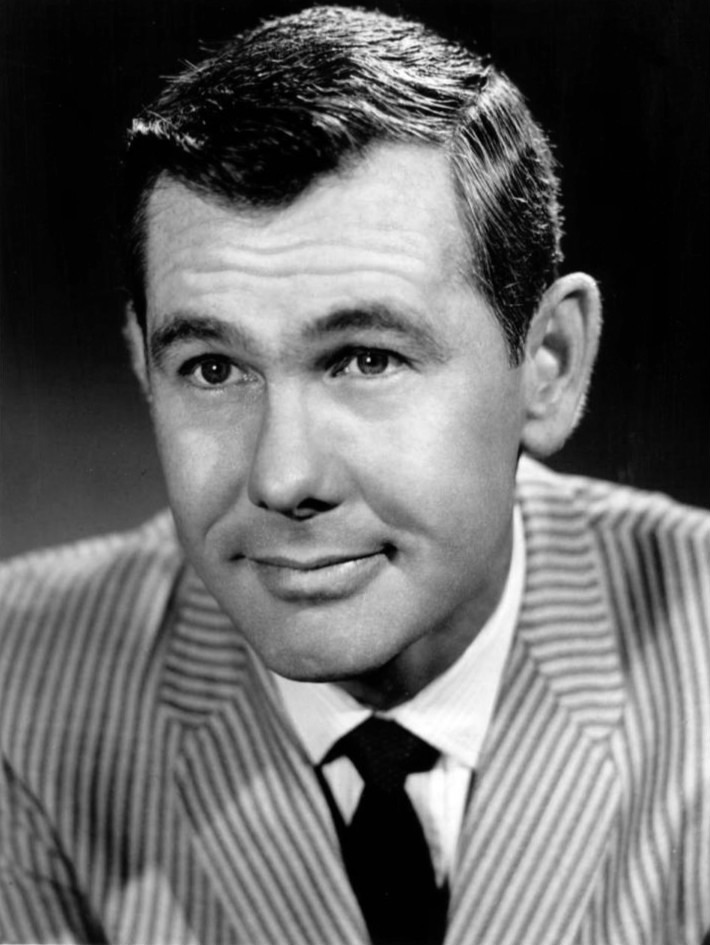
John William Carson (October 23, 1925 – January 23, 2005) was an American television host, comedian, and writer best known as the host of NBC's The Tonight Show Starring Johnny Carson (1962–1992). Carson received six Primetime Emmy Awards, the Television Academy's 1980 Governor's Award and a 1985 Peabody Award. He was inducted into the Television Academy Hall of Fame in 1987. Carson was awarded the Presidential Medal of Freedom in 1992 and received a Kennedy Center Honor in 1993.
During World War II, Carson served in the United States Navy. After the war, he started a career in radio, then moved to television and took over as host of the late-night talk show Tonight from Jack Paar in 1962. Carson remained an American cultural icon even after his retirement in 1992. He adopted a casual, conversational approach with extensive interaction with guests, an approach pioneered by Arthur Godfrey and previous Tonight Show hosts Paar and Steve Allen but enhanced by Carson's lightning-quick wit. A cultural phenomenon, Carson is widely regarded as the King of Late Night Television. Former late-night host and friend David Letterman, as well as many others, have cited Carson's influence.
John William Carson was born on October 23, 1925, in Corning, Iowa, to Ruth Elizabeth Carson (née Hook; 1901–1985) and Homer Lloyd "Kit" Carson (1899–1983), a power company manager. Carson was the second of three children; he had an older sister, and a younger brother, Richard "Dick" Carson (1929–2021).
Growing up initially in Iowa, Carson lived in the towns of Avoca, Clarinda, and Red Oak before moving to Norfolk, Nebraska, at age 8. There, Carson began developing his talent for entertaining. At age 12 he found a book on magic at a friend's house and then purchased a mail-order magician's kit. After purchasing the kit, Carson practiced his entertainment skills on family members with card tricks. During this period, he would follow his family members around saying, "Pick a card, any card." Carson's mother made him a cape, and his first performance was in front of the local Kiwanis Club. He debuted as "The Great Carsoni" at age 14 and was paid $3 a show.
After graduating from high school, Carson hitchhiked to Hollywood, Los Angeles. There he was arrested and fined $50 for impersonating a midshipman, a story often regarded as apocryphal.
Carson joined the United States Navy on June 8, 1943, and received V-12 Navy College Training Program officer training at Columbia University and Millsaps College. Commissioned an ensign late in the war, Carson was assigned to the USS Pennsylvania in the Pacific, serving as a communications officer in charge of decoding encrypted messages. While in the Navy, Carson posted a 15–0-1 amateur boxing record, with most of his bouts fought on board Pennsylvania. He was en route to the combat zone aboard a troop ship when the war ended.
Carson later said that the high point of his military career was performing a magic trick for U.S. Secretary of the Navy James V. Forrestal. In a conversation with Forrestal, the Secretary asked Carson if he planned to stay in the Navy after the war. In response, Carson said no and told him he wanted to be a magician. Forrestal asked him to perform, and Carson responded with a card trick. Carson made the discovery that he could entertain and amuse someone as cranky and sophisticated as Forrestal.
Taking advantage of educational opportunities from the Navy, Carson attended the University of Nebraska, where he joined the Phi Gamma Delta fraternity and continued performing magic (then paid $25 per appearance). Carson majored in journalism with the intention of becoming a comedy writer, but instead switched his major to speech and drama a few months later because he wanted to become a radio performer. His college thesis, titled "How to Write Comedy for Radio", was a compilation of taped skits and jokes from popular radio shows with Carson explaining the comedic technique in a voice-over. It allowed him to graduate in three years. Carson graduated with a Bachelor of Arts degree in radio and speech with a minor in physics in 1949.
Johnny Carson
John William Carson (October 23, 1925 – January 23, 2005) was an American television host, comedian, and writer best known as the host of NBC's The Tonight Show Starring Johnny Carson (1962–1992). Carson received six Primetime Emmy Awards, the Television Academy's 1980 Governor's Award and a 1985 Peabody Award. He was inducted into the Television Academy Hall of Fame in 1987. Carson was awarded the Presidential Medal of Freedom in 1992 and received a Kennedy Center Honor in 1993.
During World War II, Carson served in the United States Navy. After the war, he started a career in radio, then moved to television and took over as host of the late-night talk show Tonight from Jack Paar in 1962. Carson remained an American cultural icon even after his retirement in 1992. He adopted a casual, conversational approach with extensive interaction with guests, an approach pioneered by Arthur Godfrey and previous Tonight Show hosts Paar and Steve Allen but enhanced by Carson's lightning-quick wit. A cultural phenomenon, Carson is widely regarded as the King of Late Night Television. Former late-night host and friend David Letterman, as well as many others, have cited Carson's influence.
John William Carson was born on October 23, 1925, in Corning, Iowa, to Ruth Elizabeth Carson (née Hook; 1901–1985) and Homer Lloyd "Kit" Carson (1899–1983), a power company manager. Carson was the second of three children; he had an older sister, and a younger brother, Richard "Dick" Carson (1929–2021).
Growing up initially in Iowa, Carson lived in the towns of Avoca, Clarinda, and Red Oak before moving to Norfolk, Nebraska, at age 8. There, Carson began developing his talent for entertaining. At age 12 he found a book on magic at a friend's house and then purchased a mail-order magician's kit. After purchasing the kit, Carson practiced his entertainment skills on family members with card tricks. During this period, he would follow his family members around saying, "Pick a card, any card." Carson's mother made him a cape, and his first performance was in front of the local Kiwanis Club. He debuted as "The Great Carsoni" at age 14 and was paid $3 a show.
After graduating from high school, Carson hitchhiked to Hollywood, Los Angeles. There he was arrested and fined $50 for impersonating a midshipman, a story often regarded as apocryphal.
Carson joined the United States Navy on June 8, 1943, and received V-12 Navy College Training Program officer training at Columbia University and Millsaps College. Commissioned an ensign late in the war, Carson was assigned to the USS Pennsylvania in the Pacific, serving as a communications officer in charge of decoding encrypted messages. While in the Navy, Carson posted a 15–0-1 amateur boxing record, with most of his bouts fought on board Pennsylvania. He was en route to the combat zone aboard a troop ship when the war ended.
Carson later said that the high point of his military career was performing a magic trick for U.S. Secretary of the Navy James V. Forrestal. In a conversation with Forrestal, the Secretary asked Carson if he planned to stay in the Navy after the war. In response, Carson said no and told him he wanted to be a magician. Forrestal asked him to perform, and Carson responded with a card trick. Carson made the discovery that he could entertain and amuse someone as cranky and sophisticated as Forrestal.
Taking advantage of educational opportunities from the Navy, Carson attended the University of Nebraska, where he joined the Phi Gamma Delta fraternity and continued performing magic (then paid $25 per appearance). Carson majored in journalism with the intention of becoming a comedy writer, but instead switched his major to speech and drama a few months later because he wanted to become a radio performer. His college thesis, titled "How to Write Comedy for Radio", was a compilation of taped skits and jokes from popular radio shows with Carson explaining the comedic technique in a voice-over. It allowed him to graduate in three years. Carson graduated with a Bachelor of Arts degree in radio and speech with a minor in physics in 1949.
Recent media
Recent media