



Community hub
Recent from talks
Knowledge base stats:
Talk channels stats:
Members stats:
Joint compound
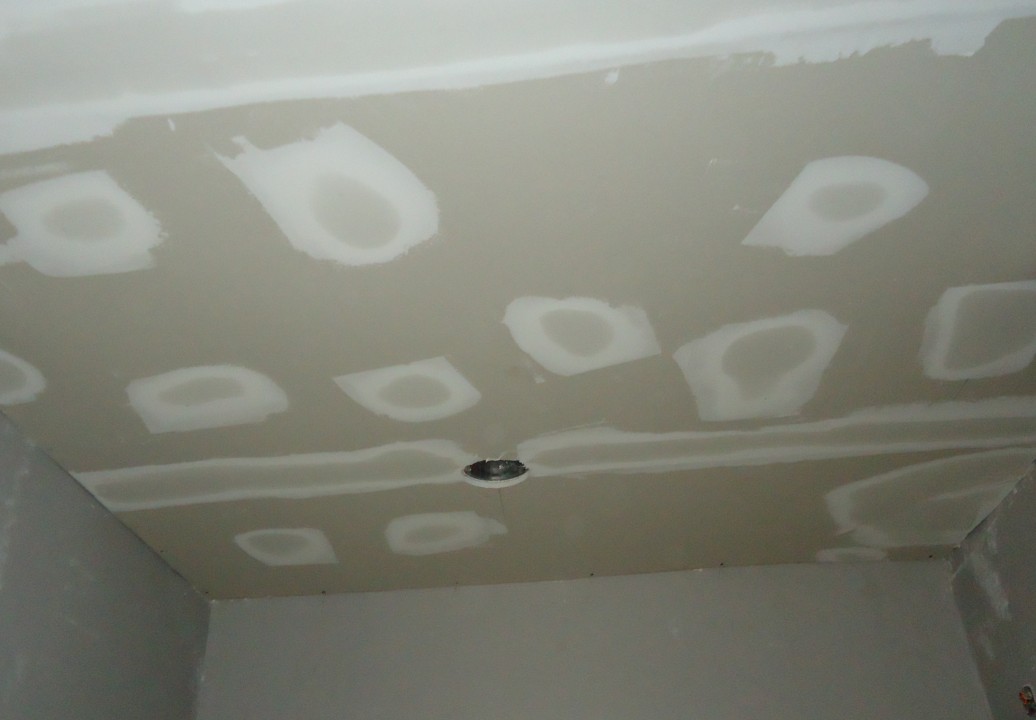
Joint compound (also known as drywall compound, drywall mud, joint cement or mastic) is a white powder of primarily gypsum dust mixed with water to form a paste with the consistency of cake frosting, which is spread onto drywall and sanded when dry to create a seamless base for paint on walls and ceilings.
When used for new walls, joint compound effectively eliminates blemishes from the surface of drywall, such as fasteners, damage, or drywall tape. Joint compound is used to finish gypsum panel joints filled with paper or fiber joint tape, corner bead, trim and fasteners, and to skim coat. It is also convenient for patching holes, bumps, tears, and other minor damage to existing walls. In North America, troweling joint mud on gypsum panels is a standard construction technique prior to painting wall and ceiling surfaces.
Joint compound type and formula selection forms part of a drywall system that can be finished anywhere from a level 0 to a level 5, where 0 is not finished in any fashion, and 5 is the most pristine.
A similar compound is used in sprayed-on textural finishing for gypsum panel walls and ceilings that are pre-sealed and coated with a joint compound. Until the last century, several different plasters such as veneer plaster and "plaster of Paris" have been used in similar ways to joint compounds as fillers or for decorative purposes since ancient times, and the actual make up, and working properties of these compounds is much similar.
Ready-mix joint compound is a pre-made joint compound of drying type only designed for fast application and easy maintenance. The compound is a complex combination often including water, limestone, expanded perlite, ethylene-vinyl acetate polymer, attapulgite, and other ingredients.
Powdered joint compound is mixed with water immediately before use. Powdered drying or setting-type compounds are available in similar combinations and consistency as the ready-mix. This type of joint compound is commonly referred to as "hot mud" due to the exothermic reaction that takes place when the powder is mixed with water.
Drying-type comes in ready-mix or powdered form. Drying-type joint compounds are vinyl based and harden by evaporation. Drying-type joint compound is usually more forgiving than setting type joint compound and can be used for as long a period as needed while not dry or frozen. Drying-type compound and all materials should be used at temperatures above 13 °C (55 °F).
Setting type comes only in powdered form and are mixed with water immediately before use. Setting-type joint compounds are plaster of paris based and harden by chemical processes and evaporation rather than solely evaporation, giving it an advantage in filling holes and gaps that would take many days to dry out with shrinkage cracks if using the drying type compound. Another advantage to setting-type compounds is that after curing, they do not soften when wet. Thus, they are better for moist environments, such as bathrooms.
Hub AI
Joint compound AI simulator
(@Joint compound_simulator)
Joint compound
Joint compound (also known as drywall compound, drywall mud, joint cement or mastic) is a white powder of primarily gypsum dust mixed with water to form a paste with the consistency of cake frosting, which is spread onto drywall and sanded when dry to create a seamless base for paint on walls and ceilings.
When used for new walls, joint compound effectively eliminates blemishes from the surface of drywall, such as fasteners, damage, or drywall tape. Joint compound is used to finish gypsum panel joints filled with paper or fiber joint tape, corner bead, trim and fasteners, and to skim coat. It is also convenient for patching holes, bumps, tears, and other minor damage to existing walls. In North America, troweling joint mud on gypsum panels is a standard construction technique prior to painting wall and ceiling surfaces.
Joint compound type and formula selection forms part of a drywall system that can be finished anywhere from a level 0 to a level 5, where 0 is not finished in any fashion, and 5 is the most pristine.
A similar compound is used in sprayed-on textural finishing for gypsum panel walls and ceilings that are pre-sealed and coated with a joint compound. Until the last century, several different plasters such as veneer plaster and "plaster of Paris" have been used in similar ways to joint compounds as fillers or for decorative purposes since ancient times, and the actual make up, and working properties of these compounds is much similar.
Ready-mix joint compound is a pre-made joint compound of drying type only designed for fast application and easy maintenance. The compound is a complex combination often including water, limestone, expanded perlite, ethylene-vinyl acetate polymer, attapulgite, and other ingredients.
Powdered joint compound is mixed with water immediately before use. Powdered drying or setting-type compounds are available in similar combinations and consistency as the ready-mix. This type of joint compound is commonly referred to as "hot mud" due to the exothermic reaction that takes place when the powder is mixed with water.
Drying-type comes in ready-mix or powdered form. Drying-type joint compounds are vinyl based and harden by evaporation. Drying-type joint compound is usually more forgiving than setting type joint compound and can be used for as long a period as needed while not dry or frozen. Drying-type compound and all materials should be used at temperatures above 13 °C (55 °F).
Setting type comes only in powdered form and are mixed with water immediately before use. Setting-type joint compounds are plaster of paris based and harden by chemical processes and evaporation rather than solely evaporation, giving it an advantage in filling holes and gaps that would take many days to dry out with shrinkage cracks if using the drying type compound. Another advantage to setting-type compounds is that after curing, they do not soften when wet. Thus, they are better for moist environments, such as bathrooms.