Hubbry Logo
Joseph TelushkinJoseph TelushkinMain
Open search
Joseph Telushkin
Community hub
Joseph Telushkin
logo
8 pages, 0 posts
0 subscribers
Be the first to start a discussion here.
Joseph Telushkin
Joseph Telushkin
from Wikipedia

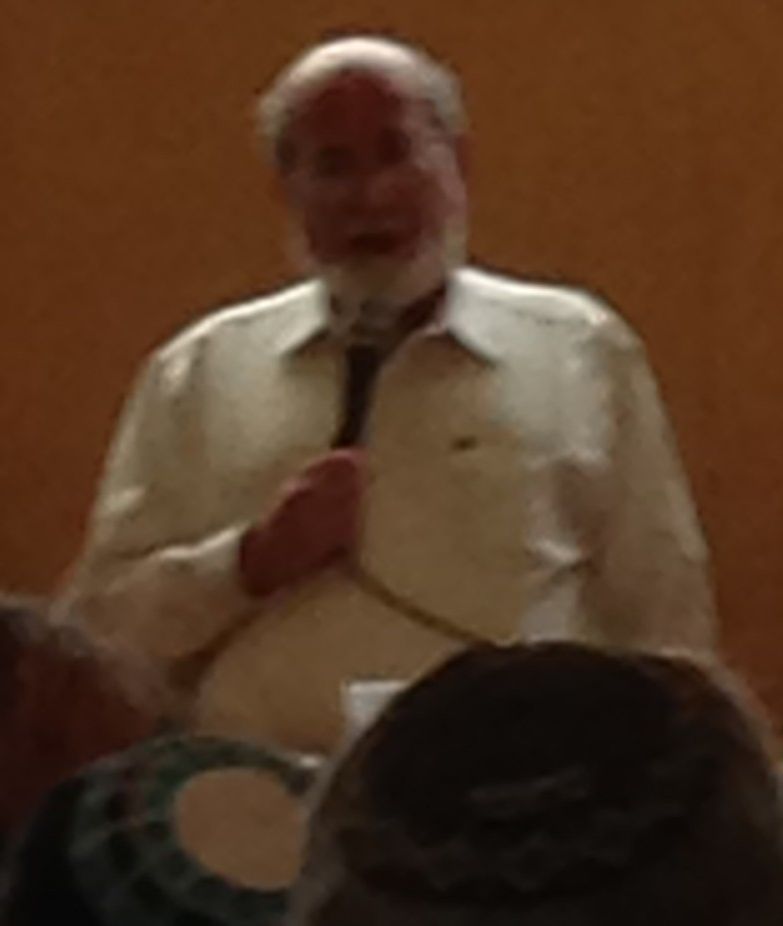
Joseph Telushkin (born 1948) is an American rabbi and writer. He has authored more than 15 books,[1] including volumes about Jewish ethics, Jewish literacy, as well as the book Rebbe, a New York Times bestseller released in June 2014.[2]

Key Information

Biography

[edit]

Telushkin was raised in Brooklyn and attended the Yeshivah of Flatbush. He was ordained at Yeshiva University and studied Jewish history at Columbia University.

Life and career

[edit]

Telushkin was raised in Brooklyn, New York, the son of Solomon and Hellen Telushkin. He attended Yeshiva of Flatbush, where he met his friend and future co-author for two books, Dennis Prager, in tenth grade. While at Columbia University, they studied Jewish history and authored Nine Questions People Ask About Judaism and Why the Jews?: The Reason for Antisemitism.

At university, Telushkin was an active leader of the Student Struggle for Soviet Jewry. As part of his position, Telushkin visited the Soviet Union, where he met with dissidents such as Andrei Sakharov. He was eventually listed by the KGB as an anti-Russian agent.

An Orthodox rabbi by training, Telushkin served until its closure in December 2022 as Rabbi of the Los Angeles Synagogue for the Performing Arts,[3] founded in 1972 by Rabbi Jerome Cutler. He is an associate of the National Jewish Center for Learning and Leadership and a former director of education at the non-denominational Brandeis-Bardin Institute. Telushkin is also a Senior Associate with CLAL and is a member of the board of directors of the Jewish Book Council. He has been on the Newsweek list of the 50 most influential rabbis in America since 1997.[4]

Telushkin is the author of 16 books on Judaism. His book Words That Hurt, Words That Heal inspired Senators Joseph Lieberman’s and Connie Mack’s Senate Resolution #151 to establish a National Speak No Evil Day in the US, a day for which Americans would go for twenty-four hours without saying anything unkind or unfair about, or to, anyone. His book Jewish Literacy: The Most Important Things to Know About the Jewish Religion, Its People and Its History was one of the best-selling books on Judaism of the 1990s and early 2000s. More than two decades after its publication, the book remains a foundation text for Jews, non-Jews, and prospective converts alike.[5] The first volume of A Code of Jewish Ethics: You Shall Be Holy, which Telushkin regards as his major life's work, was published in 2006. It won the National Jewish Book Award for Jewish Book of the Year.[6] The second volume, A Code of Jewish Ethics: Love Your Neighbor, was released in 2009.

In 2013, Telushkin was invited by the United Nations High Commissioner for Refugees, António Guterres, to speak before the commission in Geneva.[citation needed]

In 2014, Telushkin released Rebbe, which appeared on the bestseller lists of New York Times Best Seller list, Wall Street Journal,[7] and Publishers Weekly.

Telushkin tours the United States as a lecturer on Jewish topics, and he has been named by Talk Magazine as one of the 50 best speakers in the United States. He wrote the episode 'Bar Mitzvah' on Touched by an Angel, guest-starring Kirk Douglas.[citation needed]

Works

[edit]
  • A Code of Jewish Ethics: Volume 1: You Shall Be Holy
  • A Code of Jewish Ethics: Volume 2: Love Your Neighbor As Yourself
  • Jewish Literacy: The Most Important Things to Know About the Jewish Religion, Its People and Its History
  • The Book of Jewish Values: A Day-by-Day Guide to Ethical Living
  • Words that Hurt, Words that Heal: How to Use Words Wisely and Well[8]
  • Jewish Humor: What the Best Jewish Jokes Say About the Jews[9]
  • Biblical Literacy: The Most Important People, Events and Ideas of the Hebrew Bible
  • Jewish Wisdom: Ethical, Spiritual and Historical Lessons from the Great Works and Thinkers (1994, Morrow/HarperCollins)[10] ISBN 0-688-12958-7
  • The Ten Commandments of Character: Essential Advice for Living an Honorable, Ethical, Honest Life
  • Telushkin, Joseph (1987). Uncommon Sense: The World's Fullest Compendium of Wisdom. SP Books. ISBN 9780933503489.
  • The Golden Land: The Story of Jewish Immigration to America
  • Rabbi Daniel Winter mystery series, comprising:
    • The Unorthodox Murder of Rabbi Wahl (also published as The Unorthodox Murder of Rabbi Moss)
    • The Final Analysis of Dr. Stark
    • An Eye for an Eye
  • Nine Questions People Ask About Judaism (with Dennis Prager)
  • Why the Jews: The Reason for Antisemitism (with Dennis Prager)
  • Heaven's Witness (with Allen Estrin)[11]
  • The Quarrel[12]
  • Prager, Dennis; Telushkin, Joseph (1975). Eight Questions People Ask about Judaism. (with Dennis Prager)
  • Telushkin, Joseph (2010). Humor Żydowski.
  • The Case for Jewish Peoplehood: Can We Be One?, by Erica Brown, Misha Galperin, and Joseph Telushkin, 2009
  • Hillel: If Not Now, When?
  • Rebbe: The life and teachings of Menachem M. Schneerson, the most influential Rabbi in Modern History (2014)[13][14]

References

[edit]
Revisions and contributorsEdit on WikipediaRead on Wikipedia
from Grokipedia
Joseph Telushkin (born 1948) is an American rabbi, scholar, lecturer, and author renowned for his contributions to Jewish ethics, history, and popular education on Judaism. Ordained by Yeshiva University in New York and holder of graduate studies in Jewish history from Columbia University, Telushkin has authored more than fifteen books that distill complex Jewish teachings into accessible formats. His seminal work, Jewish Literacy: The Most Important Things to Know About the Jewish Religion, Its People, and Its History, serves as a comprehensive reference on Jewish traditions and has been widely adopted for its clarity and depth. Other notable publications include the two-volume A Code of Jewish Ethics, which systematically outlines ethical imperatives derived from Jewish sources, and Rebbe, a biography of Rabbi Menachem Mendel Schneerson emphasizing his influence on modern Jewish revival. Co-authoring Why the Jews?: The Reason for Antisemitism with Dennis Prager, Telushkin examines historical patterns of prejudice against Jews through empirical analysis rather than ideological narratives. Recognized as one of the top speakers in the United States by Talk magazine, he has lectured extensively on applying Jewish values to contemporary moral challenges, while facing occasional criticism from stricter Orthodox circles for interpretive approaches perceived as lenient.

Early Life and Education

Childhood and Family Background

Joseph Telushkin was born in 1948 in . He grew up in the neighborhood of , where he was raised in a modern Orthodox Jewish family. His parents were (also known as ) Telushkin, an ordained who worked as an accountant, and Hellen Telushkin. Telushkin maintained a professional relationship with the Lubavitcher , serving as his accountant for approximately forty years, which exposed the family to Chabad-Lubavitch influences alongside their modern Orthodox observance. Telushkin attended the , a prominent modern Orthodox day school in , during his formative years. He has credited his family's religious environment with profoundly shaping his lifelong commitment to and scholarship, describing it as a deeply influential force in his development.

Academic and Rabbinical Training

Telushkin received his early Jewish education at the in , a Modern Orthodox day school that emphasized both secular and religious studies. He subsequently attended in , graduating from Yeshiva College and earning rabbinical ordination through its (RIETS), an Orthodox institution known for rigorous Talmudic training and halakhic scholarship. Following ordination, Telushkin pursued advanced graduate studies in at , focusing on historical dimensions of Jewish thought and . This academic path complemented his rabbinical training, equipping him with a blend of textual expertise and historical context that informed his later scholarly and ethical writings.

Professional Career

Ordination and Initial Roles

Telushkin received rabbinical ordination from Yeshiva University in New York, an Orthodox institution emphasizing traditional Jewish scholarship and legal study. Following ordination, he pursued graduate studies in Jewish history at Columbia University, focusing on historical aspects of Jewish thought and practice. In the initial phase of his career, Telushkin took on roles rather than immediate positions. He served as director of education at the , a Jewish retreat and educational center in , where he organized programs including discussions and services. This role aligned with the institute's emphasis on accessible Jewish learning for diverse audiences during the 1970s and beyond. Concurrently, he began associating with CLAL (the National Jewish Center for Learning and Leadership) in New York, contributing to initiatives aimed at fostering Jewish leadership and ethical discourse across denominational lines. These early positions underscored Telushkin's commitment to and intellectual engagement over conventional administration, laying the groundwork for his later authorship and lecturing. By 1975, he had co-authored his first book, The Eight Questions People Ask About Judaism, with , marking the intersection of his rabbinical training with public outreach.

Synagogue Leadership and Community Involvement

Telushkin served as the rabbi of the for the from approximately 1992 until its closure in December 2022. This congregation catered specifically to members of the industry, incorporating artistic elements into services to engage its congregants. As spiritual leader, he conducted and High Holiday services, delivered sermons emphasizing and literacy, and fostered community ties within Hollywood's Jewish population. Beyond synagogue duties, Telushkin held leadership roles in broader Jewish educational and cultural organizations. He served as a senior associate at CLAL, the National Jewish Center for Learning and Leadership, contributing to initiatives on and . Additionally, he sat on the board of directors of the Jewish Book Council, supporting the promotion and preservation of Jewish literature through advocacy and programming. Earlier in his career, Telushkin directed education at the , a camp and retreat center focused on adult Jewish learning. Telushkin's community involvement extended to frequent guest lectures and Shabbat engagements at synagogues across the United States, including Adat Shalom in Farmington Hills, Michigan, where he led services and educational sessions. These appearances underscored his role in bridging scholarly expertise with grassroots Jewish engagement, often addressing ethics, antisemitism, and moral leadership. His efforts prioritized practical Jewish values over denominational boundaries, reflecting an Orthodox-trained perspective adapted for diverse audiences.

Teaching, Lecturing, and Public Speaking

Rabbi has established himself as a prominent and on , literacy, and historical figures, delivering talks across the . Named one of the 50 best speakers in the by Talk magazine, he addresses audiences at synagogues, universities, and community events, often drawing from his authored works to emphasize practical applications of Jewish moral principles. His speaking engagements include lectures at institutions such as in 2014, where he discussed , and in 2023, focusing on lessons from the Lubavitcher . Telushkin has also appeared at synagogues like Emanuel Synagogue in in 2024 and University Synagogue in Irvine, covering topics such as moral imagination and Jewish spiritual practices. In 2019, he spoke to students at on the importance of kind speech, illustrating principles from his book Words That Hurt, Words That Heal. As a senior associate of Clal: The National Jewish Center for Learning and Leadership, Telushkin contributes to educational initiatives promoting Jewish thought and ethics. He serves on the board of directors of the Jewish Book Council, further integrating his speaking with efforts to advance Jewish literary and intellectual engagement. His lectures, available through agencies like the Harry Walker Agency, frequently explore themes of ethical speech, , and biographical insights into Jewish leaders, attracting diverse audiences seeking accessible Jewish wisdom.

Major Works and Authorship

Foundational Texts on Jewish Literacy and Ethics

Telushkin's Jewish : The Most Important Things to Know About the Jewish Religion, Its People, and Its History, first published on April 26, 1991, serves as a comprehensive of Jewish fundamentals, comprising 352 concise chapters that span topics from the and to , history, antisemitism, and contemporary practices. The revised edition, released on June 17, 2008, updates content to reflect post-1991 developments, maintaining its structure as an accessible reference for beginners and scholars alike, with over 800 pages distilling essential knowledge without requiring prior expertise. This work has been characterized as an invaluable resource for fostering basic Jewish understanding among diverse audiences, including non-Jews and prospective converts, by prioritizing textual and historical accuracy over interpretive bias. In the realm of Jewish ethics, Telushkin's The Book of Jewish Values: A Day-by-Day Guide to Ethical Living, published on February 22, 2000, organizes moral guidance into a 544-page daily format drawn from biblical, Talmudic, and rabbinic sources, addressing virtues such as , , and through practical examples and prohibitions. The book emphasizes actionable ethical conduct rooted in traditional texts, serving as a manual for personal improvement without modern reinterpretations that dilute original intent. Telushkin's multi-volume A Code of Jewish Ethics further systematizes ethical teachings, with Volume 1, You Shall Be , published in 2006, focusing on self-improvement through integrity, humility, and character traits derived from over three millennia of Jewish law and commentary. Volume 2, Love Your Neighbor as Yourself, released on February 10, 2009, extends to interpersonal relations, including , charity, rituals, and dealings with non-Jews, presented with clarity and sourced examples from and . These volumes, the first major English-language code of , aim to reposition moral behavior as central to , earning praise for their depth and applicability in restoring traditional ethical priorities.

Biographies of Jewish Figures

Joseph Telushkin's biographical works focus on influential Jewish leaders, emphasizing their lives, teachings, and lasting impact on Jewish thought and practice. His most prominent biography is Rebbe: The Life and Teachings of Menachem M. Schneerson, the Most Influential Rabbi in Modern History, published in 2014 by HarperOne. The book chronicles the life of Rabbi Menachem Mendel Schneerson (1902–1994), the seventh Lubavitcher Rebbe, drawing from extensive sources including interviews, over 10,000 letters, 200 volumes of his discourses, archival materials, videos, and tapes. In , Telushkin details Schneerson's early years in , his studies in engineering in and during the , and his marriage to , daughter of the previous , . Schneerson assumed leadership of the -Lubavitch movement in 1951 after his father-in-law's death, initially with reluctance, transforming it from a small Brooklyn-based group into a global network. Under his guidance, Chabad established over 4,000 emissary (shliach) couples across 80 countries, more than 1,000 communities, 200 university campuses, and operations in 48 U.S. states by the . Telushkin highlights Schneerson's innovative use of American technology for outreach, his broad knowledge spanning disciplines, and teachings rooted in , Hasidism, and rational inquiry, which spurred post-Holocaust Jewish revival, education campaigns, and interactions with world leaders. The biography portrays Schneerson's influence extending beyond , promoting universal values like charity and moral education while avoiding hagiographic excess. It achieved commercial success as a New York Times bestseller in . Telushkin also authored Hillel: If Not Now, When? (2010), part of the Jewish Encounters series, which examines the ancient sage (c. 110 BCE–10 CE). Due to scant historical details—such as unknown parents, spouse, profession, or exact death date—a traditional is infeasible; instead, the work analyzes Hillel's surviving teachings, ic stories, and legal rulings to reconstruct his worldview. It emphasizes Hillel's ethical core of , encapsulated in his summary: "That which is hateful to you, do not do to your fellow; this is the whole , the rest is commentary" ( Shabbat 31a), his openness to converts contrasting with Shammai's stringency, and implications for modern Jewish continuity, including integrating intermarried families. The book contrasts Hillel's approach with and underscores his role in shaping rabbinic 's tolerant yet committed ethos.

Collaborations and Works on Antisemitism

Telushkin collaborated extensively with radio host and author , beginning during their time as students at in the 1970s, where they co-founded a Jewish student organization and began joint writing projects. Their most prominent work addressing is Why the Jews?: The Reason for Anti-Semitism, published in 1983 by . The book, which has remained in print for over four decades, systematically analyzes the persistence of across history, arguing that it serves as the "most accurate predictor of evil" in civilizations due to its recurrence as a moral failing rather than a mere against . In the text, Prager and Telushkin delineate seven primary manifestations of antisemitism—pagan, Christian, Muslim, Enlightenment-era, leftist, Nazi, and anti-Zionist—tracing each to underlying ideological conflicts with core Jewish values such as , universal moral standards, and resistance to assimilation. They contend that antisemitism arises not from Jewish actions or socioeconomic roles but from what represents: a challenge to paganism's , Christianity's , and modern secular ideologies' rejection of transcendent ethics. For instance, the authors assert that were secondary to preexisting theological hatred of , with rationalizing an antecedent . They also critique "non-Jewish Jews"—secular figures like and —as inadvertently fueling animosity by embodying Jewish intellectual influence while opposing traditional Jewish commitments. The collaboration extended to public discourse, with Prager and Telushkin appearing together at events like the 2011 Jewish Book & Arts Fair to discuss their works, including antisemitism's contemporary relevance. Why the Jews? has influenced discussions on antisemitism's ideological roots, prompting reflections on how societies that tolerate or rationalize it signal broader ethical decay, as evidenced by its endorsement in outlets like Commentary magazine for confronting the phenomenon's irrational yet predictable nature. While praised for its historical breadth and rejection of victim-blaming explanations, the book's emphasis on Jewish distinctiveness as a causal factor has drawn scrutiny from assimilationist perspectives, though Prager and Telushkin maintain that empirical patterns across millennia substantiate their causal analysis over socioeconomic or conspiratorial alternatives.

Intellectual Contributions and Perspectives

Emphasis on Jewish Moral Realism

Telushkin underscores Jewish moral realism by deriving ethical imperatives directly from the Torah's commandments and Talmudic interpretations, treating them as binding, objective truths rather than adaptable cultural norms. In The Book of Jewish Values: A Day-by-Day Guide to Ethical Living (2000), he structures 365 entries around traditional Jewish sources to guide practical conduct, explicitly positioning these values as a bulwark against the moral relativism that undermines pursuit of goodness in modern life. This framework emphasizes that ethical behavior demands consistent application of divine mandates, such as prohibitions against gossip (lashon hara) or requirements for honesty in business, which yield verifiable social and spiritual outcomes when followed. Collaborating with Dennis Prager in Nine Questions People Ask About Judaism (1981, revised 2007), Telushkin contends that rejecting God's authority inevitably fosters , reducing ethics to subjective opinion devoid of universal force, as evidenced by historical examples like Marxism's ethical failures. He illustrates this through Jewish teachings that affirm absolute wrongs, such as murder, independent of societal consensus, linking moral objectivity to the Sinai revelation's enduring validity. Such arguments reject secular dilutions, insisting that true ethical realism requires fidelity to halachah's causal logic—where actions like charity (tzedakah) produce tangible communal stability, as documented in . In A Code of Jewish Ethics, Volume 1: You Shall Be Holy (2006), Telushkin further elaborates this realism by prioritizing personal and virtues like and , sourced from principles such as :18's command to "love your neighbor as yourself," which he identifies as Judaism's ethical cornerstone. He critiques contemporary ethical lapses by contrasting them with Talmudic precedents, advocating realism through character formation that anticipates real-world repercussions, such as reputational harm from deceit, rather than abstract ideals. This body of work collectively promotes as empirically grounded in scriptural authority, enabling individuals to navigate moral complexities with clarity and accountability.

Critiques of Antisemitism and Cultural Influences

Telushkin, in co-authorship with , advanced a thesis in Why the Jews? The Reason for Antisemitism (1983) that endures due to Judaism's foundational elements—, the as binding law, and —which inherently challenge prevailing cultural norms and . This perspective posits not as a reaction to Jewish socioeconomic behaviors, such as wealth accumulation or , but as a against the moral authority represent; for instance, the authors cite Hitler's explicit disdain for the "tyrannical" Jewish and the Ten Commandments as emblematic of broader ideological resistance. Critiquing victim-blaming explanations, Telushkin and Prager argue that purported Jewish traits like clannishness or economic success fail as causal factors, noting that antisemitic pogroms ravaged impoverished Eastern European Jewish communities in the 19th and early 20th centuries far more intensely than relatively prosperous North American Jews experienced discrimination. They contend these are post hoc rationalizations, with historical data showing antisemitism's persistence across eras regardless of Jewish assimilation levels or material status; a University of California survey they reference indicated 60% of respondents viewed Jewish "chosenness"—the covenantal responsibility for ethical living—as a core irritant, underscoring resentment toward Jews' refusal to conform to host societies' ethical compromises. On cultural influences, the authors delineate how antisemitism adapts to societal paradigms: ancient pagans targeted Jewish monotheism's rejection of idol worship, medieval Christians amplified the deicide accusation over refusal to accept as , and Enlightenment secularists, exemplified by Voltaire's portrayal of Jews as a perpetual "nation within a nation," shifted animus to Jewish transnational and distinctiveness. In modern iterations, leftist ideologies recast through , framing Jewish national as , while each epoch repurposes Jew-hatred to justify prevailing prejudices, from to economic envy. Telushkin's lectures, including a 2014 address at , reinforce these critiques by dissecting religious, social, and economic factors that misconstrue Jewish ethical contributions—such as emphasis on and moral accountability—as existential threats, perpetuating across cultures. Ultimately, their analysis advocates promoting Judaism's as a counterforce, arguing that diminishing universal moral standards sustains , while Jewish fidelity to first principles exposes its irrationality.

Promotion of First-Principles Jewish Values

Telushkin promotes core Jewish ethical principles by distilling teachings from foundational texts like the , , and into practical guides for daily conduct, emphasizing , , and interpersonal as timeless imperatives rather than adaptable norms. In The Book of Jewish Values: A Day-by-Day Guide to Ethical Living (2000), he structures content around 365 entries drawn from Judaism's sacred writings, covering topics such as honest speech, fair business practices, and familial duties, with the explicit aim of equipping readers to lead ethically grounded lives amid modern challenges. This work prioritizes direct textual derivations, illustrating how ancient mandates foster personal and communal decency without concession to contemporary . His A Code of Jewish Ethics series further systematizes this effort, with Volume 1, You Shall Be Holy (2006), focusing on self-perfection through virtues like truthfulness, , and avoidance of , sourced extensively from rabbinic commentaries and biblical precedents to restore as Judaism's pivotal discipline. Volume 2, Love Your Neighbor as Yourself (2009), applies these to relations with others, detailing obligations in charity, , and via hundreds of textual examples, positioning the series as a comprehensive English-language code that revives ethical centrality in Jewish practice. Telushkin's methodology integrates anecdotes from tradition with real-world applications, underscoring causal links between adherence to these principles and societal harmony. In public lectures, such as his 2011 address "Being Good: Jewish Ethics for Daily Life," Telushkin reinforces these values by urging audiences to internalize Torah-derived ethics as actionable standards, countering ethical drift in secular contexts through emphasis on moral accountability rooted in scriptural authority. This consistent advocacy highlights his view that Judaism's first-order ethical framework—prioritizing objective duties over subjective interpretations—remains viable and essential for in personal and collective spheres.

Controversies and Criticisms

Reception Within Orthodox and Communities

In -Lubavitch communities, Joseph Telushkin's works, particularly his 2014 biography Rebbe: The Life and Teachings of Menachem M. Schneerson, the Most Influential in Modern History, faced significant opposition from Schochet, who in October 2014 issued a halachic against promoting the book. Schochet argued that Telushkin, despite his Orthodox from , functions as a in a Conservative-affiliated setting, collaborates with a female chazanit and a assistant, and thereby promotes heretical positions contrary to halacha, citing rulings such as that of against non-Orthodox clergy. He further contended that the book contains "terrible ideas" amounting to a chilul ( of God's name) and violates the Lubavitcher Rebbe's directive against using publications by individuals from Conservative or movements deemed unscrupulous. Schochet later clarified that his letter was intended as private correspondence and expressed regret over its public dissemination, which he said was exploited by secular media and critics to portray the movement as insular, while reaffirming his underlying concerns. Critics within , including Schochet, accused Telushkin of misrepresenting the Rebbe's inclusive outreach to non-Orthodox Jews, particularly in a about the Rebbe advising a to remain in his community as serving on the "front lines" of , which some interpreted as Telushkin implying condemnation of non-Orthodox denominations—a portrayal defenders argued distorts the Rebbe's emphasis on universal Jewish engagement without denigrating affiliations. This stemmed from broader unease with Telushkin's perceived alignment with non-Orthodox institutions, despite his smicha, leading to calls within to avoid his writings to prevent endorsement of potentially misleading content on authentic . Within broader Orthodox communities, Telushkin's reception has been more varied but not without critique, particularly from stricter elements wary of his emphasis on ethical imperatives sometimes prioritized over ritual observance, a stance he articulated in lectures as of November 2014 where he endorsed as potentially superior in certain moral dilemmas—a position viewed as controversial by traditionalists who maintain halachic as paramount. His Orthodox training is acknowledged, yet associations with progressive synagogues and collaborations, such as with on , have prompted some to question his alignment with uncompromised , though he retains lecturing invitations in Orthodox settings.

Debates Over Interpretations in Biographical Works

Telushkin's 2014 biography Rebbe: The Life and Teachings of Menachem M. Schneerson, the Most Influential in Modern History elicited significant within -Lubavitch circles over his interpretive choices regarding Schneerson's theological positions and leadership style. Critics, including Gershon Elisha Schochet, accused Telushkin of introducing heretical elements by downplaying Schneerson's alleged messianic claims and portraying his views on non-Orthodox in ways that deviated from traditional narratives. Schochet, a prominent figure, publicly banned the book, labeling it as containing content incompatible with Orthodox doctrine and urging rabbis who endorsed it to retract their support, citing Telushkin's background as a Conservative as a factor undermining his authority on matters. A key point of contention centered on Telushkin's handling of Schneerson's stance toward non-Orthodox denominations. Some commentators argued that Telushkin misrepresented Schneerson's criticisms of and Conservative movements as blanket condemnations, thereby exaggerating intra-Jewish tensions and ignoring nuanced private correspondences where Schneerson engaged constructively with non-Orthodox figures. This interpretation was contested in outlets like , where detractors described Telushkin as "unscrupulous" for allegedly fabricating or amplifying evidence of Schneerson's hostility, potentially to align with broader progressive Jewish sensibilities rather than strict textual fidelity to Chabad sources. Telushkin countered that his account drew from verified letters and eyewitness accounts, emphasizing Schneerson's pragmatic outreach while acknowledging doctrinal disagreements. Debates also arose over Telushkin's minimization of controversial aspects, such as Schneerson's predictions about the 's imminent arrival, which some followers interpreted literally. Reviewers noted that Telushkin explicitly stated Schneerson did not view himself as the and that most adherents rejected such claims, yet critics within the messianist faction of viewed this as sanitizing the Rebbe's more esoteric teachings to appeal to secular or non-Chabad audiences. These interpretive disputes highlighted broader tensions between Telushkin's journalistic approach—prioritizing accessible narratives over hagiographic reverence—and Chabad's insular expectations for biographical treatments, where deviations risked accusations of dilution or bias stemming from the author's non-affiliation. In other biographical works, such as Hillel: If Not Now, When? (2010), interpretive debates were less pronounced but included scholarly pushback on Telushkin's emphasis on Hillel's ethical over ritual stringency, with some Orthodox reviewers questioning whether this reflected anachronistic projections of modern pluralism onto ancient sources. However, these paled in comparison to the polarized reception of the Schneerson biography, underscoring how Telushkin's outsider perspective amplified in communities valuing authoritative insider .

Recognition and Impact

Literary Awards and Accolades

Telushkin's A Code of Jewish Ethics, Volume 1: You Shall Be Holy, published in 2006, received the National Jewish Book Award for Jewish Book of the Year, recognizing its comprehensive compilation of Jewish teachings on ethical conduct. The award, administered by the Jewish Book Council, was presented at a ceremony in in March 2007, honoring works that exemplify significant contributions to Jewish thought and literature. This volume draws on rabbinic sources to address topics such as personal virtues, , and interpersonal relations, establishing Telushkin as a leading voice in applied . While Telushkin's earlier works, including Jewish Literacy (1991), achieved widespread acclaim and commercial success as reference texts on Jewish knowledge, no additional literary awards for those titles are documented in major Jewish literary records. The second volume of A Code of Jewish Ethics: Love Your Neighbor (2009) extended the series' scope to communal ethics but did not receive a comparable honor. Telushkin's collaborative mystery novel The Unorthodox Murder of Rabbi Warshaw (1988), co-authored with S.S. Schweid, earned a nomination for the award, highlighting his versatility beyond ethics. These recognitions underscore the impact of his writings on Jewish moral literature, though his oeuvre has primarily garnered praise through sales and scholarly citations rather than prolific award wins.

Influence on Jewish Education and Public Discourse

Telushkin's tenure as director of education at the in the 1970s and 1980s facilitated programs aimed at adult Jewish learning, including sessions on , , and that drew participants seeking foundational knowledge outside traditional settings. His efforts there emphasized , contributing to the institute's role in fostering non-denominational amid rising interest in cultural identity post-Holocaust and . The 1991 publication of Jewish Literacy: The Most Important Things to Know About the Jewish Religion, Its People, and Its History, revised in 2008, became a primary resource for combating Jewish illiteracy, with 352 chapters covering biblical texts, , holidays, and historical events in accessible prose. Jewish leaders have described it as the "ideal introduction to ," and it has been adopted in curricula such as CUNY's Introduction to Jewish Life and Religion course, where it serves as the core text for understanding contributions of to and . By prioritizing factual overviews drawn from primary sources like and , the book has influenced self-study and communal programs, selling hundreds of thousands of copies and prompting similar literacy initiatives. In public discourse, Telushkin's lectures and writings have shaped conversations on and interpersonal conduct, notably through Words That Hurt, Words That Heal (1996), which analyzes Talmudic prohibitions on harmful speech () and applies them to modern media and . Named one of America's 50 best speakers by Talk magazine in 1999, he has delivered addresses on topics from Jewish humor's role in resilience to moral responses to , as in co-authored Why the Jews? (1983) with , which attributes to theological and cultural divergences rather than socioeconomic factors alone. These works, grounded in rabbinic texts, have informed debates in synagogues, universities, and media, promoting a realist view of Jewish values as causal forces in personal and societal outcomes without concessions to .

Personal Life and Later Years

Family and Personal Relationships

Telushkin was born in 1948 in to Shlomo Telushkin, an accountant who also served as a rabbi and handled finances for Lubavitch leaders including the Previous and Rabbi Menachem Mendel Schneerson, and Hellen Telushkin. He was raised in and attended the Yeshiva of Flatbush, where he formed a close friendship with , with whom he later co-authored books on Jewish themes. In 1988, Telushkin married Dvorah Menashe, who had previously studied at and amassed a notable collection of materials related to author . The couple resides in and has four children, including Rebecca from Menashe's prior marriage; Telushkin has referenced traveling with his wife and daughter Rebecca during personal accounts of visits to centers abroad. Telushkin's writings on frequently address marital and familial responsibilities, such as the commandment to love one's as oneself, though these reflect his scholarly perspectives rather than specific personal anecdotes beyond his structure. Public details on his personal relationships remain limited, emphasizing consistent with his focus on ethical teachings over autobiographical disclosure.

Recent Activities Post-2022

In 2023, Joseph Telushkin participated in public discussions on Jewish themes, including a conversation on June 17, 2024, as part of the Profiles of Faith interview series, where he addressed aspects of his scholarly work on Judaism. On August 30, 2024, he delivered a lecture titled "Americans and the Holocaust" followed by a book signing at the Alaska Jewish Museum, focusing on historical responses to the Shoah. In 2025, Telushkin continued his speaking engagements amid rising global . On May 12, 2025, he presented an address centered on his forthcoming book Moral Imagination, drawing from decades of ethical study to explore Jewish moral frameworks. This was followed by a lecture on August 14, 2025, at the Boulder Jewish Community Center, examining "The Reasons for and What it Means Now," tracing its historical roots from ancient times through modern . He also scheduled a on September 13, 2025, at Ramat Torah Congregation, accompanying the penitential prayers with teachings on repentance and . These activities reflect Telushkin's ongoing commitment to public education on , , and contemporary challenges, without new book publications confirmed post-2022 beyond the anticipated Moral Imagination.

References

Add your contribution
Related Hubs
User Avatar
No comments yet.