
Recent from talks
Josune Bereziartu
Knowledge base stats:
Talk channels stats:
Members stats:
Josune Bereziartu
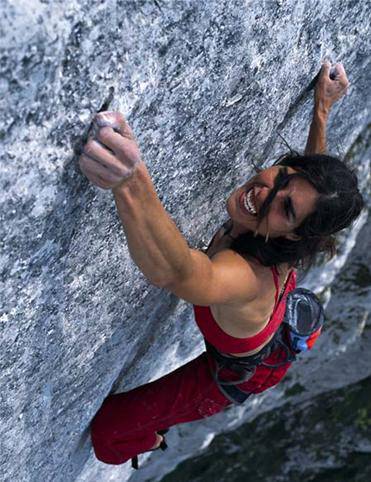
Josune Bereziartu (born January 19, 1972), also known as Josune Bereciartu Urruzola, is a Basque rock climber. For a decade starting in the late 1990s, she was considered the strongest female sport climber in the world and is regarded as one of the most important female rock climbers in history.
In 2005, Bereziartu almost completely closed the gap with the strongest male climbers by climbing to grade 9a/9a+ when the world's hardest climb was at 9a+/9b. She is known for being the first-ever female in history to climb grade 8c (5.14b), 8c+ (5.14c), 9a (5.14d) and 9a/9a+ sport climbing routes. Bereziartu is also known for being the first-ever female in history to onsight 8a+ (5.13c), 8b (5.13d), and 8b+ (5.14a) graded routes. She was one of the first-ever females to solve bouldering problems at 8A (V11) and above.
Josune Bereziartu was born on January 19, 1972, in Lazkao, a Basque town of the province of Gipuzkoa, northern Spain. Josune was first inspired to climb after watching a Spanish TV show documenting two girls climbing in the Verdon Gorge, and started climbing at 17.
In 1998, Bereziartu came to international attention with her repeat of Honky Tonky at Oñati, which made her the first-ever female in history to climb an 8c (5.14b) route. In 1999, she consolidated this achievement by repeating 8c routes White Zombie and Ras at Baltzola. In 2000, Bereziartu set a new record by becoming the first-ever female in history to climb 8c+ (5.14c) when she redpointed Honky Tonk Mix at Oñati. In October 2002, she set another record by becoming the world's first-ever female climber to climb a 9a (5.14d) route, when she redpointed Fred Nicole's Bain de Sang in St Loup, Switzerland. In 2004, she climbed Logical Progression in Japan, another 9a (5.14d) route that was only freed a few years earlier by Dai Koyamada. In May 2005, she set a further record, becoming the first-ever female to climb 9a/9a+ when she redpointed Bimbaluna in St Loup, in Switzerland; at that time, no male climber had broken the 9b (5.15b) grade barrier, and it would be another three years until Chris Sharma would climb Jumbo Love, the world's first consensus 9b route.
Bereziartu also set new records for onsight ascents. In 2000, she made the first-ever female onsight of an 8a+ (5.13c) route in history when she climbed Bon Vintage at Terradets in Catalonia, Spain. In 2002 she made the first-ever female onsight of an 8b (5.13d) route in history when she climbed Steroid Performance at Horai in Japan. Finally, in 2006, she made the first-ever female onsight of an 8b+ (5.14a) route in history when she climbed Hidrofobia in Montsant, Catalonia.
Bereziartu was a keen bouldering climber, in which she also set several records. In 2001, she became the second-ever female to solve an 8A (V11) problem, with Berezi, and in 2002, became the second-ever female to solve an 8A+ (V12) problem with Solaris. In 2002, she became the first-ever female to complete an 8B+ (V14) boulder traverse, when she solved La traversia De Balzola, at Baltzola in the Basque Country. In 2004, she pushed the female record further by completing the 8C (V15) boulder traverse, E la nave va, Lindental, at Lindental in Switzerland.
Bereziartu has also followed the path of earlier female sport climbers like Lynn Hill and Catherine Destivelle, freeing old aid climbing routes into major new multi-pitch traditional climbing routes in the mountains, such as Yeah Man (8b+, 300m, 9 pitches, with Rikar Otegui) in 2002, and El Pilar del Cantabrico (8a+, 500m, 13 pitches, with Iker Pou) in 2004, and Super Weissmuller (8a+, 300m, 8 pitches, with Rikar Otegui) in 2007. In March 2008, Bereziartu and Otegui created a new seven-pitch alpine route on the north face of Peña Telera, called Frenesi (ED+ M7 R, 450m, 7 pitches), while in late 2008 they were climbing hard mixed ice routes in Banff, such as Nemesis (VI WI6), and Phyllis Diller (M11).
Bereziartu participated in few climbing competitions which reduced her sponsorship profile, preferring instead the feel of real rock, and the challenge of bringing female sport climbing to the highest grades. In 2001, she told PlanetMountain when asked about the state of female sport climbing: "What can I say about that? It looks as if women are only present in competitions. It's obvious that this isn't the case but there are so few women climbing hard outside". Talking about her choices in a 2021 Climbing interview, she said: "Looking at my career with the perspective of age, I’ve learned that it’s important to maintain your freedom and to follow the things that excite you—not what others expect you to do".
Hub AI
Josune Bereziartu AI simulator
(@Josune Bereziartu_simulator)
Josune Bereziartu
Josune Bereziartu (born January 19, 1972), also known as Josune Bereciartu Urruzola, is a Basque rock climber. For a decade starting in the late 1990s, she was considered the strongest female sport climber in the world and is regarded as one of the most important female rock climbers in history.
In 2005, Bereziartu almost completely closed the gap with the strongest male climbers by climbing to grade 9a/9a+ when the world's hardest climb was at 9a+/9b. She is known for being the first-ever female in history to climb grade 8c (5.14b), 8c+ (5.14c), 9a (5.14d) and 9a/9a+ sport climbing routes. Bereziartu is also known for being the first-ever female in history to onsight 8a+ (5.13c), 8b (5.13d), and 8b+ (5.14a) graded routes. She was one of the first-ever females to solve bouldering problems at 8A (V11) and above.
Josune Bereziartu was born on January 19, 1972, in Lazkao, a Basque town of the province of Gipuzkoa, northern Spain. Josune was first inspired to climb after watching a Spanish TV show documenting two girls climbing in the Verdon Gorge, and started climbing at 17.
In 1998, Bereziartu came to international attention with her repeat of Honky Tonky at Oñati, which made her the first-ever female in history to climb an 8c (5.14b) route. In 1999, she consolidated this achievement by repeating 8c routes White Zombie and Ras at Baltzola. In 2000, Bereziartu set a new record by becoming the first-ever female in history to climb 8c+ (5.14c) when she redpointed Honky Tonk Mix at Oñati. In October 2002, she set another record by becoming the world's first-ever female climber to climb a 9a (5.14d) route, when she redpointed Fred Nicole's Bain de Sang in St Loup, Switzerland. In 2004, she climbed Logical Progression in Japan, another 9a (5.14d) route that was only freed a few years earlier by Dai Koyamada. In May 2005, she set a further record, becoming the first-ever female to climb 9a/9a+ when she redpointed Bimbaluna in St Loup, in Switzerland; at that time, no male climber had broken the 9b (5.15b) grade barrier, and it would be another three years until Chris Sharma would climb Jumbo Love, the world's first consensus 9b route.
Bereziartu also set new records for onsight ascents. In 2000, she made the first-ever female onsight of an 8a+ (5.13c) route in history when she climbed Bon Vintage at Terradets in Catalonia, Spain. In 2002 she made the first-ever female onsight of an 8b (5.13d) route in history when she climbed Steroid Performance at Horai in Japan. Finally, in 2006, she made the first-ever female onsight of an 8b+ (5.14a) route in history when she climbed Hidrofobia in Montsant, Catalonia.
Bereziartu was a keen bouldering climber, in which she also set several records. In 2001, she became the second-ever female to solve an 8A (V11) problem, with Berezi, and in 2002, became the second-ever female to solve an 8A+ (V12) problem with Solaris. In 2002, she became the first-ever female to complete an 8B+ (V14) boulder traverse, when she solved La traversia De Balzola, at Baltzola in the Basque Country. In 2004, she pushed the female record further by completing the 8C (V15) boulder traverse, E la nave va, Lindental, at Lindental in Switzerland.
Bereziartu has also followed the path of earlier female sport climbers like Lynn Hill and Catherine Destivelle, freeing old aid climbing routes into major new multi-pitch traditional climbing routes in the mountains, such as Yeah Man (8b+, 300m, 9 pitches, with Rikar Otegui) in 2002, and El Pilar del Cantabrico (8a+, 500m, 13 pitches, with Iker Pou) in 2004, and Super Weissmuller (8a+, 300m, 8 pitches, with Rikar Otegui) in 2007. In March 2008, Bereziartu and Otegui created a new seven-pitch alpine route on the north face of Peña Telera, called Frenesi (ED+ M7 R, 450m, 7 pitches), while in late 2008 they were climbing hard mixed ice routes in Banff, such as Nemesis (VI WI6), and Phyllis Diller (M11).
Bereziartu participated in few climbing competitions which reduced her sponsorship profile, preferring instead the feel of real rock, and the challenge of bringing female sport climbing to the highest grades. In 2001, she told PlanetMountain when asked about the state of female sport climbing: "What can I say about that? It looks as if women are only present in competitions. It's obvious that this isn't the case but there are so few women climbing hard outside". Talking about her choices in a 2021 Climbing interview, she said: "Looking at my career with the perspective of age, I’ve learned that it’s important to maintain your freedom and to follow the things that excite you—not what others expect you to do".
Recent media