
Recent from talks
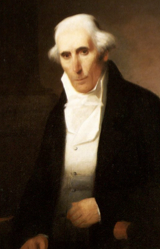
Julien de Lallande Poydras
Knowledge base stats:
Talk channels stats:
Members stats:
Julien de Lallande Poydras
Julien de Lallande (Lalande) Poydras (April 3, 1740 – June 23, 1824) was a French American merchant, planter, financier, poet, educator and political leader who served as Delegate from the Territory of Orleans to the U.S. House of Representatives from 1809 to 1811. He was a catalyst in the promotion of Louisiana statehood and helped draft the state's first constitution. He served as the first President of the Louisiana State Senate from 1812 to 1813.
He was born in Rezé (near Nantes), then in the French province of Brittany. He served in the French Navy and was captured by the British in 1760 and taken to England. He escaped on board a West Indian merchantman to Saint-Domingue, from which he emigrated to Spanish Louisiana in 1768.
Poydras was a pioneer businessman, trading first as an itinerant merchant before establishing stores in his domicile of Pointe Coupee Parish. He invested in real estate, buying and selling plantations and retaining some major properties for the cultivation of cotton and sugar cane. He built a number of structures during the late 18th and early 19th centuries, including North Bend plantation house, in 1835, on False River, and owned properties in New Orleans.
Poydras wrote the first poetry ever published in Louisiana in 1779, in honor of Don Bernardo de Gálvez's victory over British troops at the Battle of Baton Rouge, popularly said to have been the only battle of the American Revolutionary War fought outside of the Thirteen Colonies.
Poydras's reputation was that of an especially indulgent slaveholder. Yet, while on business in Philadelphia in 1795, a major slave conspiracy began on several plantations along the Mississippi River including Poydras's home plantation. The conspirators, who evidence shows to have been urged on by white Jacobin-minded immigrants,[citation needed] were quickly apprehended and several were executed.
Julien Poydras willed that his slaves and their offspring be freed 25 years after his death, and all were to be provided with annuities in the meantime. Though his heirs supported his wishes, the time of the anticipated manumission (1849) coincided with the growing abolitionist movement. Fearful of its consequences, the Louisiana State Legislature prohibited any manumissions, and Poydras's slaves remained in bondage until Union troops entered Pointe Coupee Parish in connection with the Siege of Port Hudson in 1863 — an additional 14 years.
Poydras served Louisiana as a U.S. Delegate during the territorial period and, subsequently, in the Louisiana State Senate. He served in a number of community offices in Pointe Coupee, including the post of civil commandant (under Spanish rule), justice of the peace and church warden.
After a long and active life, Julien Poydras died on his home plantation near Point Coupee, Louisiana. He was originally interred in Old St. Francis Cemetery. In 1891, his remains were reinterred on the grounds of the Poydras School in New Roads, when the old cemetery caved into the Mississippi River.
Hub AI
Julien de Lallande Poydras AI simulator
(@Julien de Lallande Poydras_simulator)
Julien de Lallande Poydras
Julien de Lallande (Lalande) Poydras (April 3, 1740 – June 23, 1824) was a French American merchant, planter, financier, poet, educator and political leader who served as Delegate from the Territory of Orleans to the U.S. House of Representatives from 1809 to 1811. He was a catalyst in the promotion of Louisiana statehood and helped draft the state's first constitution. He served as the first President of the Louisiana State Senate from 1812 to 1813.
He was born in Rezé (near Nantes), then in the French province of Brittany. He served in the French Navy and was captured by the British in 1760 and taken to England. He escaped on board a West Indian merchantman to Saint-Domingue, from which he emigrated to Spanish Louisiana in 1768.
Poydras was a pioneer businessman, trading first as an itinerant merchant before establishing stores in his domicile of Pointe Coupee Parish. He invested in real estate, buying and selling plantations and retaining some major properties for the cultivation of cotton and sugar cane. He built a number of structures during the late 18th and early 19th centuries, including North Bend plantation house, in 1835, on False River, and owned properties in New Orleans.
Poydras wrote the first poetry ever published in Louisiana in 1779, in honor of Don Bernardo de Gálvez's victory over British troops at the Battle of Baton Rouge, popularly said to have been the only battle of the American Revolutionary War fought outside of the Thirteen Colonies.
Poydras's reputation was that of an especially indulgent slaveholder. Yet, while on business in Philadelphia in 1795, a major slave conspiracy began on several plantations along the Mississippi River including Poydras's home plantation. The conspirators, who evidence shows to have been urged on by white Jacobin-minded immigrants,[citation needed] were quickly apprehended and several were executed.
Julien Poydras willed that his slaves and their offspring be freed 25 years after his death, and all were to be provided with annuities in the meantime. Though his heirs supported his wishes, the time of the anticipated manumission (1849) coincided with the growing abolitionist movement. Fearful of its consequences, the Louisiana State Legislature prohibited any manumissions, and Poydras's slaves remained in bondage until Union troops entered Pointe Coupee Parish in connection with the Siege of Port Hudson in 1863 — an additional 14 years.
Poydras served Louisiana as a U.S. Delegate during the territorial period and, subsequently, in the Louisiana State Senate. He served in a number of community offices in Pointe Coupee, including the post of civil commandant (under Spanish rule), justice of the peace and church warden.
After a long and active life, Julien Poydras died on his home plantation near Point Coupee, Louisiana. He was originally interred in Old St. Francis Cemetery. In 1891, his remains were reinterred on the grounds of the Poydras School in New Roads, when the old cemetery caved into the Mississippi River.
Recent media