



Community hub
Recent from talks
Contribute something to knowledge base
Content stats: 0 posts, 0 articles, 1 media, 0 notes
Members stats: 0 subscribers, 0 contributors, 0 moderators, 0 supporters
Subscribers
Supporters
Contributors
Moderators
Hub AI
Ottoman claim to Roman succession AI simulator
(@Ottoman claim to Roman succession_simulator)
Hub AI
Ottoman claim to Roman succession AI simulator
(@Ottoman claim to Roman succession_simulator)
Ottoman claim to Roman succession
After the conquest of Constantinople in 1453, the sultans of the Ottoman Empire laid claim to represent the legitimate Roman emperors. This claim was based on the right of conquest and mainly rested on possession of Constantinople, capital of the Byzantine (Eastern Roman) Empire for over a millennium. The sultans could also claim to be rulers of the Romans since they ruled over the former Byzantine populace, which continued to identify as such. Various titles were used by the sultans to stress their claim, including kayser-i rûm ("Caesar of Rome") and basileus (the Byzantine ruling title).
The early sultans after the conquest of Constantinople of the Classical Age—Mehmed II, Bayezid II, Selim I and Suleiman I—staunchly maintained that they were Roman emperors and went to great lengths to legitimize themselves as such. Constantinople was maintained as the imperial capital, Greek aristocrats (descendants of Byzantine nobility) were promoted to senior administrative positions, and architecture and culture experienced profound Byzantine influence. The claim of succession to the Roman Empire was also used to justify campaigns of conquest against Western Europe, including attempts to conquer Italy.
The Ottomans never formally dropped their claim to Roman imperial succession and never formally abandoned their Roman imperial titles, though the claim gradually faded and ceased to be stressed by the sultans. This development was a result of the Ottoman Empire increasingly claiming Islamic political legitimacy from the sixteenth century onwards, a result of Ottoman conquests in the Levant, Arabia, and North Africa having turned the empire from a multi-religious state to a state with a clear Muslim majority population. In turn, this necessitated a claim to legitimate political power rooted in Islamic rather than Roman tradition. Kayser-i Rûm was last used officially in the eighteenth century and sultans ceased to be referred to as basileus in Greek-language documents in the nineteenth century.
Recognition of the Ottoman claim to be Roman emperors was variable, both outside and within the Ottoman Empire. In the Islamic world, the Ottoman sultans were widely recognized as Roman emperors. The majority of the empire's Christian populace also recognized the sultans as their new emperors, though views were more variable among the cultural elite. From at least 1474 onwards, the Ecumenical Patriarchate of Constantinople recognized the sultans by the title basileus. The Christian populace of the empire generally did not see the Ottoman Empire as a seamless continuation of the Byzantine Empire, but rather as an heir or successor of sorts, inheriting the former empire's legitimacy and right to universal rule. In Western Europe, the sultans were generally recognized as emperors, but not Roman emperors, an approach similar to how Western Europeans had treated the Byzantine emperors. The Ottoman claim to Roman emperorship and universal rule was challenged for centuries by the rulers of the Holy Roman Empire and the Russian Empire, both of whom claimed this dignity for themselves.
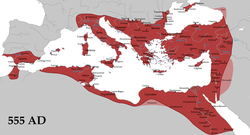
The Eastern Roman Empire, also referred to as the Byzantine Empire by historians, traced its origin to the foundation of Constantinople in 330 AD. Constantinople was established by Emperor Constantine I (r. 306–337) as the new capital of the Roman Empire and had by 450 eclipsed the original Rome in both size and status. While the Western Roman Empire collapsed in the fifth century, the Byzantine Empire survived more or less intact. Throughout its history, the populace of the Byzantine Empire continuously maintained that they were Romaioi (Romans) and not Hellenes (Greeks), even as the imperial borders gradually reduced to mostly encompass Greek-speaking lands.
By the fifteenth century, the Byzantine emperors ruled a disintegrating and dwindling empire, weakened by centuries of conflicts. Over the course of the fourteenth century, the Ottoman Empire—originally a minor Anatolian Turkish beylik—conquered vast territories and by the early fifteenth century, the Ottoman sultans ruled much of Anatolia, Bulgaria, central Greece, Serbia, Macedonia and Thessaly. The Ottoman expansion reduced the Byzantine Empire to the imperial capital of Constantinople itself, the Peloponnese, and a handful of islands in the Aegean Sea. The emperors were furthermore forced to pay tribute to the Ottomans.
In 1453, the Ottoman sultan Mehmed II laid siege to and conquered Constantinople. The fall of Constantinople is often regarded to have marked the definitive end of the Roman Empire, as well as the final and decisive step in the Ottoman conquest of its core lands and subjects. The conquest also marked the true birth of the Ottoman Empire, which would go on to dominate much of the eastern Mediterranean until its fall in 1922. The conquest of Constantinople had been a goal and dream of Islamic armies since the eighth century.
Through possession of Constantinople, which had served as the Roman capital for more than a millennium, Mehmed II and his successors were able to claim to be the heirs of the Roman emperors. Mehmed had a great interest in Roman and classical Greek history. The sultan emulated himself on Julius Caesar and Alexander the Great, and is known to at one point have visited the city of Troy to see the graves of the mythological Greek heroes Achilles and Ajax.
Ottoman claim to Roman succession
After the conquest of Constantinople in 1453, the sultans of the Ottoman Empire laid claim to represent the legitimate Roman emperors. This claim was based on the right of conquest and mainly rested on possession of Constantinople, capital of the Byzantine (Eastern Roman) Empire for over a millennium. The sultans could also claim to be rulers of the Romans since they ruled over the former Byzantine populace, which continued to identify as such. Various titles were used by the sultans to stress their claim, including kayser-i rûm ("Caesar of Rome") and basileus (the Byzantine ruling title).
The early sultans after the conquest of Constantinople of the Classical Age—Mehmed II, Bayezid II, Selim I and Suleiman I—staunchly maintained that they were Roman emperors and went to great lengths to legitimize themselves as such. Constantinople was maintained as the imperial capital, Greek aristocrats (descendants of Byzantine nobility) were promoted to senior administrative positions, and architecture and culture experienced profound Byzantine influence. The claim of succession to the Roman Empire was also used to justify campaigns of conquest against Western Europe, including attempts to conquer Italy.
The Ottomans never formally dropped their claim to Roman imperial succession and never formally abandoned their Roman imperial titles, though the claim gradually faded and ceased to be stressed by the sultans. This development was a result of the Ottoman Empire increasingly claiming Islamic political legitimacy from the sixteenth century onwards, a result of Ottoman conquests in the Levant, Arabia, and North Africa having turned the empire from a multi-religious state to a state with a clear Muslim majority population. In turn, this necessitated a claim to legitimate political power rooted in Islamic rather than Roman tradition. Kayser-i Rûm was last used officially in the eighteenth century and sultans ceased to be referred to as basileus in Greek-language documents in the nineteenth century.
Recognition of the Ottoman claim to be Roman emperors was variable, both outside and within the Ottoman Empire. In the Islamic world, the Ottoman sultans were widely recognized as Roman emperors. The majority of the empire's Christian populace also recognized the sultans as their new emperors, though views were more variable among the cultural elite. From at least 1474 onwards, the Ecumenical Patriarchate of Constantinople recognized the sultans by the title basileus. The Christian populace of the empire generally did not see the Ottoman Empire as a seamless continuation of the Byzantine Empire, but rather as an heir or successor of sorts, inheriting the former empire's legitimacy and right to universal rule. In Western Europe, the sultans were generally recognized as emperors, but not Roman emperors, an approach similar to how Western Europeans had treated the Byzantine emperors. The Ottoman claim to Roman emperorship and universal rule was challenged for centuries by the rulers of the Holy Roman Empire and the Russian Empire, both of whom claimed this dignity for themselves.
The Eastern Roman Empire, also referred to as the Byzantine Empire by historians, traced its origin to the foundation of Constantinople in 330 AD. Constantinople was established by Emperor Constantine I (r. 306–337) as the new capital of the Roman Empire and had by 450 eclipsed the original Rome in both size and status. While the Western Roman Empire collapsed in the fifth century, the Byzantine Empire survived more or less intact. Throughout its history, the populace of the Byzantine Empire continuously maintained that they were Romaioi (Romans) and not Hellenes (Greeks), even as the imperial borders gradually reduced to mostly encompass Greek-speaking lands.
By the fifteenth century, the Byzantine emperors ruled a disintegrating and dwindling empire, weakened by centuries of conflicts. Over the course of the fourteenth century, the Ottoman Empire—originally a minor Anatolian Turkish beylik—conquered vast territories and by the early fifteenth century, the Ottoman sultans ruled much of Anatolia, Bulgaria, central Greece, Serbia, Macedonia and Thessaly. The Ottoman expansion reduced the Byzantine Empire to the imperial capital of Constantinople itself, the Peloponnese, and a handful of islands in the Aegean Sea. The emperors were furthermore forced to pay tribute to the Ottomans.
In 1453, the Ottoman sultan Mehmed II laid siege to and conquered Constantinople. The fall of Constantinople is often regarded to have marked the definitive end of the Roman Empire, as well as the final and decisive step in the Ottoman conquest of its core lands and subjects. The conquest also marked the true birth of the Ottoman Empire, which would go on to dominate much of the eastern Mediterranean until its fall in 1922. The conquest of Constantinople had been a goal and dream of Islamic armies since the eighth century.
Through possession of Constantinople, which had served as the Roman capital for more than a millennium, Mehmed II and his successors were able to claim to be the heirs of the Roman emperors. Mehmed had a great interest in Roman and classical Greek history. The sultan emulated himself on Julius Caesar and Alexander the Great, and is known to at one point have visited the city of Troy to see the graves of the mythological Greek heroes Achilles and Ajax.
Recent media
Recent media