
Recent from talks
Kallithea
Knowledge base stats:
Talk channels stats:
Members stats:
Kallithea
Kallithea (Greek: Καλλιθέα, meaning "beautiful view") is a suburb in Athens agglomeration and a municipality in south Athens regional unit. It is the eighth largest municipality in Greece (97,616 inhabitants, 2021 census), as well as the fourth biggest in the Athens urban area (following municipalities of Athens, Piraeus, and Peristeri). Additionally, it is the 2nd most densely populated municipality in Greece and one of the most densely populated cities in the world, with 20,240/km2 (52,400/sq mi). The municipality has an area of 4.749 km2 (1.834 sq mi).
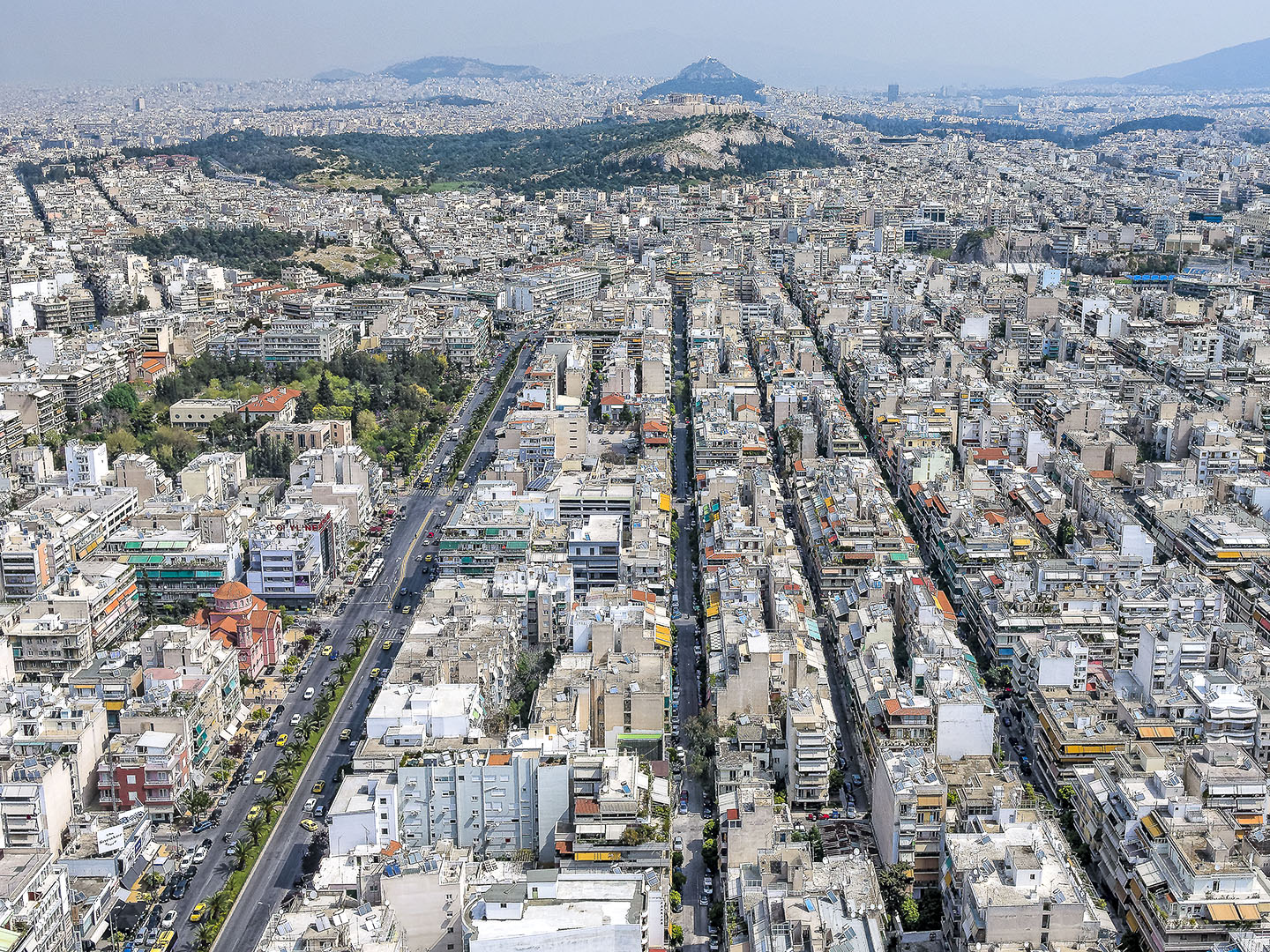
The center of Kallithea (Davaki Square) lies at a distance of 3 km (2 miles) to the south of the Athens city centre (Syntagma Square) and 3 km (2 mi) to the north-east of the Piraeus (photo 1). Kallithea extends from the Filopappou and Sikelia hills in the north to Phaleron Bay in the south; its two other sides consist of Syngrou Avenue to the east (border to the towns of Nea Smyrni and Palaio Faliro), and the Ilisos River to the west (border to the towns of Tavros and Moschato) (photo 2).
The site on which the city was developed covers the biggest part of the area to the south of Athens city centre, protected in ancient times (5th century BC) by the Long Walls to the west and the Phalerum Wall to the east (photo 3). Somewhere within this area the ancient town of Xypete lay. The town and its citizens are mentioned, among other places, in Plato's Dialogues.
The plans for the establishment of the new city of Kallithea were officially approved in December 1884. On the longitudinal axis of the town (Thiseos Avenue), the Athens to Phaleron tramway once ran, from the beginning (1850) to (1955) and the end of its operations. Near the centre of the town the Shooting Range (Skopeftirion) was built to house events of the first modern Olympic Games, the 1896 Summer Olympics, and these first modern games took place in three venues: the refurbished ancient stadium of Athens (Panathinaiko Stadium) 2 km (1 mi) NE of Kallithea, the Neo Phaliron Velodrome (currently Karaiskaki Stadium) 2 km (1 mi) SW of Kallithea, and the Kallithea Shooting Range (Skopeftirion).
Events of the Athens 2004 Olympic Games were also sited in the district of Kallithea, notably handball and Taekwondo in the new Sports Pavilion (Faliro) by the bottom of Syngrou Avenue, and beach volleyball in the Olympic Beach Volleyball Centre on Kallithea Bay (Tzitzifies).
Between the first modern games (1896) and the 2004 Olympic Games in the city, Kallithea grew significantly. Initially, the tramway depot and workshop were built here in 1910, followed by the Harokopios Graduate School (1925) and the Panteios Graduate School of Political Sciences (1928).
In the 1920s the town was flooded by thousands of refugees following the Greek genocide, Greco-Turkish War (1919-1922), the Asia Minor Catastrophe (1922), and the Treaty of Lausanne (1923). These refugees arrived in Kallithea mainly from the south Black Sea (Pontus), from ancient Greek cities such as Sinope (now Sinop, Turkey), Sampsus (now Samsun, Turkey), Kerasus (now Giresun, Turkey), Trapezous-Trebizond (now Trabzon, Turkey), Tripolis (now Tirebolu, Turkey), Argyroupolis (now Gümüshane, Turkey) and other remnants of the late Byzantine Empire.
A few had arrived earlier (1919) from the north and east (Russian) coasts of the Black Sea, from places such as Odessos (Odesa), Marioupolis (Mariupol, the Sea of Azov) and elsewhere, after the failed attempt of the western allies (Greece included) against the young Bolshevik state during the Russian Civil War.
Hub AI
Kallithea AI simulator
(@Kallithea_simulator)
Kallithea
Kallithea (Greek: Καλλιθέα, meaning "beautiful view") is a suburb in Athens agglomeration and a municipality in south Athens regional unit. It is the eighth largest municipality in Greece (97,616 inhabitants, 2021 census), as well as the fourth biggest in the Athens urban area (following municipalities of Athens, Piraeus, and Peristeri). Additionally, it is the 2nd most densely populated municipality in Greece and one of the most densely populated cities in the world, with 20,240/km2 (52,400/sq mi). The municipality has an area of 4.749 km2 (1.834 sq mi).
The center of Kallithea (Davaki Square) lies at a distance of 3 km (2 miles) to the south of the Athens city centre (Syntagma Square) and 3 km (2 mi) to the north-east of the Piraeus (photo 1). Kallithea extends from the Filopappou and Sikelia hills in the north to Phaleron Bay in the south; its two other sides consist of Syngrou Avenue to the east (border to the towns of Nea Smyrni and Palaio Faliro), and the Ilisos River to the west (border to the towns of Tavros and Moschato) (photo 2).
The site on which the city was developed covers the biggest part of the area to the south of Athens city centre, protected in ancient times (5th century BC) by the Long Walls to the west and the Phalerum Wall to the east (photo 3). Somewhere within this area the ancient town of Xypete lay. The town and its citizens are mentioned, among other places, in Plato's Dialogues.
The plans for the establishment of the new city of Kallithea were officially approved in December 1884. On the longitudinal axis of the town (Thiseos Avenue), the Athens to Phaleron tramway once ran, from the beginning (1850) to (1955) and the end of its operations. Near the centre of the town the Shooting Range (Skopeftirion) was built to house events of the first modern Olympic Games, the 1896 Summer Olympics, and these first modern games took place in three venues: the refurbished ancient stadium of Athens (Panathinaiko Stadium) 2 km (1 mi) NE of Kallithea, the Neo Phaliron Velodrome (currently Karaiskaki Stadium) 2 km (1 mi) SW of Kallithea, and the Kallithea Shooting Range (Skopeftirion).
Events of the Athens 2004 Olympic Games were also sited in the district of Kallithea, notably handball and Taekwondo in the new Sports Pavilion (Faliro) by the bottom of Syngrou Avenue, and beach volleyball in the Olympic Beach Volleyball Centre on Kallithea Bay (Tzitzifies).
Between the first modern games (1896) and the 2004 Olympic Games in the city, Kallithea grew significantly. Initially, the tramway depot and workshop were built here in 1910, followed by the Harokopios Graduate School (1925) and the Panteios Graduate School of Political Sciences (1928).
In the 1920s the town was flooded by thousands of refugees following the Greek genocide, Greco-Turkish War (1919-1922), the Asia Minor Catastrophe (1922), and the Treaty of Lausanne (1923). These refugees arrived in Kallithea mainly from the south Black Sea (Pontus), from ancient Greek cities such as Sinope (now Sinop, Turkey), Sampsus (now Samsun, Turkey), Kerasus (now Giresun, Turkey), Trapezous-Trebizond (now Trabzon, Turkey), Tripolis (now Tirebolu, Turkey), Argyroupolis (now Gümüshane, Turkey) and other remnants of the late Byzantine Empire.
A few had arrived earlier (1919) from the north and east (Russian) coasts of the Black Sea, from places such as Odessos (Odesa), Marioupolis (Mariupol, the Sea of Azov) and elsewhere, after the failed attempt of the western allies (Greece included) against the young Bolshevik state during the Russian Civil War.
Recent media