


Community hub
Recent from talks
Contribute something to knowledge base
Content stats: 0 posts, 0 articles, 1 media, 0 notes
Members stats: 0 subscribers, 0 contributors, 0 moderators, 0 supporters
Subscribers
Supporters
Contributors
Moderators
Hub AI
Kambojas AI simulator
(@Kambojas_simulator)
Hub AI
Kambojas AI simulator
(@Kambojas_simulator)
Kambojas
The Kambojas were a southeastern Iranian people who inhabited the northeastern most part of the territory populated by Iranian tribes, which bordered the Indian lands. They only appear in Indo-Aryan inscriptions and literature, being first attested during the later part of the Vedic period.
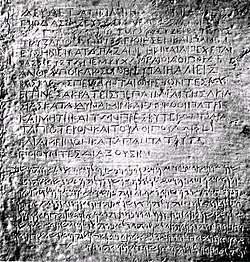
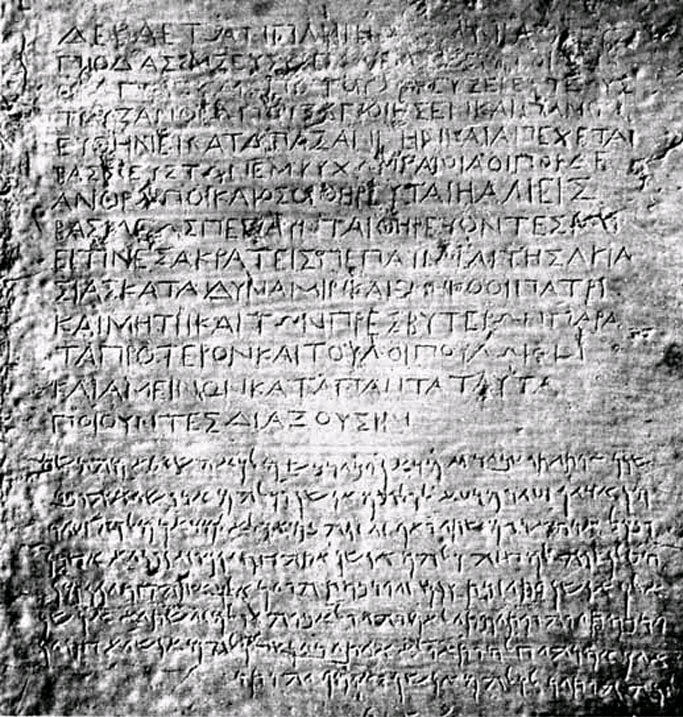
They spoke a language similar to Younger Avestan, whose words are considered to have been incorporated in the Aramao-Iranian version of the Kandahar Bilingual Rock Inscription erected by the Maurya emperor Ashoka (r. 268–232 BCE). They were adherents of Zoroastrianism, as demonstrated by their beliefs that insects, snakes, worms, frogs, and other small animals had to be killed, a practice mentioned in the Avestan Vendidad.
Kamboja- (later form Kāmboja-) was the name of their territory and identical to the Old Iranian name of *Kambauǰa-, whose meaning is uncertain. A long-standing theory is the one proposed by J. Charpentier in 1923, in which he suggests that the name is connected to the name of Cambyses I and Cambyses II (Kambū̌jiya or Kambauj in Old Persian), both kings from the Achaemenid dynasty. The theory has been discussed several times, but the issues that it posed were never persuadingly resolved.
In the same year, Sylvain Lévi proposed that the name is of Austroasiatic origin, though this is typically rejected.
The Kambojas only appear in Indo-Aryan inscriptions and literature, being first attested during the later part of the Vedic period. The Naighaṇṭukas, a glossary and oldest surviving writing about Indian lexicography, is the first source to mention them. In his book about etymology—the Nirukta—the ancient Indian author Yaska comments on that part of the Naighaṇṭukas, in which he mentions that "the word śavati as a verb of motion is used only by the Kambojas", a statement that is more or less repeated in the exact same way by later authors, such as the grammarian Patanjali (2nd-century BCE) in his Mahabhashya. The word śavati is equivalent to š́iiauua- in Younger Avestan, which demonstrates that the Kambojas spoke an Iranian tongue with close ties to it. Modern historian M. Witzel surmised that grammarians and lexicographers must have first become acquainted with the word around 500 BCE or perhaps earlier, due to Yaska and Patanjali both using the same example known amongst grammarians and lexicographers.
The Major Rock Edicts of the Maurya emperor Ashoka (r. 268–232 BCE) contain the first attestations of the Kambojas that can be precisely dated. The thirteenth edict says "among Greeks and Kambojas" and the fifth edict says "of Greeks, Kambojas and Gandharians". It is uncertain if Ashoka was only referring to just the Kambojas or all the Iranian tribes in his empire. Regardless, the mentioned groups of people were part of the Maurya Empire, being influenced by its politics, culture and religious traditions, and also adhered to ideology of "righteousness" set by Ashoka.
The major Indian epic Mahabharata also mentions the Kambojas, alongside the Greeks, Gandharas, Bactrians and Indo-Scythians. Geographical texts in Sanskrit and the Aṅguttara Nikāya include the Kambojas as one of the sixteen kingdoms of the Indian subcontinent during the lifetime of the Buddha. Various characteristics of the Kambojas are also described in different types of Sanskrit and Pali literature; they shaved themselves bald; they had a king; Rāja-pura- (meaning "King's town") was the name of their capital, but its site remains unknown. As was typical of Iranians, the Kambojas were renowned for their skill in horse breeding, and it is believed that the horses they produced were the most suitable for use in battle. These horses were brought into India in large quantities and also given as tribute. Indologist Etienne Lamotte further suggests that reputation of Kambojas as homeland of horses possibly earned the horse-breeders known as Aspasioi (from Old Persian aspa) and Assakenoi (from Sanskrit aśva "horse") their epithet.
Following the death of Ashoka, the Maurya Empire fell into decline. During the start of the 2nd-century BCE, they lost their Indian-Iranian frontier lands (including Gandhara and Arachosia) to the forces of Demetrius I (r. 200–180 BCE), the king of the Greco-Bactrian Kingdom. As a result, the Greek population of those areas were once again under the dominion of their Greek countrymen, while the Kambojas met other Iranians, as the Bactrians were likely a major component of the conquering army along with the Greeks.
Kambojas
The Kambojas were a southeastern Iranian people who inhabited the northeastern most part of the territory populated by Iranian tribes, which bordered the Indian lands. They only appear in Indo-Aryan inscriptions and literature, being first attested during the later part of the Vedic period.
They spoke a language similar to Younger Avestan, whose words are considered to have been incorporated in the Aramao-Iranian version of the Kandahar Bilingual Rock Inscription erected by the Maurya emperor Ashoka (r. 268–232 BCE). They were adherents of Zoroastrianism, as demonstrated by their beliefs that insects, snakes, worms, frogs, and other small animals had to be killed, a practice mentioned in the Avestan Vendidad.
Kamboja- (later form Kāmboja-) was the name of their territory and identical to the Old Iranian name of *Kambauǰa-, whose meaning is uncertain. A long-standing theory is the one proposed by J. Charpentier in 1923, in which he suggests that the name is connected to the name of Cambyses I and Cambyses II (Kambū̌jiya or Kambauj in Old Persian), both kings from the Achaemenid dynasty. The theory has been discussed several times, but the issues that it posed were never persuadingly resolved.
In the same year, Sylvain Lévi proposed that the name is of Austroasiatic origin, though this is typically rejected.
The Kambojas only appear in Indo-Aryan inscriptions and literature, being first attested during the later part of the Vedic period. The Naighaṇṭukas, a glossary and oldest surviving writing about Indian lexicography, is the first source to mention them. In his book about etymology—the Nirukta—the ancient Indian author Yaska comments on that part of the Naighaṇṭukas, in which he mentions that "the word śavati as a verb of motion is used only by the Kambojas", a statement that is more or less repeated in the exact same way by later authors, such as the grammarian Patanjali (2nd-century BCE) in his Mahabhashya. The word śavati is equivalent to š́iiauua- in Younger Avestan, which demonstrates that the Kambojas spoke an Iranian tongue with close ties to it. Modern historian M. Witzel surmised that grammarians and lexicographers must have first become acquainted with the word around 500 BCE or perhaps earlier, due to Yaska and Patanjali both using the same example known amongst grammarians and lexicographers.
The Major Rock Edicts of the Maurya emperor Ashoka (r. 268–232 BCE) contain the first attestations of the Kambojas that can be precisely dated. The thirteenth edict says "among Greeks and Kambojas" and the fifth edict says "of Greeks, Kambojas and Gandharians". It is uncertain if Ashoka was only referring to just the Kambojas or all the Iranian tribes in his empire. Regardless, the mentioned groups of people were part of the Maurya Empire, being influenced by its politics, culture and religious traditions, and also adhered to ideology of "righteousness" set by Ashoka.
The major Indian epic Mahabharata also mentions the Kambojas, alongside the Greeks, Gandharas, Bactrians and Indo-Scythians. Geographical texts in Sanskrit and the Aṅguttara Nikāya include the Kambojas as one of the sixteen kingdoms of the Indian subcontinent during the lifetime of the Buddha. Various characteristics of the Kambojas are also described in different types of Sanskrit and Pali literature; they shaved themselves bald; they had a king; Rāja-pura- (meaning "King's town") was the name of their capital, but its site remains unknown. As was typical of Iranians, the Kambojas were renowned for their skill in horse breeding, and it is believed that the horses they produced were the most suitable for use in battle. These horses were brought into India in large quantities and also given as tribute. Indologist Etienne Lamotte further suggests that reputation of Kambojas as homeland of horses possibly earned the horse-breeders known as Aspasioi (from Old Persian aspa) and Assakenoi (from Sanskrit aśva "horse") their epithet.
Following the death of Ashoka, the Maurya Empire fell into decline. During the start of the 2nd-century BCE, they lost their Indian-Iranian frontier lands (including Gandhara and Arachosia) to the forces of Demetrius I (r. 200–180 BCE), the king of the Greco-Bactrian Kingdom. As a result, the Greek population of those areas were once again under the dominion of their Greek countrymen, while the Kambojas met other Iranians, as the Bactrians were likely a major component of the conquering army along with the Greeks.
Recent media
Recent media