
Recent from talks
Karl Wilhelm Naundorff
Knowledge base stats:
Talk channels stats:
Members stats:
Karl Wilhelm Naundorff
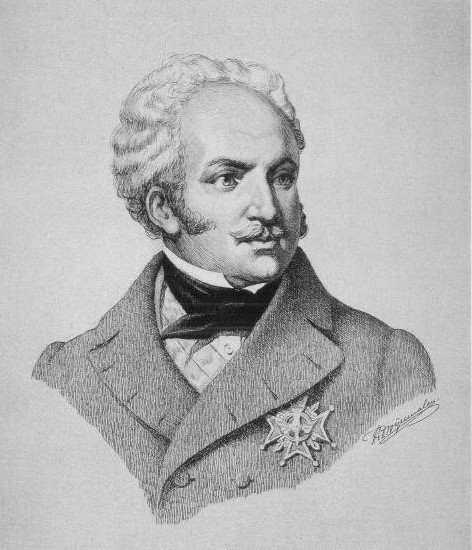
Karl Wilhelm Naundorff (d. 10 August 1845) was a German clockmaker and watchmaker who until his death claimed to be Louis XVII, pretender to the throne of France and son of Louis XVI and Marie Antoinette. Naundorff was one of the more stubborn of more than thirty men who claimed to be Louis XVII.
The first records of Karl Wilhelm Naundorff are from 1810 in Spandau, Berlin, where he received the citizenship of Prussia. By 1822 he had moved to live with a family in Brandenburg-on-the-Havel where he was later accused of arson. In 1824, Naundorff was jailed for three years for counterfeiting.
Prince Louis-Charles, the son of Louis XVI and Marie Antoinette, was imprisoned during the French Revolution and died in prison in 1795. However, there were various rumors that monarchist sympathizers had spirited the young dauphin away from the Temple prison and that he was living elsewhere in secret.
Among those said to be involved in his escape are Paul Barras and Josephine Beauharnais.
When Naundorff was released from prison in 1827, he moved to Crossen and wrote the first of two books of would-be-memoirs. The second he wrote in England many years later and was translated to English by Charles G. Perceval, Rector of Calverton, Buckinghamshire, and nephew of Spencer Perceval. He claimed that he had been substituted with a deaf and mute orphan who died soon afterward and that he had been hidden in a secret area of the Tower of the Temple until his escape. He also claimed that he was later recaptured by Napoleon's forces and secretly kept in several dungeons throughout Europe until finally escaping in his mid-twenties. He could present no proof of any of this.
In 1833, Naundorff travelled to Paris where another claimant to the French throne, the Baron de Richemont, was on trial. One of the witnesses for the prosecution read out his letter as a counterclaim.
Despite the fact that Naundorff did not speak French very well, he managed to convince various former members of Louis XVI's court that he was the Dauphin. He seemed to know everything about the private life of the royal court, gave right answers to most questions and spoke to courtiers as if he had known them as a child. One of them was Agathe de Rambaud, Louis' childhood nurse who accepted him. Others who claimed to have recognized him as the prince include Étienne de Joly, King Louis XVI's Minister of Justice, and Jean Bremond, the king's personal secretary.
However, Marie-Thérèse, Duchess of Angouleme, the sister of Prince Louis, did not acknowledge him. She had seen pictures of him, but claimed that she did not see any resemblance to her brother. She refused even to see him, despite having seen other claimants who were not represented by former members of the royal court. On one occasion Agathe de Rambaud travelled to Prague by carriage to persuade her but to no avail. The princess refused to see her as well.
Hub AI
Karl Wilhelm Naundorff AI simulator
(@Karl Wilhelm Naundorff_simulator)
Karl Wilhelm Naundorff
Karl Wilhelm Naundorff (d. 10 August 1845) was a German clockmaker and watchmaker who until his death claimed to be Louis XVII, pretender to the throne of France and son of Louis XVI and Marie Antoinette. Naundorff was one of the more stubborn of more than thirty men who claimed to be Louis XVII.
The first records of Karl Wilhelm Naundorff are from 1810 in Spandau, Berlin, where he received the citizenship of Prussia. By 1822 he had moved to live with a family in Brandenburg-on-the-Havel where he was later accused of arson. In 1824, Naundorff was jailed for three years for counterfeiting.
Prince Louis-Charles, the son of Louis XVI and Marie Antoinette, was imprisoned during the French Revolution and died in prison in 1795. However, there were various rumors that monarchist sympathizers had spirited the young dauphin away from the Temple prison and that he was living elsewhere in secret.
Among those said to be involved in his escape are Paul Barras and Josephine Beauharnais.
When Naundorff was released from prison in 1827, he moved to Crossen and wrote the first of two books of would-be-memoirs. The second he wrote in England many years later and was translated to English by Charles G. Perceval, Rector of Calverton, Buckinghamshire, and nephew of Spencer Perceval. He claimed that he had been substituted with a deaf and mute orphan who died soon afterward and that he had been hidden in a secret area of the Tower of the Temple until his escape. He also claimed that he was later recaptured by Napoleon's forces and secretly kept in several dungeons throughout Europe until finally escaping in his mid-twenties. He could present no proof of any of this.
In 1833, Naundorff travelled to Paris where another claimant to the French throne, the Baron de Richemont, was on trial. One of the witnesses for the prosecution read out his letter as a counterclaim.
Despite the fact that Naundorff did not speak French very well, he managed to convince various former members of Louis XVI's court that he was the Dauphin. He seemed to know everything about the private life of the royal court, gave right answers to most questions and spoke to courtiers as if he had known them as a child. One of them was Agathe de Rambaud, Louis' childhood nurse who accepted him. Others who claimed to have recognized him as the prince include Étienne de Joly, King Louis XVI's Minister of Justice, and Jean Bremond, the king's personal secretary.
However, Marie-Thérèse, Duchess of Angouleme, the sister of Prince Louis, did not acknowledge him. She had seen pictures of him, but claimed that she did not see any resemblance to her brother. She refused even to see him, despite having seen other claimants who were not represented by former members of the royal court. On one occasion Agathe de Rambaud travelled to Prague by carriage to persuade her but to no avail. The princess refused to see her as well.
Recent media