


Community hub
Recent from talks
Contribute something to knowledge base
Content stats: 0 posts, 0 articles, 1 media, 0 notes
Members stats: 0 subscribers, 0 contributors, 0 moderators, 0 supporters
Subscribers
Supporters
Contributors
Moderators
Hub AI
Kazys Grinius AI simulator
(@Kazys Grinius_simulator)
Hub AI
Kazys Grinius AI simulator
(@Kazys Grinius_simulator)
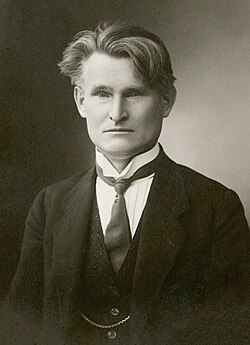
Kazys Grinius
Kazys Grinius ([kɐˈzʲiːs ˈɡʲrʲɪnʲʊs] ⓘ, 17 December 1866 – 4 June 1950) was the third President of Lithuania, holding the office from 7 June 1926 to 17 December 1926. Previously, he had served as the fifth Prime Minister of Lithuania, from 19 June 1920 until his resignation on 18 January 1922. He was posthumously awarded the Lithuanian Life Saving Cross for saving people during the Holocaust and was recognised as a Righteous Among the Nations in 2016.
Grinius was born in Selema, near Marijampolė, in the Augustów Governorate of Congress Poland, which was part of the Russian Empire. He studied medicine at the Imperial Moscow University and became a physician. As a young man, he became involved in Lithuanian political activities, and was persecuted by the Tsarist authorities. In 1896, he was one of the founders of the Lithuanian Democratic Party (LDP) and Lithuanian Popular Peasants' Union (LVLS) party. That same year he married Joana Pavalkytė. For some time they lived in Virbalis. In 1899, their son Kazys (later head of the Lithuanian National Council) was born, and in 1902, their daughter Gražina was born. During World War I they lived in Kislovodsk. In 1918, during a Red Army attack, his wife and daughter were murdered by Russian terrorists. They were buried in Kislovodsk cemetery.
When Lithuania regained its independence in 1918, Grinius became a member of the Constituent Assembly as a member of the Lithuanian Popular Peasants' Union party. He served as prime minister from 1920 until 1922, and signed a treaty with the Soviet Union. He was elected president by the Third Seimas, but served for only six months, as he was deposed in a coup led by Antanas Smetona on the pretext of an imminent communist plot to take over Lithuania. Grinius then practiced medicine in Kaunas. When Nazi Germany invaded Lithuania in 1941, Grinius refused to collaborate with the Germans because of his opposition to the occupation of Lithuania by any foreign power. He fled to the West when the Soviet army reoccupied Lithuania in 1944, and he emigrated to the United States in 1947.
He died in Chicago in 1950. After Lithuania regained its independence in 1990, his remains were returned and buried near his home village.
Of noble (szlachta) lineage, the Griniai family moved to the region of Suvalkija during the Volok Reform of 1560. Kazys Grinius was born on 17 December 1866, in the village of Selema, then known as Selemos Būda. The village belonged to the Augustów Governorate of Congress Poland, then part of the Russian Empire. Grinius was the third child out of the family's eleven (two of whom would die in infancy). His father, Vincas Grinius (1837–1915) was a farmer who owned 15 hectares of land. A nephew of writer and leader of the January Uprising Mikalojus Akelaitis, Vincas could speak Russian and Polish, and owned a small library containing prayer books and the works of Laurynas Ivinskis, Motiejus Valančius and Petras Vileišis. Grinius's mother Ona Griniuvienė née Vosyliūtė (1839–1919) was a strict and religious Catholic. Two of Grinius' siblings, Jonas Grinius (1877–1954) and Ona Griniūtė-Bacevičienė (1884–1972) were book smugglers during the Lithuanian press ban. Ona's nephew Vytautas Bacevičius-Vygandas was an officer in the Lithuanian Liberty Army, Povilas Plechavičius's Lithuanian Territorial Defense Force, as well as chief of headquarters of the Tauras military district of the Lithuanian partisans.
Grinius learned to read from his mother, and to count and write from his father. In 1876, at the age of nine, Grinius began to attend the Oszkinie Russian primary school, three months later switching to school in Gudeliai. He also attended school in Marijampolė before being accepted at the Marijampolė Gymnasium in 1879 at the age of twelve. Since the Lithuanian language in the region wasn't banned but rather acted as an optional school subject, Grinius mostly spoke Polish with his classmates before beginning to attend Lithuanian classes in third grade. His tutors were Petras Arminas-Trupinėlis and Petras Kriaučiūnas. Inspired by the release of the first Lithuanian newspaper Aušra in 1883, Grinius and future poet Jonas Mačys-Kėkštas published their own newspaper entitled Priešaušris. Grinius was also adamant that prayer would be conducted in Lithuanian rather than Polish. Grinius then began smuggling Aušra and other illegal publications, sometimes bringing them from Prussia by himself.
After graduating in 1887, Grinius began studying medicine at Imperial Moscow University, where he became a member of a secret society of Lithuanian students. He was its chairman from 1889 until his graduation. The society organized self-education and self-sufficiency of students and distributed Lithuanian press, cooperating with Latvian and Polish student societies. Grinius suggested that the 300 rubles the society won through a lottery should be used for the publication of Lithuanian books; the students subsequently established a fund to publish Lithuanian books (Fondas lietuvių knygoms leisti). Grinius also published his first article in a United States-based newspaper Lietuviškasis balsas. In 1888 at the age of twenty-two, along with Vincas Kudirka, Grinius and six others participated in a gathering in Marijampolė, in the so-called first congress of Lithuanian democrats, where they decided to begin the publication of the newspaper Varpas. In 1893, he was elected member of the Varpininkai organization committee. Grinius organized the publishing of Ūkininkas. Along with other students he wrote A Short History of Ancient Lithuanians (Trumpa senovės Lietuvių istorija), which was published in 1892 in Tilsit (modern-day Sovetsk). During vacation, Grinius would travel across Lithuania and distribute Lithuanian newspapers, lead "anti-state propaganda", and collect folklore. As a member of the 1899 Russian student strike, Grinius was arrested for 9 days and put in Butyrka prison. In 1892, he was a doctor who treated cholera patients in Minsk. During his study years, Grinius lived a poor and ascetic life. After graduating, Grinius did not have enough money to settle in Lithuania, and so became a ship doctor in the Caspian Sea for about nine months.
After returning to Lithuania in 1894, Grinius earned a living as a free-for-hire doctor in Marijampolė. After two years he moved to Virbalis, and later to Kudirkos Naumiestis. Grinius helped establish the Social Democratic Party of Lithuania in 1896, preparing its first newspaper Lietuvos darbininkas and translating the party's program from Polish into Lithuanian. He also was one of the establishers of the Lithuanian Democratic Party in 1902 who prepared its program in 1906, as well as writing the program of the Peasant Union. An active member of the Lithuanian Popular Socialist Democratic Party, Grinius edited the last edition of Varpas. From 1898 to 1902 he lived in Pilviškiai, replacing Stasys Matulaitis as the local book smuggler. From 1897 to 1899 he edited the newspaper Ūkininkas. After returning to Marijmapolė, he was briefly imprisoned for Lithuanian cultural activism. His family home became a center of the Lithuanian cultural movement in the region of Užnemunė (west of the Nemunas river). Grinius helped write petitions from local peasants to the governor of the Suwałki Governorate. In his opinion, these few years when Lithuanians became more culturally active became the foreground for the Great Seimas of Vilnius. In 1905, he lived in Vilnius, moving back to Marijampolė in 1906 only to be imprisoned along with his wife for two weeks.
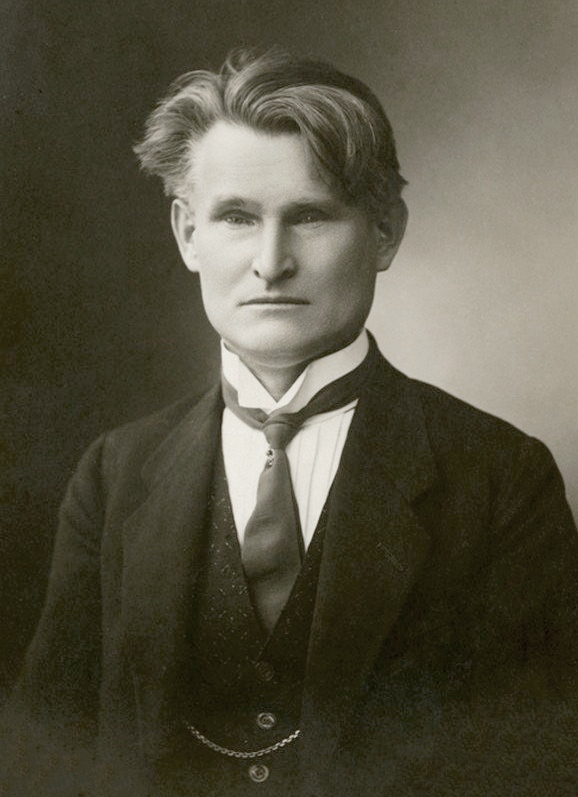
Kazys Grinius
Kazys Grinius ([kɐˈzʲiːs ˈɡʲrʲɪnʲʊs] ⓘ, 17 December 1866 – 4 June 1950) was the third President of Lithuania, holding the office from 7 June 1926 to 17 December 1926. Previously, he had served as the fifth Prime Minister of Lithuania, from 19 June 1920 until his resignation on 18 January 1922. He was posthumously awarded the Lithuanian Life Saving Cross for saving people during the Holocaust and was recognised as a Righteous Among the Nations in 2016.
Grinius was born in Selema, near Marijampolė, in the Augustów Governorate of Congress Poland, which was part of the Russian Empire. He studied medicine at the Imperial Moscow University and became a physician. As a young man, he became involved in Lithuanian political activities, and was persecuted by the Tsarist authorities. In 1896, he was one of the founders of the Lithuanian Democratic Party (LDP) and Lithuanian Popular Peasants' Union (LVLS) party. That same year he married Joana Pavalkytė. For some time they lived in Virbalis. In 1899, their son Kazys (later head of the Lithuanian National Council) was born, and in 1902, their daughter Gražina was born. During World War I they lived in Kislovodsk. In 1918, during a Red Army attack, his wife and daughter were murdered by Russian terrorists. They were buried in Kislovodsk cemetery.
When Lithuania regained its independence in 1918, Grinius became a member of the Constituent Assembly as a member of the Lithuanian Popular Peasants' Union party. He served as prime minister from 1920 until 1922, and signed a treaty with the Soviet Union. He was elected president by the Third Seimas, but served for only six months, as he was deposed in a coup led by Antanas Smetona on the pretext of an imminent communist plot to take over Lithuania. Grinius then practiced medicine in Kaunas. When Nazi Germany invaded Lithuania in 1941, Grinius refused to collaborate with the Germans because of his opposition to the occupation of Lithuania by any foreign power. He fled to the West when the Soviet army reoccupied Lithuania in 1944, and he emigrated to the United States in 1947.
He died in Chicago in 1950. After Lithuania regained its independence in 1990, his remains were returned and buried near his home village.
Of noble (szlachta) lineage, the Griniai family moved to the region of Suvalkija during the Volok Reform of 1560. Kazys Grinius was born on 17 December 1866, in the village of Selema, then known as Selemos Būda. The village belonged to the Augustów Governorate of Congress Poland, then part of the Russian Empire. Grinius was the third child out of the family's eleven (two of whom would die in infancy). His father, Vincas Grinius (1837–1915) was a farmer who owned 15 hectares of land. A nephew of writer and leader of the January Uprising Mikalojus Akelaitis, Vincas could speak Russian and Polish, and owned a small library containing prayer books and the works of Laurynas Ivinskis, Motiejus Valančius and Petras Vileišis. Grinius's mother Ona Griniuvienė née Vosyliūtė (1839–1919) was a strict and religious Catholic. Two of Grinius' siblings, Jonas Grinius (1877–1954) and Ona Griniūtė-Bacevičienė (1884–1972) were book smugglers during the Lithuanian press ban. Ona's nephew Vytautas Bacevičius-Vygandas was an officer in the Lithuanian Liberty Army, Povilas Plechavičius's Lithuanian Territorial Defense Force, as well as chief of headquarters of the Tauras military district of the Lithuanian partisans.
Grinius learned to read from his mother, and to count and write from his father. In 1876, at the age of nine, Grinius began to attend the Oszkinie Russian primary school, three months later switching to school in Gudeliai. He also attended school in Marijampolė before being accepted at the Marijampolė Gymnasium in 1879 at the age of twelve. Since the Lithuanian language in the region wasn't banned but rather acted as an optional school subject, Grinius mostly spoke Polish with his classmates before beginning to attend Lithuanian classes in third grade. His tutors were Petras Arminas-Trupinėlis and Petras Kriaučiūnas. Inspired by the release of the first Lithuanian newspaper Aušra in 1883, Grinius and future poet Jonas Mačys-Kėkštas published their own newspaper entitled Priešaušris. Grinius was also adamant that prayer would be conducted in Lithuanian rather than Polish. Grinius then began smuggling Aušra and other illegal publications, sometimes bringing them from Prussia by himself.
After graduating in 1887, Grinius began studying medicine at Imperial Moscow University, where he became a member of a secret society of Lithuanian students. He was its chairman from 1889 until his graduation. The society organized self-education and self-sufficiency of students and distributed Lithuanian press, cooperating with Latvian and Polish student societies. Grinius suggested that the 300 rubles the society won through a lottery should be used for the publication of Lithuanian books; the students subsequently established a fund to publish Lithuanian books (Fondas lietuvių knygoms leisti). Grinius also published his first article in a United States-based newspaper Lietuviškasis balsas. In 1888 at the age of twenty-two, along with Vincas Kudirka, Grinius and six others participated in a gathering in Marijampolė, in the so-called first congress of Lithuanian democrats, where they decided to begin the publication of the newspaper Varpas. In 1893, he was elected member of the Varpininkai organization committee. Grinius organized the publishing of Ūkininkas. Along with other students he wrote A Short History of Ancient Lithuanians (Trumpa senovės Lietuvių istorija), which was published in 1892 in Tilsit (modern-day Sovetsk). During vacation, Grinius would travel across Lithuania and distribute Lithuanian newspapers, lead "anti-state propaganda", and collect folklore. As a member of the 1899 Russian student strike, Grinius was arrested for 9 days and put in Butyrka prison. In 1892, he was a doctor who treated cholera patients in Minsk. During his study years, Grinius lived a poor and ascetic life. After graduating, Grinius did not have enough money to settle in Lithuania, and so became a ship doctor in the Caspian Sea for about nine months.
After returning to Lithuania in 1894, Grinius earned a living as a free-for-hire doctor in Marijampolė. After two years he moved to Virbalis, and later to Kudirkos Naumiestis. Grinius helped establish the Social Democratic Party of Lithuania in 1896, preparing its first newspaper Lietuvos darbininkas and translating the party's program from Polish into Lithuanian. He also was one of the establishers of the Lithuanian Democratic Party in 1902 who prepared its program in 1906, as well as writing the program of the Peasant Union. An active member of the Lithuanian Popular Socialist Democratic Party, Grinius edited the last edition of Varpas. From 1898 to 1902 he lived in Pilviškiai, replacing Stasys Matulaitis as the local book smuggler. From 1897 to 1899 he edited the newspaper Ūkininkas. After returning to Marijmapolė, he was briefly imprisoned for Lithuanian cultural activism. His family home became a center of the Lithuanian cultural movement in the region of Užnemunė (west of the Nemunas river). Grinius helped write petitions from local peasants to the governor of the Suwałki Governorate. In his opinion, these few years when Lithuanians became more culturally active became the foreground for the Great Seimas of Vilnius. In 1905, he lived in Vilnius, moving back to Marijampolė in 1906 only to be imprisoned along with his wife for two weeks.
Recent media
Recent media