


Community hub
Recent from talks
Contribute something
Nothing was collected or created yet.
Kbely Aviation Museum
View on WikipediaKbely Aviation Museum (Czech: Letecké Muzeum Kbely) is the largest aviation museum in the Czech Republic and one of the largest of its kind in Europe. It is located to the north-east of Prague, at the military airport Kbely.
Key Information


History
[edit]During the mid-1960s, the Prague Military Museum commenced a programme to recover, restore and preserve historic aircraft from around the country for eventual display at Kbely. Initially, one hangar was used, and about fifty aircraft were placed on public display. The aircraft collection continued to grow, and one of the original Wagner-type hangars on the airfield was brought into use, and now contains the earliest aircraft types on display. Another Picha-type hangar has also been added to bring the number of hangars housing the large and varied collection to four.[1]
Collection
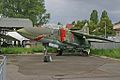
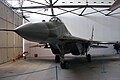
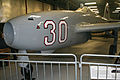
[edit]The collection at Kbely now includes 275 aircraft, of which approximately 110 are on public display at any given time.[2] The museum contains many Czech designed and Czech built aircraft dating from World War I through World War II and up to 1960's with a collection of supersonic jet fighters. Several unique types are on display, including the early 1920s-built Avia BH-11C L-BONK.[3] The period before World War II is represented with aircraft such as the Avia B-534. World War II models include a Soviet-built Ilyushin Il-2 Shturmovik, Avia S-92 (Czech version of Messerschmitt Me-262A Schwalbe in typical Czech colour), Avia CS-92 (Messerschmitt Me-262B Schwalbe in typical German camouflage), Lavochkin La-7. The formerly displayed fully authentic Supermarine Spitfire LF.IX flown by a Czech squadron of the Royal Air Force was transferred to the National Technical Museum in Prague in 2008. The post-World War II period is represented by aircraft such as the Avia S-199 and double seated Avia CS-199 (Messerschmitt Bf 109G with Jumo engine) and the Aero C3A (Siebel Si-204).
In addition to the many military aircraft and helicopters on display, there are several Soviet-designed airliners, some of which were built under licence in Czechoslovakia. Airliners on display include the Avia 14M (Ilyushin Il-14), an Avia 14T, an ex-CSA Ilyushin Il-18 and a CSA Tupolev Tu-104. Light aircraft exhibited include the Czech-built Praga E-114 Air Baby of 1936, a Mraz Sokol, an Aero 45, an Orlican L-40 Meta Sokol and a Zlin 22 Junak. Helicopters on display include a HC-2 Heli-Baby designed by VZLU (Výzkumný a zkušební letecký ústav).[4]
After 1 January 1993, when Czechoslovakia was divided, several aircraft were transferred from the collection to the Slovak Republic for inclusion in that country's aviation museums. Also, in recent years, the museum has exchanged several Czech, and Soviet-designed aircraft for aircraft from the US, UK, Sweden, Switzerland and other countries.[5]
-
 Soyuz 28 return capsule that Vladimír Remek returned to Earth in 1978 as the first non-American and non-Soviet cosmonaut in space
 -

-

-

-
-
-
 Czech Avia B-534
 -
 Czech Avia S-92
 -
-
 Bomber Ilyushin Il-28 Beagle
 -

-
 Gloster Meteor F Mk.8
 -

-

-

-

-

-

.jpg)

.jpg)

.JPG)
.JPG)

.jpg)

.jpg)
.jpg)
.jpg)
,_LKKB_Kbely,_Czech_Republic_PP1185955612.jpg)

.jpg)
.jpg)

See also
[edit]References
[edit]Notes
[edit]- ^ Ogden 2006, p. 48
- ^ "The Aviation Museum Kbely > Basic informations". Vojenský historický ústav Praha. 2006. Retrieved 8 January 2009.
- ^ Hunt 1974, p. 94
- ^ Ogden 2006, pp. 49–52
- ^ Ogden 2006, p. 49
Bibliography
[edit]- Ogden, Bob (2006), Aviation Museums and Collections of Mainland Europe, Air Britain (Historians) Ltd, ISBN 0-85130-375-7
- Hunt, Leslie (1974), Veteran and Vintage Aircraft, The Garnstone Press Ltd, ISBN 0-85511-240-9

| International | |
|---|---|
| National | |

Kbely Aviation Museum
View on GrokipediaHistory
Founding and Early Years
In the mid-1960s, the concept for an aviation museum at Prague's Kbely Air Base emerged as part of broader efforts by military historians and authorities to recover, restore, and preserve Czechoslovakia's aviation heritage, particularly amid the decommissioning of older aircraft from active service.[4] This initiative aligned with the growing interest in documenting the nation's military history during the communist era, leading to the systematic collection of historic planes from air force stocks, museums, and aero clubs.[1] The Kbely Aviation Museum was officially established in 1968 under the auspices of the Vojenský historický ústav (Military History Institute) in Prague, coinciding with the 50th anniversary of Czechoslovakia's founding in 1918 and the parallel milestone for the Czechoslovak Air Force.[1] Its public opening occurred on October 11, 1968, initially as a temporary exhibition that evolved into a permanent institution due to its immediate popularity.[5] The museum was housed in four original hangars of the Wagner-type and Picha-type at the historic Kbely airfield—the country's first military air base, operational since 1918—featuring around 62 aircraft on display from the outset.[1][6] The Military History Institute, formerly linked to the Prague Military District structures, curated the early collections with a primary emphasis on Czechoslovak military aviation from the interwar period (1918–1939), highlighting the evolution of domestic designs and their role in national defense.[1] Key acquisitions included notable pre-World War II examples such as the Avia BH-11C reconnaissance biplane, a 1920s-era aircraft that had competed in international races, and the Avia B-534 fighter biplane, one of the most advanced interceptors produced by the Avia factory in the 1930s.[4] These pieces exemplified early Czech engineering prowess and formed the core of the museum's foundational narrative on interwar aviation innovation. The collection's focus on such artifacts underscored the museum's commitment to preserving tangible links to Czechoslovakia's aeronautical past under state-sponsored communist initiatives.[1]Expansion and Post-Communist Developments
Following the Velvet Revolution in 1989, which ended communist rule in Czechoslovakia, the Kbely Aviation Museum transitioned under a new democratic framework, enabling greater international collaboration and preservation efforts for its collections. The subsequent peaceful division of Czechoslovakia into the Czech Republic and Slovakia on January 1, 1993, prompted the redistribution of national assets, including several aircraft from the museum's holdings to support the establishment of the Slovak Aviation Museum in Košice; notable examples include MiG-21MF fighters that had served in joint Czechoslovak units and were reassigned to Slovak custody.[7][8] These transfers facilitated balanced representation of aviation heritage across the successor states, while the museum pursued international swaps, such as the 2015 exchange of an Ilyushin Il-28 bomber for a Slovak MiG-29 fighter.[9] The museum's collection expanded significantly in the post-communist era, reaching 275 aircraft by the early 2000s, reflecting acquisitions from decommissioned military stocks and private donations; of these, approximately 110 are available for public display at any time, with the remainder in storage or restoration.[1] To accommodate this growth, facilities were enhanced with additional exhibition spaces, including a fifth hangar by the late 2010s, increasing indoor capacity for preserved airframes and reducing exposure to environmental degradation.[2] A key adjustment in 2008 involved the transfer of the Supermarine Spitfire LF.IXe (serial TE565), a World War II-era aircraft flown by the Czech 310th Squadron of the RAF, back to its owner, the National Technical Museum in Prague, to centralize certain exile aviation artifacts.[10] Post-2010 initiatives emphasized conservation and accessibility, supported by European Union-funded programs under the Joint Programming Initiative on Cultural Heritage, which facilitated research into corrosion prevention and environmental monitoring for aircraft heritage at Kbely, including data-driven assessments of hangar conditions.[11] Restoration efforts, often in partnership with entities like LOM Praha, yielded notable returns to display, such as the 2021 unveiling of a renovated Aero L-29 Delfín jet trainer in unique "LERAN" camouflage and an Avia CB-33 (Il-10 variant) attack aircraft, both previously in storage.[12] By 2025, the museum had strengthened its emphasis on Czech aviation developments after 1993, integrating NATO-era equipment alongside enduring displays of Cold War Soviet types like the Tupolev Tu-104 airliner, which has been a fixture since at least the early 2000s and underscores the transition from Warsaw Pact dependencies to modern independent operations.[1][13] These updates, including ongoing restorations like the 2019 return of a McDonnell Douglas F-4 Phantom II, ensure the institution remains a comprehensive repository of national aerospace evolution.[14]Location and Facilities
Site and Accessibility
The Kbely Aviation Museum is located at Prague-Kbely Airport (ICAO: LKKB), approximately 15 km northeast of Prague's city center, on the site of Czechoslovakia's first military airfield established in 1918.[2][1] The museum occupies former air base hangars within this active military facility, operated by the Czech Air Force as the 24th Air Base, amid restricted zones that limit access to designated public areas due to ongoing aviation operations.[15][16] Visitors can access the museum efficiently via public transport from central Prague, with the journey taking 30 to 45 minutes. Take Metro Line C to the Letňany terminus, then transfer to bus lines 185, 259, 280, 302, 375, or 376, alighting at the Letecké Muzeum stop, which is a 3-minute walk from the entrance.[17][18] For those driving, the route from the city center covers about 13 km via northeastern roads such as the D11 expressway, leading to ample free on-site parking approximately 100 meters from the main entrance, with capacity for hundreds of vehicles.[19][20] Admission to the museum is free, with seasonal opening hours typically from 10:00 AM to 6:00 PM, May through September Tuesday to Sunday (closed Mondays), and limited to weekends in October.[2][1] The site includes accessibility features such as ramps for wheelchairs and is suitable for strollers, though visitors near the active military zones must follow posted safety guidelines to ensure secure navigation.[17][21]Hangars and Exhibition Layout
The Kbely Aviation Museum's exhibition spaces are primarily organized within five main hangars, comprising four original historical structures and one modern addition constructed after 2010. The original hangars include two Wagner-type buildings from the 1920s and two Picha-type structures from the 1930s, reflecting the airfield's early military aviation heritage.[22][23] The modern hangar, opened in 2018 as Hangar 43, provides enhanced facilities for displaying and storing sensitive artifacts, including training aircraft, with improved environmental controls to support preservation efforts.[23][24] The hangars are arranged to facilitate a chronological and thematic progression through aviation history, enabling self-guided exploration without congestion through designated one-way paths. The exhibitions cover key periods such as early interwar aviation (1918–1924), the 1925–1938 era of Czech aircraft development, World War II contributions, the jet age, and post-1945 Cold War technology.[22][25][26] Complementing the indoor spaces, an outdoor exhibition area on a fenced apron accommodates larger aircraft unsuitable for hangar storage, such as transport models, with protective weather-resistant coverings to mitigate environmental damage.[27][25] The site's infrastructure includes interconnected walking paths spanning approximately 20,000 square meters of open-air grounds, promoting efficient visitor flow across the former airfield. Active restoration workshops are visible to the public, offering insights into the ongoing maintenance of the collection.[27][28][1]Collections and Exhibits
Aircraft Collection
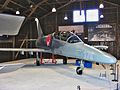
The Kbely Aviation Museum houses a collection of 275 aircraft, with approximately 110 on public display across indoor hangars and outdoor areas, encompassing both military and civilian models spanning from 1918 to the present day. Of these, 10 remain in operational condition, and many others are preserved in flyable states or undergoing restoration, highlighting the museum's emphasis on Czech and Czechoslovak aviation heritage. The displays prioritize indigenous designs from manufacturers like Avia, Aero Vodochody, and Let, alongside significant foreign types that served in Czechoslovak units, providing context for the nation's role in global aviation history.[1] Pre-World War II holdings feature pioneering Czech biplanes and light aircraft that established the foundations of the Czechoslovak Air Force. A notable example is the Avia BH-11C, the first military biplane produced in Czechoslovakia in 1919, which served as a trainer and liaison aircraft while achieving competitive success in international air races, such as the 1926 Coppa d'Italia victory by Czech pilots. The collection also includes multiple examples of the iconic Avia B-534, a 1930s biplane fighter that represented the peak of interwar Czech design innovation, equipping fighter squadrons until the 1940s and symbolizing national technological prowess before the German occupation. Another highlight is the Praga E-114, a lightweight 1930s sport and touring aircraft known as the "Air Baby" for its simplicity and accessibility, reflecting early civilian aviation enthusiasm in Czechoslovakia.[1][4][29] World War II exhibits underscore the resilience of Czech aviation under occupation and in exile, with a mix of captured, produced, and allied aircraft. The Ilyushin Il-2 Shturmovik, a Soviet ground-attack plane, is displayed to honor its use by Czech pilots in the mixed Czechoslovak Air Division on the Eastern Front, where it supported infantry operations against German forces. Post-occupation production is exemplified by the Avia S-92, a Czechoslovak-built variant of the Messerschmitt Me 262, one of only two surviving examples worldwide and a testament to Avia's rapid adaptation of German jet technology for national defense in the late 1940s. Complementing this is the Avia S-199, a postwar derivative of the Bf 109 fighter powered by a Junkers Jumo engine, which entered service with the reconstituted Czechoslovak Air Force and was notably exported to Israel for its 1948 War of Independence.[1][4][30] Postwar and Cold War selections illustrate Czechoslovakia's integration into the Soviet sphere, featuring Warsaw Pact staples alongside domestic innovations. The Tupolev Tu-104, the world's first successful Soviet jet airliner introduced in the 1950s, represents civilian advancements and was operated by Czechoslovak Airlines (CSA) on international routes, marking a milestone in Eastern Bloc commercial aviation. Military highlights include the MiG-15 and MiG-21 fighters, emblematic of the jet age in the Czechoslovak Air Force during the 1950s–1980s, with these Soviet designs underscoring the nation's role in NATO's Cold War adversary alliances. The period also showcases the Praga E-114 in its civilian context and early rotary-wing efforts like the HC-2 Heli-Baby, Czechoslovakia's first domestically designed two-seat light utility helicopter from the 1950s, which pioneered local rotorcraft development for training and liaison duties.[1][31][32] Modern holdings emphasize ongoing Czech contributions to aviation, with prototypes and production models from Aero Vodochody and other firms. The Let L-410 Turbolet, a twin-engine turboprop transport introduced in the 1970s, remains in production today and exemplifies versatile regional operations, having served military and civilian roles across Eastern Europe. Preservation efforts focus on these Czech designs, including Aero Vodochody prototypes that trace the evolution from Cold War jets to contemporary light attack aircraft, ensuring the collection's relevance to current aerospace engineering.[1][33]Engines, Artifacts, and Special Displays
The Kbely Aviation Museum houses a substantial collection of nearly 50 aircraft engines, showcasing the evolution of propulsion technology in Czechoslovak and Czech aviation.[2] Notable examples include the Walter M 105 inline engine, which powered interwar fighters like the Avia B-534; the Junkers Jumo 004 turbojet, a postwar Czechoslovak-built version (designated M-04) from the Avia S-92 jet fighter; and the Soviet Klimov VK-1 centrifugal turbojet, utilized in early Cold War aircraft such as the MiG-15.[1] These engines, displayed in dedicated sections of the hangars, highlight key advancements from piston to jet power, with cutaway models allowing visitors to examine internal components.[26] Complementing the engines are diverse historical artifacts that document the human and cultural aspects of aviation from the founding of the Czechoslovak Air Force in 1918 to its dissolution in 1993. The collection features uniforms, banners, insignia, and other relics spanning military and civilian eras, including personal items that illustrate pilot experiences and operational routines.[1] Models of unbuilt prototypes, such as scale representations of experimental designs from Avia and other firms, provide insight into innovative but unrealized projects from the interwar and postwar periods.[4] These artifacts are arranged thematically to trace the socio-political influences on aviation, emphasizing Czech contributions without delving into full-scale replicas. Special displays enrich the non-airframe exhibits with focused themes on pivotal chapters of aviation history. The Stará Aerovka indoor exhibit, housed in preserved early-20th-century hangars originally used by the Aero company, explores the dawn of Czech flight through artifacts related to gliders, balloons, and pioneering experiments from the 1900s onward.[34] Adjacent is a dedicated corner on Aero's legacy, featuring components from the L-29 Delfín jet trainer, such as instrumentation and structural elements, that underscore the company's role in postwar trainer development.[26] The Cold War section presents radar equipment and ejection seats from Soviet-era aircraft, illustrating defensive and safety technologies deployed by the Czechoslovak People's Army Air Force.[1] As of 2025, rotating exhibits continue to highlight contemporary Czech aviation advancements, including temporary installations on national space contributions—such as memorabilia linked to cosmonaut Vladimír Remek, the first Czechoslovak in orbit—and emerging drone technology, with displays of ultra-modern unmanned aerial vehicles like those from Primoco UAV.[4][35] Educational elements integrate seamlessly, offering interactive simulators that allow hands-on exploration of engine operations and flight dynamics, alongside timelines that chronologically map artifact evolution and technological milestones in Czech aviation.[17] These features enhance visitor engagement by connecting historical relics to practical understanding of aviation's progression.[36]References
- https://commons.wikimedia.org/wiki/File:Tu-104A_Prague.jpg