



Community hub
Recent from talks
Knowledge base stats:
Talk channels stats:
Members stats:
Kebaya
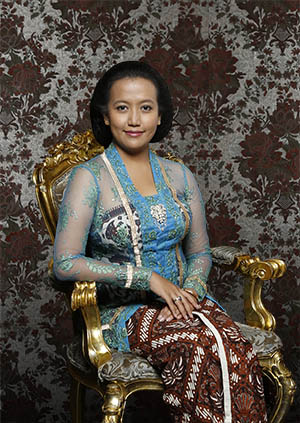
A kebaya is an upper garment traditionally worn by women in Southeast Asia, notably in Brunei, Indonesia, Malaysia, Singapore, and Southern Thailand.
Kebaya is an upper garment opened at the front that is traditionally made from lightweight fabrics such as brocade, cotton, gauze, lace, or voile and sometimes adorned with embroidery. The front is secured with either buttons, pins, or brooches. The lower garment for the outfit is known as sarong, kemben or kain, a long piece of cloth wrapped and tucked around the waist or under the armpits, either made out of batik, ikat, songket or tenun.
Kebaya has become a Southeast Asian fashion icon, with many Southeast Asian flag carrier airlines, including Singapore Airlines, Malaysia Airlines, Royal Brunei Airlines, and Garuda Indonesia adopting the traditional clothing as the uniforms for their female flight attendants.
The link between "kebaya" with "qaba" "a vesture", an Arabic term was first established in the Hobson-Jobson dictionary in 1886. The term was used since the seventh century and was ultimately originated from a Persian word meaning "robe of honour". Portuguese records published in the 16th and 17th century also noted variations of the term cabaya as a Muslim long robe. The term was then introduced to the Malay world and Java through a Portuguese intermediary during the 16th century.
According to the Kamus Dewan, a kebaya is defined as a women's long-sleeved dress opened at the front, secured with buttons, pins, or brooches while the Kamus Besar Bahasa Indonesia described it as a women's long-sleeved upper garment worn with a long piece of cloth. Although the etymology of kebaya has its origin as a dress worn by both men and women, the modern definition of kebaya in both languages has been narrowed to only refer to the women's dress.
There are extensive possibilities of the origin of kebaya with most indicating its roots in the Middle East. The connection between kebaya with Arabic qaba, "a long loose jacket" was first established by orientalist Henry Yule and Arthur Burnell in 1886. Arabic clothing was known since the seventh century, with historical records even mentioning that the Islamic Prophet Muhammad received gifts of aqbiya (plural of qaba) on several occasions. Scholars attributed that Persian is the ultimate origin of qaba. With the spread of Islam, the term and clothing was not only known in Arabic but also Persian, Turkish and Urdu. Due to its resemblance, many sources stated that kebaya has its origin from Muslim clothing, namely qaba, habaya, al akibiya al turkiyya and djubba. The claim that kebaya may have its origins from the Arab World is highly possible as Islam was firmly established in the Malay world in the 15th century when women began to cover up in reaction to the Islamic dress code. Before Islam, local women dressed with fewer layers because of the hot and humid climate and the pre-Islamic religion of the Malays did not impose such restrictions. The Malaccan-Portuguese explorer, Manuel Godinho de Erédia, suggests that the wearing of cabayas (plural of cabaya) were brought to Southeast Asia by Arab and Egyptian merchants as early as 1618.
The detailed description of cabaya can be seen in the 19th-century Hobson-Jobson dictionary. The Anglo-Indian dictionary describes cabaya as a word of Asian origin, referring to a surcoat or a long tunic of muslin worn by the Indian upper classes. The term was likely to be introduced into the subcontinent by the Portuguese. Several Portuguese records published in the 16th and 17th century also noted caba, cabaya and cabaia as a Muslim long robe worn by the ruling class of India as well as the Middle East. The earliest use of the word dates to the 1540s when the Portuguese explorer, Fernão Mendes Pinto visited India. It was also mentioned that the Prince Dharmapala of Kotte was the first to be introduced to the cabaya by the Portuguese, where it was worn by the Portuguese royalty during royal occasions. Later, King Vimaladharmasuriya of Kandy established it as the upper garment for Sri Lankan royalty signifying the changing of attitudes and loyalty to the Portuguese. Once Goa was occupied by the Portuguese in 1510, the Portuguese influences extended from the India Subcontinent to the Southeast Asia Archipelago. The term was then introduced to the archipelago to refer to a light cotton surcoat worn by both European men and women.
After the capture of Malacca in 1511, the cabaya worn by the Portuguese settlers in Portuguese Malacca (1511–1641) took the fancy of local Malay women, especially in Johor and the east coast of Malay Peninsula. It was popularized by the Chinese Peranakan in Malacca. This perhaps encouraged by their Chinese husbands as this style of clothing was considered appropriate and not that different from Chinese style clothing. Peter Mundy, a British writer who visited Goa in the 1630s, also stated that women in Malacca dressed similar to women in Goa. The influences of the Portuguese and Indian can be observed by the kebaya worn in Malacca, thus the possibilities that the term "cabaya" and the wearing of the dress was introduced to Malacca by the Portuguese or Portuguese Eurasians from India is higher than by the Arabs or Chinese.
Hub AI
Kebaya AI simulator
(@Kebaya_simulator)
Kebaya
A kebaya is an upper garment traditionally worn by women in Southeast Asia, notably in Brunei, Indonesia, Malaysia, Singapore, and Southern Thailand.
Kebaya is an upper garment opened at the front that is traditionally made from lightweight fabrics such as brocade, cotton, gauze, lace, or voile and sometimes adorned with embroidery. The front is secured with either buttons, pins, or brooches. The lower garment for the outfit is known as sarong, kemben or kain, a long piece of cloth wrapped and tucked around the waist or under the armpits, either made out of batik, ikat, songket or tenun.
Kebaya has become a Southeast Asian fashion icon, with many Southeast Asian flag carrier airlines, including Singapore Airlines, Malaysia Airlines, Royal Brunei Airlines, and Garuda Indonesia adopting the traditional clothing as the uniforms for their female flight attendants.
The link between "kebaya" with "qaba" "a vesture", an Arabic term was first established in the Hobson-Jobson dictionary in 1886. The term was used since the seventh century and was ultimately originated from a Persian word meaning "robe of honour". Portuguese records published in the 16th and 17th century also noted variations of the term cabaya as a Muslim long robe. The term was then introduced to the Malay world and Java through a Portuguese intermediary during the 16th century.
According to the Kamus Dewan, a kebaya is defined as a women's long-sleeved dress opened at the front, secured with buttons, pins, or brooches while the Kamus Besar Bahasa Indonesia described it as a women's long-sleeved upper garment worn with a long piece of cloth. Although the etymology of kebaya has its origin as a dress worn by both men and women, the modern definition of kebaya in both languages has been narrowed to only refer to the women's dress.
There are extensive possibilities of the origin of kebaya with most indicating its roots in the Middle East. The connection between kebaya with Arabic qaba, "a long loose jacket" was first established by orientalist Henry Yule and Arthur Burnell in 1886. Arabic clothing was known since the seventh century, with historical records even mentioning that the Islamic Prophet Muhammad received gifts of aqbiya (plural of qaba) on several occasions. Scholars attributed that Persian is the ultimate origin of qaba. With the spread of Islam, the term and clothing was not only known in Arabic but also Persian, Turkish and Urdu. Due to its resemblance, many sources stated that kebaya has its origin from Muslim clothing, namely qaba, habaya, al akibiya al turkiyya and djubba. The claim that kebaya may have its origins from the Arab World is highly possible as Islam was firmly established in the Malay world in the 15th century when women began to cover up in reaction to the Islamic dress code. Before Islam, local women dressed with fewer layers because of the hot and humid climate and the pre-Islamic religion of the Malays did not impose such restrictions. The Malaccan-Portuguese explorer, Manuel Godinho de Erédia, suggests that the wearing of cabayas (plural of cabaya) were brought to Southeast Asia by Arab and Egyptian merchants as early as 1618.
The detailed description of cabaya can be seen in the 19th-century Hobson-Jobson dictionary. The Anglo-Indian dictionary describes cabaya as a word of Asian origin, referring to a surcoat or a long tunic of muslin worn by the Indian upper classes. The term was likely to be introduced into the subcontinent by the Portuguese. Several Portuguese records published in the 16th and 17th century also noted caba, cabaya and cabaia as a Muslim long robe worn by the ruling class of India as well as the Middle East. The earliest use of the word dates to the 1540s when the Portuguese explorer, Fernão Mendes Pinto visited India. It was also mentioned that the Prince Dharmapala of Kotte was the first to be introduced to the cabaya by the Portuguese, where it was worn by the Portuguese royalty during royal occasions. Later, King Vimaladharmasuriya of Kandy established it as the upper garment for Sri Lankan royalty signifying the changing of attitudes and loyalty to the Portuguese. Once Goa was occupied by the Portuguese in 1510, the Portuguese influences extended from the India Subcontinent to the Southeast Asia Archipelago. The term was then introduced to the archipelago to refer to a light cotton surcoat worn by both European men and women.
After the capture of Malacca in 1511, the cabaya worn by the Portuguese settlers in Portuguese Malacca (1511–1641) took the fancy of local Malay women, especially in Johor and the east coast of Malay Peninsula. It was popularized by the Chinese Peranakan in Malacca. This perhaps encouraged by their Chinese husbands as this style of clothing was considered appropriate and not that different from Chinese style clothing. Peter Mundy, a British writer who visited Goa in the 1630s, also stated that women in Malacca dressed similar to women in Goa. The influences of the Portuguese and Indian can be observed by the kebaya worn in Malacca, thus the possibilities that the term "cabaya" and the wearing of the dress was introduced to Malacca by the Portuguese or Portuguese Eurasians from India is higher than by the Arabs or Chinese.