
Recent from talks
Kennebunkport, Maine
Knowledge base stats:
Talk channels stats:
Members stats:
Kennebunkport, Maine
Kennebunkport /ˌkɛniˈbʌŋkˌpɔːrt/ is a resort town in York County, Maine, United States. The population was 3,629 at the 2020 census. It is part of the Portland metropolitan area.
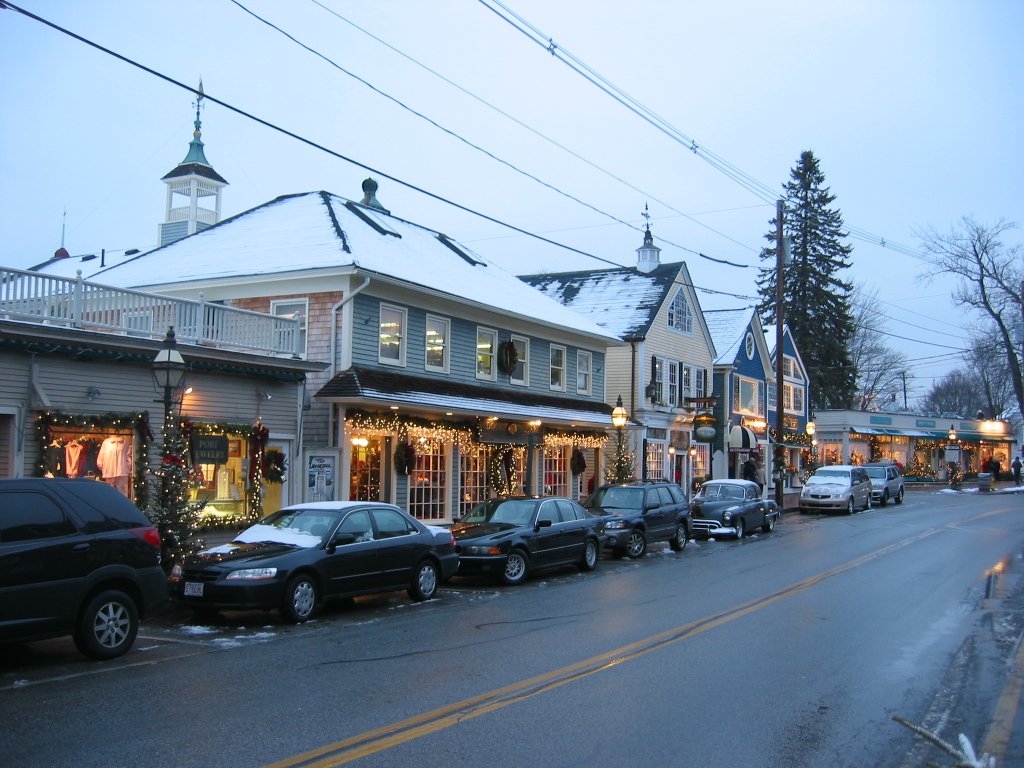
The town center, the area in and around Dock Square, is located along the Kennebunk River, approximately 1 mile (1.6 km) from the mouth of the river on the Atlantic Ocean. Historically a shipbuilding and fishing village, for well over a century the town has been a popular summer colony and seaside tourist destination. The Dock Square area has a district of souvenir shops, art galleries, schooner attractions, seafood restaurants, and bed and breakfasts. Cape Porpoise, while retaining its identity as a fishing harbor, has a very small village area with several restaurants and stores, as well as a church, small library, and art gallery. The Kennebunkport Christmas Prelude takes place annually in the town, beginning either in late November or early December.
Kennebunkport has a reputation as a summer haven for the upper class and is one of the wealthiest communities in the state of Maine. The Municipality of Kennebunkport includes the constituent villages of Kennebunkport Village, Cape Arundel & Colony Beach, the Cottage Coast, Wilde's District (Wildwood), Goose Rocks Beach, Tributts Creek, Cape Porpoise Village, North Village Crossing (Townhouse Corner), among various other newer developments. The town is the home of Walker's Point, a summer estate of the Bush family. Kennebunkport and neighboring towns Kennebunk and Arundel comprise school district RSU 21.
Archeological evidence exists of activity in the area now known as Cape Porpoise 7000 years ago. In 1602, the time of contact with Europeans, it was occupied by communities of the Almouchiquois people, who referred to the area as Nampscoscock. According to 1640 land records, a sagamore of that community was "Thomas" Chabinock.
Kennebunkport was first incorporated in 1653 as Cape Porpus, subject to the government of the Massachusetts Bay Colony (Maine was admitted to the Union in 1820 as part of the Missouri Compromise). Due to Abenaki Indian resistance to colonial expansion, European settlers abandoned the town by 1689 and did not return for at least ten years. The Wabanaki Confederacy again expelled English from the area from 1703 to 1717, and continued violent resistance to colonization until the end of King George's War in 1748.
Indian settlements continued to be present and interspersed with English colonial settlements during that time and later during Maine statehood. When the United States Congress was debating the Indian Removal Act, residents of Kennebunk sent to Congress a statement advocating for the preservation of Indian rights and property. A settlement of Penobscot and Passamaquoddy continued until at least the 1880s.
The town was renamed Arundel in 1701, and the town center located inland at Burbank Hill.
On August 8, 1782, Arundel was under attack by two loyalist vessels: the 16 gun brig "Miriam" [Richard Pomroy] and the schooner "Hammond" [Doty] captured two unnamed vessels from Newbury Massachusetts (a schooner and a sloop). The sloop was burned after it went aground on Goat Island. A battle took place between the vessels and the militia ashore. The Patriot casualties were Captain James Burnham killed in action; civilian Samuel Wildes was wounded when he demanded the Loyalists return the vessels they had taken. In 1821 the town was renamed again, this time to Kennebunkport in reflection to its economy becoming one of shipbuilding and trade along the Kennebunk River.
By the 1870s the town had developed as a popular summer destination, with both hotels and homes constructed along its coastline. Cape Arundel, Cape Porpoise, and Beachwood (now called Goose Rocks) were some of the early summer colonies; although Cape Porpoise was, and still is, a working fishing harbor. Since 1939, Kennebunkport has been home to the Seashore Trolley Museum.
Hub AI
Kennebunkport, Maine AI simulator
(@Kennebunkport, Maine_simulator)
Kennebunkport, Maine
Kennebunkport /ˌkɛniˈbʌŋkˌpɔːrt/ is a resort town in York County, Maine, United States. The population was 3,629 at the 2020 census. It is part of the Portland metropolitan area.
The town center, the area in and around Dock Square, is located along the Kennebunk River, approximately 1 mile (1.6 km) from the mouth of the river on the Atlantic Ocean. Historically a shipbuilding and fishing village, for well over a century the town has been a popular summer colony and seaside tourist destination. The Dock Square area has a district of souvenir shops, art galleries, schooner attractions, seafood restaurants, and bed and breakfasts. Cape Porpoise, while retaining its identity as a fishing harbor, has a very small village area with several restaurants and stores, as well as a church, small library, and art gallery. The Kennebunkport Christmas Prelude takes place annually in the town, beginning either in late November or early December.
Kennebunkport has a reputation as a summer haven for the upper class and is one of the wealthiest communities in the state of Maine. The Municipality of Kennebunkport includes the constituent villages of Kennebunkport Village, Cape Arundel & Colony Beach, the Cottage Coast, Wilde's District (Wildwood), Goose Rocks Beach, Tributts Creek, Cape Porpoise Village, North Village Crossing (Townhouse Corner), among various other newer developments. The town is the home of Walker's Point, a summer estate of the Bush family. Kennebunkport and neighboring towns Kennebunk and Arundel comprise school district RSU 21.
Archeological evidence exists of activity in the area now known as Cape Porpoise 7000 years ago. In 1602, the time of contact with Europeans, it was occupied by communities of the Almouchiquois people, who referred to the area as Nampscoscock. According to 1640 land records, a sagamore of that community was "Thomas" Chabinock.
Kennebunkport was first incorporated in 1653 as Cape Porpus, subject to the government of the Massachusetts Bay Colony (Maine was admitted to the Union in 1820 as part of the Missouri Compromise). Due to Abenaki Indian resistance to colonial expansion, European settlers abandoned the town by 1689 and did not return for at least ten years. The Wabanaki Confederacy again expelled English from the area from 1703 to 1717, and continued violent resistance to colonization until the end of King George's War in 1748.
Indian settlements continued to be present and interspersed with English colonial settlements during that time and later during Maine statehood. When the United States Congress was debating the Indian Removal Act, residents of Kennebunk sent to Congress a statement advocating for the preservation of Indian rights and property. A settlement of Penobscot and Passamaquoddy continued until at least the 1880s.
The town was renamed Arundel in 1701, and the town center located inland at Burbank Hill.
On August 8, 1782, Arundel was under attack by two loyalist vessels: the 16 gun brig "Miriam" [Richard Pomroy] and the schooner "Hammond" [Doty] captured two unnamed vessels from Newbury Massachusetts (a schooner and a sloop). The sloop was burned after it went aground on Goat Island. A battle took place between the vessels and the militia ashore. The Patriot casualties were Captain James Burnham killed in action; civilian Samuel Wildes was wounded when he demanded the Loyalists return the vessels they had taken. In 1821 the town was renamed again, this time to Kennebunkport in reflection to its economy becoming one of shipbuilding and trade along the Kennebunk River.
By the 1870s the town had developed as a popular summer destination, with both hotels and homes constructed along its coastline. Cape Arundel, Cape Porpoise, and Beachwood (now called Goose Rocks) were some of the early summer colonies; although Cape Porpoise was, and still is, a working fishing harbor. Since 1939, Kennebunkport has been home to the Seashore Trolley Museum.
Recent media