


Community hub
Recent from talks
Contribute something
Nothing was collected or created yet.
Kenneth Copeland
View on Wikipedia
 | This article may rely excessively on sources too closely associated with the subject, potentially preventing the article from being verifiable and neutral. (September 2025) |
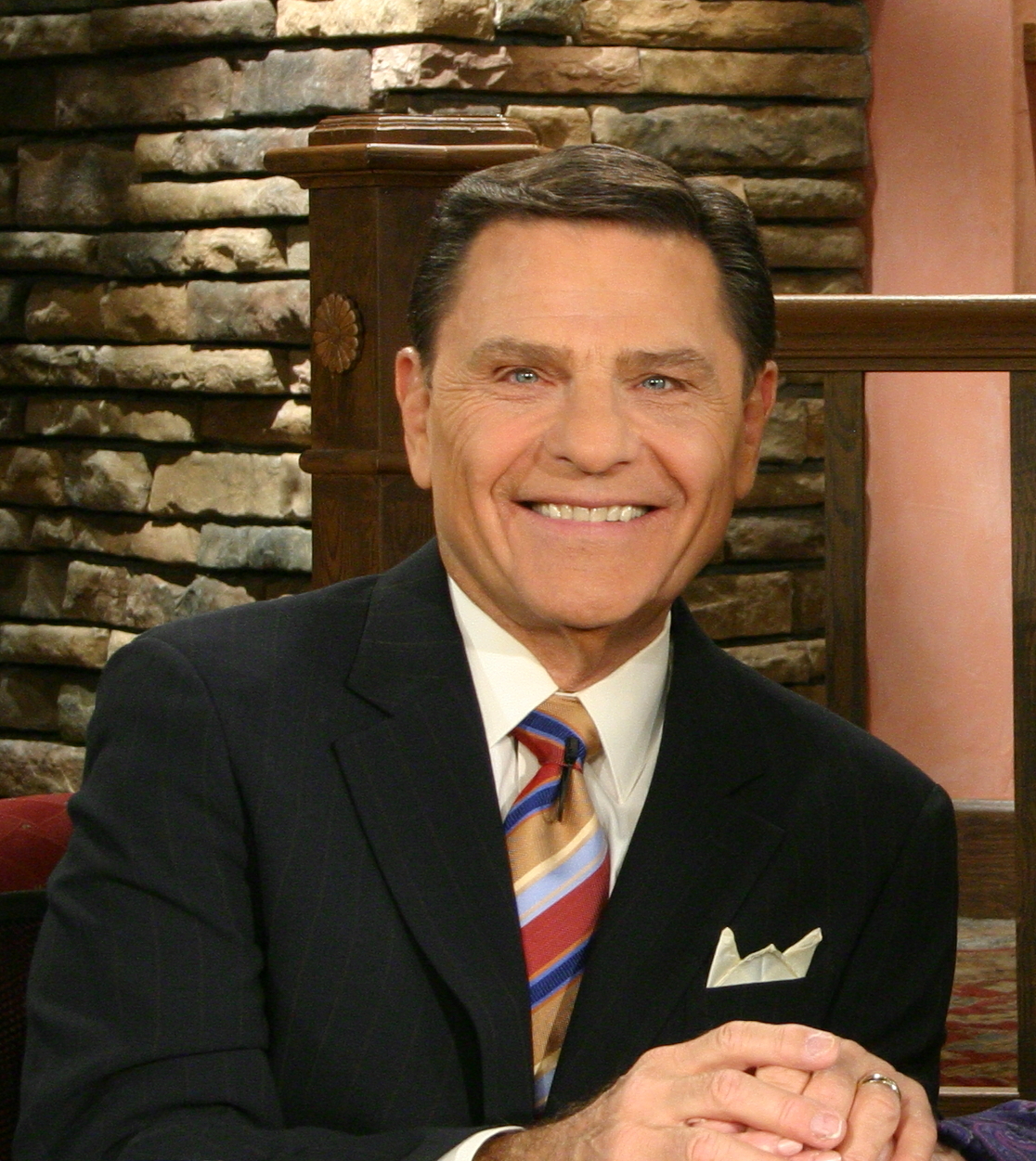
Kenneth Max Copeland (born December 6, 1936) is an American televangelist associated with the charismatic movement. He is the founder of Eagle Mountain International Church Inc. (EMIC), which is based in Tarrant County, Texas. Copeland has also written several books and other resources, and is known for his broadcast The Believer's Voice of Victory.
Key Information


Copeland preaches prosperity theology and is part of the Word of Faith movement, which teaches that divine favor is expressed in material and financial blessing, and that giving to ministries unlocks this favor.
Early life and career
[edit]Kenneth Max Copeland was born on December 6, 1936,[1] and raised in West Texas, near a United States Army Air Forces airfield. This inspired him to become a pilot.[1][2]
Copeland was a recording artist on the Imperial Records label during the 1950s, recording a number of singles including "Pledge of Love", which charted in the Billboard Top 40 on April 20, 1957, staying on the charts for 15 weeks and peaking at No. 17.[3]
In the fall of 1967, he enrolled in Oral Roberts University, where he soon became pilot and chauffeur to Oral Roberts.[4]
Kenneth Copeland Ministries
[edit]
In 1967, after attending Kenneth E. Hagin's Pastor Seminars, Copeland and his wife Gloria founded Kenneth Copeland Ministries (KCM) in Fort Worth, Texas.[5] The ministry's motto is "Jesus is Lord".[6] Kenneth Copeland Ministries has six international offices in Canada, Africa, Asia, Australia, Europe, and Ukraine.[7] He preaches prosperity theology and is part of the Word of Faith movement, which teaches that financial blessing and physical well-being are the will of God for believers, and that material and financial success are a sign of divine favor.[8] This may be unlocked through giving to ministry, and Copeland has written that parishioners will get a "hundredfold" return on their investment through "giving to God" by offering to his ministry.[9]
Television and other programming
[edit]Since 1967, Copeland's ministry has held three-to-six-day conventions across the United States.[10] KCM still holds an annual Southwest Believer's Convention in his hometown of Fort Worth during the first week of August.[11] Kenneth and Gloria Copeland also preach and minister at other conventions and conferences throughout the world.[12]
On May 27, 1971, KCM began a one-hour television program called The Word of Faith. In 1972, a television program called The Prayer Group was launched. This was a half-hour television program aired across the United States.[13]
Believer's Voice of Victory
[edit]In 1989, the weekly show The Word of Faith was replaced by a daily series called Believer's Voice of Victory.[14][15]
Victory Channel
[edit]In 2015, KCM launched the Believer's Voice of Victory Network on channel 265 on Dish Network.[16] Believer's Voice of Victory Network was renamed Victory Channel in 2019 and is available over-the-air and on some cable providers.[17] On October 2, 2020, the Believer's Voice of Victory (BVOV) stopped broadcasting on the Trinity Broadcasting Network (TBN).[18] At the start of 2022, it was added on several national cable systems under a new channel lease with Olympusat, which had previously offered Hillsong Channel and Living Faith Network, then Bulldog Shopping Network, on the channel space until the fall of 2025, when the ministry ended those agreements to focus on free streaming venues and satellite.[19]
Pastor Gene Bailey hosts the Victory Channel's popular FlashPoint current-events prophecy program and reaches approximately 11,000 households. FlashPoint commonly features nationally known ministry leaders such as Lance Wallnau and Hank Kunneman; other guests have included Donald Trump, Charlie Kirk, Marjorie Taylor Greene and former Ambassador to Israel David Friedman.[20][21]
Facilities and aircraft
[edit]Kenneth Copeland Ministries is located in Fort Worth, Texas, on a 33-acre (13 ha) property that was once Marine Corps Air Station Eagle Mountain Lake (MCAS Eagle Mountain Lake), a United States Marine Corps air base, valued in 2008 at $554,160 (equivalent to $809,313 in 2024) by Tarrant Appraisal District. The site includes the Eagle Mountain International Church,[22] television and radio production facilities, warehouse and distribution facilities, residences for the Copeland family, and Kenneth Copeland Airport.[23] As of 2024, Federal Aviation Administration (FAA) records indicated that no aircraft were based at the airport and that it had a single usable runway;[24] that same year, KCM told the Fort Worth Star-Telegram that it was raising money to resurface the second runway so it could be used again. It was using the former Marine Corps hospital building as a medical clinic for church members.[25] In 2008, approximately 500 people were employed by KCM.[23] Copeland's son John Copeland was the ministry's chief operating officer until his divorce from Marty Copeland in 2018.[26] He remains a consultant to the ministry.[citation needed]
KCM owns several business jets, including a 1998 Cessna 550 Citation Bravo, which it received from a donor in October 2007 and is used for domestic flights, and a 2005 Cessna 750 Citation X, which it uses for international flights. In 2018, KCM acquired a Gulfstream V that was formerly owned by Tyler Perry,[27] and was restoring a 1962 Beech H-18 Twin, which the ministry plans to use for disaster relief efforts.[28][29]
Kenneth Copeland Bible College
[edit]Kenneth Copeland Bible College (KCBC) is located on the property of Kenneth Copeland Ministries and Eagle Mountain International Church (EMIC). KCBC is an accredited member with Transworld Accrediting Commission International.[30] On August 28, 2003, Kenneth Copeland Bible College opened an extension campus in Langley, British Columbia.[31]
Israel
[edit]Copeland and KCM have been public and vocal supporters of Israel for several decades. On August 17, 2022, the President of Israel, Isaac Herzog, called and personally thanked Copeland and KCM for their support of Ukrainian and Russian Jews.[32] In 2020 he was listed by the Israel Allies Foundation as one of the top supporters of Israel along with Paula White, John Hagee, Mike Huckabee, and other Christian leaders.[33] Copeland and other Christian leaders such as Greg Laurie and John Hagee have received criticism for their support of Israel.[34]
Personal life
[edit]Copeland has been married three times. His first marriage was to Ivy Bodiford in October 1955. They had one child,[35] and divorced in 1958. He was then married to Cynthia Davis from 1958 to 1961.
Copeland married Gloria (née Neece) in 1963.[36] They are the parents of John Copeland and Kellie Copeland. Gloria co-hosts the ministry's flagship broadcast, The Believer's Voice of Victory, alongside her husband.
Kellie preaches throughout the United States, as does Copeland's daughter Terri, who also preaches at Eagle Mountain International Church, which is pastored by her husband George Pearsons.[citation needed]
Copeland has amassed significant wealth during his career and has referred to himself as a "very wealthy man".[37] The Houston Chronicle referred to him as the wealthiest pastor in America, allegedly having a net worth of $750 million in 2021.[38][39] As of 2024, Copeland's net worth was estimated to be $300 million.[40]
Donald Trump advisory board
[edit]Copeland sat on the evangelical executive advisory board that Donald Trump assembled during his campaign for the presidency.[41] Appointment to the board did not require endorsement of his bid for presidency,[42] and Copeland clarified that he did not endorse Trump at the time.[43] Before the 2016 election, Copeland said that Christians who did not vote for Trump would be guilty of murder, referring to the pro-choice stance of Hillary Clinton.[44] After a state dinner at the White House that Copeland attended, he stated in an interview that Trump was "led by the Spirit of God", and that his most important legacy as president would be the appointments of conservative judges.[45]
On November 5, 2022, Copeland spoke at a Donald Trump rally in Latrobe, Pennsylvania, stating that Trump is the only president he has ever seen wear the red, white, and blue in office.[46] During the 2024 Southwest Believers' Convention in Fort Worth, Texas, Copeland told the thousands in attendance and online that voting is a sacred trust.[47] His involvement in politics as a nationally prominent ministry leader has drawn both praise and criticism.
On April 16, 2025, Copeland took part in an invitation-only White House Easter Dinner, hosted by the White House Faith Office. Other notable leaders at the dinner included Franklin Graham, Jentezen Franklin, Alveda King, Greg Laurie, and Paula White.[48]
Controversy
[edit] |
KCM has been criticized for its use of private aircraft. KCM promised from 2006 to 2010 to create an aviation relief assistance program called Angel Flight 44, to help Haiti.[49] A spokesperson responded "This was not a specific promise with a timeline attached", and said that the money was spent on airplane repairs.[49] In 2008, the ministry owned five airplanes[50] and continued to purchase more.[51] In February 2007, Copeland was accused of using KCM's Citation X for personal vacations.[52] The Copelands' financial records and a list of KCM's board of directors are not publicly available; the information is held in confidence by the Internal Revenue Service.[52] Responding to media questions, Copeland pointed to an accounting firm's declaration that his jet travel complied with federal tax laws.[52]
In December 2008, KCM's Citation Bravo was denied tax exemption after KCM refused to submit a standardized Texas Comptroller form that some county appraisal districts use to make determinations, which would have required making public the salary of all ministry staff.[53][54] KCM subsequently filed suit with the Tarrant Appraisal District in January 2009 and its petition to have the aircraft's tax-exempt status restored was granted in March 2010.[54][55][56]
KCM has utilized an FAA program that blocks enrolled aircraft on flight tracking websites; in 2010, the flights of five of the ministry's aircraft were kept private, including the Citation X and a North American T-28 Trojan.[57] United States Senator Chuck Grassley has questioned some of the flights taken by these aircraft, including layovers in Maui, Fiji, and Honolulu.[57] The ministries say that the stopovers were for preaching or for allowing pilot rest.[57]
Copeland raised funds for the building of a hangar, upgrading of the runway, and maintenance.[51] Copeland's and other televangelists' use of private jets, luxury cars and lavish houses has been widely criticized.[37][58][59] In 2015, Copeland, in a broadcast alongside fellow televangelist Jesse Duplantis, defended the use of private jets as a necessary part of their ministry.[37][60][61][62]
Mike Huckabee, a 2008 Republican presidential primary candidate who made six appearances on Copeland's program Believer's Voice of Victory[63] rented KCM's facilities for a fundraiser, which was criticized by the Trinity Foundation.[64] As a result of the Huckabee appearances, KCM was one of six ministries investigated in the United States Senate inquiry into the tax-exempt status of religious organizations.[65] KCM was one of four that did not co-operate or volunteer to make reforms.[66][67] The investigation did not conclude the Copelands had done anything wrong.[68][69]
In 2013, a measles outbreak with 25 confirmed cases in Tarrant County, Texas, was attributed in the press to anti-vaccination sentiments expressed by members of the Copeland Ministries.[70] The church denied making any such statements and urged members to get vaccinations, even offering free immunizations through the church itself.[71] Pastor Terri Copeland Pearsons, who is Kenneth Copeland's daughter, offered free vaccination clinics and advised those who did not attend one of the clinics to quarantine themselves at home for two weeks. In a statement on the church website, Pearsons said she was not against immunizations, but also raised concerns about them.[72]
"Some people think I am against immunizations, but that is not true, vaccinations help cut the mortality rate enormously. I believe it is wrong to be against vaccinations. The concerns we have had are primarily with very young children who have family history of autism and with bundling too many immunizations at one time. There is no indication of the autism connection with vaccinations in older children. Furthermore, the new MMR vaccination is without thimerosal (mercury), which has also been a concern to many."[73]
Copeland and his wife were featured in a 2015 episode of Last Week Tonight with John Oliver.[74][75][76] John Oliver criticized the Copelands for using tax laws to live in a $6.3 million mansion as the parsonage allowance for their home is not subject to income taxes,[77] for using church donations to buy a $20 million jet that was used for trips to a ski resort and a private game ranch,[78] and for promotion of healing through faith and skepticism of medicine.
In May 2019, he received criticism for his lavish lifestyle after Inside Edition released an interview where he defended his purchase of a private jet. He stated "If I flew commercial, I'd have to stop 65% of what I'm doing" and he additionally defended a previous comment where he said that he did not fly commercial because he likened it to flying with demons.[79]
Copeland had drawn criticism for his comments on the Joe Biden presidency.[80][81] He also gained attention during the COVID-19 pandemic,[82] arguing pastors should not cancel services,[83][84] and repeatedly saying the pandemic had ended or would end soon.[85] On March 29, 2020, in a televised sermon, Copeland "executed judgment" on COVID-19. He claimed that it was "finished" and "over" and that the US was now "healed and well again".[85] In another sermon shortly thereafter, he claimed to destroy the virus with the "wind of God".[85] He urged followers to continue to give tithes to his ministry even if they had lost their jobs through economic hardship brought about by the pandemic.[86]
On August 3–8, 2020, the Kenneth Copeland Ministries hosted the Southwest Believers' Conference at the Fort Worth Convention Center in Fort Worth, Texas, despite restrictions on social gatherings to limit the spread of the pandemic. Local leaders criticized the event, attended by hundreds of people, but were unable to enforce public health restrictions, because religious gatherings were exempt under Governor Greg Abbott's executive orders.[87][88]
Selected bibliography
[edit]- From Faith to Faith: A Daily Guide to Victory. 1991. ISBN 978-0-88114-843-5
- A Ceremony of Marriage. 2012. ISBN 978-0-938458-15-9
- The Power of the Tongue. 2012. ISBN 978-1-57562-113-5
- Blessed to Be a Blessing: Understanding True, Biblical Prosperity. 2012. ISBN 978-1-60463-016-9
- Raising Children Without Fear. 2012. ISBN 978-1-60683-899-0
- Six Steps to Excellence in Ministry. 2012. ISBN 978-1-57562-104-3
- Pursuit of His Presence: Daily Devotions to Strengthen Your Walk With God 2012. ISBN 978-1-57562-435-8
- A House Not Divided: Defeating the Spirit of Division. 2016. ISBN 978-1-60463-280-4
- God, the Covenant and the Contradiction: Accessing God's Promises of Healing, Peace and Provision. 2023. ISBN 978-1-60463-508-9
See also
[edit]References
[edit]- ^ a b "Kenneth Copeland". biographyministries.com. 2008. Archived from the original on October 16, 2008. Retrieved December 17, 2008.
- ^ Gorski, Eric (July 27, 2008). "AP IMPACT: Relatives of televangelist prosper". NewsOK.com. Archived from the original on December 28, 2020. Retrieved April 18, 2018.
- ^ Whitburn, Joel (2000). The Billboard Book of Top 40 Hits. Billboard Books. p. 151. ISBN 9780823076901. Archived from the original on December 28, 2020. Retrieved April 23, 2020.
- ^ "ORU alumni". Archived from the original on February 10, 2009. Retrieved April 16, 2017.
- ^ Randall Herbert Balmer, Encyclopedia of Evangelicalism: Revised and expanded edition, Baylor University Press, USA, 2004, p. 189
- ^ "Kenneth Copeland Ministries – About Us". Kenneth Copeland Ministries. Archived from the original on June 6, 2019. Retrieved June 26, 2019.
- ^ "Kenneth Copeland Ministries: A Brief History | Kenneth Copeland Ministries". www.kcm.org. Retrieved July 10, 2024.
- ^ Wilson, J. Matthew (2007). From Pews to Polling Places: Faith and Politics in the American Religious Mosaic. Georgetown University Press. ISBN 978-1-58901-172-4.
- ^ Burton, Tara Isabella (September 1, 2017). "The prosperity gospel, explained: Why Joel Osteen believes that prayer can make you rich". Vox. Archived from the original on March 11, 2020. Retrieved March 12, 2020.
- ^ Kate Bowler, Blessed: A History of the American Prosperity Gospel, OUP USA, 2013, p. 82
- ^ "2022 Southwest Believers' Convention | Kenneth Copeland Ministries". www.kcm.org. Retrieved January 12, 2022.
- ^ "2022 Branson Victory Campaign | Kenneth Copeland Ministries". www.kcm.org. Retrieved February 22, 2022.
- ^ "Reaching the World Through Television". Believers Voice of Victory Magazine. 2020.
- ^ "The Founding of a Ministry".
- ^ "Kenneth Copeland Ministries History: Founding, Timeline, and Milestones - Zippia". August 27, 2020.
- ^ "dish general channel linup" (PDF). dish. Archived (PDF) from the original on April 14, 2016. Retrieved March 29, 2016.
- ^ "About - VICTORY". Archived from the original on December 28, 2020. Retrieved May 14, 2020.
- ^ "Effective Oct. 2, 2020, the Believer's Voice of Victory (BVOV) broadcast will no longer air on the Trinity Broadcasting Network (TBN)". Kenneth Copeland Ministries. August 3, 2020. Archived from the original on December 28, 2020. Retrieved August 30, 2020.
- ^ "VICTORY Channel Makes a Broadcasting Change" (Press release). Kenneth Copeland Ministries. August 5, 2025. Retrieved September 23, 2025.
- ^ Hixenbaugh, Mike (May 3, 2024). "Inside the Christian TV show rallying Trump superfans with apocalyptic warnings". NBC News. Retrieved September 27, 2024.
- ^ Rabey, Steve (February 2, 2024). "With FlashPoint Live, roster of Pentecostal 'prophets' hits the road for Trump". Religion News Service. Retrieved September 27, 2024.
- ^ "Eagle Mountain International Church, Inc.: Texas (US): OpenCorporates". opencorporates.com. Retrieved December 3, 2021.
- ^ a b "Televangelist's family prospers from ministry". NBC News. July 27, 2008. Retrieved May 3, 2024.
- ^ FAA Airport Form 5010 for 4T2 PDF. Federal Aviation Administration. Effective 31 October 2024.
- ^ Gonzales, Ella (September 28, 2024). "A rare glimpse inside the Eagle Mountain Lake site where a long-gone base helped win WWII". Retrieved November 25, 2024.
- ^ "Register of Actions; Case No. 17-0439-393: In the Matter of the Marriage of J.D.C. and M.J.C. and In the Interest of J.D.C. and A.N.C., Children". dentoncounty.gov. Retrieved January 4, 2025.
- ^ Gutierrez, Lisa (July 15, 2019). "'Word from the Lord': Televangelist's ministry buys Tyler Perry's Gulfstream jet". The Kansas City Star. Retrieved December 13, 2022.
- ^ "Kenneth Copeland Airport FBOs (Fort Worth, TX) [4T2] ✈ FlightAware". Archived from the original on April 17, 2017. Retrieved April 16, 2017.
- ^ "FAQ: Why does Kenneth Copeland Ministries own private aircraft? What types of aircraft are they? Why don't Kenneth and Gloria fly on commercial airlines?". Believers Stand United. Archived from the original on November 4, 2013. Retrieved May 14, 2013.
- ^ "Accreditation Status | Transworld Accrediting Commission International". Retrieved September 1, 2021.
- ^ Partida, Erica (November 15, 2023). "Vision Update: KCBC Canada Welcomes First Class!". KCM Blog. Retrieved December 4, 2023.
- ^ Kenneth Copeland Ministries (August 18, 2022). President of Israel Thanks KCM for Helping Ukrainian Jews Make Aliyah. Retrieved May 28, 2024 – via YouTube.
- ^ "Israel's Top 50 Christian Allies". Israel Allies Foundation. Retrieved May 28, 2024.
- ^ "5 reasons why evangelicals are rallying behind Israel". Reckon. November 10, 2023. Retrieved May 28, 2024.
- ^ "Lubbock County Marriage Certificate". erecord.co.lubbock.tx.us. Archived from the original on December 28, 2020. Retrieved April 18, 2018.
- ^ Carvajal, Edduin (September 28, 2020). "Kenneth and Gloria Copeland Have Been Married for over 50 Years – Glimpse into Their Family". news.amomama.com. Retrieved February 22, 2022.
- ^ a b c Brice-Saddler, Michael (June 4, 2019). "A wealthy televangelist explains his fleet of private jets: 'It's a biblical thing'". The Washington Post. Archived from the original on April 10, 2020. Retrieved April 6, 2020.
- ^ Bostock, Bill (December 17, 2021). "America's richest pastor avoids $150,000 in annual taxes on a $7 million Texas mansion that he said God told him to build, report says". Business Insider. Retrieved December 24, 2023.
- ^ Root, Jay (December 15, 2021). "Kenneth Copeland is the wealthiest pastor in America. So why does he live in a tax-free Texas mansion?". Houston Chronicle. Retrieved October 8, 2024.
- ^ Farah, Lynn (April 27, 2024). "8 of the richest pastors and televangelists of 2024 – net worths, ranked: from T.D. Jakes to Joel Osteen and Kenneth Copeland, who have sizeable fortunes that they mostly prefer not to discuss". South China Morning Post.
- ^ Sharman, Jon (February 6, 2018). "Trump adviser urges followers to 'inoculate yourself with the word of God' against flu". The Independent. Retrieved April 9, 2020.
- ^ Gass, Nick (June 21, 2016). "Trump's evangelical advisory board features Bachmann, Falwell". Politico. Retrieved October 3, 2021.
- ^ "Spiritual Leaders Pray for Donald Trump on 9-28-15". Kenneth Copeland Ministries. October 2015. Retrieved October 3, 2021.
- ^ Pulliam Bailey, Sarah (October 11, 2016). "Televangelist: Christians who don't vote are 'going to be guilty of murder'". The Washington Post. Archived from the original on December 28, 2020. Retrieved April 9, 2020.
- ^ Strang, Steve (2018). "Kenneth Copeland on Trump's State Dinner: 'It Was Like a Really Anointed Church Service'". Charisma Magazine. Archived from the original on August 2, 2020. Retrieved April 9, 2020.
- ^ Hume, Chris (November 8, 2022). "Kenneth Copeland Speaks at Trump Rally in Pennsylvania". The Lancaster Patriot. Retrieved May 28, 2024.
- ^ Greene, Marissa (July 30, 2024). "Ahead of election, Kenneth Copeland ties Christianity to politics at Fort Worth conference". Fort Worth Report. Retrieved October 8, 2024.
- ^ DiMella, Ashley (April 16, 2025). "President Donald Trump hosts Easter dinner with 'worship and prayers'". Fox News. Retrieved April 22, 2025.
- ^ a b Kwon, Lillian (February 2010). "Televangelist Kenneth Copeland Blasted for 'Unfulfilled Promises'". The Christian Post. Archived from the original on December 28, 2020. Retrieved April 16, 2017.
- ^ "Tax-Exempt Status For Televangelist's Jet Denied". Americans United. Archived from the original on January 20, 2018. Retrieved December 25, 2018.
- ^ a b "Glory to God! It's Ours! The Gulfstream V is in our hands!". KCM Blog. Kenneth Copeland Ministries. January 12, 2018. Retrieved October 3, 2021.
- ^ a b c "Jet flight records spur Copeland ministry questions". WFAA-TV. February 28, 2007. Archived from the original on September 7, 2007. Retrieved October 17, 2007.
- ^ "Televangelist's $3.6 million jet not tax-exempt, county says". Fort Worth Star Telegram. December 5, 2008. Retrieved December 17, 2008. [dead link] – dead link
- ^ a b "A Victory for Church Freedom". Church Law Group. March 11, 2010. Archived from the original on November 4, 2013. Retrieved May 14, 2013.
- ^ Barbee, Darren (February 25, 2009). "Appraisal district sued over tax exemption for private jet". Fort Worth Star-Telegram. pp. B07 Metro.
- ^ "TAD, Copeland ministry settle suit over tax-exempt jet". Fort Worth Star-Telegram. March 10, 2010.
- ^ a b c "Televangelist, college boosters, Hooters on stealth fliers list – USAToday.com". Archived from the original on December 28, 2020. Retrieved April 16, 2017.
- ^ Goodstein, Laurie (August 15, 2009). "Believers Invest in the Gospel of Getting Rich". The New York Times. ISSN 0362-4331. Archived from the original on October 1, 2019. Retrieved March 12, 2020.
- ^ Kuruvilla, Carol (June 5, 2019). "Televangelist Kenneth Copeland Defends His Private Jets: 'I'm A Very Wealthy Man'". HuffPost. Retrieved October 2, 2021.
- ^ Bote, Joshua (December 15, 2019). "'None of your business': A televangelist defending his private jets goes viral". USA Today. Archived from the original on December 28, 2020. Retrieved April 6, 2020.
- ^ Calicchio, Dom. "Televangelist Kenneth Copeland defends use of private jets in TV interview, denies calling people 'demons'". Fox News. Archived from the original on December 28, 2020. Retrieved April 6, 2020.
- ^ Brito, Christopher (June 4, 2019). "Televangelist defends lavish lifestyle and use of private jets, calls it a "biblical thing"". CBS News. Archived from the original on December 28, 2020. Retrieved April 6, 2020.
- ^ Van Biema, David (November 15, 2007). "Huckabee Stands By a Televangelist". Time. Retrieved October 3, 2021.
- ^ "Plate passed for Huckabee at ministry site". Arkansas Democrat-Gazette. January 29, 2008. Archived from the original on February 1, 2008. Retrieved December 17, 2008.
- ^ "Huckabee's Link To TV Preacher Questioned". CBS News. February 8, 2008. Retrieved January 5, 2021.
- ^ Goodstein, Laurie (January 8, 2011). "Tax-Exempt Ministries Avoid New Regulation". The New York Times. ISSN 0362-4331. Archived from the original on May 6, 2012. Retrieved January 5, 2021.
- ^ "Televangelists escape penalty in Senate inquiry". Fox News. Associated Press. March 27, 2015. Retrieved January 5, 2021.
- ^ Zoll, Rachel (July 1, 2011). "Televangelists escape penalty in Senate inquiry". NBC News. Archived from the original on February 2, 2015. Retrieved February 11, 2013.
- ^ Senate Finance Committee, Minority Staff Review of Eagle Mountain International Church d/b/a Kenneth Copeland Ministries January 5, 2011 [1]
- ^ Szabo, Liz (August 25, 2013). "Texas measles outbreak linked to church". USA Today. Retrieved October 3, 2021.
- ^ Menzie, Nicola (August 26, 2013). "Texas Measles Outbreak Linked to Church Led by Kenneth Copeland's Daughter; Infection Spreads to Congregation, Staff, Day Care". The Christian Post. Archived from the original on October 26, 2013. Retrieved December 22, 2017.
- ^ "Texas Megachurch At Center Of Measles Outbreak". NPR.org. Archived from the original on December 28, 2020. Retrieved December 22, 2017.
- ^ "Texas Church at Epicenter of Measles Outbreak". ABC News. August 27, 2013. Archived from the original on December 28, 2020. Retrieved December 22, 2017.
- ^ "Last Week Tonight with John Oliver: Televangelists (HBO)" (August 16, 2015). YouTube. August 16, 2015. Archived from the original on August 17, 2015. Retrieved August 18, 2015.
- ^ Ohlheiser, Abby (August 17, 2015). "Comedian John Oliver takes on the prosperity gospel by becoming a televangelist". The Washington Post. Archived from the original on December 28, 2020. Retrieved August 18, 2015.
- ^ Locker, Melissa (August 17, 2015). "John Oliver Becomes a Televangelist and Finally Starts His Own Church". Time Magazine. Archived from the original on August 24, 2015. Retrieved August 18, 2015.
- ^ Burnett, John (April 2014). "Can A Television Network Be A Church? The IRS Says Yes" (April 1, 2014). NPR. Archived from the original on November 3, 2017. Retrieved August 18, 2015.
- ^ "Senate audit critical of TV preacher Kenneth Copeland". WFAA. Dallas, Texas. January 7, 2011. Archived from the original on October 19, 2015. Retrieved August 18, 2015.
- ^ Saddler, Michael Brice (June 3, 2019). "Televangelist Kenneth Coleman confronted about private jets. "It's a biblical thing," he said". The Washington Post. Retrieved September 2, 2023.
- ^ "Televangelist Kenneth Copeland manically fake laughs for 40 seconds in mockery of Joe Biden's victory". Evening Standard. November 9, 2020. Retrieved November 30, 2021.
- ^ Spocchia, Gino (November 9, 2020). "Kenneth Copeland laughs maniacally at media for calling US election for Biden". The Independent. Retrieved November 30, 2021.
- ^ Lemon, Jason (March 12, 2020). "Conservative Pastor Claims He 'Healed' Viewers of Coronavirus Through Their TV Screens". Newsweek. Archived from the original on March 16, 2020. Retrieved March 15, 2020.
- ^ Blair, Leonardo (March 13, 2020). "Kenneth Copeland calls coronavirus 'very weak strain of flu,' says healthy people shouldn't fear". The Christian Post. Archived from the original on April 5, 2020. Retrieved April 2, 2020.
- ^ Wilson, Jason (April 4, 202). "The rightwing Christian preachers in deep denial over Covid-19's danger". The Guardian. Archived from the original on December 28, 2020. Retrieved April 5, 2020.
- ^ a b c Woodward, Alex (April 6, 2020). "Coronavirus: Televangelist Kenneth Copeland 'blows wind of God' at Covid-19 to 'destroy' pandemic". The Independent. Archived from the original on April 6, 2020. Retrieved April 6, 2020.
- ^ Woodward, Alex (April 24, 2020). "America's Bible Belt played down the pandemic and even cashed in. Now dozens of pastors are dead". The Independent. Retrieved October 27, 2023.
- ^ Hanson, Blake (August 4, 2020). "Tarrant County leaders unable to stop religious convention in Fort Worth that draws large crowd". FOX 4. Retrieved January 5, 2021.
- ^ "'Now's not the time to relax,' says disappointed Tarrant County judge, as popular televangelist wraps up large multi-day convention". wfaa.com. August 8, 2020. Retrieved January 5, 2021.
