
Recent from talks
Khalid Mahmud Arif
Knowledge base stats:
Talk channels stats:
Members stats:
Khalid Mahmud Arif
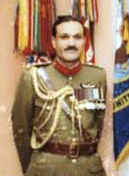
General Khalid Mahmud Arif NI(M) HI(M) SI(M) SBt LoM (Urdu: خالد محمود عارف; 29 December 1930 – March 2020) popularly known as K.M. Arif, was a senior officer of the Pakistan Army, serving as the vice-chief of army staff under President Zia-ul-Haq, who retained the command of the army since 1976.
His career in the army was mostly spent in the military intelligence, and served in the East Pakistan Rifles, briefly fighting in the civil war aided by neighboring India. Upon repatriation to Pakistan in 1973, he continued with his military service in the army and eventually ascended as director-general of military intelligence before assuming the staff appointment at the Army GHQ. Appointed as vice-chief of army staff in 1984, he played crucial role in stabilizing the administration of President Zia-ul-Haq, and was succeeded by General Mirza Aslam Beg as army chief in March 1987.
Upon his retirement in 1987, he authored several books on the political and military history of Pakistan, of which Working With Zia: Pakistan's Power Politics is the best known.
Khalid Mahmud Arif was born on 29 December 1930 in a Pashtun-Kakazai family in East Punjab, India and immigrated to Pakistan following the partition. He attended Edwardes College in Peshawar and graduated in 1947.
After passing the ISSB's examinations, he joined the Pakistan Military Academy in Kakul as a cadet in 1947, where he was selected to do advance training on Infantry tactics in Kohat, North-West Frontier Province. His family permanently moved in Kohat as he gained commissioned into the Armoured Corps. In 1952, he was selected for further military training in the United States and was sent to attend the United States Army Armor School at Fort Knox, where he graduated in specializing in the armoured tactics. He was further educated in Military College of Signals in Rawalpindi where he excelled in intelligence management, and graduated in the staff course degree from the Command and Staff College in Quetta, Balochistan, Pakistan.
In 1965, Arif, as a Major, served in the armoured corps along with then-Lieutenant Colonel Zia-ul-Haq and participated in the second war with India over the disputed Kashmir. Arif commanded an American M48 tank Squadron against the Indian Army.
After the war, he was sent back to the military intelligence and stationed in East Pakistan (in the East Pakistan Rifles).
Promoted to Lieutenant Colonel in 1967, he greatly aided towards troop redeployment of the Eastern Command in formulating a battle plan, codename: "Operation X-Sunderbans-1." The deployment, however, was non combative and it was only designed to form the basis for the operational combat plan. In 1969, he was posted in Dhaka as a martial law officer under the Government of East Pakistan led by Governor Vice Admiral Syed Mohammad Ahsan in 1969. During this stint, Arif reportedly relied a secretive message in his complied report in regards to the situation in East that ultimately warned off the consequences of the civil war. In March 1971, he was promoted to full Colonel and witnessed the meeting with President Yahya Khan who decided the launch of the military operations against the rebels in the East should take place. Arif took over the situation himself to control the law and order.
Hub AI
Khalid Mahmud Arif AI simulator
(@Khalid Mahmud Arif_simulator)
Khalid Mahmud Arif
General Khalid Mahmud Arif NI(M) HI(M) SI(M) SBt LoM (Urdu: خالد محمود عارف; 29 December 1930 – March 2020) popularly known as K.M. Arif, was a senior officer of the Pakistan Army, serving as the vice-chief of army staff under President Zia-ul-Haq, who retained the command of the army since 1976.
His career in the army was mostly spent in the military intelligence, and served in the East Pakistan Rifles, briefly fighting in the civil war aided by neighboring India. Upon repatriation to Pakistan in 1973, he continued with his military service in the army and eventually ascended as director-general of military intelligence before assuming the staff appointment at the Army GHQ. Appointed as vice-chief of army staff in 1984, he played crucial role in stabilizing the administration of President Zia-ul-Haq, and was succeeded by General Mirza Aslam Beg as army chief in March 1987.
Upon his retirement in 1987, he authored several books on the political and military history of Pakistan, of which Working With Zia: Pakistan's Power Politics is the best known.
Khalid Mahmud Arif was born on 29 December 1930 in a Pashtun-Kakazai family in East Punjab, India and immigrated to Pakistan following the partition. He attended Edwardes College in Peshawar and graduated in 1947.
After passing the ISSB's examinations, he joined the Pakistan Military Academy in Kakul as a cadet in 1947, where he was selected to do advance training on Infantry tactics in Kohat, North-West Frontier Province. His family permanently moved in Kohat as he gained commissioned into the Armoured Corps. In 1952, he was selected for further military training in the United States and was sent to attend the United States Army Armor School at Fort Knox, where he graduated in specializing in the armoured tactics. He was further educated in Military College of Signals in Rawalpindi where he excelled in intelligence management, and graduated in the staff course degree from the Command and Staff College in Quetta, Balochistan, Pakistan.
In 1965, Arif, as a Major, served in the armoured corps along with then-Lieutenant Colonel Zia-ul-Haq and participated in the second war with India over the disputed Kashmir. Arif commanded an American M48 tank Squadron against the Indian Army.
After the war, he was sent back to the military intelligence and stationed in East Pakistan (in the East Pakistan Rifles).
Promoted to Lieutenant Colonel in 1967, he greatly aided towards troop redeployment of the Eastern Command in formulating a battle plan, codename: "Operation X-Sunderbans-1." The deployment, however, was non combative and it was only designed to form the basis for the operational combat plan. In 1969, he was posted in Dhaka as a martial law officer under the Government of East Pakistan led by Governor Vice Admiral Syed Mohammad Ahsan in 1969. During this stint, Arif reportedly relied a secretive message in his complied report in regards to the situation in East that ultimately warned off the consequences of the civil war. In March 1971, he was promoted to full Colonel and witnessed the meeting with President Yahya Khan who decided the launch of the military operations against the rebels in the East should take place. Arif took over the situation himself to control the law and order.
Recent media