


Community hub
Recent from talks
Contribute something to knowledge base
Content stats: 0 posts, 0 articles, 1 media, 0 notes
Members stats: 0 subscribers, 0 contributors, 0 moderators, 0 supporters
Subscribers
Supporters
Contributors
Moderators
Hub AI
Khama III AI simulator
(@Khama III_simulator)
Hub AI
Khama III AI simulator
(@Khama III_simulator)
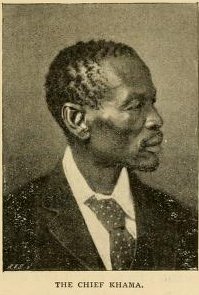
Khama III
Khama III (c. 1837 – 21 February, 1923), referred to by missionaries as Khama the Good also called Khama the Great, was the Kgosi (meaning king) of the Bangwato people.
Malope, a chief of the Bakwena, led his people from the Transvaal region of South Africa into the southeast territory of Botswana. Malope had three sons – Kwena, Ngwato, and Ngwaketse – each of whom would eventually break away from their father (as well as from each other) and form new communities in neighboring territories. This type of familial break between father and sons (and then between sons) was historically how ethnic communities proliferated throughout the southern African region.
In this particular instance, the break between Malope and sons was precipitated by a series of events – the death of Malope, Kwena's subsequent assumption of the Bakwena chieftainship, and ultimately a dispute between Kwena and Ngwato over a lost cow. Shortly after the lost-cow incident, Ngwato and his followers secretly left Kwena's village under the cover of darkness and established a new village to the north. Ngwaketse similarly moved south.
Kwena warriors attacked Ngwato's village three times, each time pushing Ngwato and his followers (now known as the Bamangwato) further northward. Somehow (this episode is not explained by Bessie), they held on, and by the time of Chief Khama III's reign (between the years 1875–1923), the Bamangwato had grown (both through natural population increase and the influx of refugees from South Africa and Rhodesia) to become the region's largest ethnic community.
Following the opening up of the Kalahari by David Livingstone in 1849, a large hunting-trading boom arose that lasted into the late 1870s. This trade was controlled by the Bakwena, Bangwato, Bangwaketse, and Batawana, who were all part of a loose alliance. All four of these Tswana-speaking groups organized private and regimental hunting groups using horses and guns, in addition to the forced labor of desert-dwellers whom they subjugated or forced to pay annual tribute in the form of hunting products. The young Khama was at the forefront of this transition to global commerce, and as a young man owned considerable numbers of horses, guns, and ox-wagons. He was well-travelled and spoke fluent Dutch, the lingua franca of the period. By all accounts he was popular with visiting hunters (who came from South Africa and across the globe), who needed permission to travel and hunt on Ngwato territory. Although he was often portrayed by his missionary patrons as being primarily motivated by religious concerns, Khama was at the center of not only reshaping the Ngwato economy, but also of extending its power over a host of subject peoples.
Despite his considerable influence as an economic actor, Khama is best known as the founder of a Christian state. In his early twenties, Khama was baptized into the Lutheran church in 1860 by the German missionary Heinrich Christoph Schulenberg along with five of his younger brothers. The brothers were some of the first members of the tribe to take this step; a step that would soon be joined by a fairly large percentage of Khama's followers. It was no small step for Khama. By this time in his life he had already gone through bogwera (the tribe's traditional initiation ceremony into manhood) with members of his mephato (age regiment). Historically, bogwera entailed rigorous endurance tests, which included circumcision. Initially, Khama's father, Chief Sekgoma I, grudgingly accepted his son's affiliation with the church, although he did not embrace church doctrine himself, seeing it as an inherently colonial religion that stood against the values, beliefs, and practices of the Bangwato. Eventually their divergent beliefs and values brought Sekgoma and Khama into open conflict. At the time, the tribe was based in the village of Shoshong, which is located near present-day Mahalapye.
The conflict included its share of intrigue – an attempted assassination (of Khama by Sekgoma), Khama's marriage in 1862 to a Christian woman named Mma Bessie and his subsequent refusal to take a second wife according to the custom of polygamy, Khama's withstanding of Sekgoma's sorcery, Khama's forced exile with the tribe's Christian followers into the hills surrounding the village of Shoshong, and finally Khama's return to Shoshong after Sekgoma's second botched assassination attempt and the concomitant installing of Sekgoma's brother, Macheng, as the new chief of the beleaguered tribe (Sekgoma headed into exile).
It was not long before Macheng and Khama clashed as well, leading Macheng to attempt his own assassination of Khama, which likewise failed miserably. Khama then ousted Macheng and, in what was either a selfless gesture of goodwill or simply a dogged adherence to tribal custom, re-installed his father, Sekgoma, as Chief of the Bamangwato. Unfortunately, the truce between father and son would again falter after a few short months.
Khama III
Khama III (c. 1837 – 21 February, 1923), referred to by missionaries as Khama the Good also called Khama the Great, was the Kgosi (meaning king) of the Bangwato people.
Malope, a chief of the Bakwena, led his people from the Transvaal region of South Africa into the southeast territory of Botswana. Malope had three sons – Kwena, Ngwato, and Ngwaketse – each of whom would eventually break away from their father (as well as from each other) and form new communities in neighboring territories. This type of familial break between father and sons (and then between sons) was historically how ethnic communities proliferated throughout the southern African region.
In this particular instance, the break between Malope and sons was precipitated by a series of events – the death of Malope, Kwena's subsequent assumption of the Bakwena chieftainship, and ultimately a dispute between Kwena and Ngwato over a lost cow. Shortly after the lost-cow incident, Ngwato and his followers secretly left Kwena's village under the cover of darkness and established a new village to the north. Ngwaketse similarly moved south.
Kwena warriors attacked Ngwato's village three times, each time pushing Ngwato and his followers (now known as the Bamangwato) further northward. Somehow (this episode is not explained by Bessie), they held on, and by the time of Chief Khama III's reign (between the years 1875–1923), the Bamangwato had grown (both through natural population increase and the influx of refugees from South Africa and Rhodesia) to become the region's largest ethnic community.
Following the opening up of the Kalahari by David Livingstone in 1849, a large hunting-trading boom arose that lasted into the late 1870s. This trade was controlled by the Bakwena, Bangwato, Bangwaketse, and Batawana, who were all part of a loose alliance. All four of these Tswana-speaking groups organized private and regimental hunting groups using horses and guns, in addition to the forced labor of desert-dwellers whom they subjugated or forced to pay annual tribute in the form of hunting products. The young Khama was at the forefront of this transition to global commerce, and as a young man owned considerable numbers of horses, guns, and ox-wagons. He was well-travelled and spoke fluent Dutch, the lingua franca of the period. By all accounts he was popular with visiting hunters (who came from South Africa and across the globe), who needed permission to travel and hunt on Ngwato territory. Although he was often portrayed by his missionary patrons as being primarily motivated by religious concerns, Khama was at the center of not only reshaping the Ngwato economy, but also of extending its power over a host of subject peoples.
Despite his considerable influence as an economic actor, Khama is best known as the founder of a Christian state. In his early twenties, Khama was baptized into the Lutheran church in 1860 by the German missionary Heinrich Christoph Schulenberg along with five of his younger brothers. The brothers were some of the first members of the tribe to take this step; a step that would soon be joined by a fairly large percentage of Khama's followers. It was no small step for Khama. By this time in his life he had already gone through bogwera (the tribe's traditional initiation ceremony into manhood) with members of his mephato (age regiment). Historically, bogwera entailed rigorous endurance tests, which included circumcision. Initially, Khama's father, Chief Sekgoma I, grudgingly accepted his son's affiliation with the church, although he did not embrace church doctrine himself, seeing it as an inherently colonial religion that stood against the values, beliefs, and practices of the Bangwato. Eventually their divergent beliefs and values brought Sekgoma and Khama into open conflict. At the time, the tribe was based in the village of Shoshong, which is located near present-day Mahalapye.
The conflict included its share of intrigue – an attempted assassination (of Khama by Sekgoma), Khama's marriage in 1862 to a Christian woman named Mma Bessie and his subsequent refusal to take a second wife according to the custom of polygamy, Khama's withstanding of Sekgoma's sorcery, Khama's forced exile with the tribe's Christian followers into the hills surrounding the village of Shoshong, and finally Khama's return to Shoshong after Sekgoma's second botched assassination attempt and the concomitant installing of Sekgoma's brother, Macheng, as the new chief of the beleaguered tribe (Sekgoma headed into exile).
It was not long before Macheng and Khama clashed as well, leading Macheng to attempt his own assassination of Khama, which likewise failed miserably. Khama then ousted Macheng and, in what was either a selfless gesture of goodwill or simply a dogged adherence to tribal custom, re-installed his father, Sekgoma, as Chief of the Bamangwato. Unfortunately, the truce between father and son would again falter after a few short months.
Recent media
Recent media