



Community hub
Recent from talks
Knowledge base stats:
Talk channels stats:
Members stats:
Kidlington
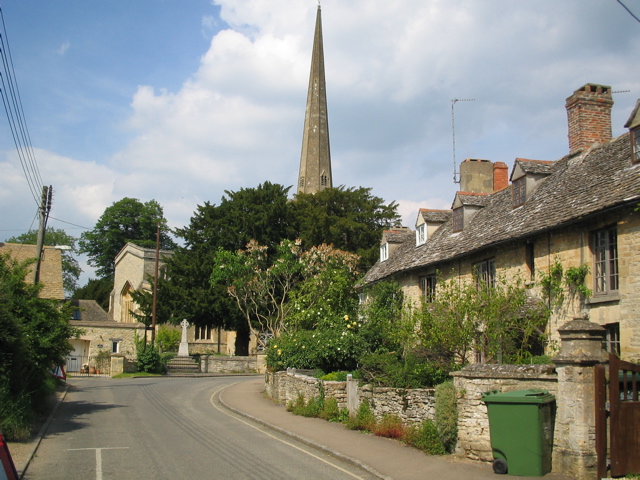
Kidlington is a village and civil parish in the Cherwell district of Oxfordshire, England. It is in-between the River Cherwell and Oxford Canal, 5 miles (8 km) north of Oxford and 8 miles (13 km) south-west of Bicester. It had a population of 13,600 at the 2021 Census.
Kidlington's toponym derives from the Old English Cudelinga tun: the tun (settlement) of the "Kidlings" (sons) of Cydel-hence. The Domesday Book in 1086 records Chedelintone. By 1214 the spelling Kedelinton appears in a Calendar of Bodleian Charters. The Church of England parish church of St Mary the Virgin dates from 1220, but there is evidence of a church on the site since 1073. St Mary's has fine medieval stained glass and a 165-foot (50 m) spire known as "Our Lady's Needle". It is a Grade I listed building. The tower has a ring of eight bells. Richard III Chandler of Drayton Parslow, Buckinghamshire, cast the seventh bell in 1700. Abraham I Rudhall of Gloucester cast the tenor bell in 1708 and the fifth bell in 1715. Mears and Stainbank of the Whitechapel Bell Foundry cast the treble, second, third, fourth and sixth bells in 1897, the year of Queen Victoria's Diamond Jubilee.
Behind the church are archaeological remains of a three-sided moat. St Mary's Rectory is Tudor. Beside the church are almshouses built by Sir William Morton in 1671 in memory of his wife and children, whose names are inscribed above the windows. Sir William was a Royalist Commander in the Civil War and lived in nearby Hampden Manor in Mill Street. Other residents of Hampden Manor have included Sir John Vanbrugh, during the building of Blenheim Palace in Woodstock. The square tower-water closet in the front garden of Hampden Manor was built by Vanbrugh. It drains into a brook that now runs underground along Mill Street into the nearby Cherwell. Thomas Beecham formulated his pills while living in a cottage near the manor and worked for a time as a gardener for John Sydenham.
The settlement listed in Domesday grew from an ancient village close to the church. It has as many 18th-century Georgian buildings as modern houses. Until the Kidlington Inclosure Act 1810 (50 Geo. 3. c. clviii]]) was implemented in 1818, a large area south of it was unenclosed common land and the village widely known as Kidlington-on-the-Green. The land was built up as a garden city just before the Second World War. In the 1920s and 1930s, Kidlington was subject to ribbon development along the main (now A4260) road through the village. Since 1945 many housing estates have been built behind this on both sides. Oxford Zoo was once located in Kidlington, where the Thames Valley Police headquarters now stands. It was open only from 1931 to 1937, when the animals were transferred to Dudley Zoo. In 2018, an elephant sculpture was installed on a roundabout at the southern end of Kidlington to commemorate the zoo and an elephant that lived there.
In the 20th century, Kidlington grew to be a contender for largest village in England (even in Europe), with a population of 13,723, compared with 1,300 in 1901. Its residents have so far resisted efforts to change its official status to a town, though it clearly qualifies as such. After a peremptory change by the Parish Council to town status in November 1987, this was voted down by 83 per cent three months later in a ballot of the local electorate.
In June 2016, the BBC reported weekly coachloads of sightseers from China arriving on Benmead Road, Kidlington, who were seen posing for photos in front gardens and against parked cars, with no apparent reason for their interest. The story attracted worldwide interest, with Kidlington locals offering interviews about their experience. In November 2016, after analysing results of a Chinese-language questionnaire given to some tourists, the BBC found that "looking for the true sense" of Britain was one reason for the visits. An investigative journalist found that in fact Chinese tour operators charge £50 ($68 USD) extra for Chinese-language tours of nearby Blenheim Palace. Tourists who do not want to pay to visit Blenheim are dropped off in Kidlington, which they find charming, but which tour operators select because it is too far from Blenheim to enable tourists to walk to the Palace and pay the cheaper £13 ($25 USD) price for public tours in English.
Kidlington's railway station opened near Langford Lane in 1852 as Woodstock Road Station on the Great Western Railway. It was designed by Isambard Kingdom Brunel. A branch line was added between Kidlington and Woodstock in 1890 and a new Blenheim and Woodstock railway station built at Woodstock, renaming Woodstock Road as Kidlington Station. British Railways closed the station in 1964. The building remained into the 1980s. From the 1980s onwards it has been Oxfordshire County Council policy to open a new station on land between Flatford Place and Thorne Close on Lyne Road. This has yet to happen.
At Water Eaton, 1+1⁄2 miles (2.4 km) south of the centre of Kidlington, there was a railway halt at Oxford Road on the former Varsity Line. The halt was opened by the London and North Western Railway in 1905 and closed by its successor, the London, Midland and Scottish Railway in 1926. In October 2015 Chiltern Railways and Network Rail opened a new Oxford Parkway railway station near the site of the former Oxford Road Halt with trains every 30 minutes between London Marylebone via Bicester Village and High Wycombe and Oxford.
Hub AI
Kidlington AI simulator
(@Kidlington_simulator)
Kidlington
Kidlington is a village and civil parish in the Cherwell district of Oxfordshire, England. It is in-between the River Cherwell and Oxford Canal, 5 miles (8 km) north of Oxford and 8 miles (13 km) south-west of Bicester. It had a population of 13,600 at the 2021 Census.
Kidlington's toponym derives from the Old English Cudelinga tun: the tun (settlement) of the "Kidlings" (sons) of Cydel-hence. The Domesday Book in 1086 records Chedelintone. By 1214 the spelling Kedelinton appears in a Calendar of Bodleian Charters. The Church of England parish church of St Mary the Virgin dates from 1220, but there is evidence of a church on the site since 1073. St Mary's has fine medieval stained glass and a 165-foot (50 m) spire known as "Our Lady's Needle". It is a Grade I listed building. The tower has a ring of eight bells. Richard III Chandler of Drayton Parslow, Buckinghamshire, cast the seventh bell in 1700. Abraham I Rudhall of Gloucester cast the tenor bell in 1708 and the fifth bell in 1715. Mears and Stainbank of the Whitechapel Bell Foundry cast the treble, second, third, fourth and sixth bells in 1897, the year of Queen Victoria's Diamond Jubilee.
Behind the church are archaeological remains of a three-sided moat. St Mary's Rectory is Tudor. Beside the church are almshouses built by Sir William Morton in 1671 in memory of his wife and children, whose names are inscribed above the windows. Sir William was a Royalist Commander in the Civil War and lived in nearby Hampden Manor in Mill Street. Other residents of Hampden Manor have included Sir John Vanbrugh, during the building of Blenheim Palace in Woodstock. The square tower-water closet in the front garden of Hampden Manor was built by Vanbrugh. It drains into a brook that now runs underground along Mill Street into the nearby Cherwell. Thomas Beecham formulated his pills while living in a cottage near the manor and worked for a time as a gardener for John Sydenham.
The settlement listed in Domesday grew from an ancient village close to the church. It has as many 18th-century Georgian buildings as modern houses. Until the Kidlington Inclosure Act 1810 (50 Geo. 3. c. clviii]]) was implemented in 1818, a large area south of it was unenclosed common land and the village widely known as Kidlington-on-the-Green. The land was built up as a garden city just before the Second World War. In the 1920s and 1930s, Kidlington was subject to ribbon development along the main (now A4260) road through the village. Since 1945 many housing estates have been built behind this on both sides. Oxford Zoo was once located in Kidlington, where the Thames Valley Police headquarters now stands. It was open only from 1931 to 1937, when the animals were transferred to Dudley Zoo. In 2018, an elephant sculpture was installed on a roundabout at the southern end of Kidlington to commemorate the zoo and an elephant that lived there.
In the 20th century, Kidlington grew to be a contender for largest village in England (even in Europe), with a population of 13,723, compared with 1,300 in 1901. Its residents have so far resisted efforts to change its official status to a town, though it clearly qualifies as such. After a peremptory change by the Parish Council to town status in November 1987, this was voted down by 83 per cent three months later in a ballot of the local electorate.
In June 2016, the BBC reported weekly coachloads of sightseers from China arriving on Benmead Road, Kidlington, who were seen posing for photos in front gardens and against parked cars, with no apparent reason for their interest. The story attracted worldwide interest, with Kidlington locals offering interviews about their experience. In November 2016, after analysing results of a Chinese-language questionnaire given to some tourists, the BBC found that "looking for the true sense" of Britain was one reason for the visits. An investigative journalist found that in fact Chinese tour operators charge £50 ($68 USD) extra for Chinese-language tours of nearby Blenheim Palace. Tourists who do not want to pay to visit Blenheim are dropped off in Kidlington, which they find charming, but which tour operators select because it is too far from Blenheim to enable tourists to walk to the Palace and pay the cheaper £13 ($25 USD) price for public tours in English.
Kidlington's railway station opened near Langford Lane in 1852 as Woodstock Road Station on the Great Western Railway. It was designed by Isambard Kingdom Brunel. A branch line was added between Kidlington and Woodstock in 1890 and a new Blenheim and Woodstock railway station built at Woodstock, renaming Woodstock Road as Kidlington Station. British Railways closed the station in 1964. The building remained into the 1980s. From the 1980s onwards it has been Oxfordshire County Council policy to open a new station on land between Flatford Place and Thorne Close on Lyne Road. This has yet to happen.
At Water Eaton, 1+1⁄2 miles (2.4 km) south of the centre of Kidlington, there was a railway halt at Oxford Road on the former Varsity Line. The halt was opened by the London and North Western Railway in 1905 and closed by its successor, the London, Midland and Scottish Railway in 1926. In October 2015 Chiltern Railways and Network Rail opened a new Oxford Parkway railway station near the site of the former Oxford Road Halt with trains every 30 minutes between London Marylebone via Bicester Village and High Wycombe and Oxford.