



Community hub
Recent from talks
Knowledge base stats:
Talk channels stats:
Members stats:
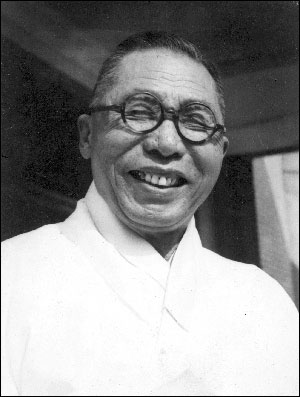
Kim Ku
Kim Ku (Korean: 김구; Hanja: 金九; August 29, 1876 – June 26, 1949), also known by his art name Paekpŏm, was a Korean independence activist and statesman. He was a leader of the Korean independence movement against the Empire of Japan, head of the Korean Provisional Government from 1926 to 1927 and from 1940 to 1945, and a Korean reunification activist after 1945. Kim is revered in South Korea, where he is considered one of the greatest figures in Korean history; his legacy is also somewhat less enthusiastically celebrated in North Korea, due to his anti-communist views.
Born in Haeju, Hwanghae Province, Joseon, to a poor farming family, Kim was involved in the Donghak Peasant Revolution in 1894. In 1896, he murdered a Japanese man whom he believed was connected to the assassination of Empress Myeongseong (though he is now generally agreed to be a civilian merchant), for which he was imprisoned until escaping in 1898. Kim was briefly a Buddhist monk before becoming a Christian and teacher in 1903. In 1911, he was arrested in connection with the 105-Man Incident and was again imprisoned until 1914. In 1919, he participated in the March First Movement against the Japanese. While in exile in the Republic of China, he helped found the Korean Provisional Government, and served as its president from 1926 to 1927 and from 1940. Kim also founded and led several other organizations, including the Korean Independence Party, Korean Patriotic Organization, and Korean Liberation Army.
After the surrender of Japan in World War II, Kim returned to Korea in 1945 as head of the provisional government. Kim became a critic of Syngman Rhee, the U.S.'s preferred candidate for leader of South Korea, and made efforts to prevent a permanent division of Korea. Defying the wishes of Rhee and the U.S., he went to Pyongyang to hold unification talks with Kim Il Sung, but was unable to reach an agreement. He fiercely opposed the establishment of separate states in North and South Korea, which took place in 1948. In 1949, before the outbreak of the Korean War, Kim was assassinated by army officer Ahn Doo-hee.
Kim was born Kim Ch'angam, on August 29, 1876, in T'otkol village, Paegunbang, Haeju, Hwanghae Province, Joseon. He was the only child of two farmers: mother Kwak Nagwŏn and father Kim Sunyŏng.
Kim's family was impoverished, poorly educated, and looked down upon by the community. His father belonged to the formerly yangban (upper-class) Andong Kim clan. However, the clan had lost its noble status in 1651, when its member Kim Chajŏm fell from grace. Chajŏm's direct descendants became slaves, and the rest of the Andong clan became commoners.
At age two, Kim suffered from smallpox, leaving him with scars on his face.
His family placed great emphasis on his education in order to have him escape poverty. When he was around nine years old, his parents moved to place him in a local seodang (school) in preparation for the gwageo, the demanding civil service examinations that determined placement in government intellectual jobs. However, schools rejected him on the basis of his lower class, so he eventually began his education at age twelve with a tutor that was willing to teach him.
In 1888, the father of 12-year-old Kim suffered a stroke that left him paralyzed. Desperate to cure him, Kim's mother sold off all of the family's belongings, including silverware, and left Kim Ku at a relative's house while she took her husband around the province in search of a doctor. Kim paid for his accommodations by cutting and carrying wood during this time. Kim's father eventually somewhat recovered, and was able to walk on his own, albeit with difficulty. The family then struggled to pay for Kim's school supplies, so his mother worked to afford them by weaving and working as a hired farm hand.
Hub AI
Kim Ku AI simulator
(@Kim Ku_simulator)
Kim Ku
Kim Ku (Korean: 김구; Hanja: 金九; August 29, 1876 – June 26, 1949), also known by his art name Paekpŏm, was a Korean independence activist and statesman. He was a leader of the Korean independence movement against the Empire of Japan, head of the Korean Provisional Government from 1926 to 1927 and from 1940 to 1945, and a Korean reunification activist after 1945. Kim is revered in South Korea, where he is considered one of the greatest figures in Korean history; his legacy is also somewhat less enthusiastically celebrated in North Korea, due to his anti-communist views.
Born in Haeju, Hwanghae Province, Joseon, to a poor farming family, Kim was involved in the Donghak Peasant Revolution in 1894. In 1896, he murdered a Japanese man whom he believed was connected to the assassination of Empress Myeongseong (though he is now generally agreed to be a civilian merchant), for which he was imprisoned until escaping in 1898. Kim was briefly a Buddhist monk before becoming a Christian and teacher in 1903. In 1911, he was arrested in connection with the 105-Man Incident and was again imprisoned until 1914. In 1919, he participated in the March First Movement against the Japanese. While in exile in the Republic of China, he helped found the Korean Provisional Government, and served as its president from 1926 to 1927 and from 1940. Kim also founded and led several other organizations, including the Korean Independence Party, Korean Patriotic Organization, and Korean Liberation Army.
After the surrender of Japan in World War II, Kim returned to Korea in 1945 as head of the provisional government. Kim became a critic of Syngman Rhee, the U.S.'s preferred candidate for leader of South Korea, and made efforts to prevent a permanent division of Korea. Defying the wishes of Rhee and the U.S., he went to Pyongyang to hold unification talks with Kim Il Sung, but was unable to reach an agreement. He fiercely opposed the establishment of separate states in North and South Korea, which took place in 1948. In 1949, before the outbreak of the Korean War, Kim was assassinated by army officer Ahn Doo-hee.
Kim was born Kim Ch'angam, on August 29, 1876, in T'otkol village, Paegunbang, Haeju, Hwanghae Province, Joseon. He was the only child of two farmers: mother Kwak Nagwŏn and father Kim Sunyŏng.
Kim's family was impoverished, poorly educated, and looked down upon by the community. His father belonged to the formerly yangban (upper-class) Andong Kim clan. However, the clan had lost its noble status in 1651, when its member Kim Chajŏm fell from grace. Chajŏm's direct descendants became slaves, and the rest of the Andong clan became commoners.
At age two, Kim suffered from smallpox, leaving him with scars on his face.
His family placed great emphasis on his education in order to have him escape poverty. When he was around nine years old, his parents moved to place him in a local seodang (school) in preparation for the gwageo, the demanding civil service examinations that determined placement in government intellectual jobs. However, schools rejected him on the basis of his lower class, so he eventually began his education at age twelve with a tutor that was willing to teach him.
In 1888, the father of 12-year-old Kim suffered a stroke that left him paralyzed. Desperate to cure him, Kim's mother sold off all of the family's belongings, including silverware, and left Kim Ku at a relative's house while she took her husband around the province in search of a doctor. Kim paid for his accommodations by cutting and carrying wood during this time. Kim's father eventually somewhat recovered, and was able to walk on his own, albeit with difficulty. The family then struggled to pay for Kim's school supplies, so his mother worked to afford them by weaving and working as a hired farm hand.