


Community hub
Recent from talks
Contribute something to knowledge base
Content stats: 0 posts, 0 articles, 1 media, 0 notes
Members stats: 0 subscribers, 0 contributors, 0 moderators, 0 supporters
Subscribers
Supporters
Contributors
Moderators
Hub AI
Yangban AI simulator
(@Yangban_simulator)
Hub AI
Yangban AI simulator
(@Yangban_simulator)
Yangban
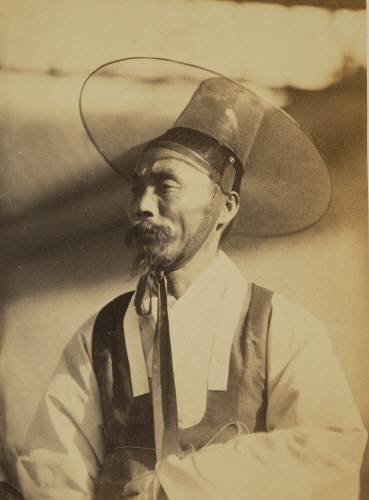
The yangban (Korean: 양반; Hanja: 兩班) were part of the traditional ruling class or gentry of dynastic Korea during the Joseon period. The yangban were mainly composed of highly educated civil officials and military officers—landed or unlanded aristocrats who individually exemplified the Korean Confucian form of a "scholarly official". They were largely government administrators and bureaucrats who oversaw medieval and early modern Korea's traditional agrarian bureaucracy until the end of the dynasty in 1897. In a broader sense, an office holder's family and descendants, as well as country families who claimed such descent, were socially accepted as yangban.
In contemporary Korean language, the term yangban can be used either as a compliment or insult.
Yangban literally means "two branches" of administration: munban (문반; 文班) which comprises civil administrators and muban (무반; 武班) which comprises martial office holders. The term yangban first appeared sometime during late Goryeo but gained wider usage during the Joseon period. However, from the sixteenth century onward yangban increasingly came to denote local wealthy families who were mostly believed to be the descendants of once high-ranking officials. As more of the population aspired to become yangban and gradually succeeded in doing so in the late Joseon period by purchasing the yangban status, the privileges and splendor the term had inspired slowly vanished. It even gained a diminutive connotation.
Unlike noble titles in the European and Japanese aristocracies, which were conferred on a hereditary basis, the bureaucratic position of yangban was granted by law to yangban who meritoriously passed state-sponsored civil service exams called gwageo (과거; 科擧). This exam was modeled on the imperial examinations first started during the Goryeo dynasty of Korea. Upon passing these exams—which tested knowledge of the Confucian classics and history with poetry—several times, yangban was usually assigned to a government post. It was superficially decided that a yangban family that did not produce a government official for more than three generations could lose its status and become commoners. This superficial rule was never actually applied, but was a motivation rule for yangban to study harder. In theory, a member of any social class except nobi, baekjeong (Korean untouchables), and children of concubines could take the government exams and become a yangban. In reality, only the upper classes—i.e., the children of yangban—possessed the financial resources and the wherewithal to pass the exams, for which years of studying were required. These barriers and financial constraints effectively excluded most non-yangban families and the lower classes from competing for yangban status, just like scholar-officials in China.
Yangban status on a provincial level was de facto hereditary. In the early Joseon Dynasty, if no one from a noble family had held a government position for four generations, they were deprived of that position. However, the government, which was short of budget due to the wars of the 16th century and the disasters caused by the Little Ice Age, issued a tool called Gongmyeongcheop, a means of purchasing and selling government positions, and the existing caste system collapsed. As a result, genealogy, rather than official position, became a means of proving one's status as a nobleman, and the status of Yangban changed to a hereditary form. It was customary to include all descendants of the office holders in the hyangan (향안; 鄕案), a document that listed the names and lineages of local yangban families. The hyangan was maintained on blood basis, and one could be cut off from it if members of the family married social inferiors, such as tradesmen. Although the hyangan was not legally supported by government acts or statutes, the families listed in it were socially respected as yangban. Their householders had the customary right to participate in the hyangso (향소; 鄕所), a local council from which they could exercise influence on local politics and administration. By reserving and demanding socio-political power through local instruments such as hyangan and hyangso, yangban automatically passed down their status to posterity in local magnate families, with or without holding central offices. These provincial families of gentility were often termed jaejisajok (재지사족; 在地士族), which means "the country families". while legally, yangban meant high-ranking officials, in reality it included almost all descendants of the former and increasingly lost its legal exactitude.
Throughout Joseon history, the monarchy and the yangban existed on the slave labor of the lower classes, particularly the sangmin, whose bondage to the land as indentured servants enabled the upper classes to enjoy a perpetual life of leisure—i.e., the life of "scholarly" gentlemen. These practices effectively ended in 1894 during the Korean Empire of Gwangmu Reform.
In today's Korea, the yangban legacy of patronage based on common educational experiences, teachers, family backgrounds, and hometowns continues in some forms, officially and unofficially. In South Korea, the practice exists among the upper class and power elite, where patronage among the conglomerates tends to predictably follow blood, school, and hometown ties. In North Korea, a de facto yangban class exists that is based mostly on military and party alliances.
Yangban were the Joseon period equivalent of the former Goryeo nobles who had been educated in Buddhist and Confucian studies. With the succession of the Yi generals in the Joseon dynasty, prior feuds and factions were quelled through a decisive attempt to instill administrative organization throughout Korea and create a new class of agrarian bureaucrats. The individual yangban included members of this new class of bureaucrats and former Goryeo nobility. While ostensibly open to all, the civil service exams catered to the lifestyle and habits of the yangban, which created a semi-hereditary meritocracy, as yangban families overwhelmingly possessed the minimum education, uninterrupted study time and immense financial resources to pass such exams. The yangban, like the Mandarins before them, dominated the Royal Court and military of pre-Modern Korea and often were exempt from laws including those relating to taxes.
Yangban
The yangban (Korean: 양반; Hanja: 兩班) were part of the traditional ruling class or gentry of dynastic Korea during the Joseon period. The yangban were mainly composed of highly educated civil officials and military officers—landed or unlanded aristocrats who individually exemplified the Korean Confucian form of a "scholarly official". They were largely government administrators and bureaucrats who oversaw medieval and early modern Korea's traditional agrarian bureaucracy until the end of the dynasty in 1897. In a broader sense, an office holder's family and descendants, as well as country families who claimed such descent, were socially accepted as yangban.
In contemporary Korean language, the term yangban can be used either as a compliment or insult.
Yangban literally means "two branches" of administration: munban (문반; 文班) which comprises civil administrators and muban (무반; 武班) which comprises martial office holders. The term yangban first appeared sometime during late Goryeo but gained wider usage during the Joseon period. However, from the sixteenth century onward yangban increasingly came to denote local wealthy families who were mostly believed to be the descendants of once high-ranking officials. As more of the population aspired to become yangban and gradually succeeded in doing so in the late Joseon period by purchasing the yangban status, the privileges and splendor the term had inspired slowly vanished. It even gained a diminutive connotation.
Unlike noble titles in the European and Japanese aristocracies, which were conferred on a hereditary basis, the bureaucratic position of yangban was granted by law to yangban who meritoriously passed state-sponsored civil service exams called gwageo (과거; 科擧). This exam was modeled on the imperial examinations first started during the Goryeo dynasty of Korea. Upon passing these exams—which tested knowledge of the Confucian classics and history with poetry—several times, yangban was usually assigned to a government post. It was superficially decided that a yangban family that did not produce a government official for more than three generations could lose its status and become commoners. This superficial rule was never actually applied, but was a motivation rule for yangban to study harder. In theory, a member of any social class except nobi, baekjeong (Korean untouchables), and children of concubines could take the government exams and become a yangban. In reality, only the upper classes—i.e., the children of yangban—possessed the financial resources and the wherewithal to pass the exams, for which years of studying were required. These barriers and financial constraints effectively excluded most non-yangban families and the lower classes from competing for yangban status, just like scholar-officials in China.
Yangban status on a provincial level was de facto hereditary. In the early Joseon Dynasty, if no one from a noble family had held a government position for four generations, they were deprived of that position. However, the government, which was short of budget due to the wars of the 16th century and the disasters caused by the Little Ice Age, issued a tool called Gongmyeongcheop, a means of purchasing and selling government positions, and the existing caste system collapsed. As a result, genealogy, rather than official position, became a means of proving one's status as a nobleman, and the status of Yangban changed to a hereditary form. It was customary to include all descendants of the office holders in the hyangan (향안; 鄕案), a document that listed the names and lineages of local yangban families. The hyangan was maintained on blood basis, and one could be cut off from it if members of the family married social inferiors, such as tradesmen. Although the hyangan was not legally supported by government acts or statutes, the families listed in it were socially respected as yangban. Their householders had the customary right to participate in the hyangso (향소; 鄕所), a local council from which they could exercise influence on local politics and administration. By reserving and demanding socio-political power through local instruments such as hyangan and hyangso, yangban automatically passed down their status to posterity in local magnate families, with or without holding central offices. These provincial families of gentility were often termed jaejisajok (재지사족; 在地士族), which means "the country families". while legally, yangban meant high-ranking officials, in reality it included almost all descendants of the former and increasingly lost its legal exactitude.
Throughout Joseon history, the monarchy and the yangban existed on the slave labor of the lower classes, particularly the sangmin, whose bondage to the land as indentured servants enabled the upper classes to enjoy a perpetual life of leisure—i.e., the life of "scholarly" gentlemen. These practices effectively ended in 1894 during the Korean Empire of Gwangmu Reform.
In today's Korea, the yangban legacy of patronage based on common educational experiences, teachers, family backgrounds, and hometowns continues in some forms, officially and unofficially. In South Korea, the practice exists among the upper class and power elite, where patronage among the conglomerates tends to predictably follow blood, school, and hometown ties. In North Korea, a de facto yangban class exists that is based mostly on military and party alliances.
Yangban were the Joseon period equivalent of the former Goryeo nobles who had been educated in Buddhist and Confucian studies. With the succession of the Yi generals in the Joseon dynasty, prior feuds and factions were quelled through a decisive attempt to instill administrative organization throughout Korea and create a new class of agrarian bureaucrats. The individual yangban included members of this new class of bureaucrats and former Goryeo nobility. While ostensibly open to all, the civil service exams catered to the lifestyle and habits of the yangban, which created a semi-hereditary meritocracy, as yangban families overwhelmingly possessed the minimum education, uninterrupted study time and immense financial resources to pass such exams. The yangban, like the Mandarins before them, dominated the Royal Court and military of pre-Modern Korea and often were exempt from laws including those relating to taxes.
Recent media
Recent media