



Community hub
Recent from talks
Knowledge base stats:
Talk channels stats:
Members stats:
Kitchen stove
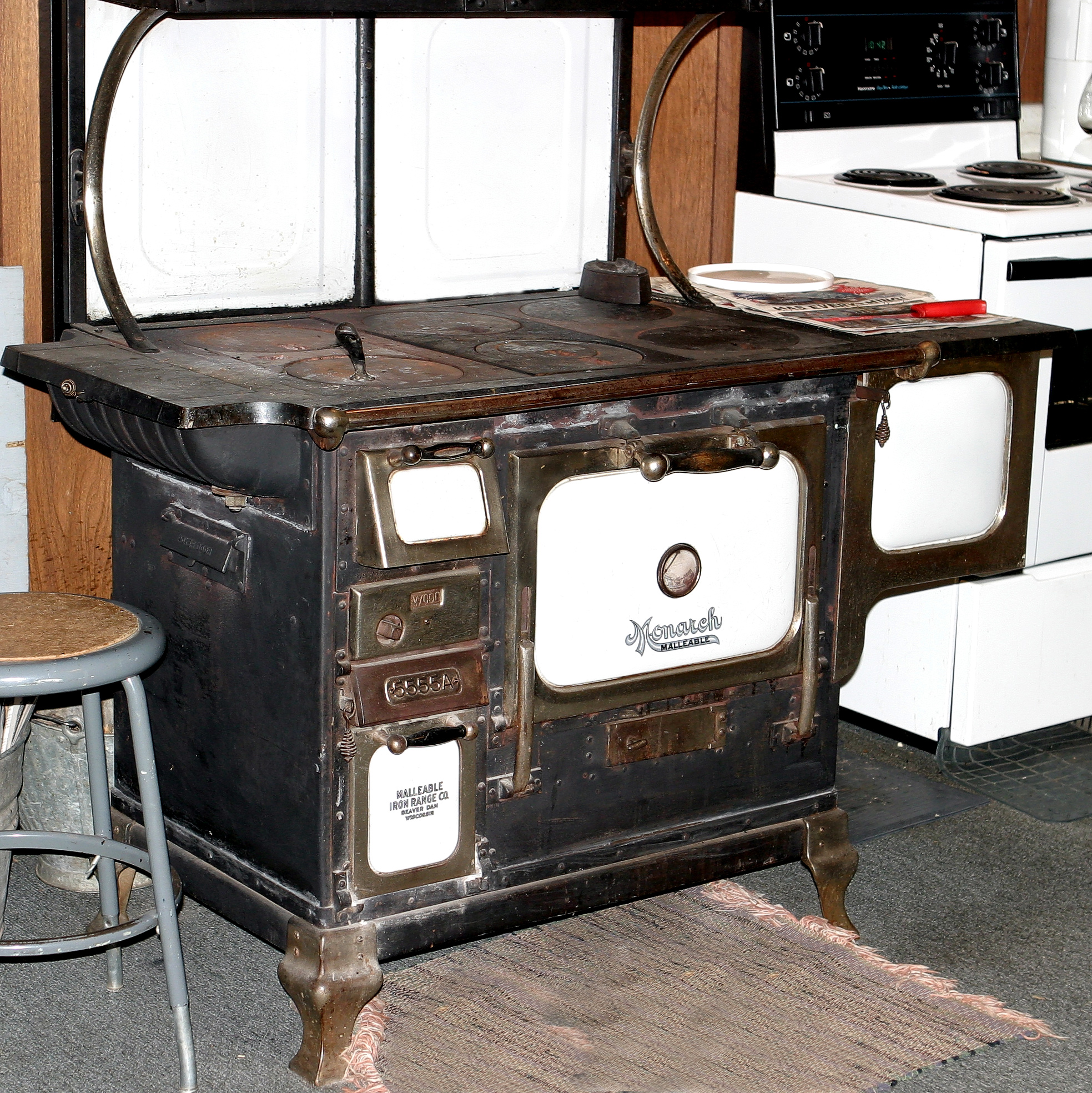
A kitchen stove, often called simply a stove or a cooker, is a kitchen appliance designed for the purpose of cooking food. Kitchen stoves rely on the application of direct heat for the cooking process and may also contain an oven, used for baking. "Cookstoves" (also called "cooking stoves" or "wood stoves") are heated by burning wood or charcoal; "gas stoves" are heated by gas; and "electric stoves" by electricity. A stove with a built-in cooktop is also called a range.
In the industrialized world, as stoves replaced open fires and braziers as a source of more efficient and reliable heating, models were developed that could also be used for cooking, and these came to be known as kitchen stoves. When homes began to be heated with central heating systems, there was less need for an appliance that served as both heat source and cooker and stand-alone cookers replaced them. Cooker and stove are often used interchangeably.
The fuel-burning stove is the most basic design of a kitchen stove. As of 2012, it was found that "Nearly half of the people in the world (mainly in the developing world), burn biomass (wood, charcoal, crop residues, and dung) and coal in rudimentary cookstoves or open fires to cook their food." More fuel-efficient and environmentally sound biomass cookstoves are being developed for use there.
Natural gas and electric stoves are the most common today in western countries. Electricity may reduce environmental impact if generated from non-fossil sources. The choice between the two is mostly a matter of personal preference and availability of utilities. Bottled gas ranges are used where utilities are unavailable.
Modern kitchen stoves have an oven, and a often have a "stovetop" or "cooktop" in American English; known as the "hob" in British English, from Hob (hearth). A "drop-in range" is a combination stovetop-and-oven unit that installs in a kitchen's lower cabinets flush with the countertop. Most modern stoves come in a unit with built-in extractor hoods. Today's major brands offer both gas and electric stoves, and many also offer dual-fuel ranges combining a gas stovetop and an electric oven.
Early clay stoves that enclosed the fire completely were known from the Chinese Qin dynasty (221 BC – 206/207 BC), and a similar design known as kamado (かまど) appeared in the Kofun period (3rd–6th century) in Japan.
Brick and Iron (Craticula) stoves were used across the Roman Empire, several example are preserved at Herculaneum and Pompeii.
These stoves were fired by wood or charcoal through a hole in the front. In both designs, pots were placed over or hung into holes at the top of the knee-high construction. In the Middle East, references to similar stoves and cooking ranges where the fire was lit from below are recorded as early as the 2nd-century AD, constructed of clay and either made portable or attached to the ground. Raised kamados were developed in Japan during the Edo period (1603–1867).
Hub AI
Kitchen stove AI simulator
(@Kitchen stove_simulator)
Kitchen stove
A kitchen stove, often called simply a stove or a cooker, is a kitchen appliance designed for the purpose of cooking food. Kitchen stoves rely on the application of direct heat for the cooking process and may also contain an oven, used for baking. "Cookstoves" (also called "cooking stoves" or "wood stoves") are heated by burning wood or charcoal; "gas stoves" are heated by gas; and "electric stoves" by electricity. A stove with a built-in cooktop is also called a range.
In the industrialized world, as stoves replaced open fires and braziers as a source of more efficient and reliable heating, models were developed that could also be used for cooking, and these came to be known as kitchen stoves. When homes began to be heated with central heating systems, there was less need for an appliance that served as both heat source and cooker and stand-alone cookers replaced them. Cooker and stove are often used interchangeably.
The fuel-burning stove is the most basic design of a kitchen stove. As of 2012, it was found that "Nearly half of the people in the world (mainly in the developing world), burn biomass (wood, charcoal, crop residues, and dung) and coal in rudimentary cookstoves or open fires to cook their food." More fuel-efficient and environmentally sound biomass cookstoves are being developed for use there.
Natural gas and electric stoves are the most common today in western countries. Electricity may reduce environmental impact if generated from non-fossil sources. The choice between the two is mostly a matter of personal preference and availability of utilities. Bottled gas ranges are used where utilities are unavailable.
Modern kitchen stoves have an oven, and a often have a "stovetop" or "cooktop" in American English; known as the "hob" in British English, from Hob (hearth). A "drop-in range" is a combination stovetop-and-oven unit that installs in a kitchen's lower cabinets flush with the countertop. Most modern stoves come in a unit with built-in extractor hoods. Today's major brands offer both gas and electric stoves, and many also offer dual-fuel ranges combining a gas stovetop and an electric oven.
Early clay stoves that enclosed the fire completely were known from the Chinese Qin dynasty (221 BC – 206/207 BC), and a similar design known as kamado (かまど) appeared in the Kofun period (3rd–6th century) in Japan.
Brick and Iron (Craticula) stoves were used across the Roman Empire, several example are preserved at Herculaneum and Pompeii.
These stoves were fired by wood or charcoal through a hole in the front. In both designs, pots were placed over or hung into holes at the top of the knee-high construction. In the Middle East, references to similar stoves and cooking ranges where the fire was lit from below are recorded as early as the 2nd-century AD, constructed of clay and either made portable or attached to the ground. Raised kamados were developed in Japan during the Edo period (1603–1867).