
Recent from talks
Konstantinos Mitsotakis
Knowledge base stats:
Talk channels stats:
Members stats:
Konstantinos Mitsotakis
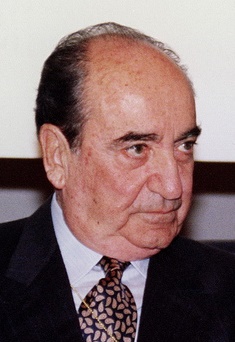
Konstantinos Mitsotakis (Greek: Κωνσταντίνος Μητσοτάκης, romanized: Konstantínos Mitsotákis, IPA: [konsta(n)ˈdinos mit͡soˈtacis]; 31 October [O.S. 18 October] 1918 – 29 May 2017) was a Greek liberal politician and statesman. He served as prime minister of Greece from 1990 to 1993.
Born in Chania, Crete, he came from a politically prominent family related to Eleftherios Venizelos. Mitsotakis graduated in law and economics from the University of Athens. He joined politics in 1946 as a member of the Liberal Party. During the 1950s and 1960s, he held several ministerial posts. He joined Center Union party in 1961 and he was regarded as a potential candidate for the party's leadership by 1965. However, he crossed party lines against Prime Minister Georgios Papandreou and his son Andreas Papandreou in the Iouliana of 1965, which made him a controversial figure for decades. After the fall of the Greek junta in 1974, Mitsotakis worked to rebuild his political reputation, and in 1978, joined the political party of Konstantinos Karamanlis, New Democracy. He rose to its leadership in 1984, standing out as one of the few most experienced politicians capable of confronting the populist Prime Minister Andreas Papandreou. Their rivalry deeply polarized Greek society, cumulating in the "catharsis" era (1989), when Andreas was indicted in connection with the Koskotas scandal.
Coming to power in 1990, Mitsotakis implemented an austerity program combined with policies of economic liberalization and privatization in an effort to reverse the economic divergence of the previous decade and steer Greece toward meeting the Euro convergence criteria. His government also improved relations with neighboring countries and United States. However, his tenure was marred by political instability and internal party conflicts, one which was the handling of the Macedonia naming dispute, that led to his resignation in 1993.
Mitsotakis remained an influential figure in Greek public life even after leaving office, spanning 58 years of active political career. In 2017, He died at the age of 98. His son, Kyriakos Mitsotakis, was elected as the prime minister of Greece in 2019.
Mitsotakis was born on 31 October 1918 in Halepa suburb of Chania, Crete, into an influential political family, linked to the distinguished statesman Eleftherios Venizelos. His grandfather Kostis Mitsotakis (1845–1898), a lawyer, journalist, and short-time member of parliament (MP) of then Ottoman-ruled Crete, founded the "Party of the Barefeet" (Greek: Κόμμα των Ξυπόλητων) with Venizelos that later became Liberal Party. Kostis married Venizelos' sister, Katigo Venizelou, Konstantine's grandmother. Mitsotakis father Kyriakos Mitsotakis (senior) (1883–1944), also MP for Chania in the Greek Parliament (1915–20) and leader of the Cretan volunteers fighting with the Greek army in the First Balkan War, married Stavroula Ploumidaki. Stavroula was the daughter of Charalambos Ploumidakis (1866–1943), who was cousin of Eleftherios Venizelos and the first Christian mayor of Chania and an MP at the time of the Cretan State.
He studied law at the University of Athens using funds from a bequest established for his education by Eleftherios Venizelos. Mitsotakis was married to Marika Mitsotakis (née Giannoukou) from 1953 until her death on 6 May 2012. They had four children, two of which, Kyriakos Mitsotakis and Dora Bakoyannis, have notable political careers.
Mitsotakis developed a large collection of Minoan and other Cretan antiquities, which he and his wife donated to the Greek state.[citation needed] He promoted the reforestation efforts across Greece, in particular the mountains of Crete.[citation needed]
Shortly before the outbreak of the World War II, he enlisted in the Infantry Reserve Officers' School on the island of Syros. With the onset of war, he joined the army and fought as a reserve second lieutenant in Macedonia (Greece) against the German invasion of Greece, remaining on the front line for a month and a half. During the retreat, he moved south.
Hub AI
Konstantinos Mitsotakis AI simulator
(@Konstantinos Mitsotakis_simulator)
Konstantinos Mitsotakis
Konstantinos Mitsotakis (Greek: Κωνσταντίνος Μητσοτάκης, romanized: Konstantínos Mitsotákis, IPA: [konsta(n)ˈdinos mit͡soˈtacis]; 31 October [O.S. 18 October] 1918 – 29 May 2017) was a Greek liberal politician and statesman. He served as prime minister of Greece from 1990 to 1993.
Born in Chania, Crete, he came from a politically prominent family related to Eleftherios Venizelos. Mitsotakis graduated in law and economics from the University of Athens. He joined politics in 1946 as a member of the Liberal Party. During the 1950s and 1960s, he held several ministerial posts. He joined Center Union party in 1961 and he was regarded as a potential candidate for the party's leadership by 1965. However, he crossed party lines against Prime Minister Georgios Papandreou and his son Andreas Papandreou in the Iouliana of 1965, which made him a controversial figure for decades. After the fall of the Greek junta in 1974, Mitsotakis worked to rebuild his political reputation, and in 1978, joined the political party of Konstantinos Karamanlis, New Democracy. He rose to its leadership in 1984, standing out as one of the few most experienced politicians capable of confronting the populist Prime Minister Andreas Papandreou. Their rivalry deeply polarized Greek society, cumulating in the "catharsis" era (1989), when Andreas was indicted in connection with the Koskotas scandal.
Coming to power in 1990, Mitsotakis implemented an austerity program combined with policies of economic liberalization and privatization in an effort to reverse the economic divergence of the previous decade and steer Greece toward meeting the Euro convergence criteria. His government also improved relations with neighboring countries and United States. However, his tenure was marred by political instability and internal party conflicts, one which was the handling of the Macedonia naming dispute, that led to his resignation in 1993.
Mitsotakis remained an influential figure in Greek public life even after leaving office, spanning 58 years of active political career. In 2017, He died at the age of 98. His son, Kyriakos Mitsotakis, was elected as the prime minister of Greece in 2019.
Mitsotakis was born on 31 October 1918 in Halepa suburb of Chania, Crete, into an influential political family, linked to the distinguished statesman Eleftherios Venizelos. His grandfather Kostis Mitsotakis (1845–1898), a lawyer, journalist, and short-time member of parliament (MP) of then Ottoman-ruled Crete, founded the "Party of the Barefeet" (Greek: Κόμμα των Ξυπόλητων) with Venizelos that later became Liberal Party. Kostis married Venizelos' sister, Katigo Venizelou, Konstantine's grandmother. Mitsotakis father Kyriakos Mitsotakis (senior) (1883–1944), also MP for Chania in the Greek Parliament (1915–20) and leader of the Cretan volunteers fighting with the Greek army in the First Balkan War, married Stavroula Ploumidaki. Stavroula was the daughter of Charalambos Ploumidakis (1866–1943), who was cousin of Eleftherios Venizelos and the first Christian mayor of Chania and an MP at the time of the Cretan State.
He studied law at the University of Athens using funds from a bequest established for his education by Eleftherios Venizelos. Mitsotakis was married to Marika Mitsotakis (née Giannoukou) from 1953 until her death on 6 May 2012. They had four children, two of which, Kyriakos Mitsotakis and Dora Bakoyannis, have notable political careers.
Mitsotakis developed a large collection of Minoan and other Cretan antiquities, which he and his wife donated to the Greek state.[citation needed] He promoted the reforestation efforts across Greece, in particular the mountains of Crete.[citation needed]
Shortly before the outbreak of the World War II, he enlisted in the Infantry Reserve Officers' School on the island of Syros. With the onset of war, he joined the army and fought as a reserve second lieutenant in Macedonia (Greece) against the German invasion of Greece, remaining on the front line for a month and a half. During the retreat, he moved south.
Recent media