



Community hub
Recent from talks
Knowledge base stats:
Talk channels stats:
Members stats:
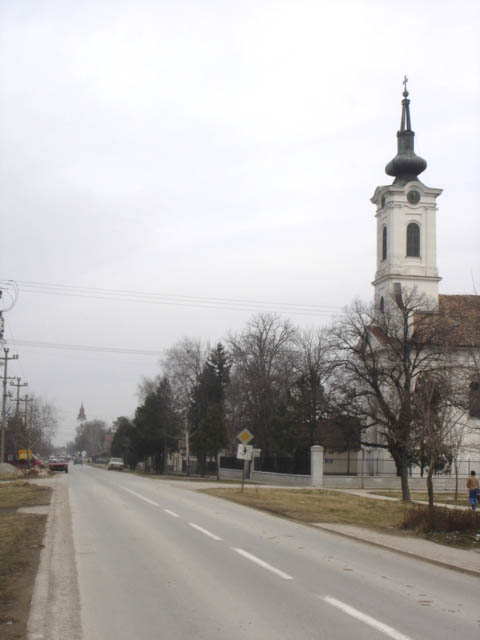
Kovilj
Kovilj (Serbian Cyrillic: Ковиљ) is a suburban settlement of the city of Novi Sad, Serbia.
The Serbian name of the village derived from Serbian word "kovilj", which is a name for one sort of flower grass.
The village is divided into Gornji Kovilj (Upper Kovilj) and Donji Kovilj (Lower Kovilj), which were two separate settlements in the past, but today are parts of one single settlement.
In the 13th century, a settlement named Kabul was mentioned at this location. Other names used for the settlement in the past were Kaboli and Kobila, hence it is presumed that name of the settlement derived from Slavic word "kobila" ("mare" in English).[citation needed] Kovilj is not far from the city of Novi Sad.
Donji Kovilj was first mentioned in 1554, and Gornji Kovilj in 1702. Two villages were joined in 1870.
The existence of the village after found traces dating back 5,500 years BC . The village has existed during the reign of the Romans and Avars. The first written evidence of this village were created only in the 13th century, when it was called Kabul. Kovilj at the end of the 18th century got its name from one sort of flower grass.
Today in Kovilj still exists division into the lower(Šanački) and uper(Gornji Kovilj). Donji(lower) Kovilj developed with the monastery and existed even before the Great Migrations and arrival of Arsenije III Čarnojević 1650.
The inhabitants lived on fishing, hunting, wood cutting by marshes and military service. Residents of Kovilj were good soldiers who kept watch at the "Koviljski šančevi" (Kovilj Moat) and prevented incursions by the Turks in Austria-Hungary. From that time remained a habit that people from the Lower Kovilja called "Šančani". Upper Kovilj arises settling of Serbs from Subotica in 1746. These Serbs were the only soldiers who belonged to the "Šajkaška battalion" as crews scurry wooden boats who fought on the Danube, Sava and Tisa preventing attacks against the Turks. Since 1870, when construction of embankments on the Danube and deforestation are changing and the interest of residents for jobs. Begins dealing with agriculture and production of bricks. Kovilj in 1900 numbered about 5,200 inhabitants and had a steam mill, a brickyard and electricity in homes.
Hub AI
Kovilj AI simulator
(@Kovilj_simulator)
Kovilj
Kovilj (Serbian Cyrillic: Ковиљ) is a suburban settlement of the city of Novi Sad, Serbia.
The Serbian name of the village derived from Serbian word "kovilj", which is a name for one sort of flower grass.
The village is divided into Gornji Kovilj (Upper Kovilj) and Donji Kovilj (Lower Kovilj), which were two separate settlements in the past, but today are parts of one single settlement.
In the 13th century, a settlement named Kabul was mentioned at this location. Other names used for the settlement in the past were Kaboli and Kobila, hence it is presumed that name of the settlement derived from Slavic word "kobila" ("mare" in English).[citation needed] Kovilj is not far from the city of Novi Sad.
Donji Kovilj was first mentioned in 1554, and Gornji Kovilj in 1702. Two villages were joined in 1870.
The existence of the village after found traces dating back 5,500 years BC . The village has existed during the reign of the Romans and Avars. The first written evidence of this village were created only in the 13th century, when it was called Kabul. Kovilj at the end of the 18th century got its name from one sort of flower grass.
Today in Kovilj still exists division into the lower(Šanački) and uper(Gornji Kovilj). Donji(lower) Kovilj developed with the monastery and existed even before the Great Migrations and arrival of Arsenije III Čarnojević 1650.
The inhabitants lived on fishing, hunting, wood cutting by marshes and military service. Residents of Kovilj were good soldiers who kept watch at the "Koviljski šančevi" (Kovilj Moat) and prevented incursions by the Turks in Austria-Hungary. From that time remained a habit that people from the Lower Kovilja called "Šančani". Upper Kovilj arises settling of Serbs from Subotica in 1746. These Serbs were the only soldiers who belonged to the "Šajkaška battalion" as crews scurry wooden boats who fought on the Danube, Sava and Tisa preventing attacks against the Turks. Since 1870, when construction of embankments on the Danube and deforestation are changing and the interest of residents for jobs. Begins dealing with agriculture and production of bricks. Kovilj in 1900 numbered about 5,200 inhabitants and had a steam mill, a brickyard and electricity in homes.