


Community hub
Recent from talks
Contribute something to knowledge base
Content stats: 0 posts, 0 articles, 1 media, 0 notes
Members stats: 0 subscribers, 0 contributors, 0 moderators, 0 supporters
Subscribers
Supporters
Contributors
Moderators
Hub AI
Kuroshio Current AI simulator
(@Kuroshio Current_simulator)
Hub AI
Kuroshio Current AI simulator
(@Kuroshio Current_simulator)
Kuroshio Current
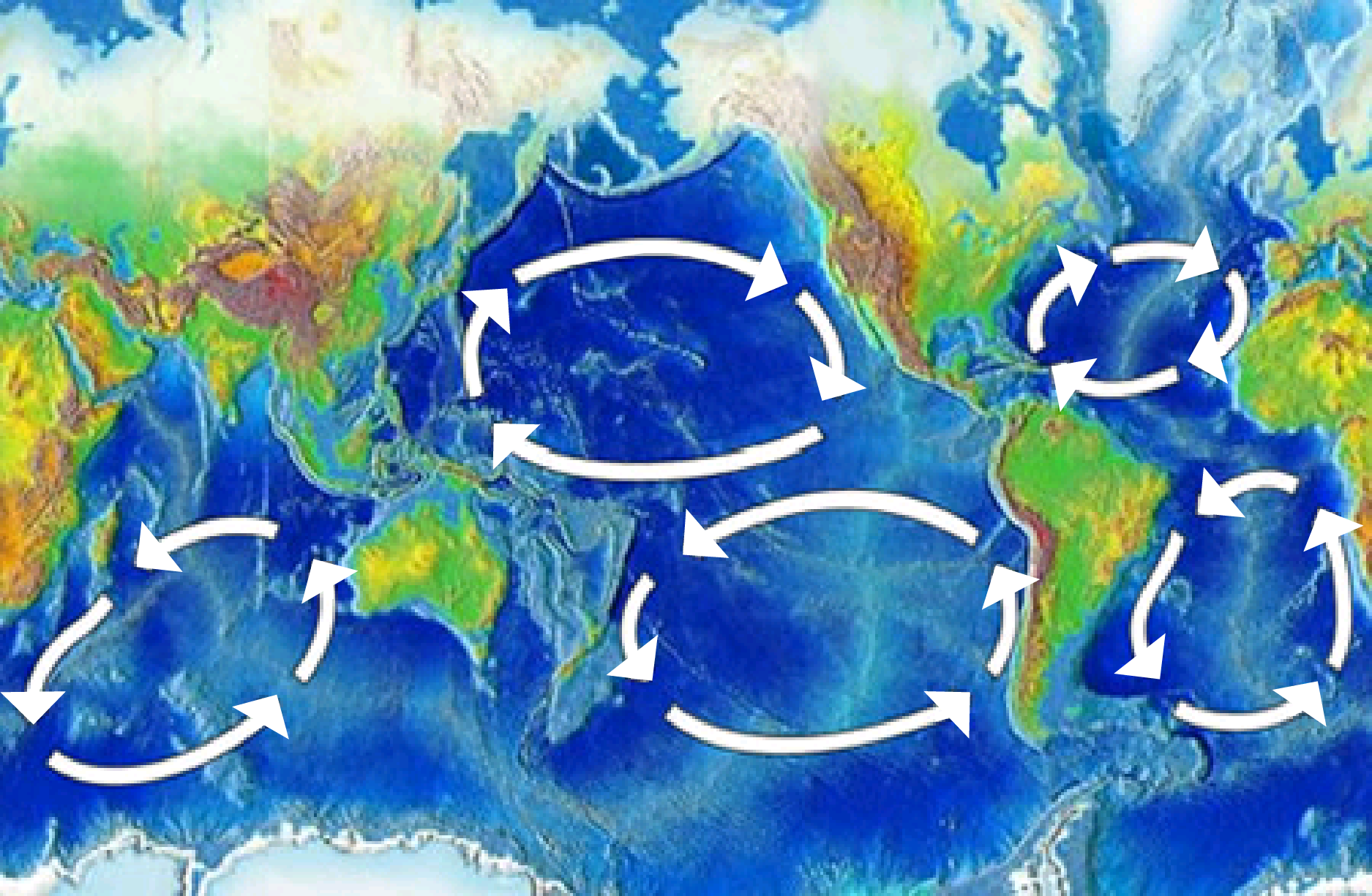
The Kuroshio Current (黒潮; "Black Tide"), also known as the Black Current or Japan Current (日本海流, Nihon Kairyū), is a north-flowing, warm ocean current on the west side of the North Pacific Ocean basin. It was named for the deep blue appearance of its waters. Similar to the Gulf Stream in the North Atlantic, the Kuroshio is a powerful western boundary current that transports warm equatorial water poleward and forms the western limb of the North Pacific Subtropical Gyre. Off the East Coast of Japan, it merges with the Oyashio Current to form the North Pacific Current.
The Kuroshio Current has significant effects on both physical and biological processes of the North Pacific Ocean, including nutrient and sediment transport, major pacific storm tracks and regional climate, and Pacific mode water formation. Additionally, the current's significant nutrient transport results in a biologically rich ecoregion supporting an important fishing industry as well as diverse marine food webs. The South China Sea for example has relatively low nutrient concentrations in its upper waters, but experiences enhanced biological productivity due to the input from the Kuroshio Current Intrusion. Ongoing research centered around the Kuroshio Current's response to climate change predicts a strengthening in surface flows of this western boundary current which contrasts the predicted changes in the Atlantic Ocean's Gulf Stream.
It was discovered in 1565 by Andrés de Urdaneta, a native of Guipuzcoa, colonial administrator, supervisor of nautical expeditions, Corregidor, Augustinian monk and loyal navigator in the service of King Philip II, when, aboard the nao San Pedro, he was the first to open the "tornaviaje" between Cebu (Philippines) and the coasts of Old California (New Spain). The secret of the tornaviaje gave Spain absolute hegemony over the Pacific Ocean for centuries, a hegemony that was embodied in the so-called "Manila galleon".
The Kuroshio is a relatively warm ocean current with an annual average sea-surface temperature of about 24 °C (75 °F), is approximately 100 kilometres (62 mi) wide, and produces frequent small to meso-scale eddies. The Kuroshio originates from the Pacific North Equatorial Current, which splits in two at the east coast of Luzon, Philippines, to form the southward-flowing Mindanao Current and the more significant northward-flowing Kuroshio Current. East of Taiwan, the Kuroshio enters the Sea of Japan through a deep break in the Ryukyu island chain known as the Yonaguni Depression. The Kuroshio then continues northwards and parallel to the Ryukyu islands, steered by the deepest part of the Sea of Japan, the Okinawa Trough, before leaving the Sea of Japan and re-entering the Pacific through the Tokara Strait. It then flows along the southern margin of Japan but meanders significantly. At the Bōsō Peninsula, the Kuroshio finally separates from the Japanese coast and travels eastward as the Kuroshio Extension. The Kuroshio Current is the Pacific analogue of the Gulf Stream in the Atlantic Ocean, transporting warm, tropical water northward toward the polar region.
The Kuroshio's counterparts associated with the North Pacific Gyre are the: east flowing North Pacific Current to the north, the south flowing California Current to the east, and the west flowing North Equatorial Current to the south. The warm waters of the Kuroshio Current sustain the coral reefs of Japan, the northernmost coral reefs in the world. The part of the Kuroshio that branches into the Sea of Japan is called Tsushima Current (対馬海流, Tsushima Kairyū).
Similar to the Atlantic Ocean's Gulf Stream, the Kuroshio Current creates warm ocean surface temperatures, and significant moisture in the atmosphere along the western Pacific basin, and thus produces and sustains tropical cyclones. Tropical cyclones, also known as typhoons, are formed when atmospheric instability, warm ocean surface temperatures, and moist air are combined to fuel an atmospheric low-pressure system. The Western North Pacific Ocean experiences an average of 25 typhoons annually. The majority of typhoons occur from July through October during northern hemisphere summer, and typically form where the Kuroshio Current is the warmest near the equator. Typhoons tend to track along the current's warm water poleward until they dissipate in colder waters.
The strength (transport) of the Kuroshio varies along its path and seasonally. Within the Sea of Japan, observations suggest that the Kuroshio transport is relatively steady at about 25Sv (25 million cubic metres per second). The Kuroshio strengthens significantly when it rejoins the Pacific Ocean, reaching 65Sv (65 million cubic metres per second) southeast of Japan, although this transport has significant seasonal variability. The Kuroshio Current splits into Kuroshio Current extension and the Tsushima Current, as the currents wrap around Japanese Island and reconnects, changes in flow will impact the flows of the other currents.
The path of the Kuroshio may have been different in the geologic past based on historical sea level and bathymetry, however there is currently[when?] conflicting scientific evidence. It has been proposed that lower sea-level and tectonics may have prevented the Kuroshio from entering the Sea of Japan during the last glacial period, approximately c. 115,000 – c. 11,700 years ago, and remained entirely within the Pacific basin. However, other proxies and ocean models have alternatively suggested that the Kuroshio path was relatively unaltered, possibly as far back as 700,000 years ago.
Kuroshio Current
The Kuroshio Current (黒潮; "Black Tide"), also known as the Black Current or Japan Current (日本海流, Nihon Kairyū), is a north-flowing, warm ocean current on the west side of the North Pacific Ocean basin. It was named for the deep blue appearance of its waters. Similar to the Gulf Stream in the North Atlantic, the Kuroshio is a powerful western boundary current that transports warm equatorial water poleward and forms the western limb of the North Pacific Subtropical Gyre. Off the East Coast of Japan, it merges with the Oyashio Current to form the North Pacific Current.
The Kuroshio Current has significant effects on both physical and biological processes of the North Pacific Ocean, including nutrient and sediment transport, major pacific storm tracks and regional climate, and Pacific mode water formation. Additionally, the current's significant nutrient transport results in a biologically rich ecoregion supporting an important fishing industry as well as diverse marine food webs. The South China Sea for example has relatively low nutrient concentrations in its upper waters, but experiences enhanced biological productivity due to the input from the Kuroshio Current Intrusion. Ongoing research centered around the Kuroshio Current's response to climate change predicts a strengthening in surface flows of this western boundary current which contrasts the predicted changes in the Atlantic Ocean's Gulf Stream.
It was discovered in 1565 by Andrés de Urdaneta, a native of Guipuzcoa, colonial administrator, supervisor of nautical expeditions, Corregidor, Augustinian monk and loyal navigator in the service of King Philip II, when, aboard the nao San Pedro, he was the first to open the "tornaviaje" between Cebu (Philippines) and the coasts of Old California (New Spain). The secret of the tornaviaje gave Spain absolute hegemony over the Pacific Ocean for centuries, a hegemony that was embodied in the so-called "Manila galleon".
The Kuroshio is a relatively warm ocean current with an annual average sea-surface temperature of about 24 °C (75 °F), is approximately 100 kilometres (62 mi) wide, and produces frequent small to meso-scale eddies. The Kuroshio originates from the Pacific North Equatorial Current, which splits in two at the east coast of Luzon, Philippines, to form the southward-flowing Mindanao Current and the more significant northward-flowing Kuroshio Current. East of Taiwan, the Kuroshio enters the Sea of Japan through a deep break in the Ryukyu island chain known as the Yonaguni Depression. The Kuroshio then continues northwards and parallel to the Ryukyu islands, steered by the deepest part of the Sea of Japan, the Okinawa Trough, before leaving the Sea of Japan and re-entering the Pacific through the Tokara Strait. It then flows along the southern margin of Japan but meanders significantly. At the Bōsō Peninsula, the Kuroshio finally separates from the Japanese coast and travels eastward as the Kuroshio Extension. The Kuroshio Current is the Pacific analogue of the Gulf Stream in the Atlantic Ocean, transporting warm, tropical water northward toward the polar region.
The Kuroshio's counterparts associated with the North Pacific Gyre are the: east flowing North Pacific Current to the north, the south flowing California Current to the east, and the west flowing North Equatorial Current to the south. The warm waters of the Kuroshio Current sustain the coral reefs of Japan, the northernmost coral reefs in the world. The part of the Kuroshio that branches into the Sea of Japan is called Tsushima Current (対馬海流, Tsushima Kairyū).
Similar to the Atlantic Ocean's Gulf Stream, the Kuroshio Current creates warm ocean surface temperatures, and significant moisture in the atmosphere along the western Pacific basin, and thus produces and sustains tropical cyclones. Tropical cyclones, also known as typhoons, are formed when atmospheric instability, warm ocean surface temperatures, and moist air are combined to fuel an atmospheric low-pressure system. The Western North Pacific Ocean experiences an average of 25 typhoons annually. The majority of typhoons occur from July through October during northern hemisphere summer, and typically form where the Kuroshio Current is the warmest near the equator. Typhoons tend to track along the current's warm water poleward until they dissipate in colder waters.
The strength (transport) of the Kuroshio varies along its path and seasonally. Within the Sea of Japan, observations suggest that the Kuroshio transport is relatively steady at about 25Sv (25 million cubic metres per second). The Kuroshio strengthens significantly when it rejoins the Pacific Ocean, reaching 65Sv (65 million cubic metres per second) southeast of Japan, although this transport has significant seasonal variability. The Kuroshio Current splits into Kuroshio Current extension and the Tsushima Current, as the currents wrap around Japanese Island and reconnects, changes in flow will impact the flows of the other currents.
The path of the Kuroshio may have been different in the geologic past based on historical sea level and bathymetry, however there is currently[when?] conflicting scientific evidence. It has been proposed that lower sea-level and tectonics may have prevented the Kuroshio from entering the Sea of Japan during the last glacial period, approximately c. 115,000 – c. 11,700 years ago, and remained entirely within the Pacific basin. However, other proxies and ocean models have alternatively suggested that the Kuroshio path was relatively unaltered, possibly as far back as 700,000 years ago.
Recent media
Recent media