


Community hub
Recent from talks
Contribute something to knowledge base
Content stats: 0 posts, 0 articles, 1 media, 0 notes
Members stats: 0 subscribers, 0 contributors, 0 moderators, 0 supporters
Subscribers
Supporters
Contributors
Moderators
Hub AI
La Violencia AI simulator
(@La Violencia_simulator)
Hub AI
La Violencia AI simulator
(@La Violencia_simulator)
La Violencia
La Violencia (Spanish pronunciation: [la βjoˈlensja], The Violence) was a ten-year civil war in Colombia from 1948 to 1958, between the Colombian Conservative Party and the Colombian Liberal Party, mainly fought in the countryside.
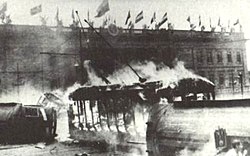
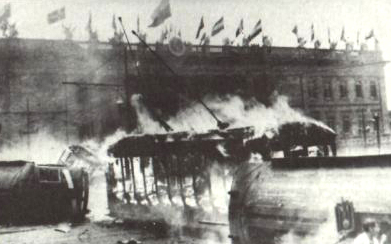
La Violencia is considered to have begun with the assassination on 9 April 1948 of Jorge Eliécer Gaitán, a Liberal Party presidential candidate and frontrunner for the 1949 November election. His murder provoked the Bogotazo rioting, which lasted ten hours and resulted in around 5,000 casualties. An alternative historiography proposes the Conservative Party's return to power following the election of 1946 to be the cause. Rural town police and political leaders encouraged Conservative-supporting peasants to seize the agricultural lands of Liberal-supporting peasants, which provoked peasant-to-peasant violence throughout Colombia.
La Violencia is estimated to have killed at least 200,000 people, almost 1 in 50 Colombians.
The La Violencia conflict took place between the Military Forces of Colombia and the National Police of Colombia supported by Colombian Conservative Party paramilitary groups on one side, and paramilitary and guerrilla groups aligned with the Colombian Liberal Party and the Colombian Communist Party on the other side.
The conflict caused millions of people to abandon their homes and property. Media and news services failed to cover events accurately for fear of revenge attacks. The lack of public order and civil authority prevented victims from laying charges against perpetrators. Documented evidence from these years is rare and fragmented.[citation needed]
The majority of the population at the time was Catholic. During the conflict there were press reports that Catholic Church authorities supported the Conservative Party. Several priests were accused of openly encouraging the murder of the political opposition during Catholic mass, including the Santa Rosa de Osos Bishop Miguel Ángel Builes, although this is unproven. No formal charges were ever presented and no official statements were made by the Holy See or the Board of Bishops. These events were recounted in the 1950 book Lo que el cielo no perdona ("What heaven doesn't forgive"), written by the secretary to Builes, Father Fidel Blandon Berrio. Eduardo Caballero Calderón also recounted these events in his 1952 book El Cristo de Espaldas ("Backwards Christ"). After releasing his book, Blandon resigned from his position and assumed a false identity as Antonio Gutiérrez. However, he was eventually identified and legally charged and prosecuted for libel by the Conservative Party.
As a result of La Violencia there were no liberal candidates for the presidency, congress, or any public corporations in the 1950 elections. The press accused the government of pogroms against the opposition. Censorship and reprisals were common against journalists, writers, and directors of news services; in consequence many media figures left the country. Jorge Zalamea, director of Critica magazine, fled to Buenos Aires; Luis Vidales to Chile; Antonio Garcia to La Paz, and Gerardo Molina to Paris.[citation needed]
Since the 1920s, Conservatives had held the majority of governmental power, a position it would continue to occupy until the 2002 election of Alvaro Uribe. Even when Liberals gained control of the government in the 1930s, there was tension and even violent outbursts between peasants and landowners, as well as workers and industry owners. The number of yearly deaths from conflict, however, were far less than those estimated to have occurred during La Violencia.
La Violencia
La Violencia (Spanish pronunciation: [la βjoˈlensja], The Violence) was a ten-year civil war in Colombia from 1948 to 1958, between the Colombian Conservative Party and the Colombian Liberal Party, mainly fought in the countryside.
La Violencia is considered to have begun with the assassination on 9 April 1948 of Jorge Eliécer Gaitán, a Liberal Party presidential candidate and frontrunner for the 1949 November election. His murder provoked the Bogotazo rioting, which lasted ten hours and resulted in around 5,000 casualties. An alternative historiography proposes the Conservative Party's return to power following the election of 1946 to be the cause. Rural town police and political leaders encouraged Conservative-supporting peasants to seize the agricultural lands of Liberal-supporting peasants, which provoked peasant-to-peasant violence throughout Colombia.
La Violencia is estimated to have killed at least 200,000 people, almost 1 in 50 Colombians.
The La Violencia conflict took place between the Military Forces of Colombia and the National Police of Colombia supported by Colombian Conservative Party paramilitary groups on one side, and paramilitary and guerrilla groups aligned with the Colombian Liberal Party and the Colombian Communist Party on the other side.
The conflict caused millions of people to abandon their homes and property. Media and news services failed to cover events accurately for fear of revenge attacks. The lack of public order and civil authority prevented victims from laying charges against perpetrators. Documented evidence from these years is rare and fragmented.[citation needed]
The majority of the population at the time was Catholic. During the conflict there were press reports that Catholic Church authorities supported the Conservative Party. Several priests were accused of openly encouraging the murder of the political opposition during Catholic mass, including the Santa Rosa de Osos Bishop Miguel Ángel Builes, although this is unproven. No formal charges were ever presented and no official statements were made by the Holy See or the Board of Bishops. These events were recounted in the 1950 book Lo que el cielo no perdona ("What heaven doesn't forgive"), written by the secretary to Builes, Father Fidel Blandon Berrio. Eduardo Caballero Calderón also recounted these events in his 1952 book El Cristo de Espaldas ("Backwards Christ"). After releasing his book, Blandon resigned from his position and assumed a false identity as Antonio Gutiérrez. However, he was eventually identified and legally charged and prosecuted for libel by the Conservative Party.
As a result of La Violencia there were no liberal candidates for the presidency, congress, or any public corporations in the 1950 elections. The press accused the government of pogroms against the opposition. Censorship and reprisals were common against journalists, writers, and directors of news services; in consequence many media figures left the country. Jorge Zalamea, director of Critica magazine, fled to Buenos Aires; Luis Vidales to Chile; Antonio Garcia to La Paz, and Gerardo Molina to Paris.[citation needed]
Since the 1920s, Conservatives had held the majority of governmental power, a position it would continue to occupy until the 2002 election of Alvaro Uribe. Even when Liberals gained control of the government in the 1930s, there was tension and even violent outbursts between peasants and landowners, as well as workers and industry owners. The number of yearly deaths from conflict, however, were far less than those estimated to have occurred during La Violencia.
Recent media
Recent media