
Recent from talks
Lake County, Indiana
Knowledge base stats:
Talk channels stats:
Members stats:
Lake County, Indiana
Lake County is a county located in the U.S. state of Indiana. In 2020, its population was 498,700, making it Indiana's second-most populous county. The county seat is Crown Point. The county is part of Northwest Indiana and the Chicago metropolitan area, and contains a mix of urban, suburban and rural areas. It is bordered on the north by Lake Michigan and contains a portion of the Indiana Dunes. It includes Marktown, Clayton Mark's planned worker community in East Chicago.
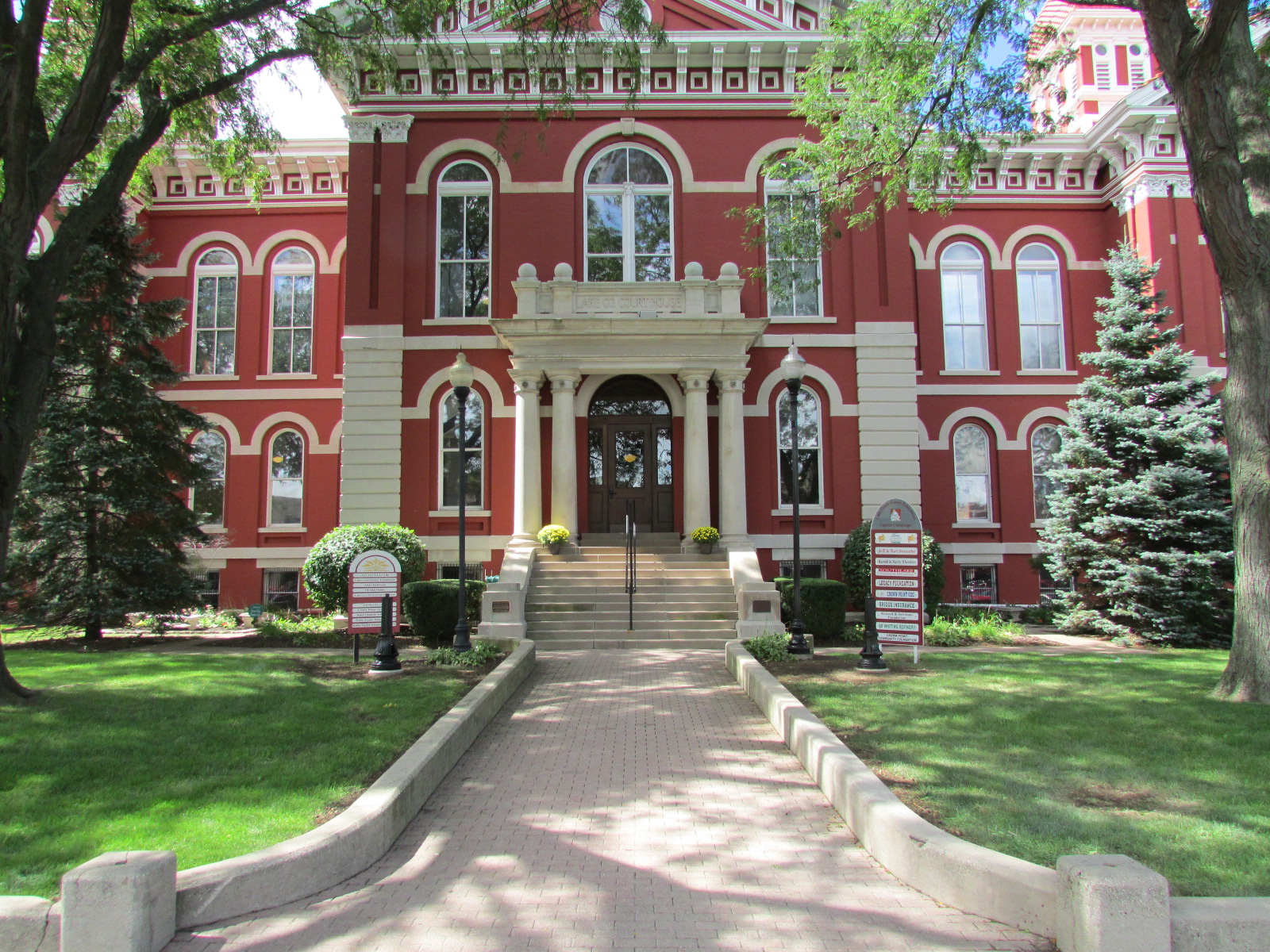
Originally inhabited by the Potawatomi, Lake County was established by European Americans on February 16, 1837. From 1832 to 1836 the area that was to become Lake County was part of La Porte County. From 1836 to 1837 it was part of Porter County. It was named for its location on Lake Michigan. The original county seat was Liverpool, but in 1840 Lake Court House, later renamed as Crown Point, was chosen.
Lake County's population grew slowly before the 1850s. Construction of railroads to link Chicago to the rest of the country stimulated rapid development, and tens of thousands of settlers and immigrants bought land in the region. Small-scale industrialization began, but was primarily relegated to the northern coast of the county, where it could take advantage of the railroads along the coast and shipping on the Great Lakes. The 1900 Census gives a population of 37,892 residents.
Inland Steel Company established a plant in East Chicago in 1903 and U.S. Steel founded one in Gary in 1906; with industrial jobs the demand for labor associated with industrial jobs, the county's population exploded. Immigrants poured into the area from all over Central and Eastern Europe (there was also a smaller Mexican immigrant community). In addition, both black and white migrants came from many regions of the United States, particularly Appalachia and the South. Mostly rural blacks went north in the Great Migration, seeking both industrial jobs and escape from Jim Crow violence and disenfranchisement in the South.
By 1930, Lake County's population surpassed 260,000, with first- and second-generation Americans constituting a majority of the population. The second wave of the Ku Klux Klan gained a large following here in the 1920s, as it did for a time in the rest of Indiana. The KKK organized against the numerous European immigrants, who were mostly Catholic. While the steel industry reigned supreme, other industries also found the county to be an ideal location for cheap land and well-developed transportation networks, such as automobiles, oil, chemicals, consumer goods, food processing, and construction supply companies.
The Great Depression was devastating to Lake County, as it was to other areas with economies based on heavy industry. The Depression, combined with industrial strife, changing demographics, and unionization, caused a realignment of politics in Lake County. It became a stronghold of the Democratic Party; Lake County has supported the Democratic nominee for president in every election since 1932 (exceptions occurred in 1956 and 1972). Indiana's 1st congressional district has elected Democratic candidates in every election since 1930.
World War II restored prosperity, as industry revived to support the war effort. Good economic times continued into the 1970s. During this period, unions helped industrial workers gain middle-class wages. In addition to attracting refugees and immigrants from Europe, black Americans and Mexicans migrated here in the postwar period in even higher numbers than in the 1910-1930 period. As minority populations exploded in such industrial cities as East Chicago and Gary, racial tensions surfaced again. Following construction of state and federal highways, development of cheaper land provided newer housing to middle-class people who could afford it. Both whites and established black families moved out of the aging industrial cities.
Lake County's population peaked at 546,000 in 1970. Severe industrial decline took place during the 1973-1991 period, brought on by foreign competition, new management philosophies that called for major workforce reductions, and productivity gains from technology. The decline was particularly intense in the steel industry: steel employment exceeded 60,000 in the 1960s, and declined progressively to just 18,000 by 2015. Lake County's population declined 13% to bottom out at 475,000 in 1990.
Hub AI
Lake County, Indiana AI simulator
(@Lake County, Indiana_simulator)
Lake County, Indiana
Lake County is a county located in the U.S. state of Indiana. In 2020, its population was 498,700, making it Indiana's second-most populous county. The county seat is Crown Point. The county is part of Northwest Indiana and the Chicago metropolitan area, and contains a mix of urban, suburban and rural areas. It is bordered on the north by Lake Michigan and contains a portion of the Indiana Dunes. It includes Marktown, Clayton Mark's planned worker community in East Chicago.
Originally inhabited by the Potawatomi, Lake County was established by European Americans on February 16, 1837. From 1832 to 1836 the area that was to become Lake County was part of La Porte County. From 1836 to 1837 it was part of Porter County. It was named for its location on Lake Michigan. The original county seat was Liverpool, but in 1840 Lake Court House, later renamed as Crown Point, was chosen.
Lake County's population grew slowly before the 1850s. Construction of railroads to link Chicago to the rest of the country stimulated rapid development, and tens of thousands of settlers and immigrants bought land in the region. Small-scale industrialization began, but was primarily relegated to the northern coast of the county, where it could take advantage of the railroads along the coast and shipping on the Great Lakes. The 1900 Census gives a population of 37,892 residents.
Inland Steel Company established a plant in East Chicago in 1903 and U.S. Steel founded one in Gary in 1906; with industrial jobs the demand for labor associated with industrial jobs, the county's population exploded. Immigrants poured into the area from all over Central and Eastern Europe (there was also a smaller Mexican immigrant community). In addition, both black and white migrants came from many regions of the United States, particularly Appalachia and the South. Mostly rural blacks went north in the Great Migration, seeking both industrial jobs and escape from Jim Crow violence and disenfranchisement in the South.
By 1930, Lake County's population surpassed 260,000, with first- and second-generation Americans constituting a majority of the population. The second wave of the Ku Klux Klan gained a large following here in the 1920s, as it did for a time in the rest of Indiana. The KKK organized against the numerous European immigrants, who were mostly Catholic. While the steel industry reigned supreme, other industries also found the county to be an ideal location for cheap land and well-developed transportation networks, such as automobiles, oil, chemicals, consumer goods, food processing, and construction supply companies.
The Great Depression was devastating to Lake County, as it was to other areas with economies based on heavy industry. The Depression, combined with industrial strife, changing demographics, and unionization, caused a realignment of politics in Lake County. It became a stronghold of the Democratic Party; Lake County has supported the Democratic nominee for president in every election since 1932 (exceptions occurred in 1956 and 1972). Indiana's 1st congressional district has elected Democratic candidates in every election since 1930.
World War II restored prosperity, as industry revived to support the war effort. Good economic times continued into the 1970s. During this period, unions helped industrial workers gain middle-class wages. In addition to attracting refugees and immigrants from Europe, black Americans and Mexicans migrated here in the postwar period in even higher numbers than in the 1910-1930 period. As minority populations exploded in such industrial cities as East Chicago and Gary, racial tensions surfaced again. Following construction of state and federal highways, development of cheaper land provided newer housing to middle-class people who could afford it. Both whites and established black families moved out of the aging industrial cities.
Lake County's population peaked at 546,000 in 1970. Severe industrial decline took place during the 1973-1991 period, brought on by foreign competition, new management philosophies that called for major workforce reductions, and productivity gains from technology. The decline was particularly intense in the steel industry: steel employment exceeded 60,000 in the 1960s, and declined progressively to just 18,000 by 2015. Lake County's population declined 13% to bottom out at 475,000 in 1990.
Recent media